
Description
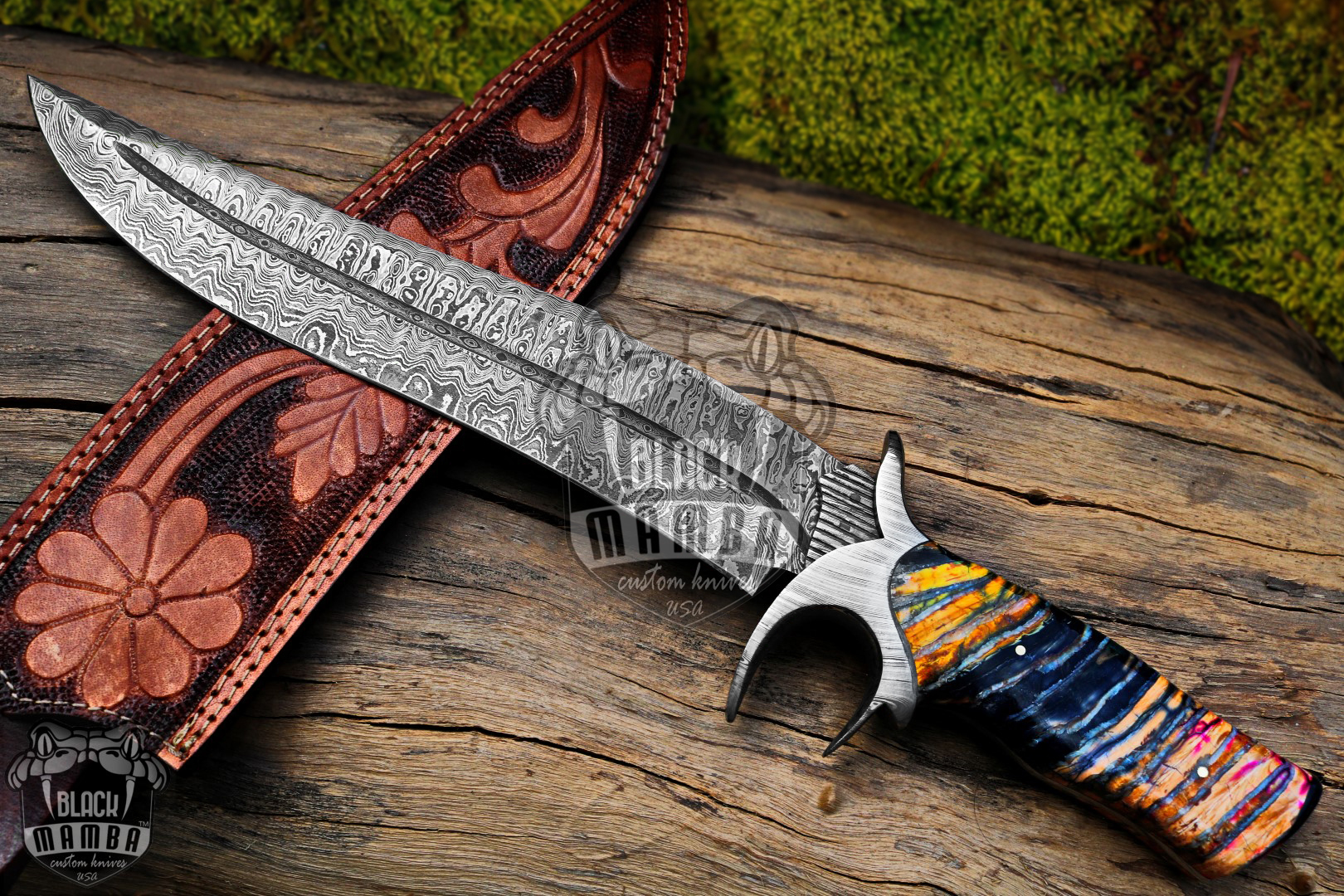
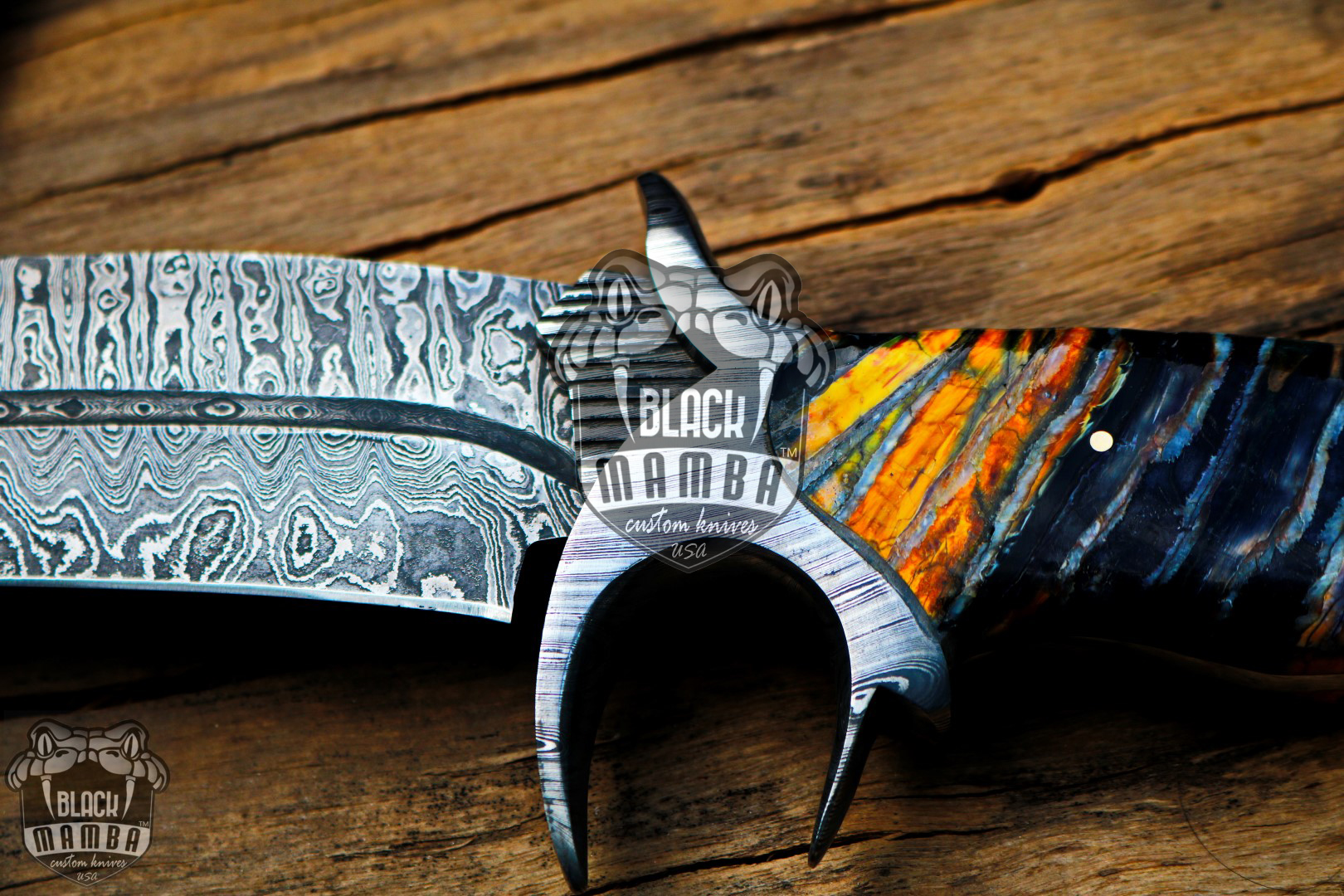
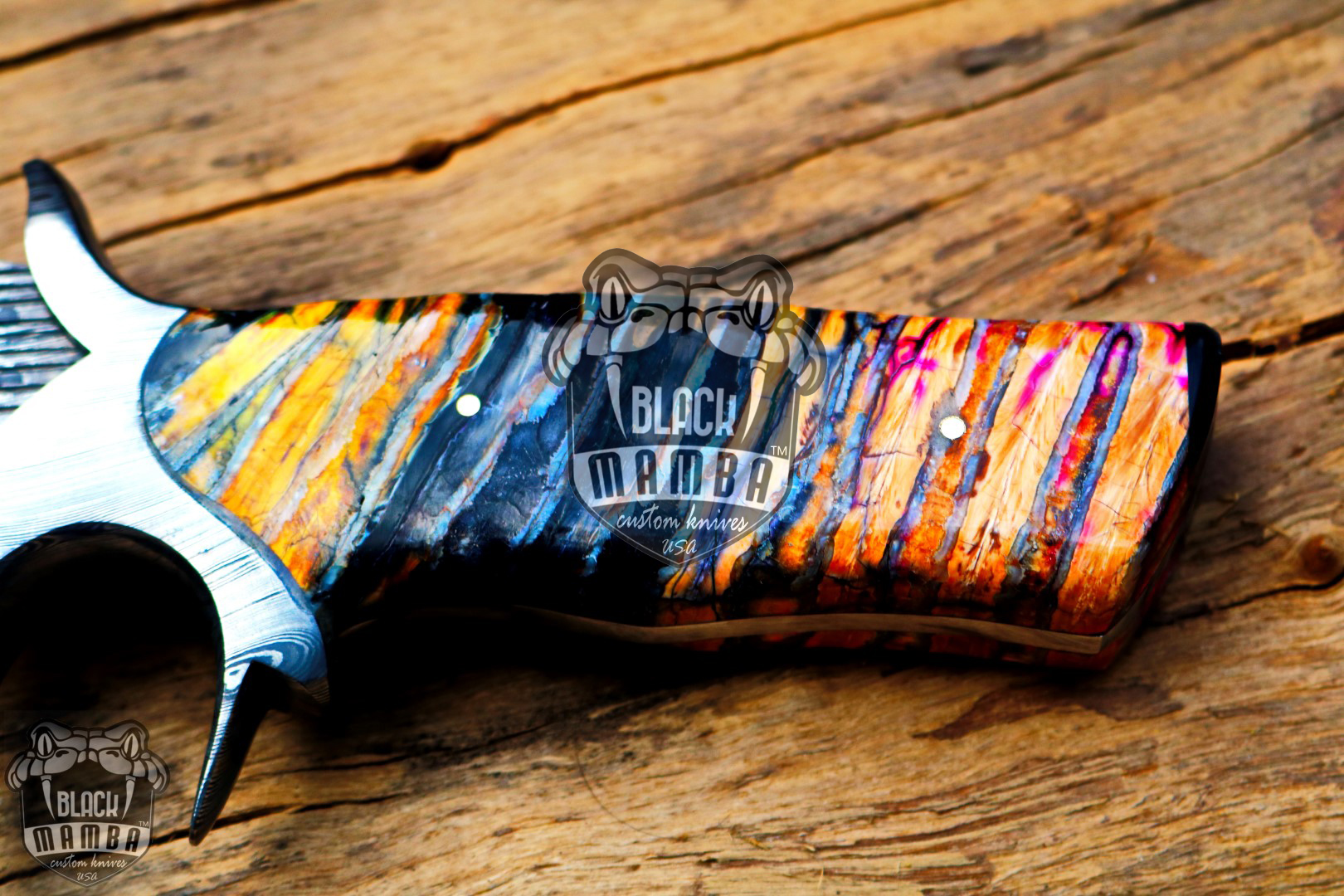
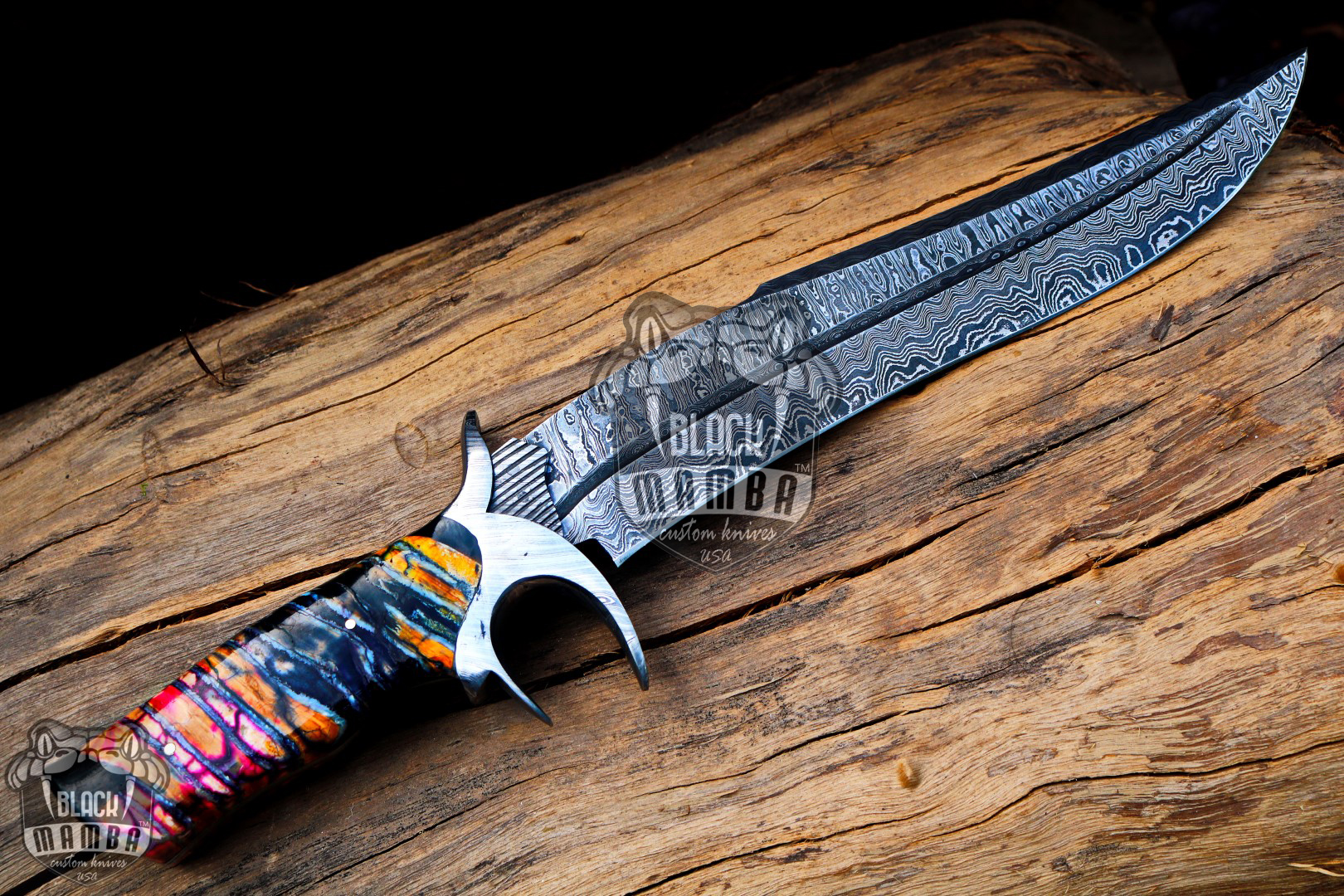
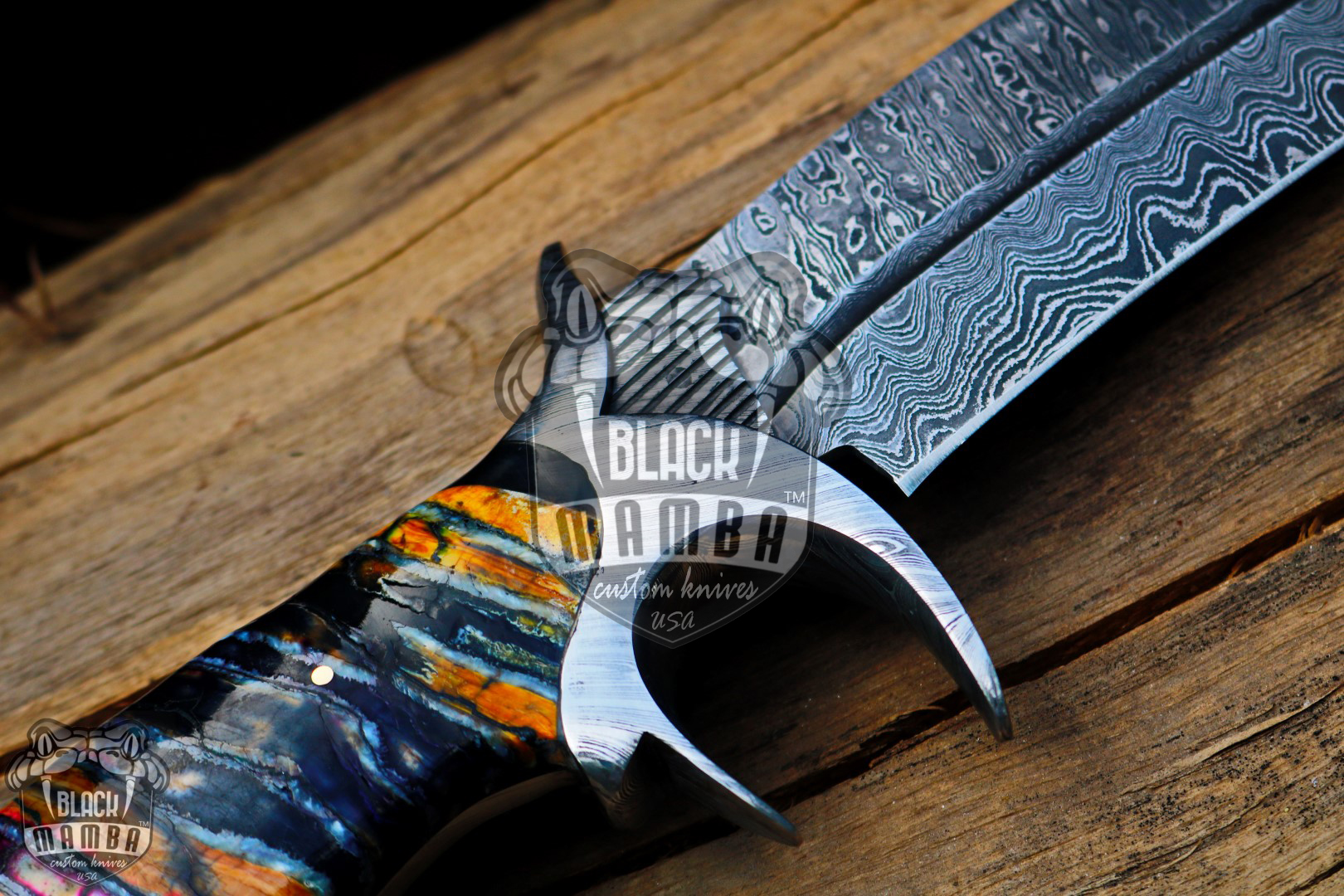
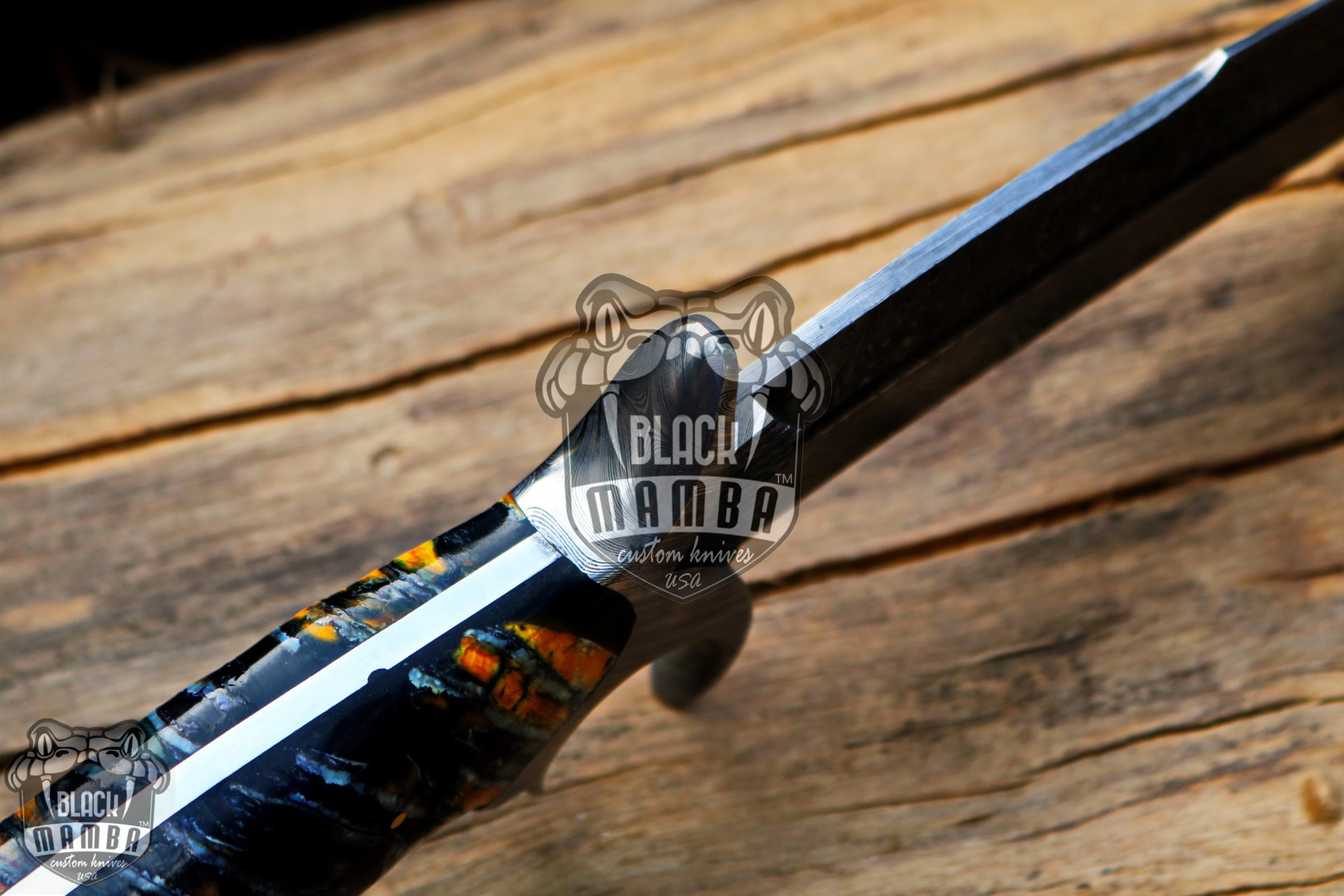
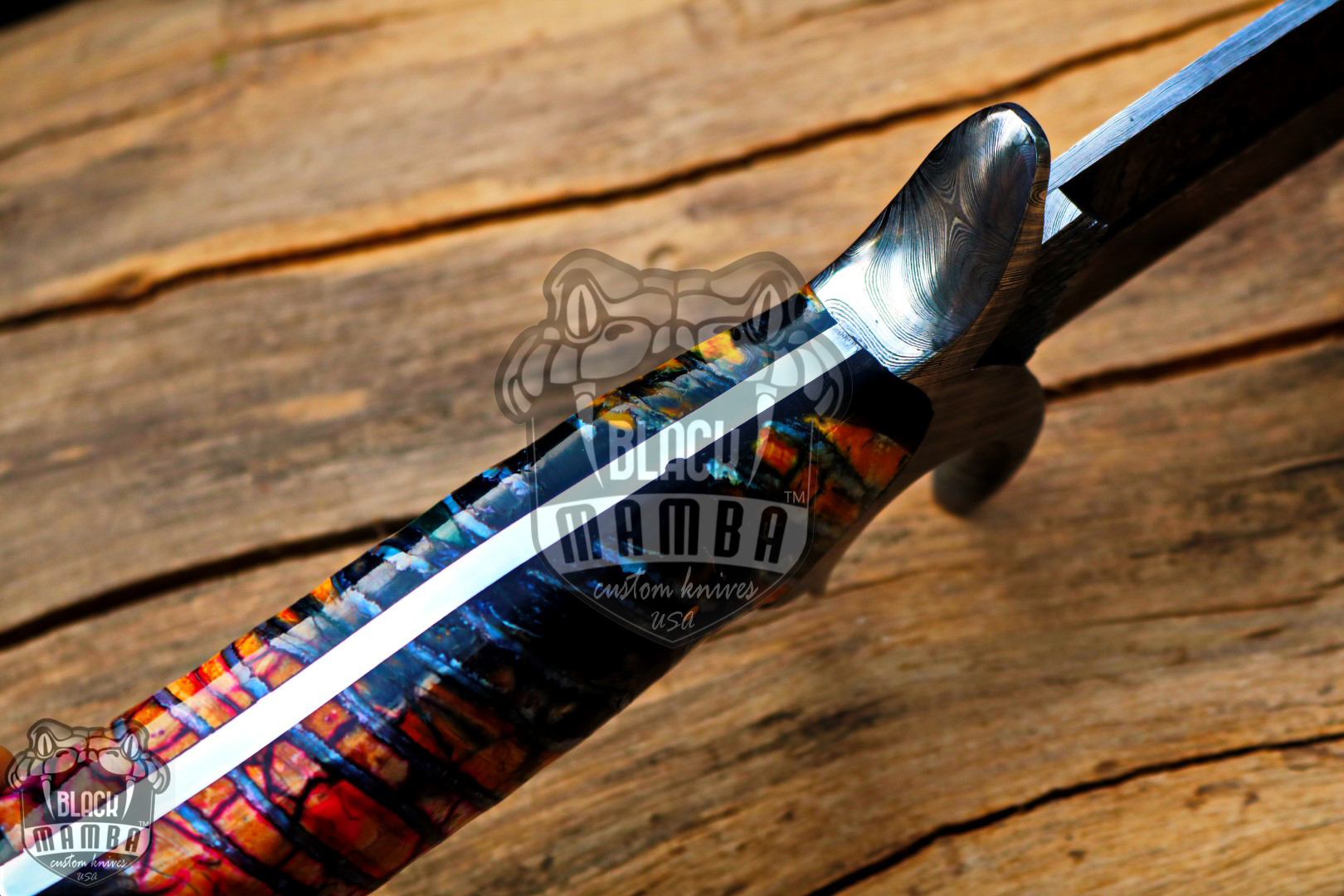
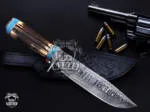
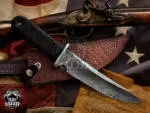
Seventeen and a half inches overall, eleven of blade, six and a half of handle, 22.9 ounces. The handle is stabilized mammoth, material that came out of permafrost rather than out of a mill, and that one fact separates this from every other large bowie in the catalog.
| Overall length | 17.5 inches |
| Blade length | 11 inches |
| Handle length | 6.5 inches |
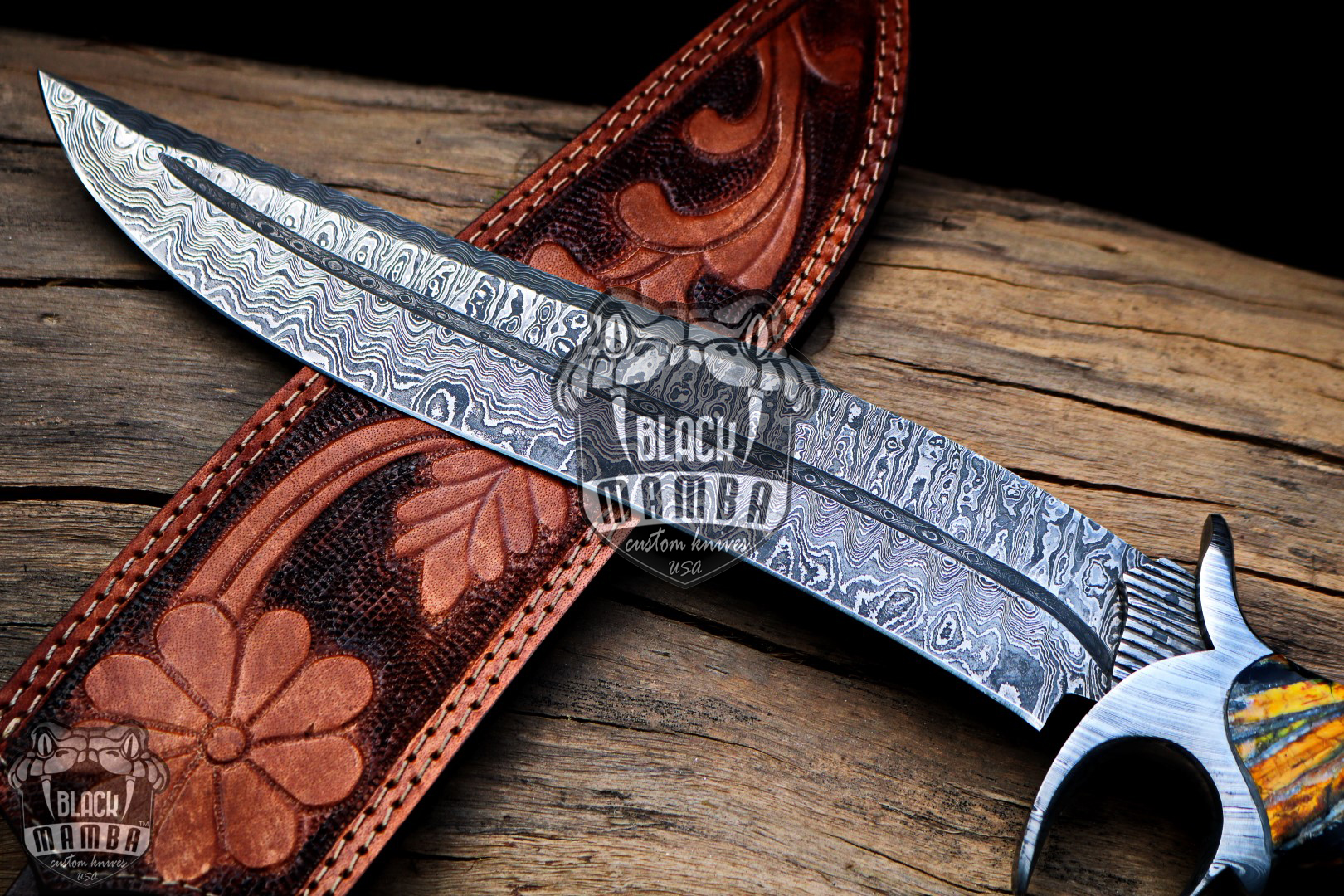
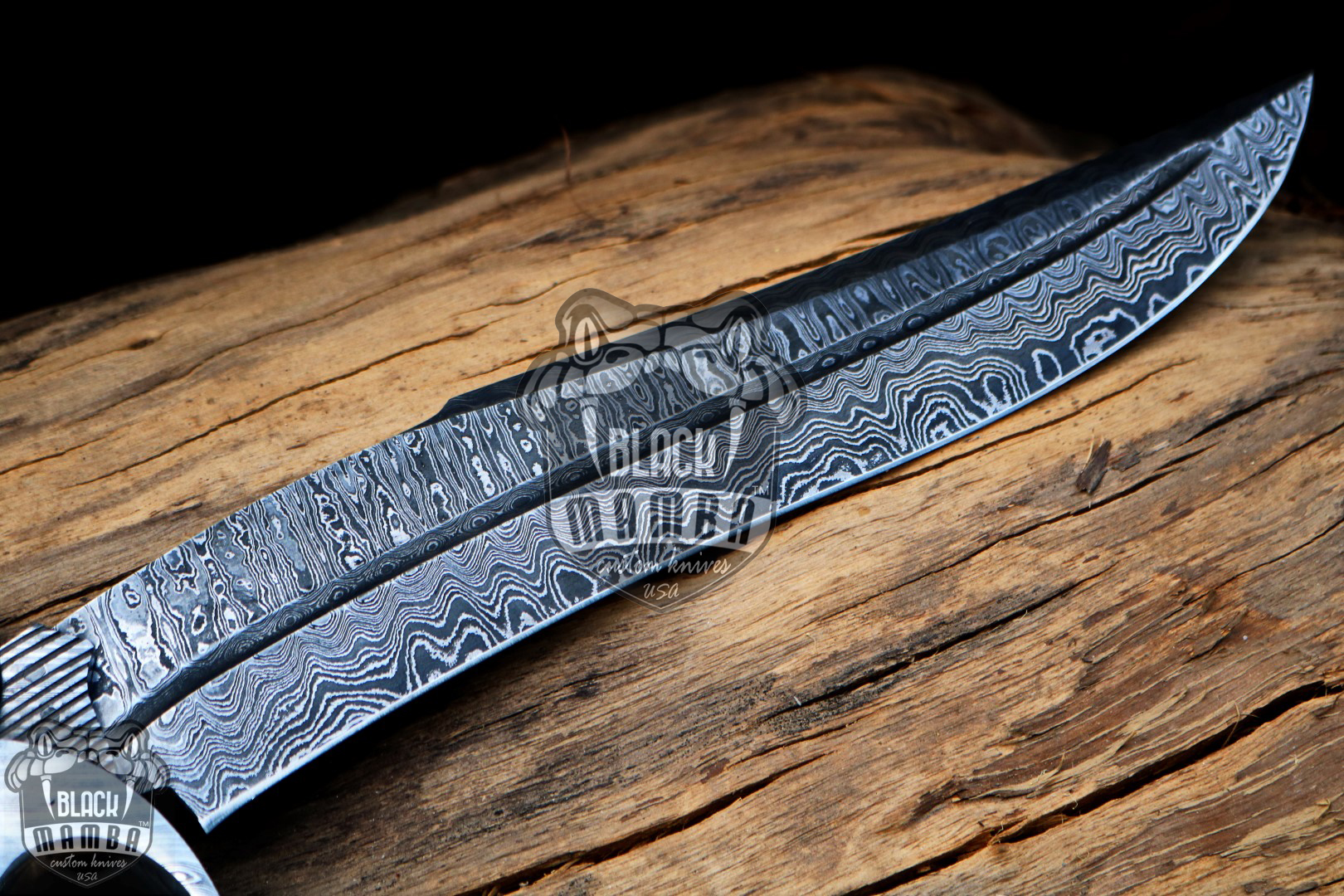
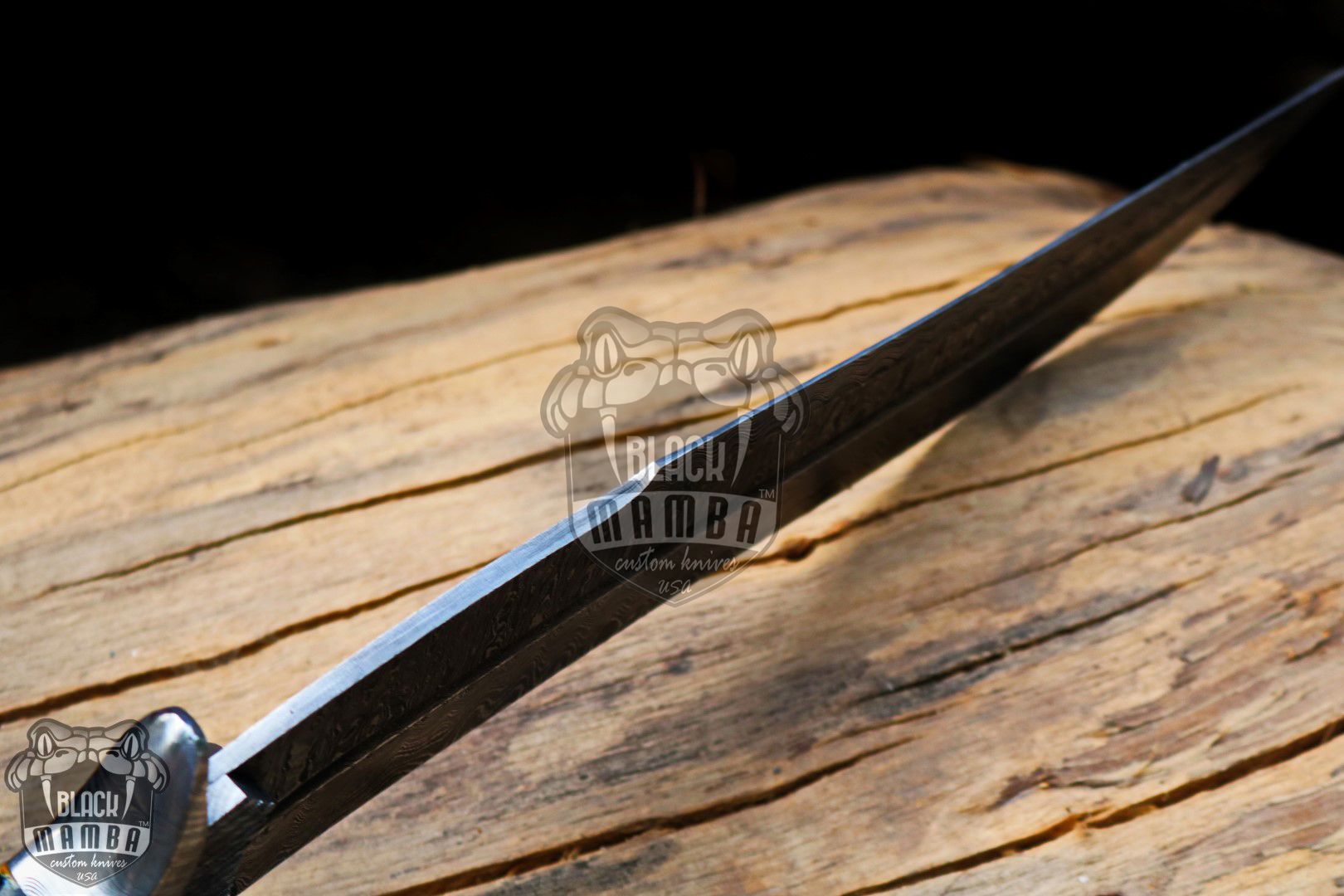
| Steel | 1095 + 15N20 Damascus, 352 layers |
| Hardness | 58–60 HRC, oil tempered |
| Weight | 22.9 oz |
| Handle | stabilized mammoth handle |
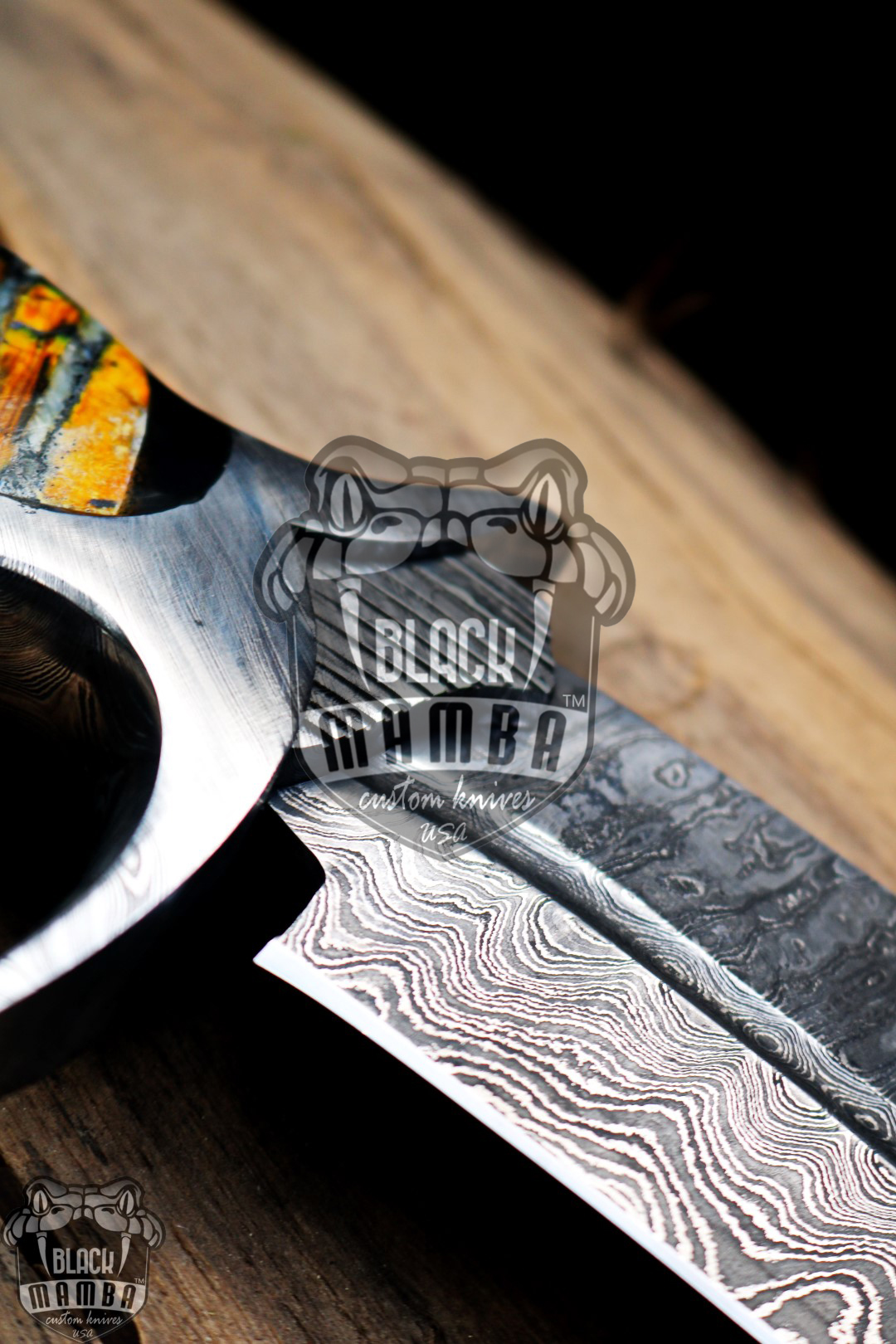
| Pattern | Wind & Mix twist Fire pattern Damascus Blade, Extreme custom Brass File-work |
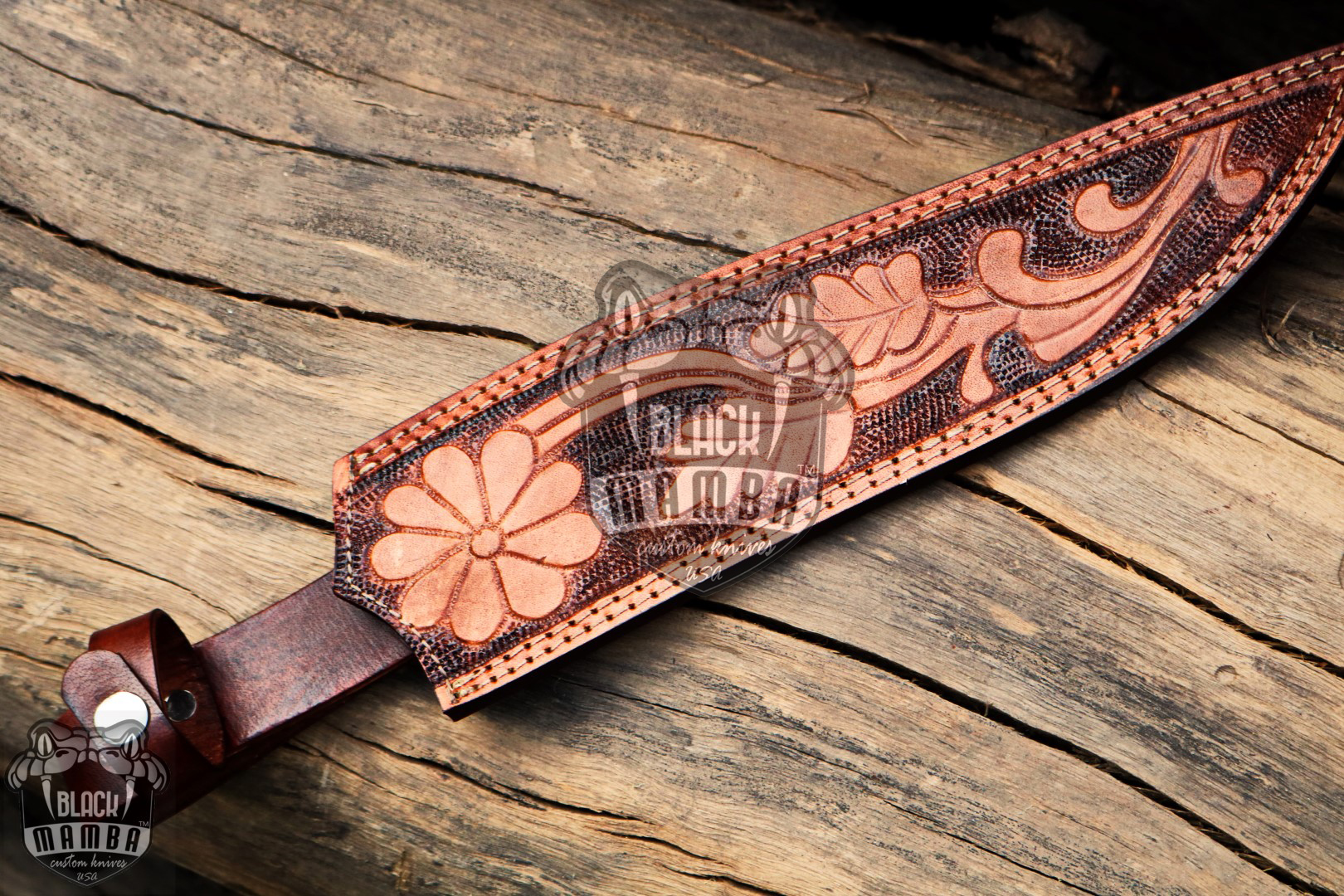
| Included | Hand-stitched leather sheath |
What this one is: a collector’s piece that happens to be functional. Eleven inches of forged edge will clear brush and split camp wood, and at nearly a pound and a half it has the mass to do it. But nobody buys a mammoth-handled bowie in order to abuse it.
Stabilized mammoth: age, color and a legal wrinkle
Mammoth material is fossil ivory or fossil molar, typically tens of thousands of years old, recovered from Siberian and Alaskan permafrost. The color comes from minerals in the ground where it lay, giving blues, ambers and browns, sometimes all three in one piece, and none of it is dyed. Because it is ancient it is also fragile, which is why it is stabilized with resin before being cut into scales. Two things to know before ordering. First, no two pieces are remotely alike, so the photograph shows the model and not your knife. Second, several US states regulate ivory sales in terms broad enough to cover mammoth, and those rules have changed more than once in recent years. Check your own state, and the destination rules if you are shipping this as a gift.
Eleven inches and a pound and a half
Weight forward, long lever, plenty of authority. What you lose is everything fine. You cannot cape or whittle with it, and the tip is no use for delicate work. It is also over the carry limit almost everywhere, so treat it as a home and property knife. If you want a large Damascus bowie you can realistically take into the field, the twelve-inch Yuma at 11.2 oz is half the weight.
Care and display: ivory and steel want opposite environments, which makes this the fussiest knife we sell. The blade wants dry air and a film of oil. The mammoth wants stable humidity, because very dry air over years can open hairline checks in fossil material even after stabilizing. Aim for normal room conditions, wipe the blade with an oiled cloth every month or two, and never store it in the leather sheath, which is damp enough to mark both. How to store knives properly covers racks and display cases.
Questions about this piece
Is mammoth ivory legal? Federally in the US, yes. It is fossil material from an extinct species and not covered by elephant ivory bans. Several states set their own rules, and responsibility for local law is yours.
Will the colors match the photos? No. Mineral staining is unique to each piece and the variation is wide.
Is it worth the price? That depends entirely on whether the handle material means something to you. Our piece on Damascus value works through what you are paying for in a hand-forged blade.
Model: BMK-1004-LQA

Tanguy A. (verified owner) –
Marcus King –
Photos don’t do this knife justice at all.
Tyler Howard –
Ordering again from this shop the second I finish writing this review. Took it out camping right away and it handled everything I threw at it. So worth it.
Ashley Freeman –
Not going to lie. This exceeded my expectations by a lot. Leather sheath is thick and well stitched. Not the cheap stuff you usually get. Black Mamba Knives keeps setting the bar higher with each order. If you’re on the fence just get it. You won’t regret it.