
Description
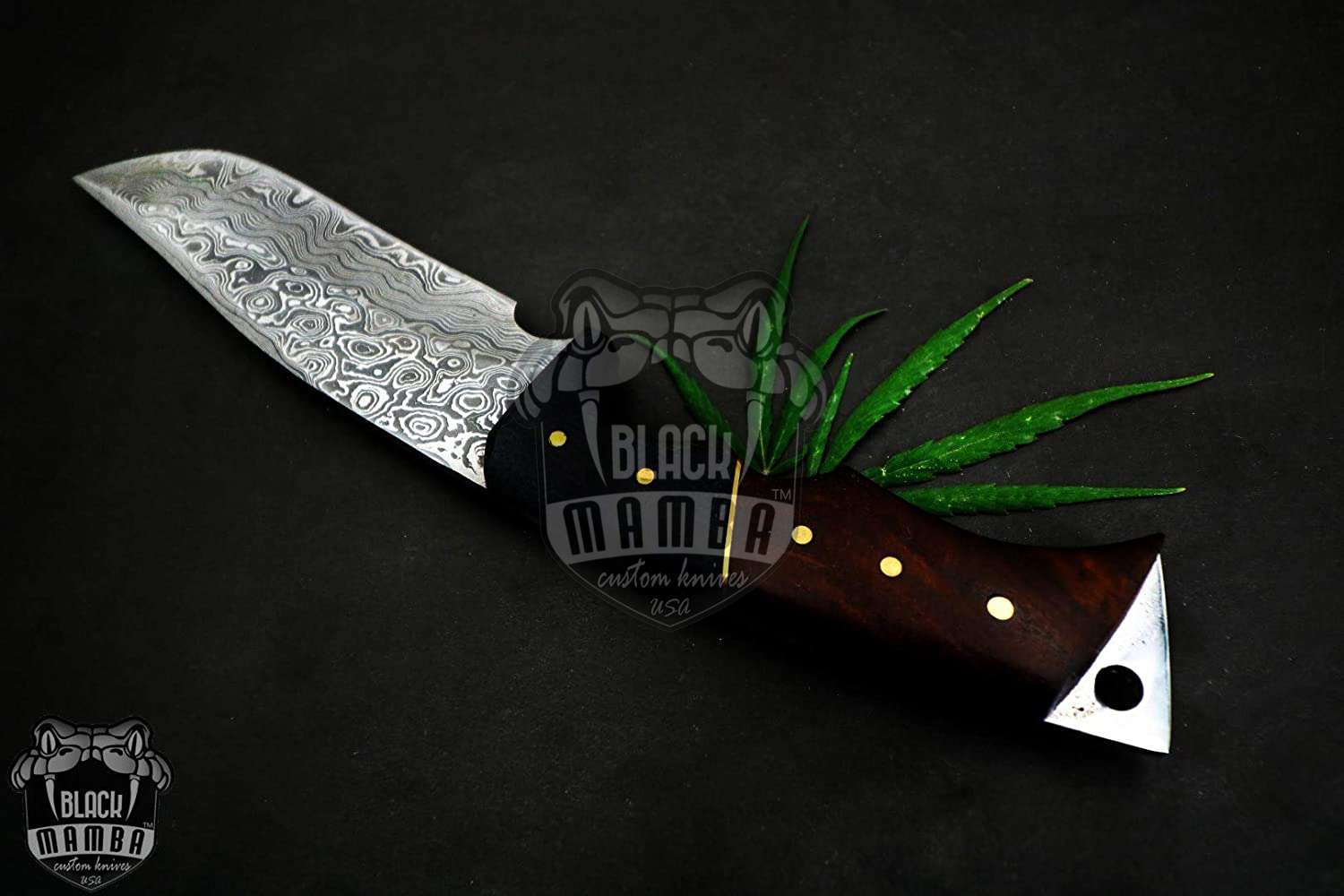
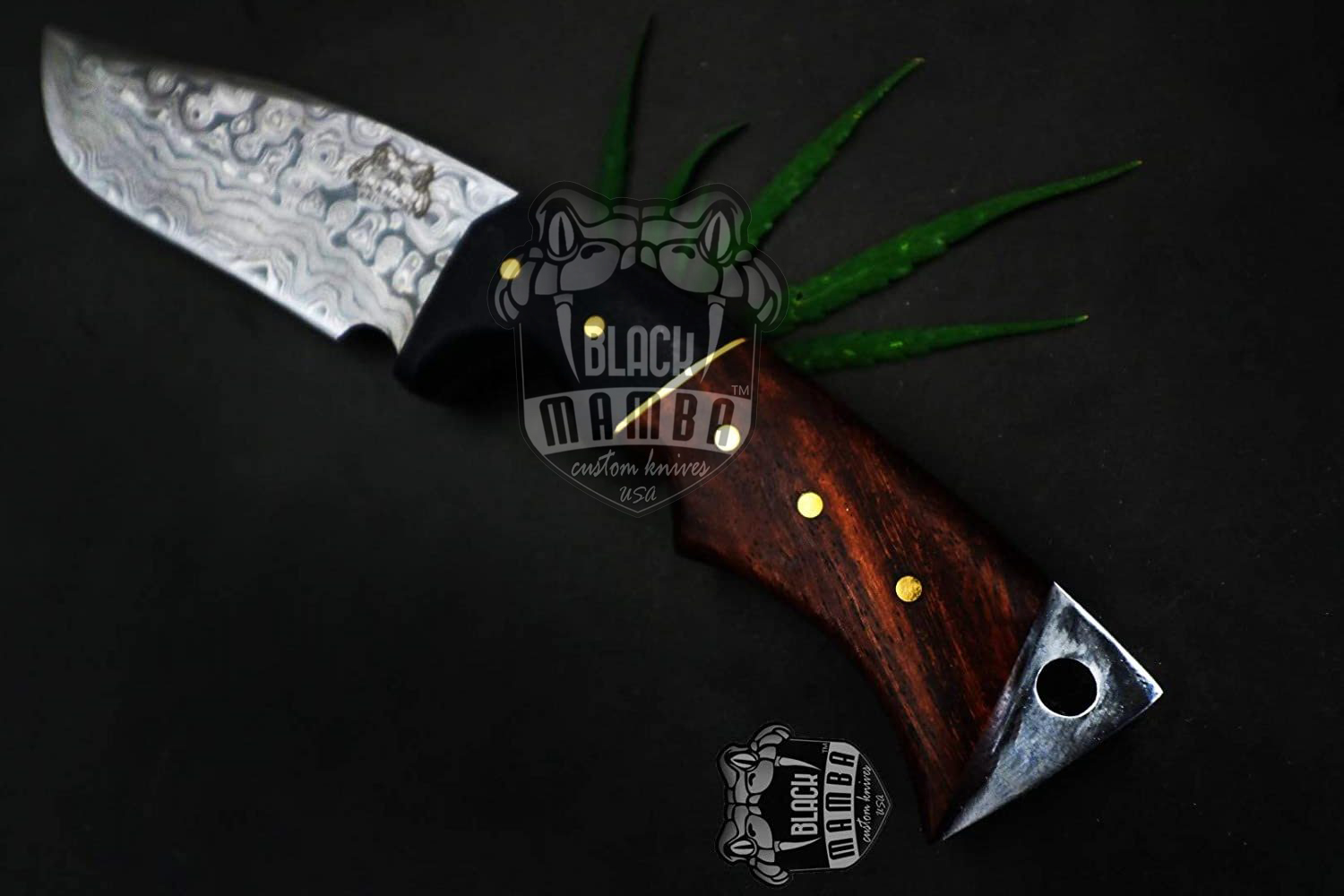
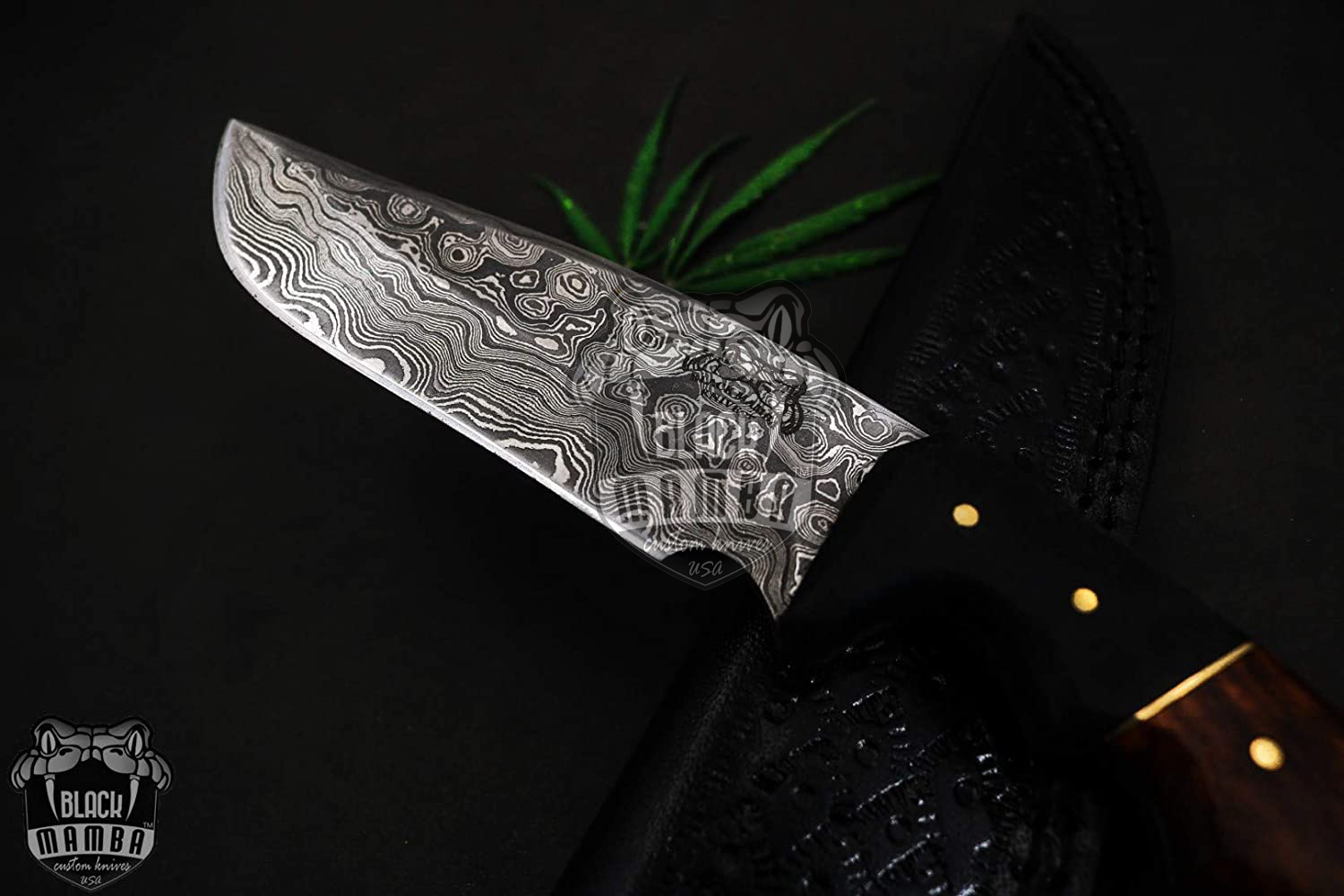
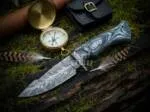
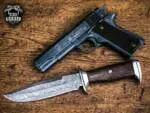
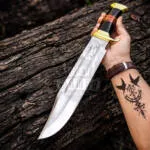
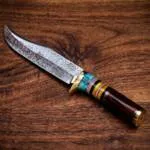
A five inch drop point carrying one of the most legible raindrop patterns in the catalog, finished with brass pins and a polished pommel.
| Overall length | 10 inches |
| Blade length | 5 inches |
| Handle length | 5 inches |
| Steel | 1095 + 15N20 Damascus, 352 layers |
| Hardness | 58–60 HRC, oil tempered |
| Weight | 13 oz |
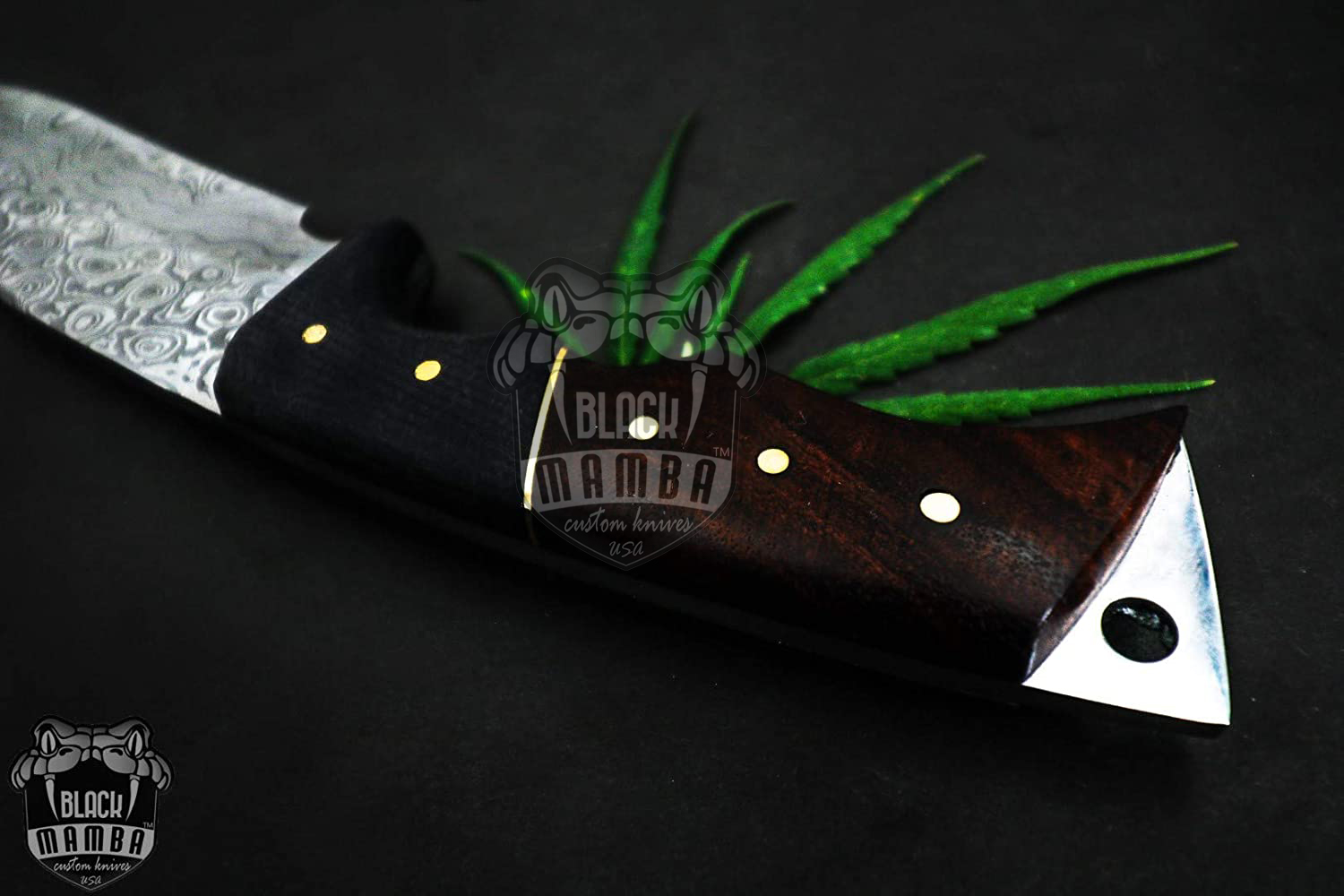
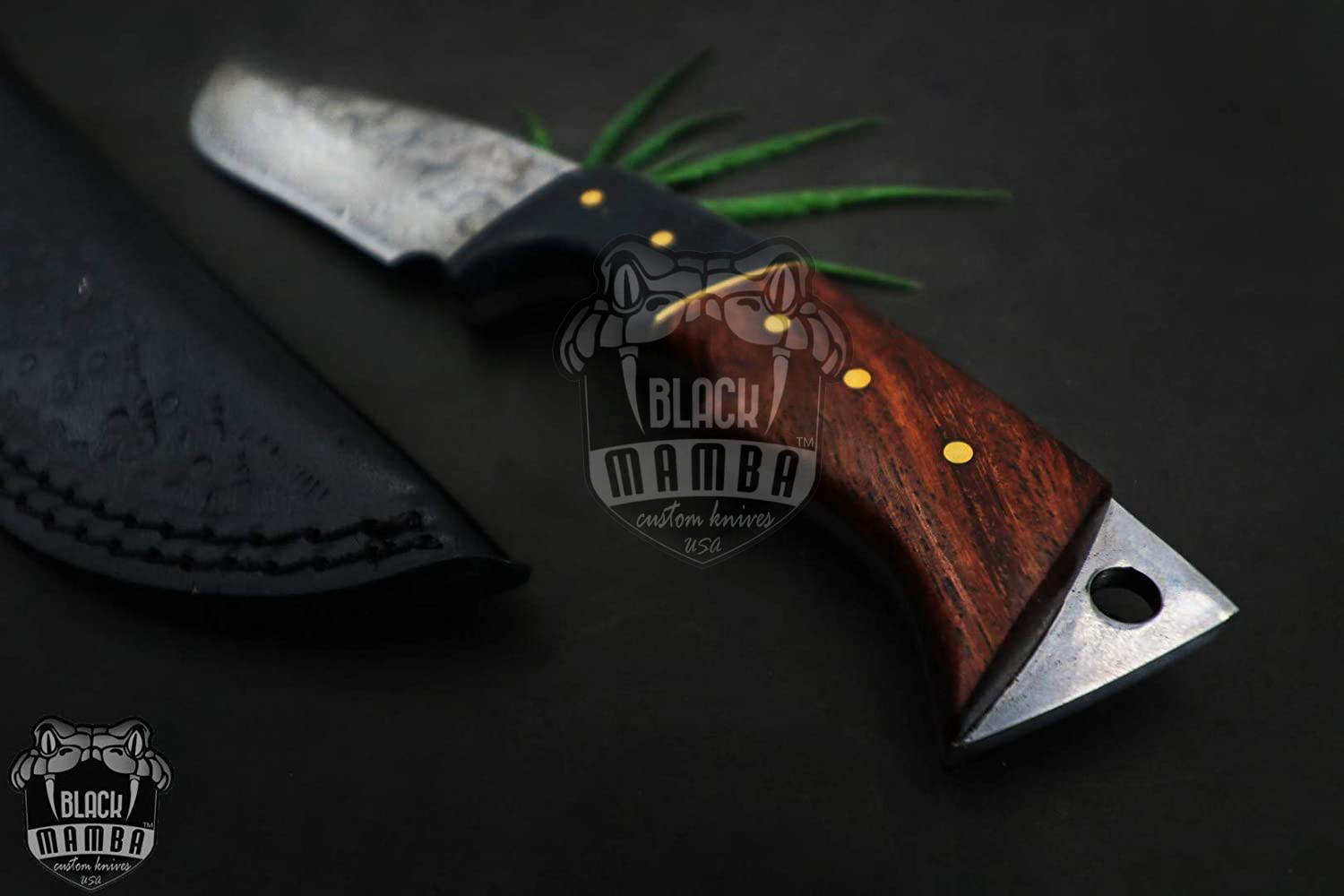
| Handle | Dark wood handle with brass pins |
| Pattern | Damascus Blade |
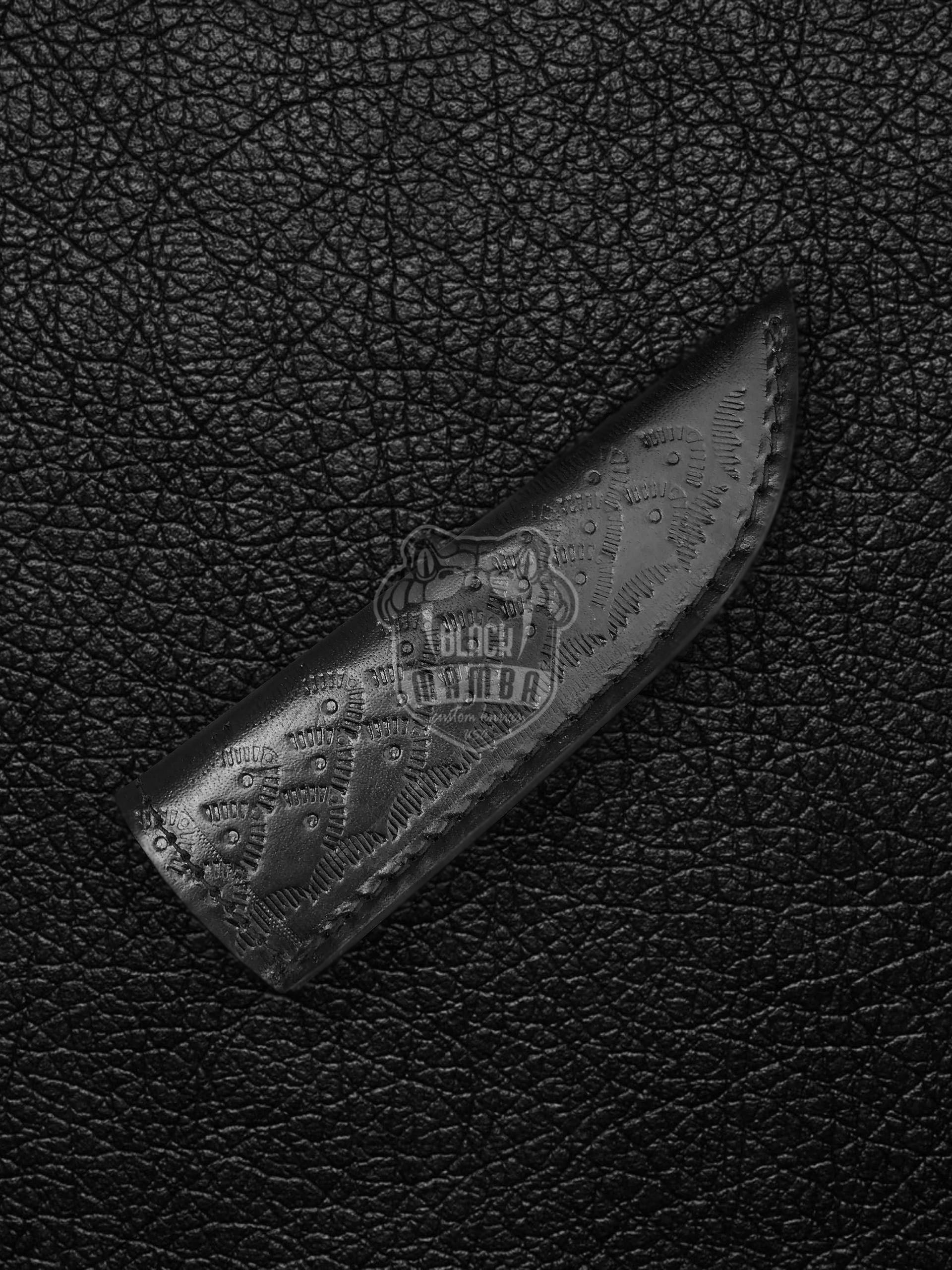
| Included | Hand-stitched leather sheath |
Put it to work on: processing game and general camp tasks. Ten inches overall, five of that blade, thirteen ounces on the belt with a leather sheath.
Five inches, thirteen ounces
The blade is broad and the spine is thick, and the mass sits forward of your hand. That combination makes long draw cuts easy — the knife carries itself through the stroke and you steer it rather than push it. The same mass makes fine work near the tip harder than it would be on a small knife, so this is the tool for the first half of the job rather than the fiddly end of it. Ten inches overall: long enough to need a sheath, short enough to stay clear when you kneel.
Reading the raindrop pattern
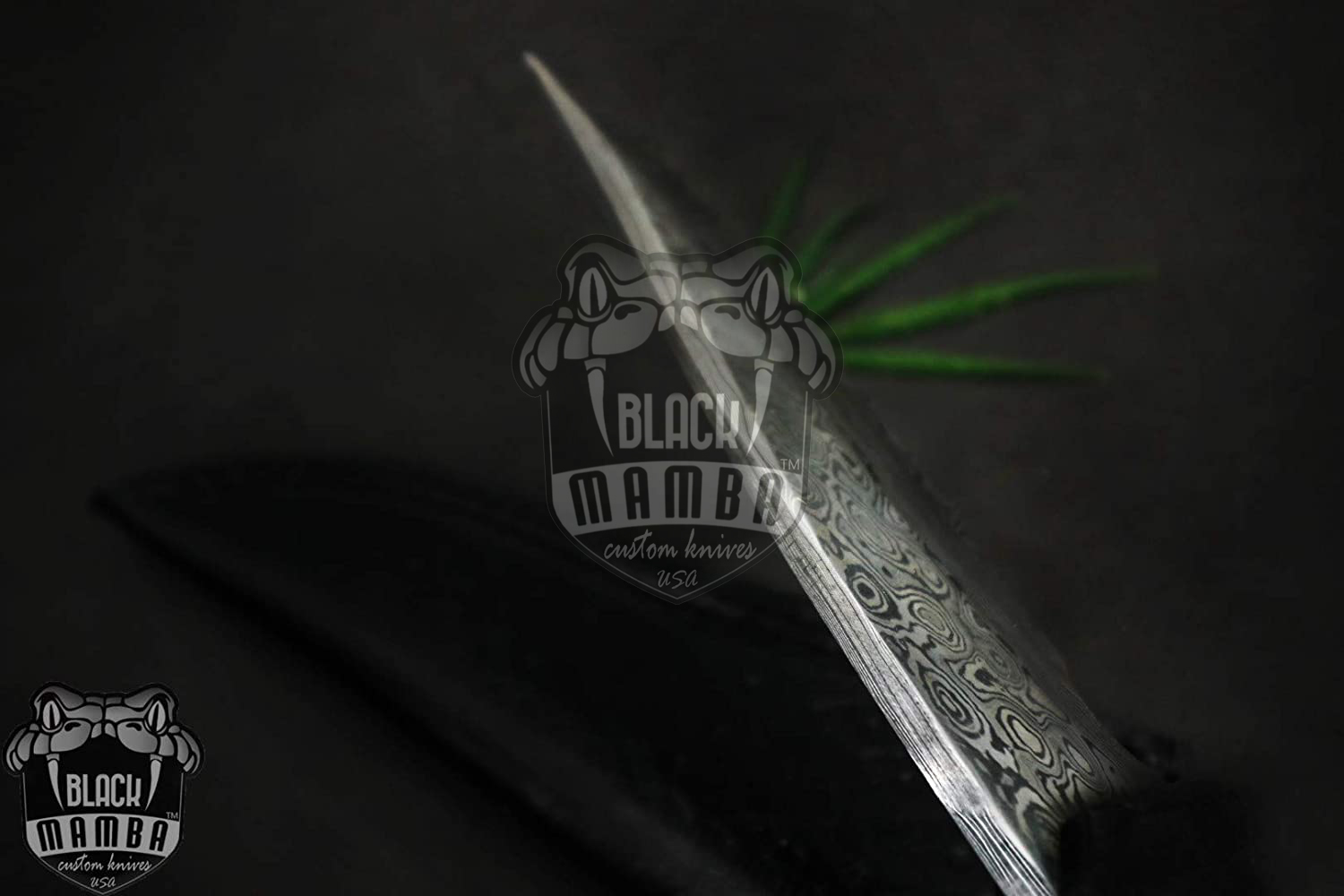
Raindrop is made by dimpling or drilling into the surface of the billet and then forging it flat again. Each mark pulls the layers below it upward into a dome, and when the flat is ground back through those domes you get concentric rings. The rings on this blade are unusually round and evenly spaced, which is the sign of consistent depth across the whole billet. Our guide to spotting a printed Damascus pattern explains what to look for, and the short version is that a real pattern runs into the edge bevel and changes as the grind cuts deeper. A printed one stops at the bevel line.
Fittings
Three brass pins run through the handle, and there is a polished steel pommel at the rear with a lanyard hole through it. Brass pins are finished flush by hand after the handle is shaped, so they read as circles rather than as proud dots. Use the lanyard hole — thirteen ounces is enough weight to hurt if it slips. For a longer blade in the same family, compare the 12 inch Yakushima or the BMK-131 Damascus bowie.
Care: carbon Damascus stains fast, and organic residue is the worst of it — blood is acidic and starts a mark within hours. Wash it, dry it properly including around the pins and the pommel seam where water collects, and wipe a light coat of mineral oil over the steel before storage. Keep it out of the leather sheath between trips; leather holds moisture and its tannins will stain bare carbon steel over a season. Wipe the handle dry rather than soaking it, and never run this knife through a dishwasher.
FAQs
Is the pattern etched on or forged in? Forged in. The layers are welded, drawn and dimpled, and acid at the end reveals what is already in the steel.
Is a sheath included? Yes, a hand-stitched leather sheath.
Will mine look exactly like the photo? The pattern is hand-forged, so it varies piece to piece.
Model: BMK-157


Brian L. (verified owner) –
“The steel knife I ordered here is the sharpest I’ve ever owned. It’s a pleasure to use and has significantly improved my cooking experience. I would recommend it to anyone.”
Daniel L. (verified owner) –
“I’m a professional chef, and this Damascus knife is my secret weapon. It’s reliable, sharp, and beautifully crafted.”
Samantha D. (verified owner) –
“I was searching for a high-quality steel knife, and I’m so glad I found this store. The knife I received is not only functional but also a work of art. It’s a must-have for any kitchen.”
Olivia S. (verified owner) –
“I purchased a Damascus knife as a wedding gift, and the couple loved it. It’s a thoughtful and practical present.”
Patrick S. (verified owner) –
“I’m an avid home cook, and this steel knife is a game-changer. It feels well-balanced in my hand, and the precision it offers is unparalleled. I can’t imagine my kitchen without it.”
Jackson G. (verified owner) –
“The Damascus knife I received is a true work of craftsmanship. It’s sharp, durable, and a pleasure to use.”