


Description
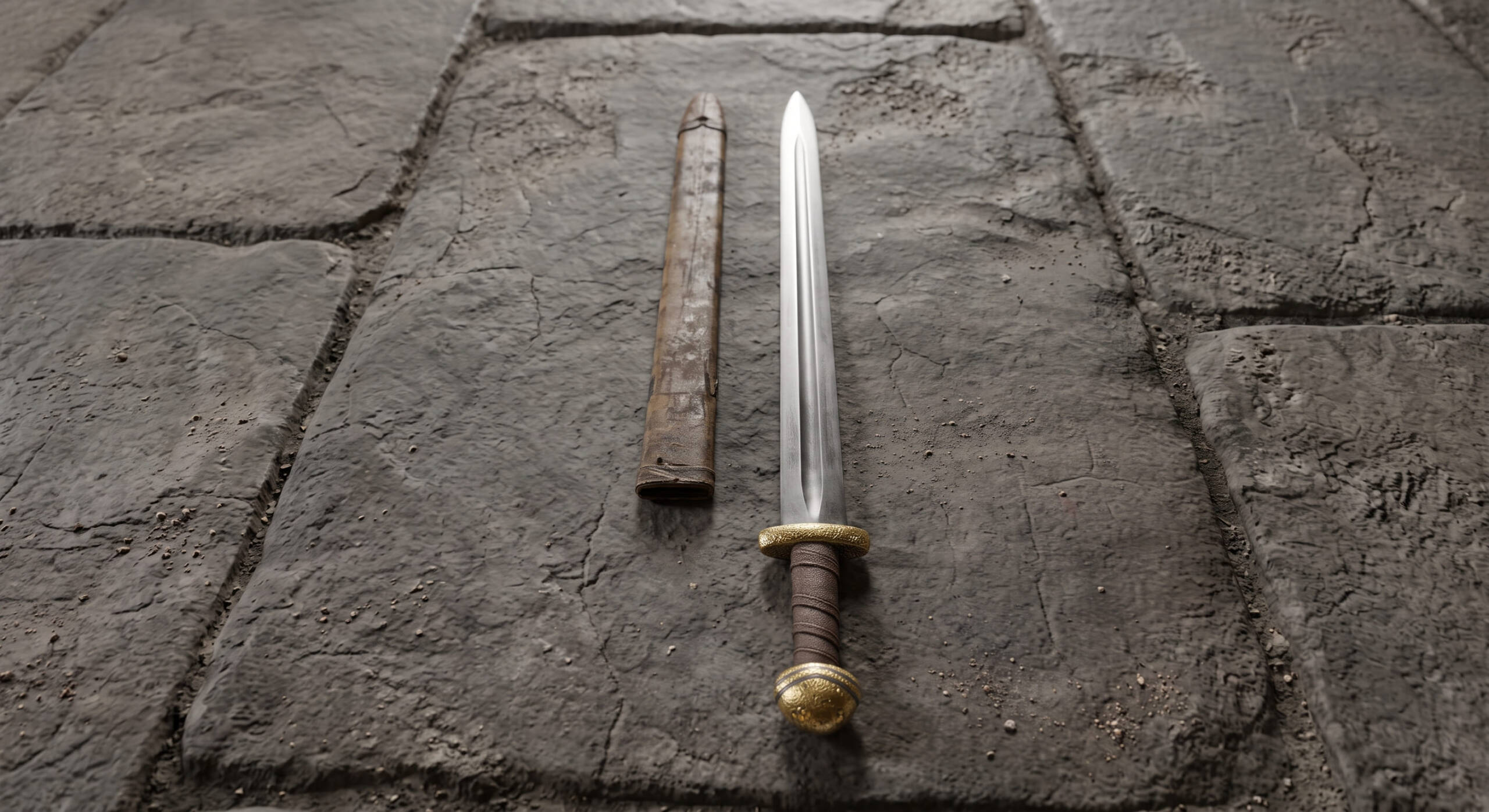
Sea Wolf is a Viking-age sword and it is the plainest thing in this group, which is the point. Thirty inches, straight, double edged, with a broad shallow fuller down the middle of each flat. The finish is hand rubbed to a matte satin rather than polished — the way a working blade of the period would have looked once it had been used.
The grip is wrapped in brown leather over a short one-handed core. A thick brass crossguard sits at the front and a heavy brass brazil-nut pommel closes the back. It ships in a wooden scabbard wrapped in leather, which is the correct period construction rather than a modern all-leather sheath.
| Overall length | 30 inches |
| Blade | Straight, double edged, broad central fuller |
| Steel | D2 tool steel |
| Finish | Hand rubbed matte satin |
| Grip | Brown leather wrapped |
| Guard | Short thick brass crossguard |
| Pommel | Heavy brass brazil-nut |
| Included | Leather wrapped wooden scabbard |
Intended for: anyone interested in the Norse period who would rather have the real shape than a fantasy one. There are no runes, no wolf heads and no antler on this sword. It is what an archaeologist would recognize: a straight, fullered, one-handed blade with a heavy pommel and simple brass furniture.
What the fuller is actually doing
People call it a blood groove. It is not. The fuller is structural — grinding a channel down the center removes steel from the middle of the cross-section, where it contributes least to stiffness, and leaves the strength concentrated at the edges and spine. You get a blade that is lighter and better balanced without losing rigidity, which on a sword you swing one-handed all day matters. Parts of a blade explained names the rest.
The pommel and where it balances
The brazil-nut pommel is a lump of brass, deliberately. A one-handed sword used with a shield needs its balance point close to the hand so the wrist can turn it quickly, and mass behind the grip pulls the balance back toward the guard. Every Viking-age sword solves that problem the same way, which is why period pommels are consistently large and consistently heavy.
Ground by hand, not stamped
The blade is ground and the fuller cut by hand, so the fuller wanders very slightly and the satin has direction to it. That is normal on a hand-finished sword.
Care and storage: D2 resists corrosion better than plain carbon but is not stainless, so wipe the blade after handling and keep a light oil on it. Leave the leather grip wrap alone unless it dries out, in which case a little conditioner is enough. Store the sword out of the scabbard — a wooden, leather-wrapped scabbard holds moisture, and steel left inside will spot.
FAQs
Is the pommel solid brass? Yes, as is the crossguard.
Can I use it two-handed? The grip is sized for one hand, in period style. You can get a second hand onto the pommel but it is not built as a two-hander.
Is the scabbard wood or leather? Both — a wooden core wrapped in leather, which is how they were made.
Is it machine made? No. The blade is ground and the fuller cut by hand, so the satin has direction to it; hand-forged versus factory made covers what changes.
What if I want the two-handed version? The Ironcross European longsword is 36 inches with a two-handed grip.
Make it a gift: add laser engraving at checkout. Every order ships from Memphis, TN with a lifetime warranty — backed by 2,000+ verified customer reviews.
Model: BMK-1135
Reviews
There are no reviews yet.