
Description
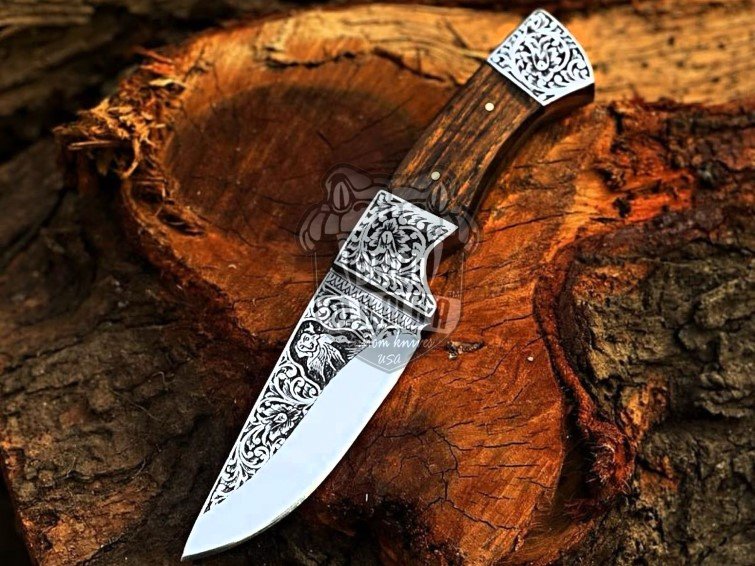
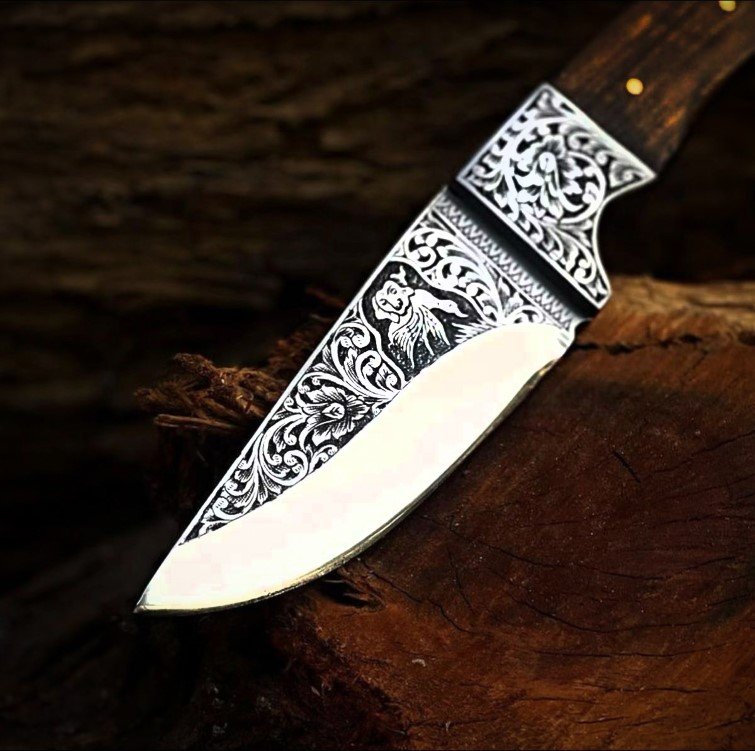
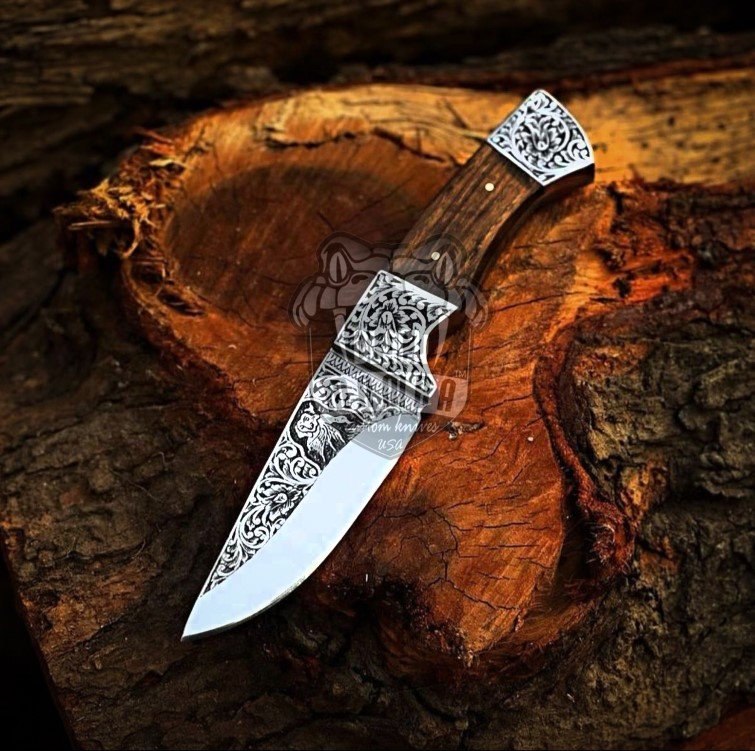
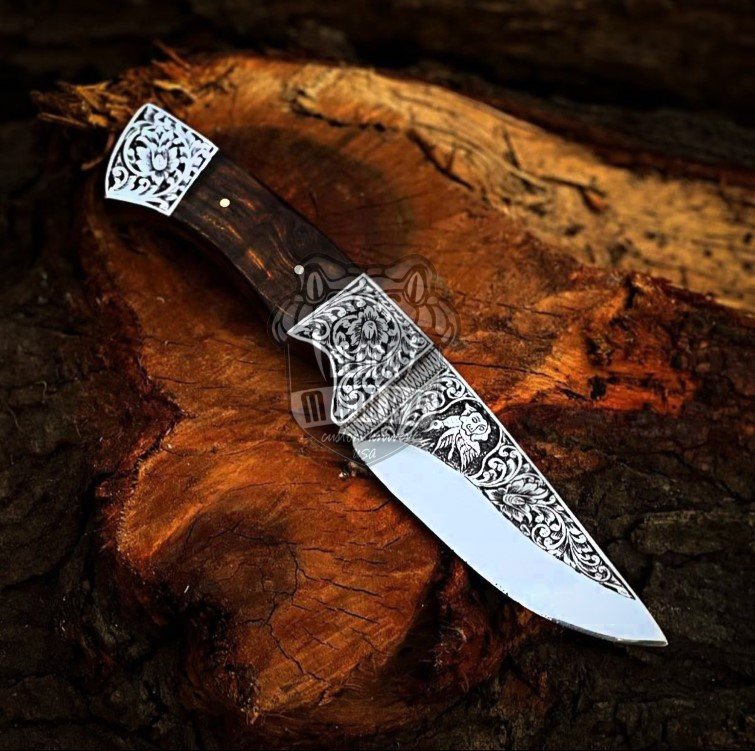
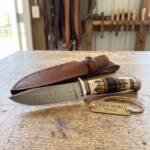
Hand-cut acanthus scrollwork runs across the bolster, the pommel cap and the flat of the blade.
| Overall length | 6.5 inches |
| Blade length | 3 inches |
| Handle length | 3.5 inches |
| Steel | Hand-forged high-carbon steel |
| Weight | 10 oz |
| Handle | Green Pakka Wood |
| Included | Hand-stitched leather sheath |
Best suited to: a hunter who wants a small, controllable knife and a collector who wants engraving done by hand. Three inches of blade is plenty for caping and detail work, and short enough that the tip goes where you put it.
Care: Dry it after use, then oil it monthly with a rag rather than a spray, so the oil gets worked into the cut lines of the engraving. This is hand-forged high-carbon steel. Standing water in a deep scroll is what starts a spot.
FAQs
Is the engraving done by hand? Yes. The scrollwork on the bolster, the pommel and the ricasso is cut with a graver, not stamped or laser marked. That is why the depth varies across the pattern.
How big is it? 6.5 inches overall, from a 3 inch blade and a 3.5 inch handle. It weighs 10 oz.
Can I add my own engraving? Yes. Laser engraving is a paid option at checkout, done here before the knife ships.
What acanthus scroll is
The pattern is the classic acanthus leaf, the same motif that runs through European gun engraving and silverwork. It is cut with a graver pushed through the steel by hand, one line at a time, and then the background is punched down so the leaves stand proud. It takes hours per surface. Look at where the scroll turns and you can see the tool marks a machine would not leave. The punched background is what makes the leaves read at arm’s length. Without it the cuts would vanish into the polish under most lighting.
The bolster and pommel
Both ends of the handle are capped in engraved steel, which does two things. It protects the wood at the points that take the knocks, and it balances the knife back toward your hand. On a three inch blade that rearward balance is what gives you tip control. Both caps are fitted to the wood rather than the wood to the caps, so the seam runs tight the whole way round with nothing filling it. On a knife carrying engraving at both ends, a gap anywhere along that line would be the first thing anyone saw. Our page on knife anatomy explained names each part if the terms are new.
Hand work versus machine work
There is nothing wrong with a machine-made knife, but the two are not the same object and they do not age the same way. A cut line deepens and softens with polishing over years. A stamped one stays exactly as it left the press. Our comparison of hand forged versus factory knives sets out the difference honestly. For a working hunter with the same standard of finish, see the Vermillion Coil gut hook hunter.
Model: BMK-670
Reviews
There are no reviews yet.