


Description
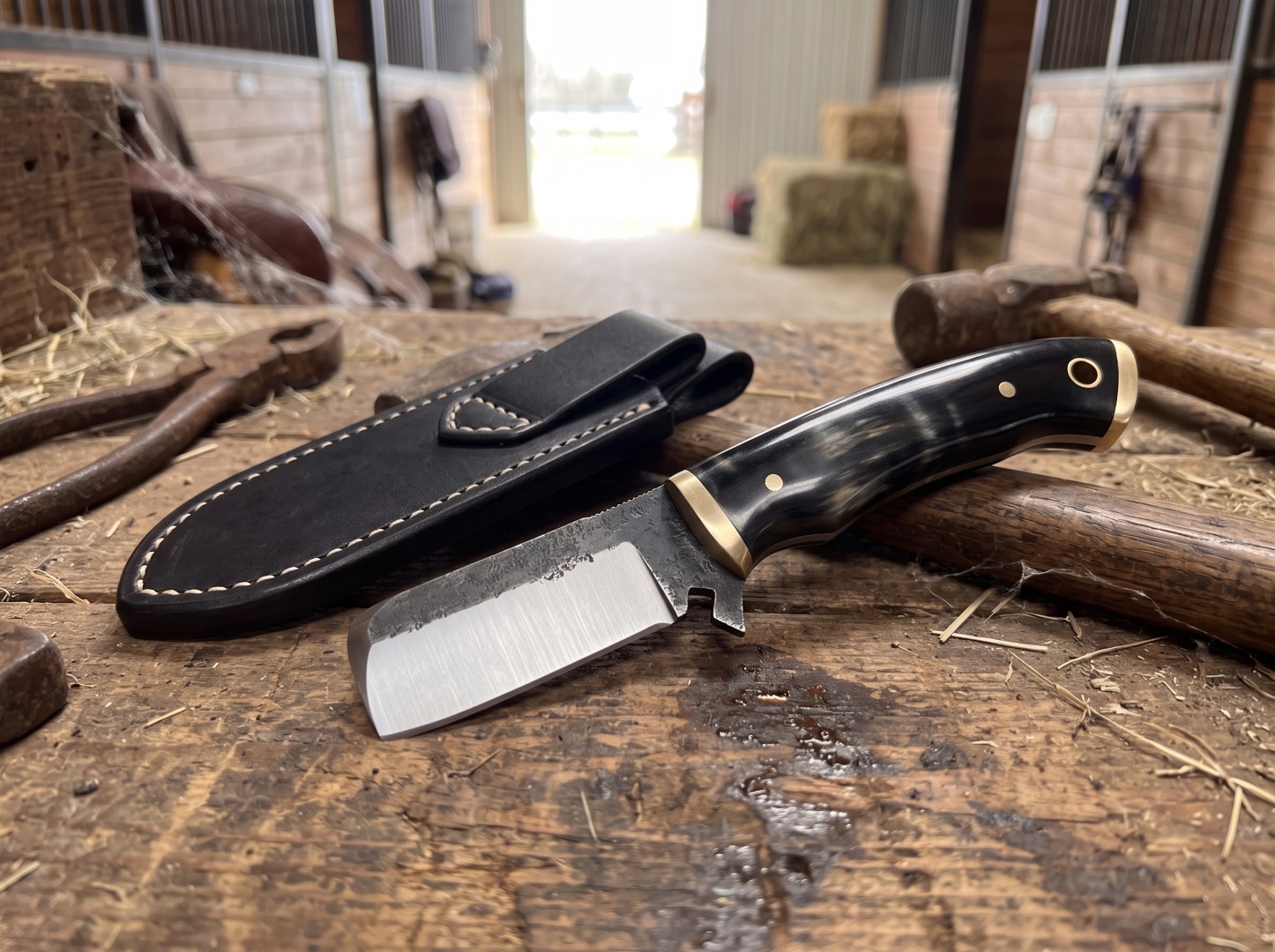
Forge Shadow is the hand-forged one and it does not hide it. The blade is high carbon spring steel left with its dark forge scale on the flats and the hammer marks still visible across the surface. Only the bevel is ground and polished, so a bright edge runs along the bottom of a black, textured blade.
It is also the smallest knife in this family: seven inches overall with a three inch blade. The handle is buffalo horn between a solid brass front bolster and a brass butt cap with a lanyard hole, pinned with brass.
| Overall Length | 7 inches |
|---|---|
| Blade Length | 3 inches |
| Handle Length | 4 inches |
| Blade Steel | High carbon spring steel, hand forged |
| Blade Finish | Dark forge scale with visible hammer marks, polished bevel |
| Blade Style | Sheepsfoot bull cutter with notched choil |
| Handle Material | Buffalo horn |
| Bolsters | Solid brass front bolster and brass butt cap with lanyard hole |
| Fittings | Brass pins |
| Tang | Full tang |
| Sheath | Handmade black leather belt sheath with contrast stitching (included) |
For the buyer who: wants to see that a person made it. Every other knife here hides the process. This one shows it — the scale, the hammer texture, the single bright bevel. Beside a mirror-polished blade it looks like a different trade entirely.
What forge scale actually is
Heat steel to forging temperature and it reacts with oxygen, growing a hard black iron-oxide skin. Most makers grind that off to get to clean steel. Leaving it on is deliberate: it is genuinely from the fire, and cannot be applied afterwards. Scale is not a protective coating, though — it is thin, wears off high points, and the steel underneath needs the same care as any carbon blade.
Spring steel, and why it is different
Spring steel is high carbon steel heat treated toward toughness rather than maximum hardness — the property you want in something that bends and comes back. In a knife that means an edge slightly softer than a tool steel like D2, easier to sharpen, and far less likely to chip on bone or a staple.
Buffalo horn between brass
The horn is dark and streaked with lighter bands, and the two brass fittings frame it at both ends. Horn is a natural material, so the pattern varies from piece to piece and no two handles read the same. It warms in the hand faster than any of the synthetics used elsewhere in this family, which is part of why it has stayed on working knives for so long. It does not like being left somewhere very dry or very hot, and it should never be soaked. The brass will darken as it is handled; some owners polish it back, others let it go.
What it asks of you: this is plain high carbon steel. It will develop a patina and it will rust if you neglect it. Dry it the moment you finish using it and keep oil on the bevel. If it does spot, removing rust from a knife covers the fix. Wipe the horn dry; do not soak it.
FAQs
Why is this one smaller? Half an inch shorter overall than the rest of the range, and it carries a little easier.
Will the hammer marks wear away? The texture is in the steel, not on it. The scale coloring thins at contact points over years.
Is a patina a problem? No. A stable gray patina protects the steel. Red rust is the one to deal with.
How is this different from a production blade? Hand-forged versus factory made is the whole answer.
What is the polished opposite? The Chrome Wrangler in mirror-polished D2 is the same pattern finished the other way entirely.
Make it a gift
Tell us at checkout that this one is a gift and we will pack and ship it gift-ready. Every knife leaves our Memphis, Tennessee workshop with a lifetime warranty against defects in materials and workmanship, backed by over 2,000 verified customer reviews.
Model: BMK-1141


Susan Richardson –
This ring is nice but not quite perfect.
Emily Hernandez –
No regrets on this purchase at all. Pattern in the metal catches the light beautifully. This is the kind of purchase that makes online shopping worth it.
Katherine Cox –
This ring has already earned a permanent spot in my collection.
Caleb Martin –
Bought this on a whim and it turned out to be one of my favorite purchases in ages. Exactly the weight and finish I wanted. Feels substantial without being bulky. This is exactly why I keep coming back to this company.
Douglas Robinson –
My whole family passed this ring around at dinner just to look at it. This one’s a keeper for sure.
Wayne Adams –
It’s alright. Not great not bad. Made in the USA in Memphis, shipped worldwide, arrived in a reasonable time. It’s alright. A bit plainer in person than the photos suggested. Wouldn’t say no to it but wouldn’t rave about it either.
Zachary Campbell –
Honestly one of my better purchases in a while. Fits perfectly and the damascus pattern looks amazing in person. Can’t say enough good things about this purchase.