


Description
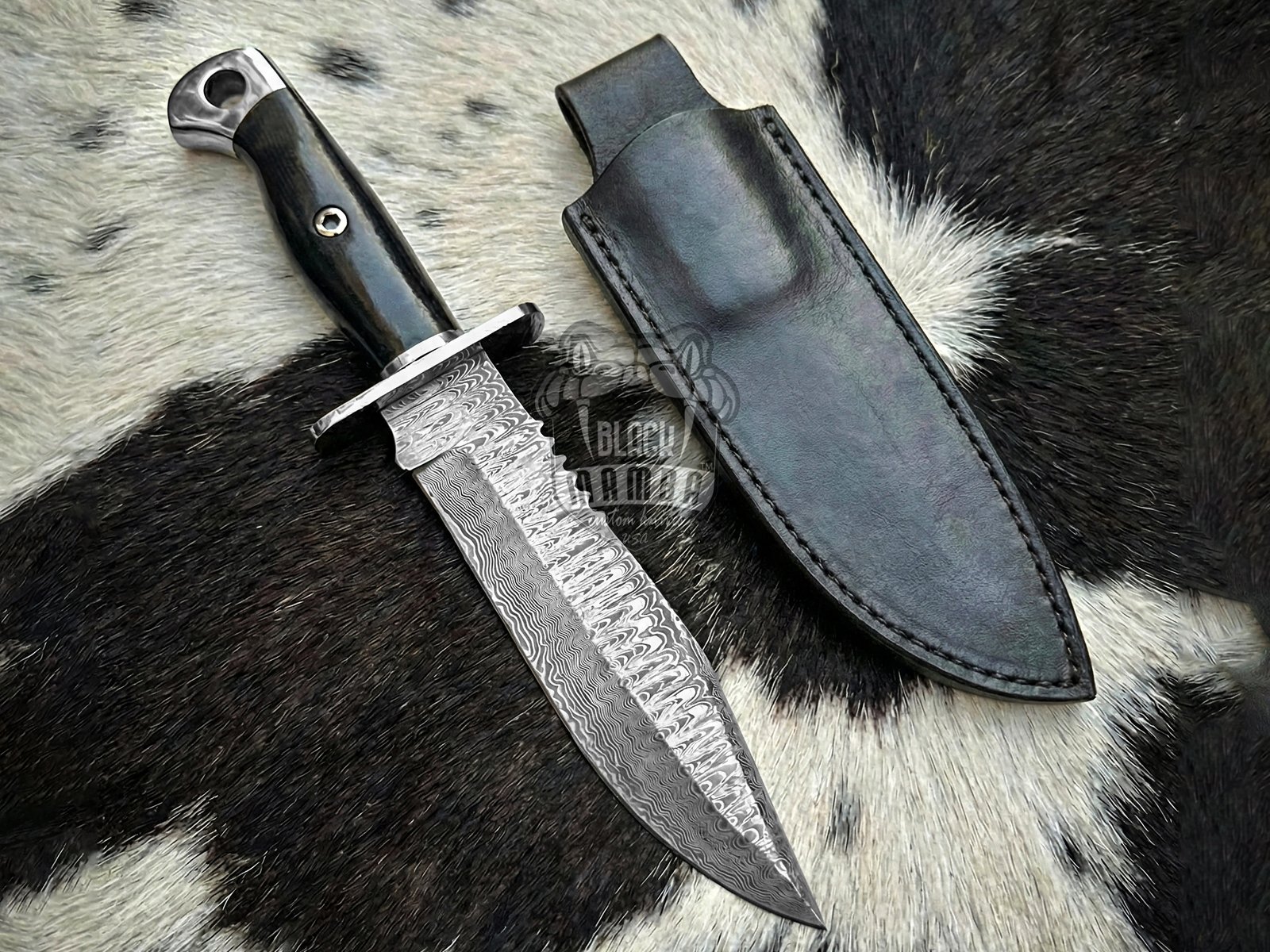
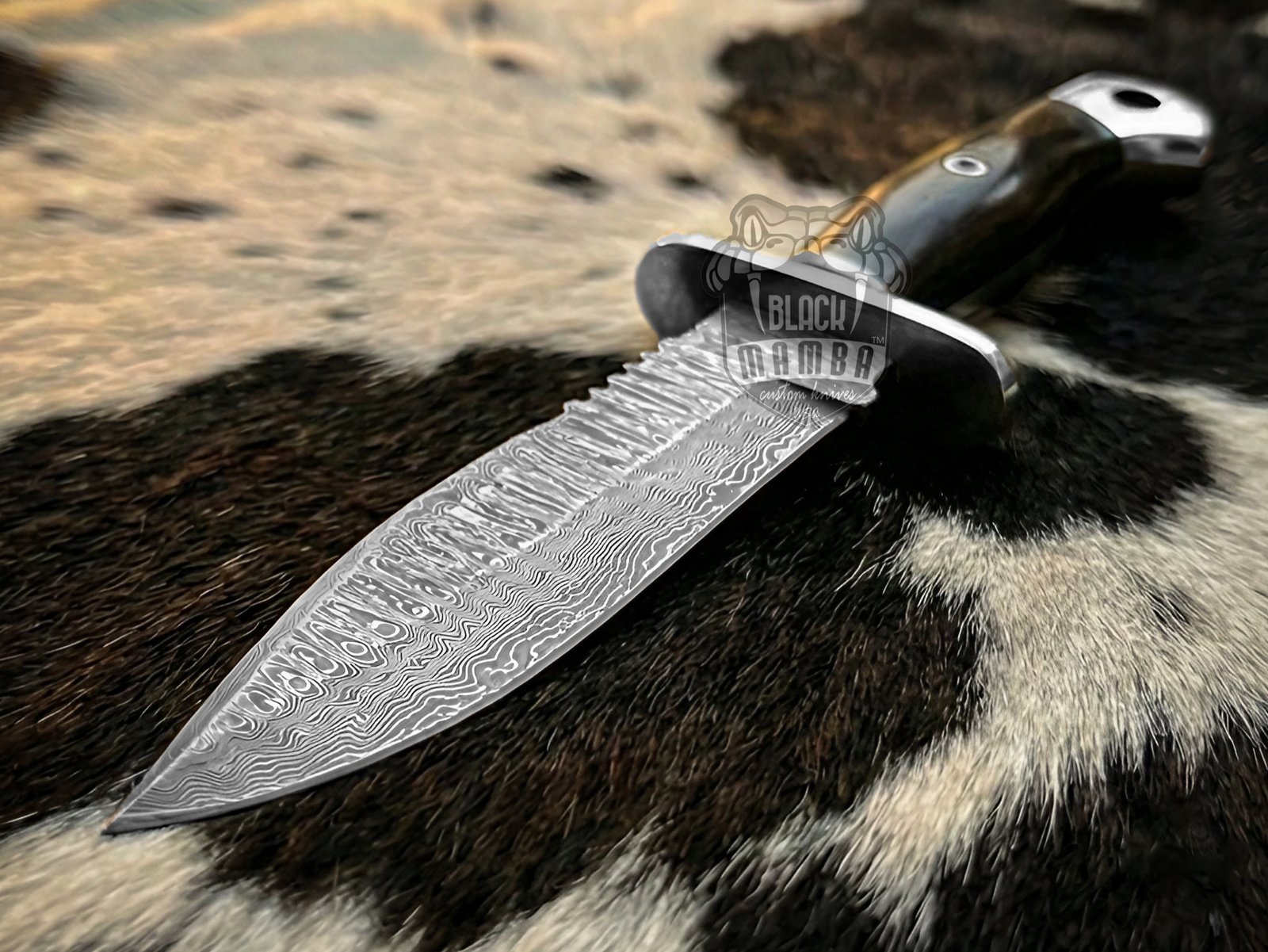
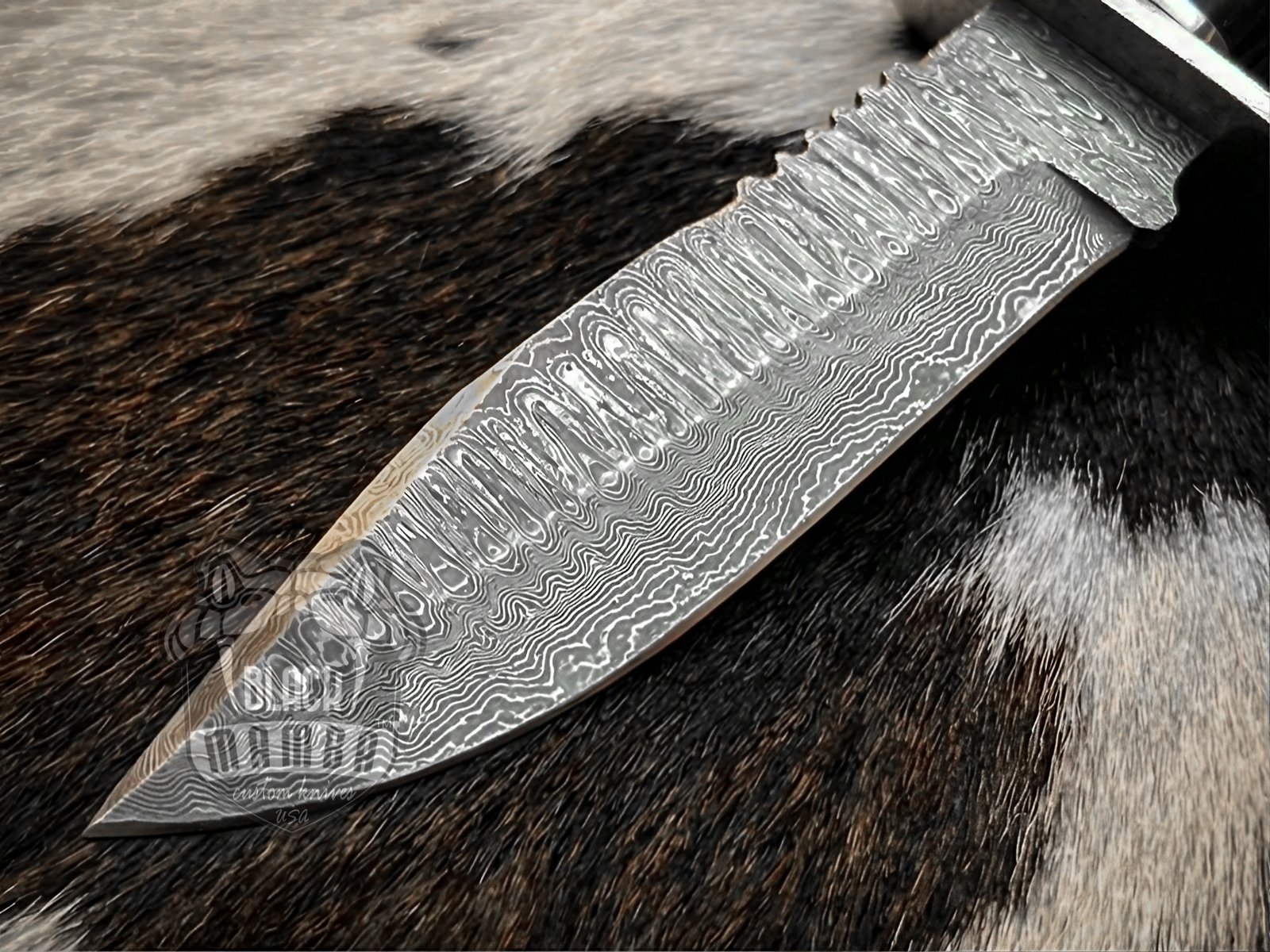
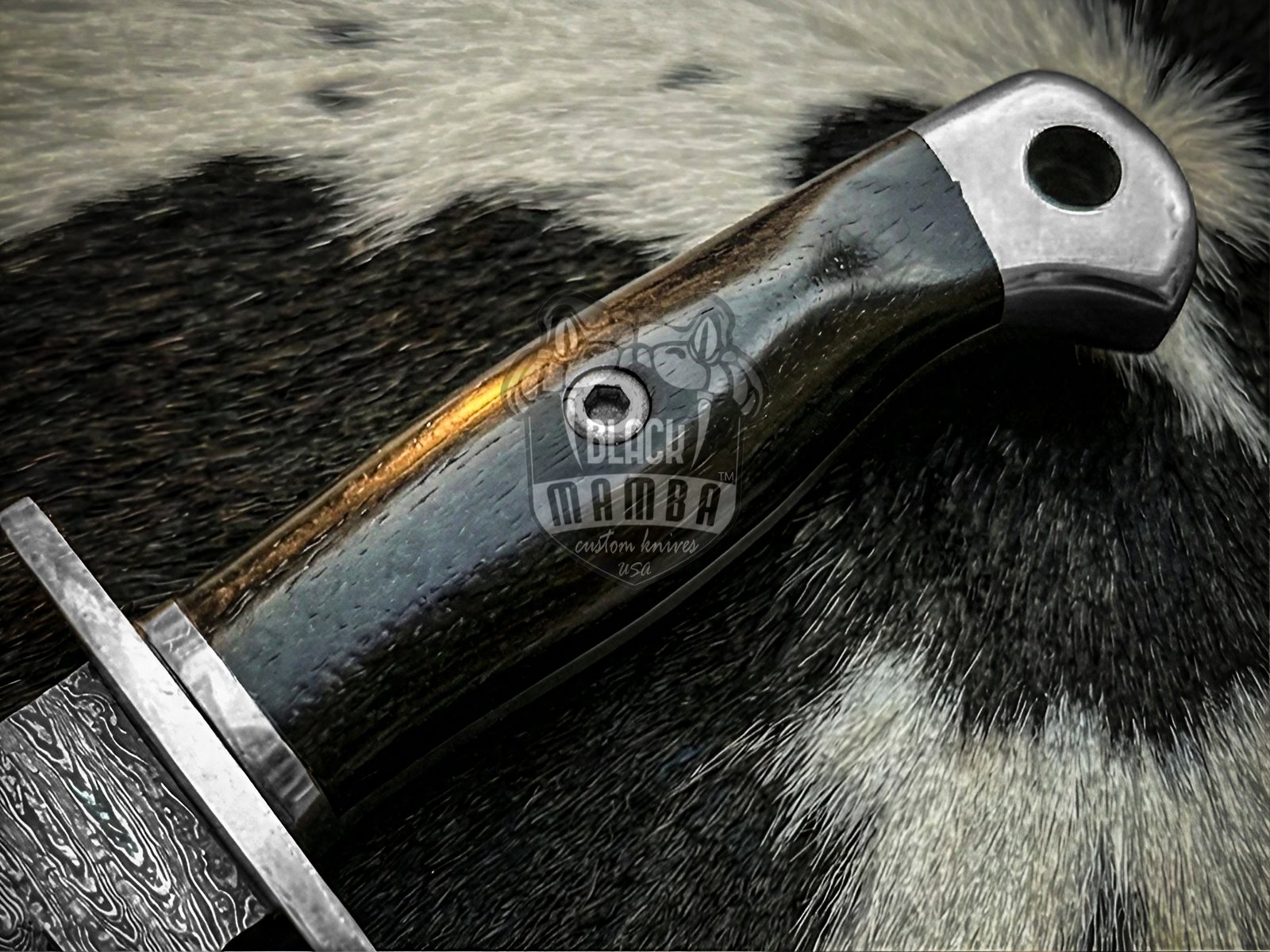
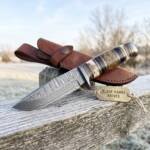
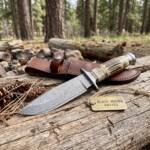
The Damascus on this one runs as tight parallel waves along the flat and then breaks into a ladder pattern where the swedge is cut into the spine, which is a good demonstration of how much the surface geometry changes what the same billet shows you.
| Overall length | 12 inches |
| Blade length | 7 inches |
| Handle length | 5 inches |
| Steel | 1095 + 15N20 Damascus |
| Hardness | 58–60 HRC, oil tempered |
| Handle | Natural Buffalo Horn with Steel Bolster |
| Included | Hand-stitched leather sheath |
Best suited to: hunting and heavy field use. Seven inches of blade with a full steel crossguard is more knife than most people carry, and the guard is the tell — it is there because this is a knife you use with force, wet hands and gloves on, and the guard is what stops your hand from sliding forward.
Buffalo horn, and how it differs from wood
The handle is natural buffalo horn, deep glossy black, secured with a single steel rivet through the middle. Horn is denser than any wood used for handles and it does not absorb blood or moisture the way an unsealed wood scale does, which is the practical reason it has been used on hunting knives for centuries. It also does not swell, so the fit against the bolster stays tight through wet seasons.
The fittings do specific jobs
There is a polished steel bolster where the handle meets the blade, a full crossguard forward of it, and a shaped steel pommel cap at the butt with a lanyard hole through it. The pommel is not decorative — on a knife this size it balances the mass of the blade back toward your hand, and the hole takes a wrist loop so a wet knife does not end up in the leaves.
The point is a spear, not a drop
The tip sits close to the centerline of the blade rather than dropped below it, with the swedge ground back along the spine. That gives you a stronger tip for prying and a more direct thrust, at the cost of a little of the skinning belly a drop point would offer.
Care: horn is the material that will surprise you if you ignore it. It is keratin, and it does not like extremes — leave this knife on a radiator, in a hot car or in a dry-heated room all winter and the horn can develop hairline checks along its length. Keep it at normal room humidity, wipe the handle with a slightly damp cloth rather than washing it, and put a little neutral wax on the horn once or twice a year to keep its gloss. The blade wants the usual: dry after use, thin film of oil, stored outside the leather.
Questions about this knife
What is the guard actually called? The crossguard, and the piece behind it is the bolster. Knife anatomy explained names every part on a knife like this one.
Is seven inches too much blade for field dressing? For the opening cuts, no. For caping, most hunters prefer something shorter. Our Damascus hunting knife guide covers matching length to the job.
Will the horn crack? Not under normal use and normal indoor conditions. It cracks from heat and from being dried out fast, not from work. If you want a skinner instead, the Azure Matrix skinner trades the guard for belly.
Model: BMK-720
Kenneth Jackson –
This knife punches way above its price point. 10/10 would buy again.
Thomas Young –
Best knife I’ve ever owned. Hands down. Proud to support American made goods out of Memphis with this purchase. Blade geometry makes it glide through cuts with barely any effort. No hesitation recommending this to anyone looking.
Jack Collins –
This knife completely won me over the moment I picked it up. Steel has a gorgeous pattern that looks different in every light. Edge retention has been great even after regular use in the field. This seller clearly takes pride in their work.