
Description
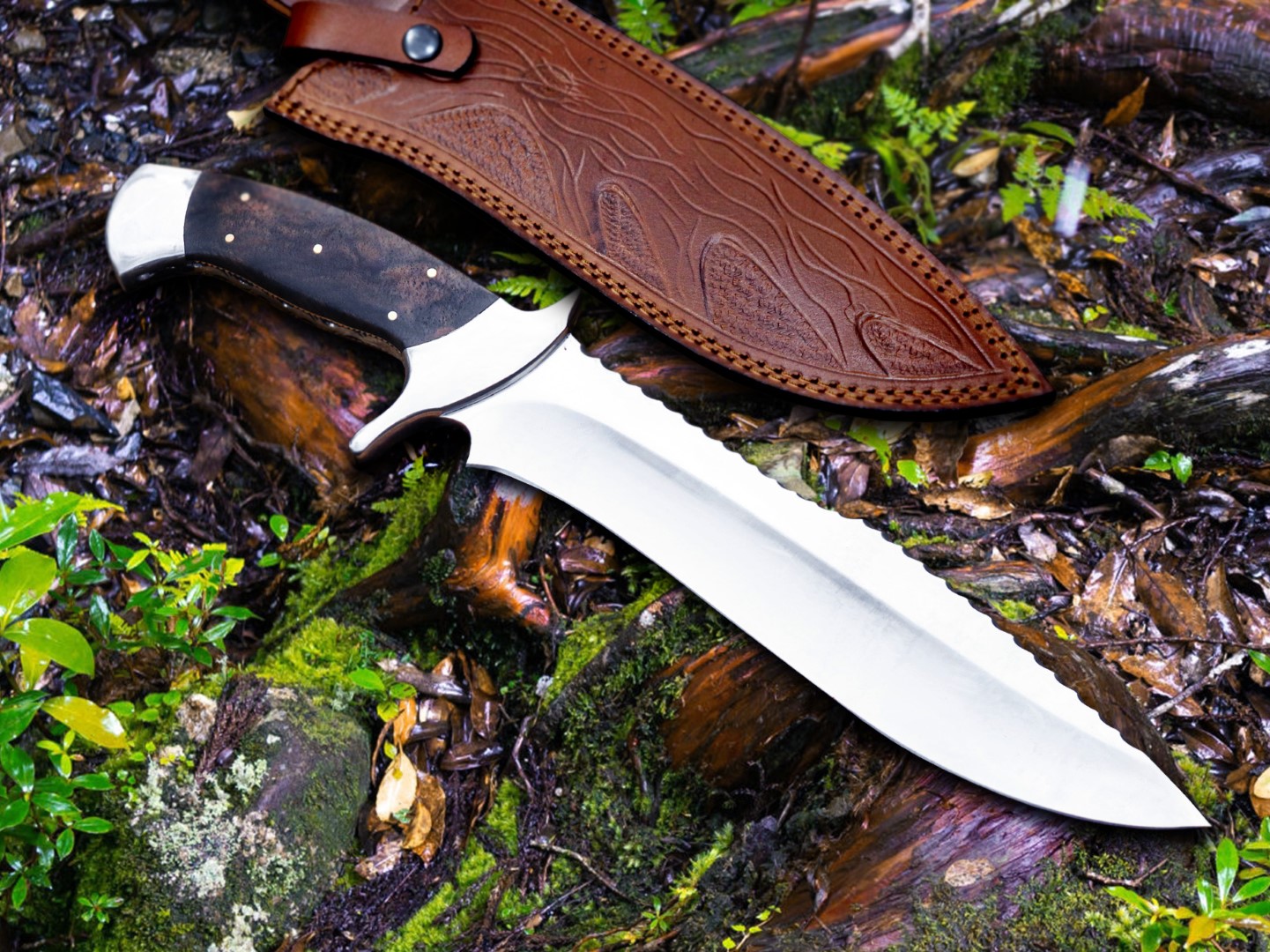
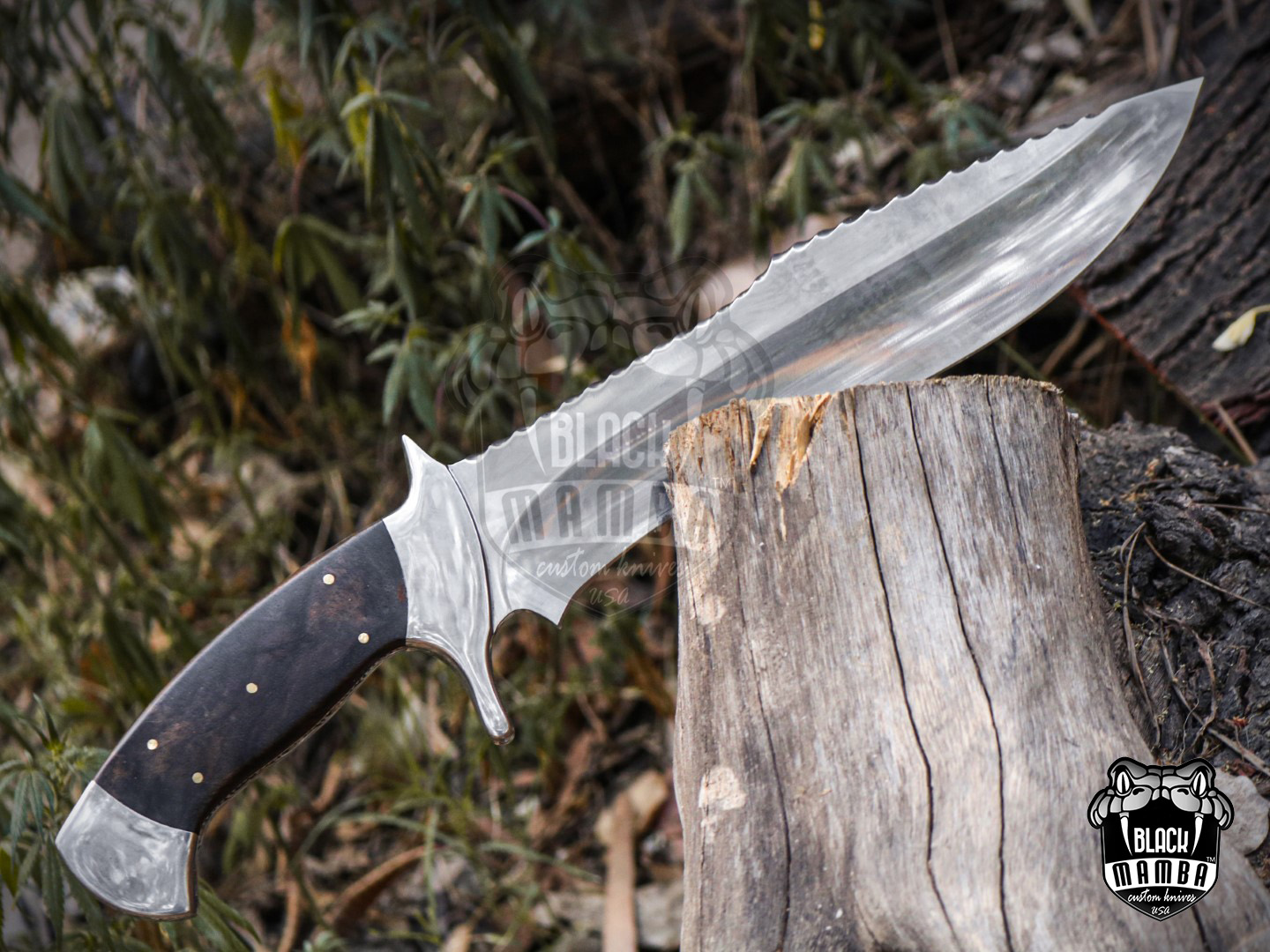
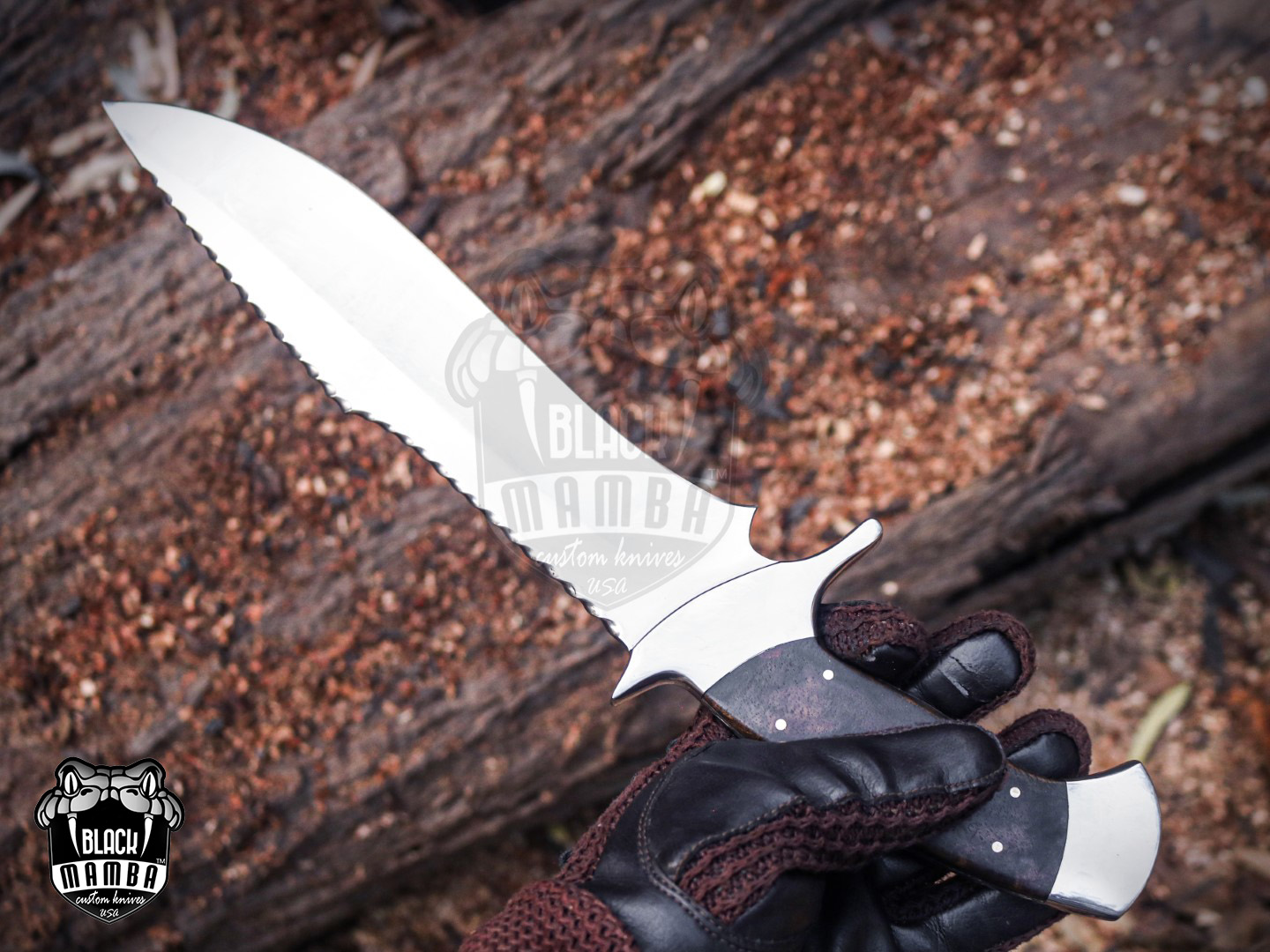
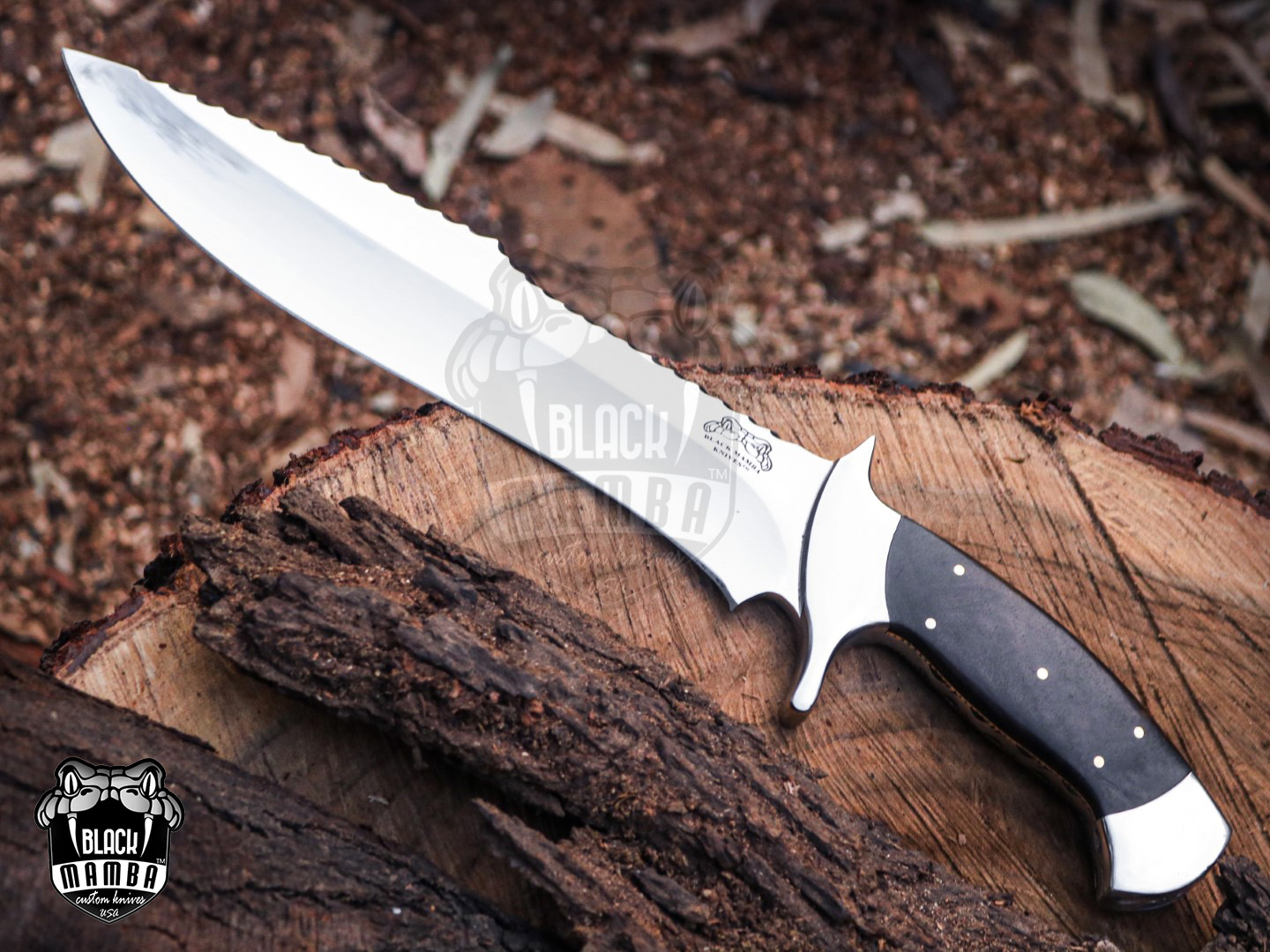
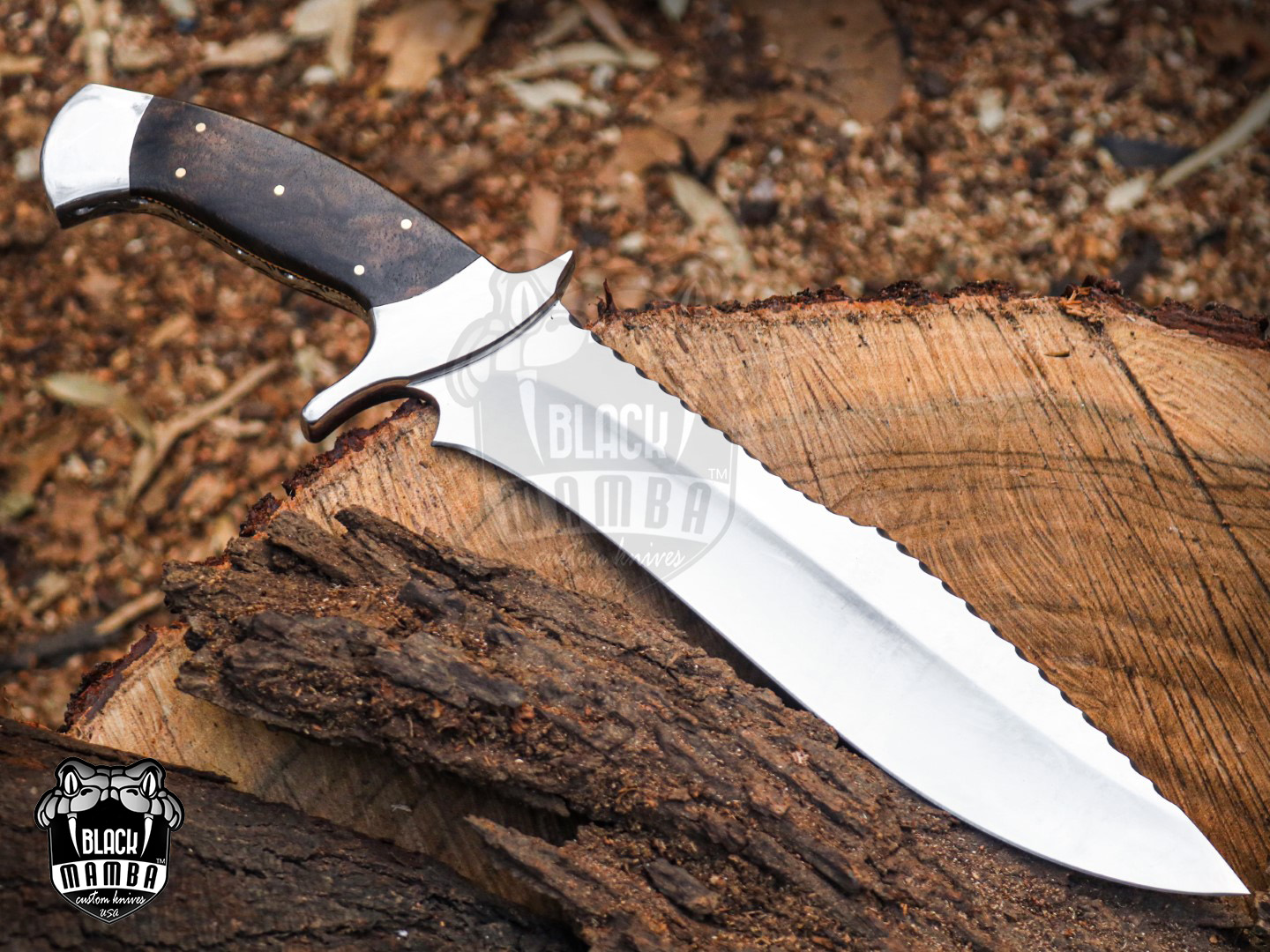
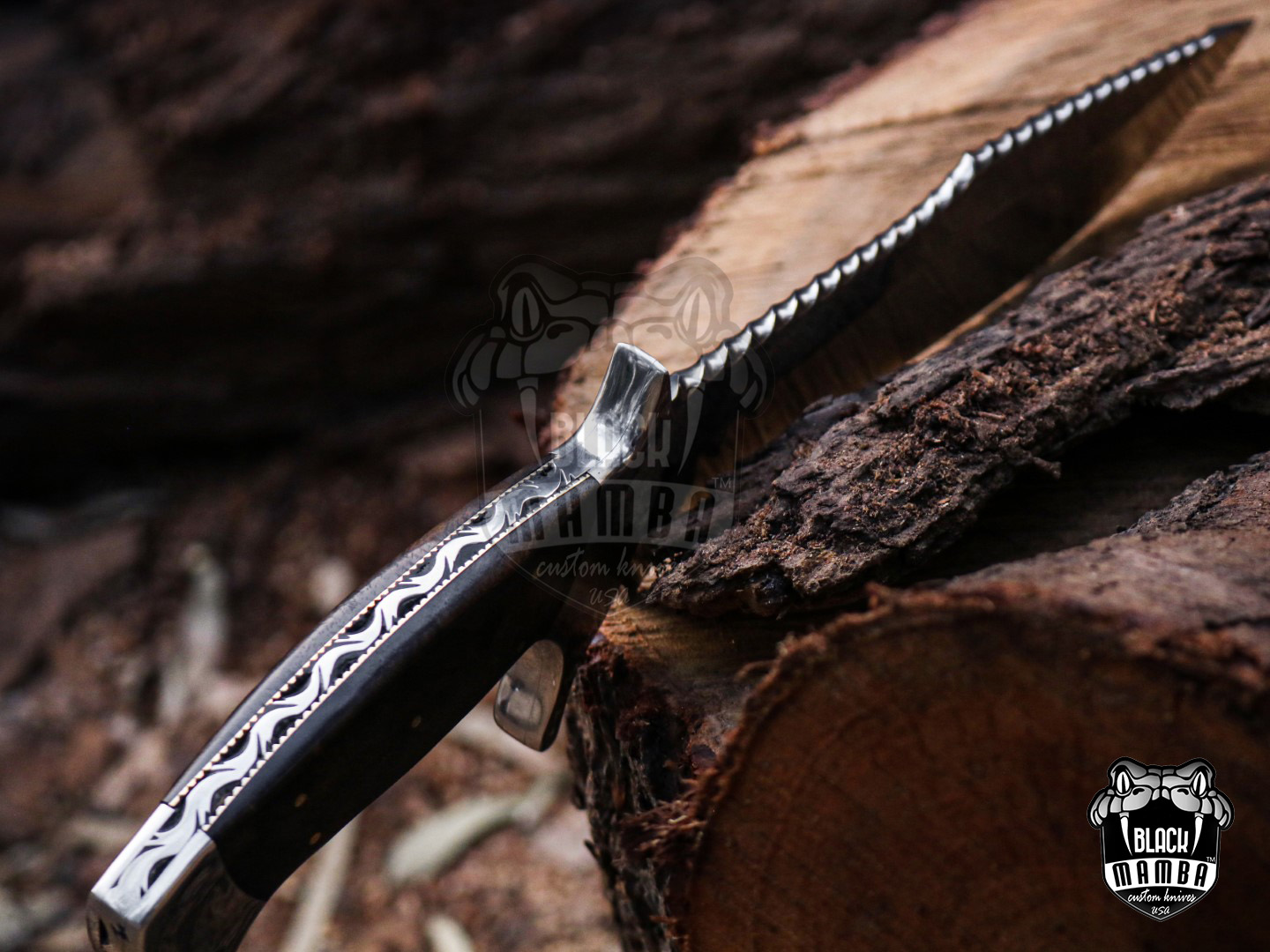
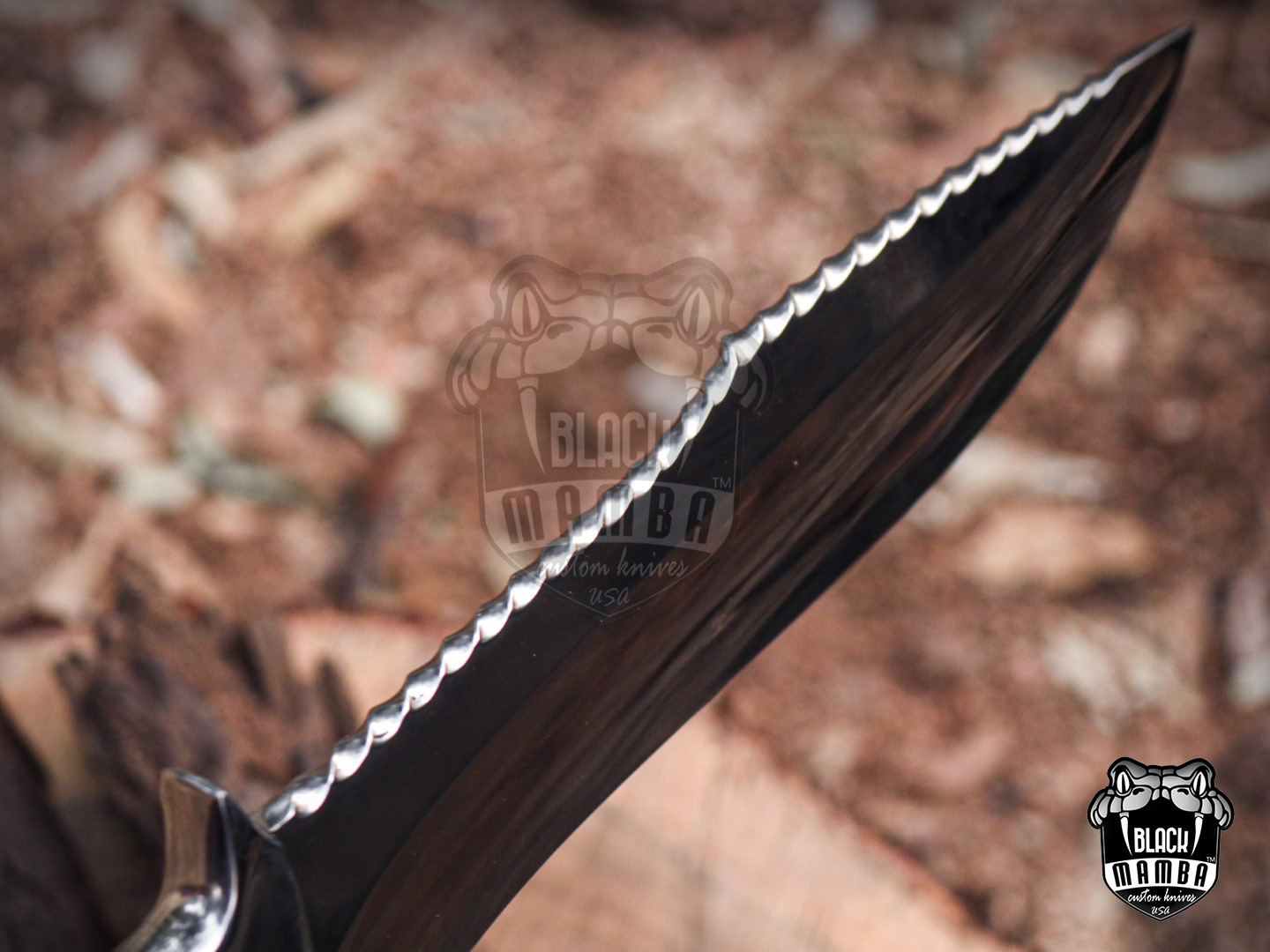
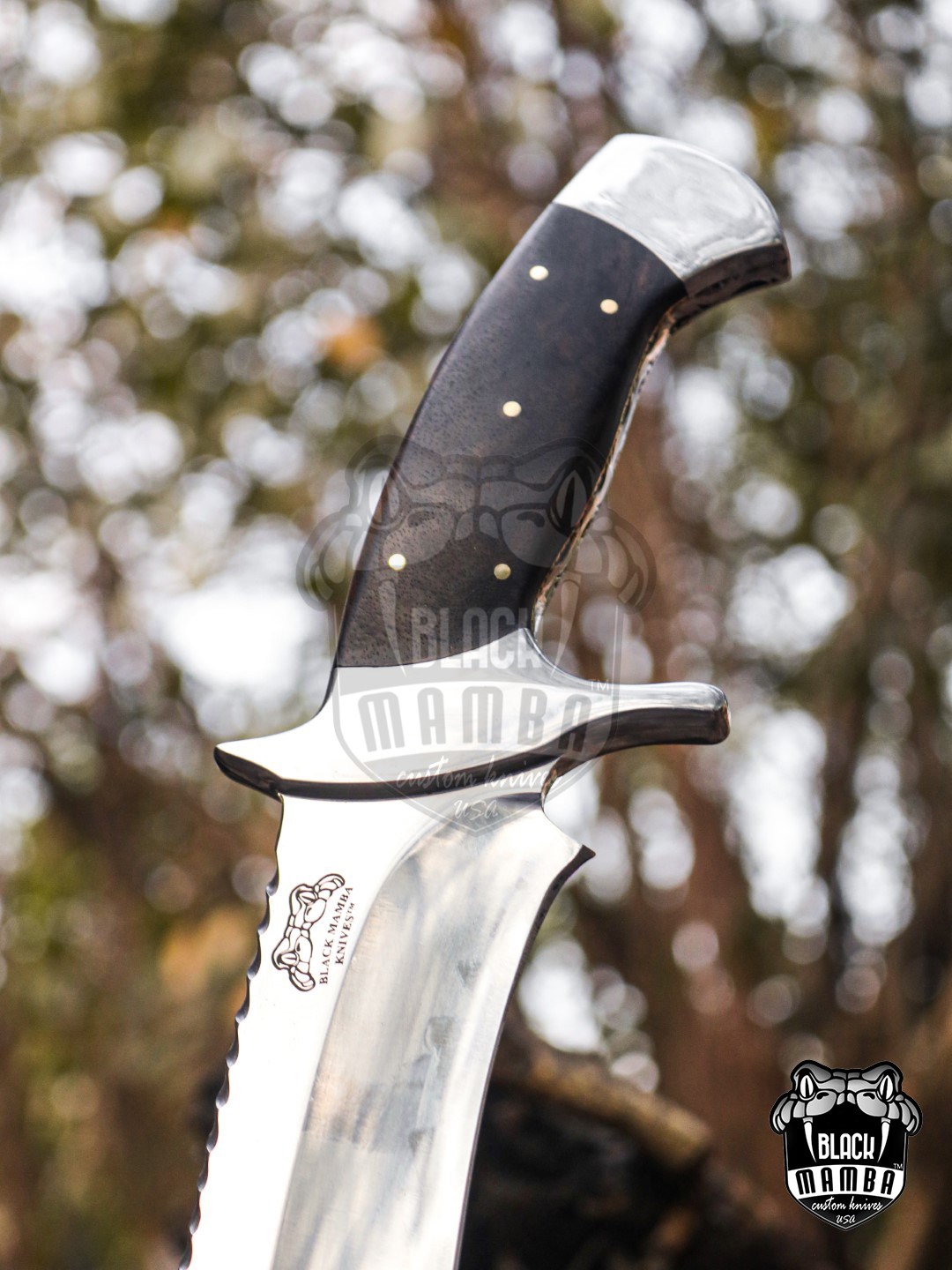
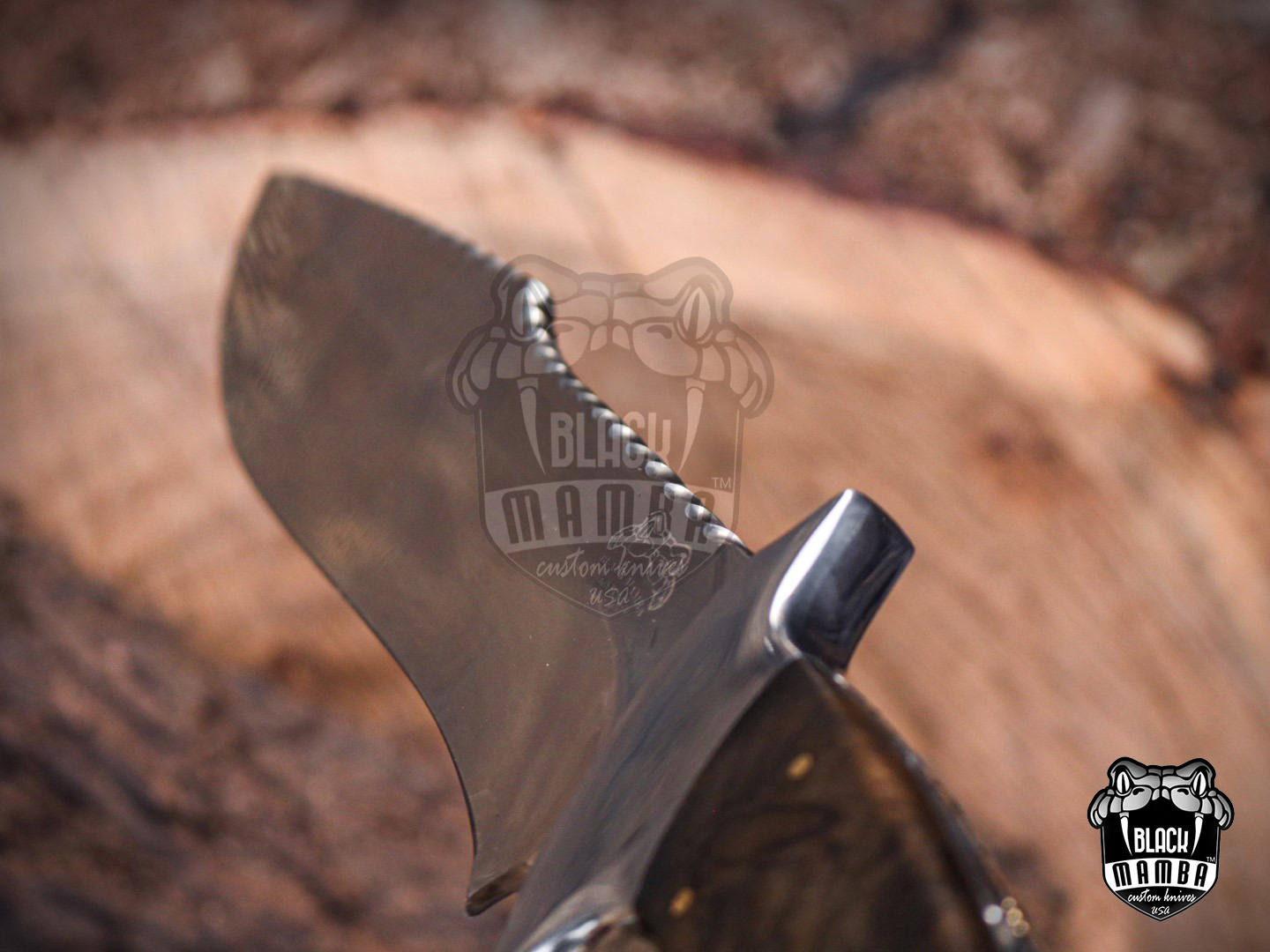
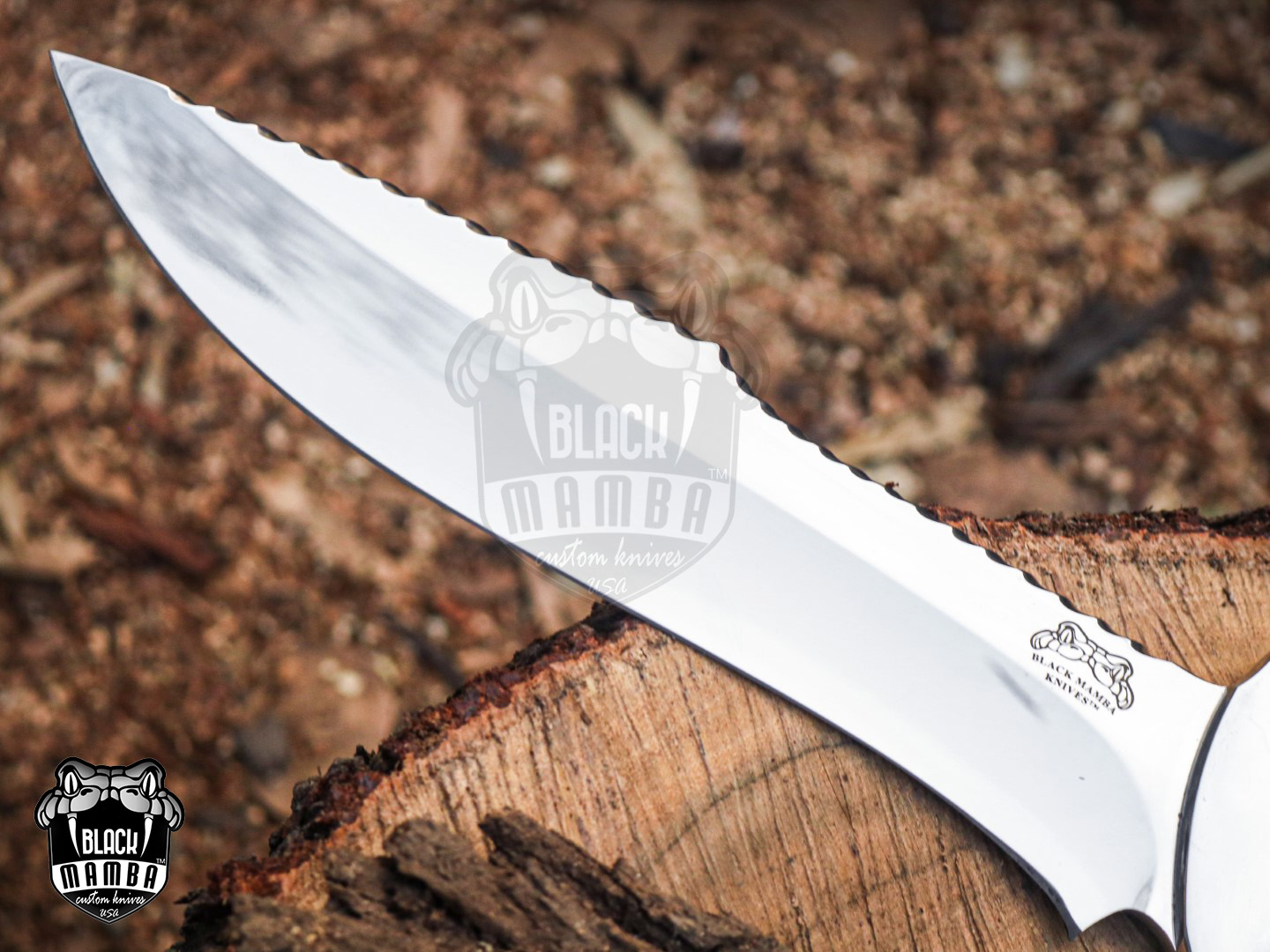
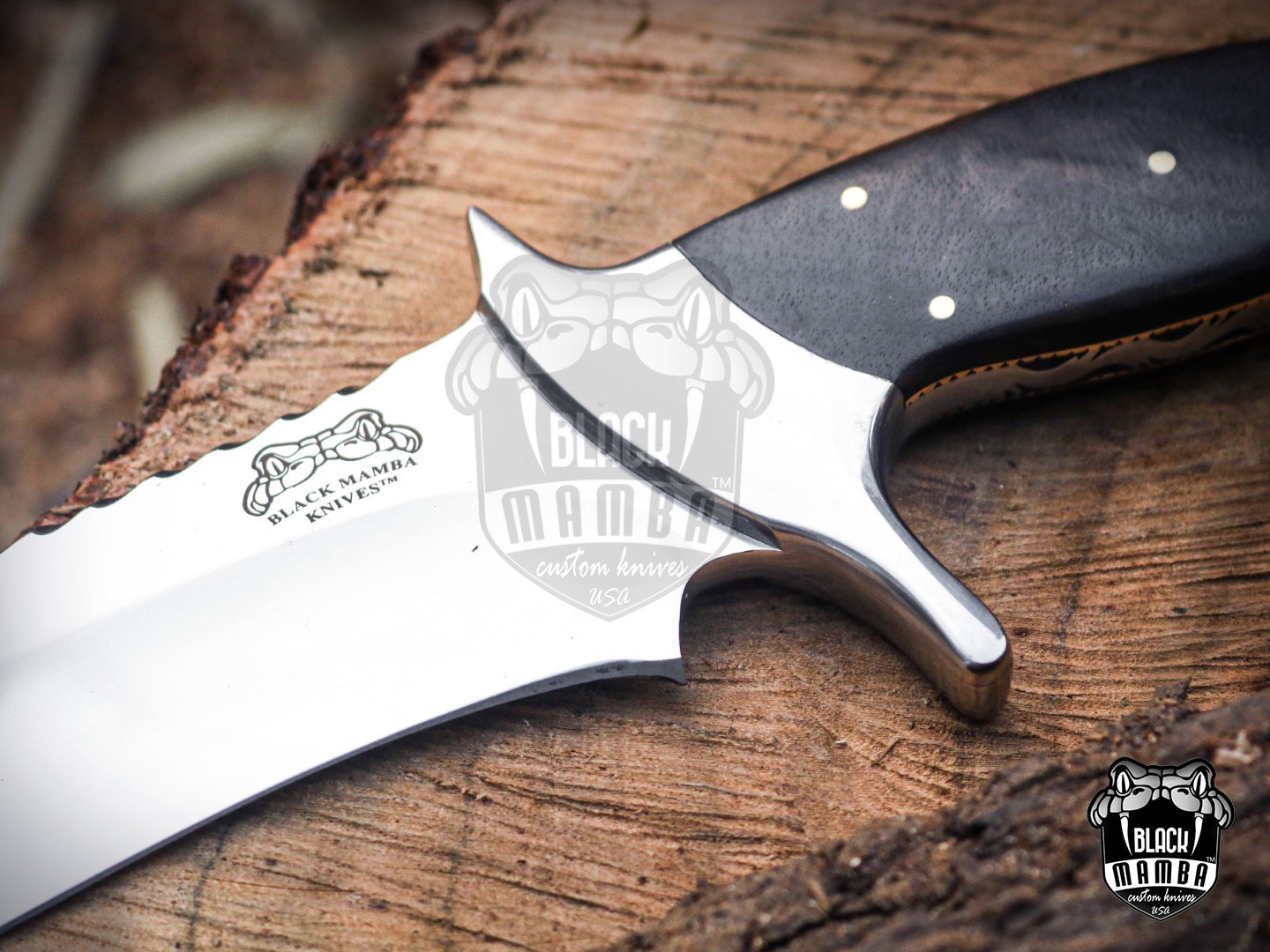
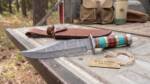
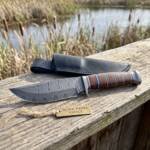
Eleven inches of blade and twenty-eight ounces of knife. This is a chopper wearing the outline of a hunting knife, and it should be bought as one.
| Overall length | 16 inches |
| Blade length | 11 inches |
| Handle length | 5 inches |
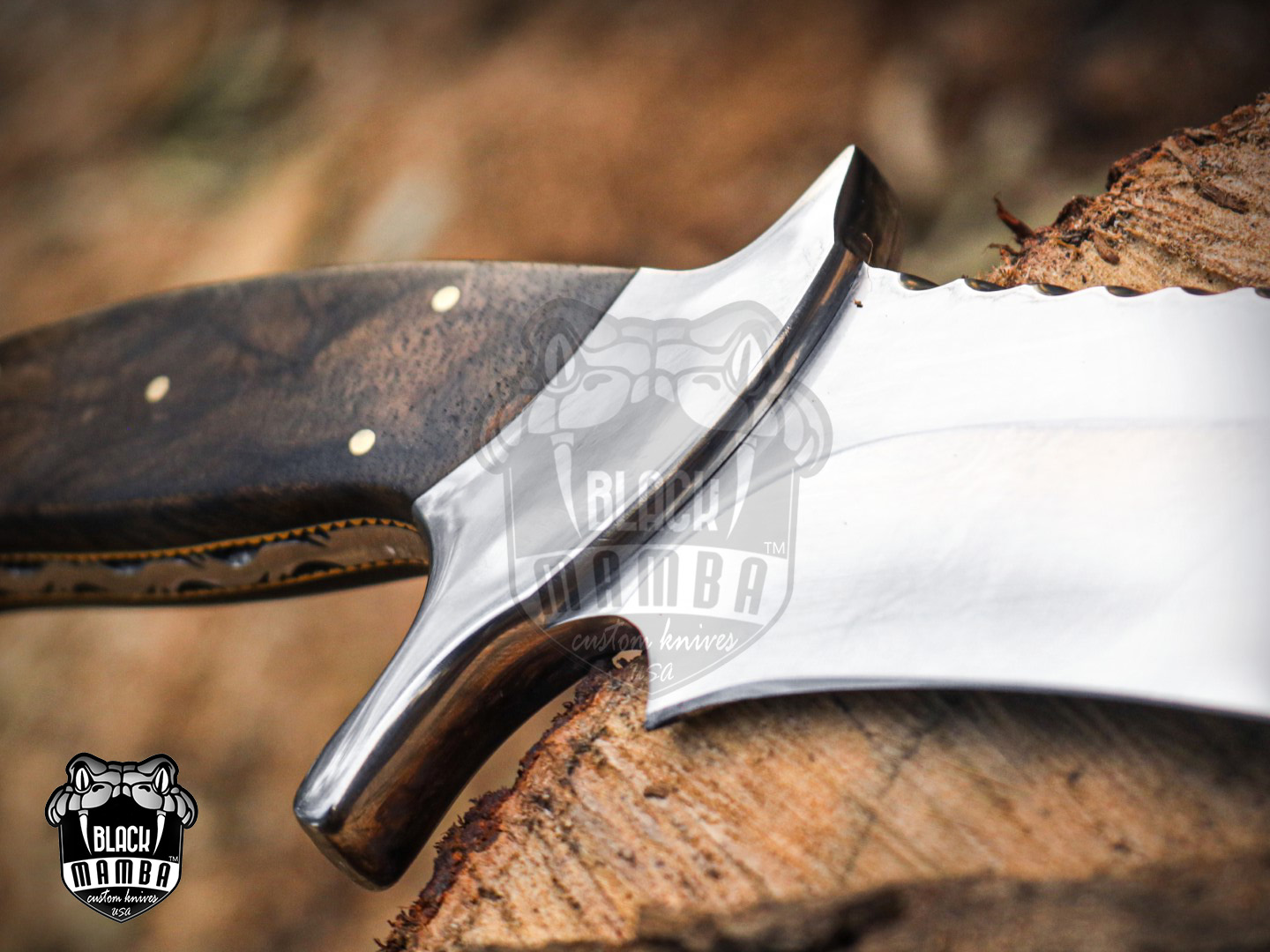
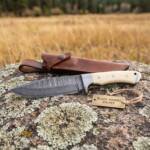
| Steel | 1095 + 15N20 Damascus, 352 layers |
| Hardness | 58–60 HRC, oil tempered |
| Weight | 28 oz |
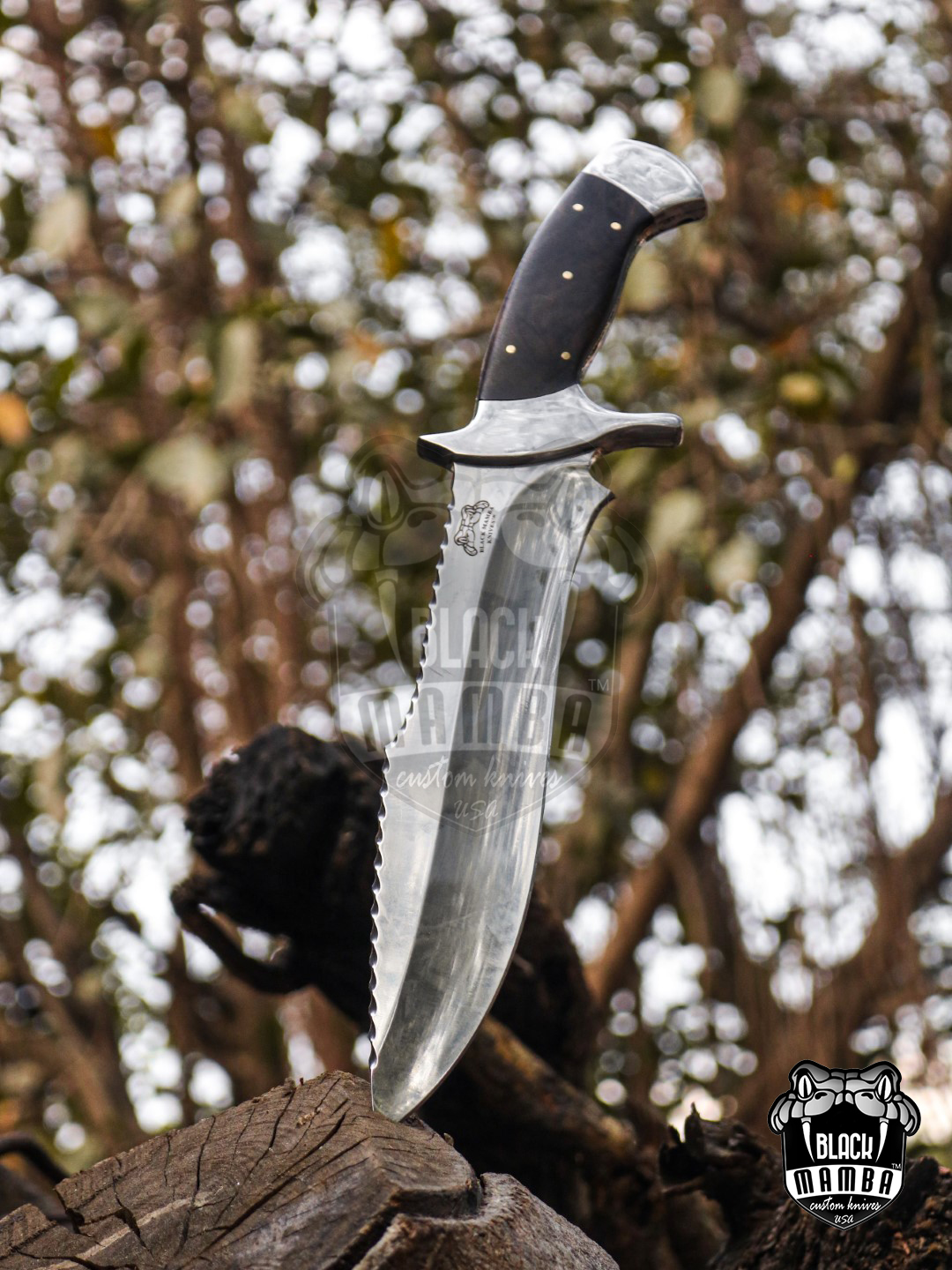
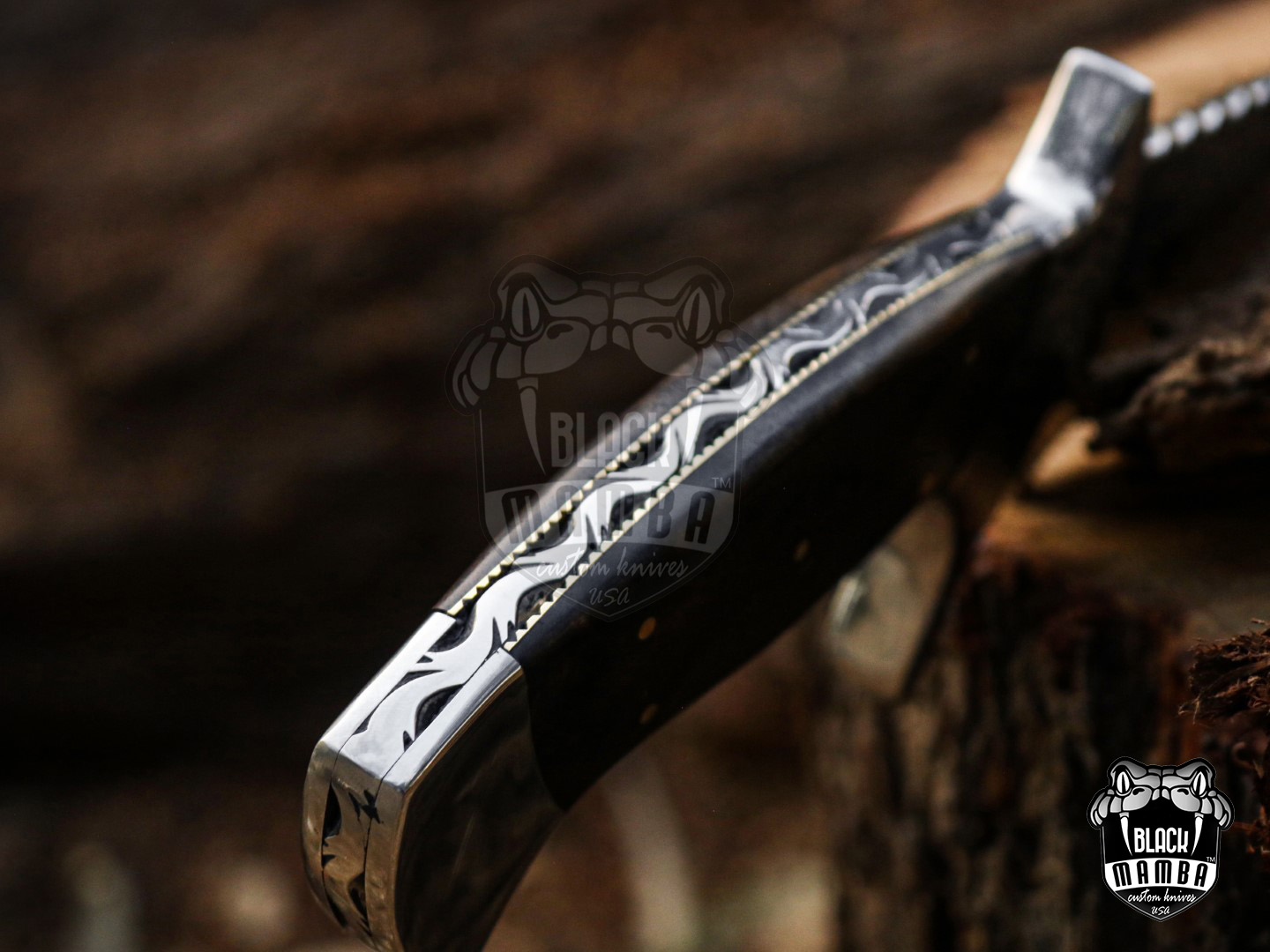
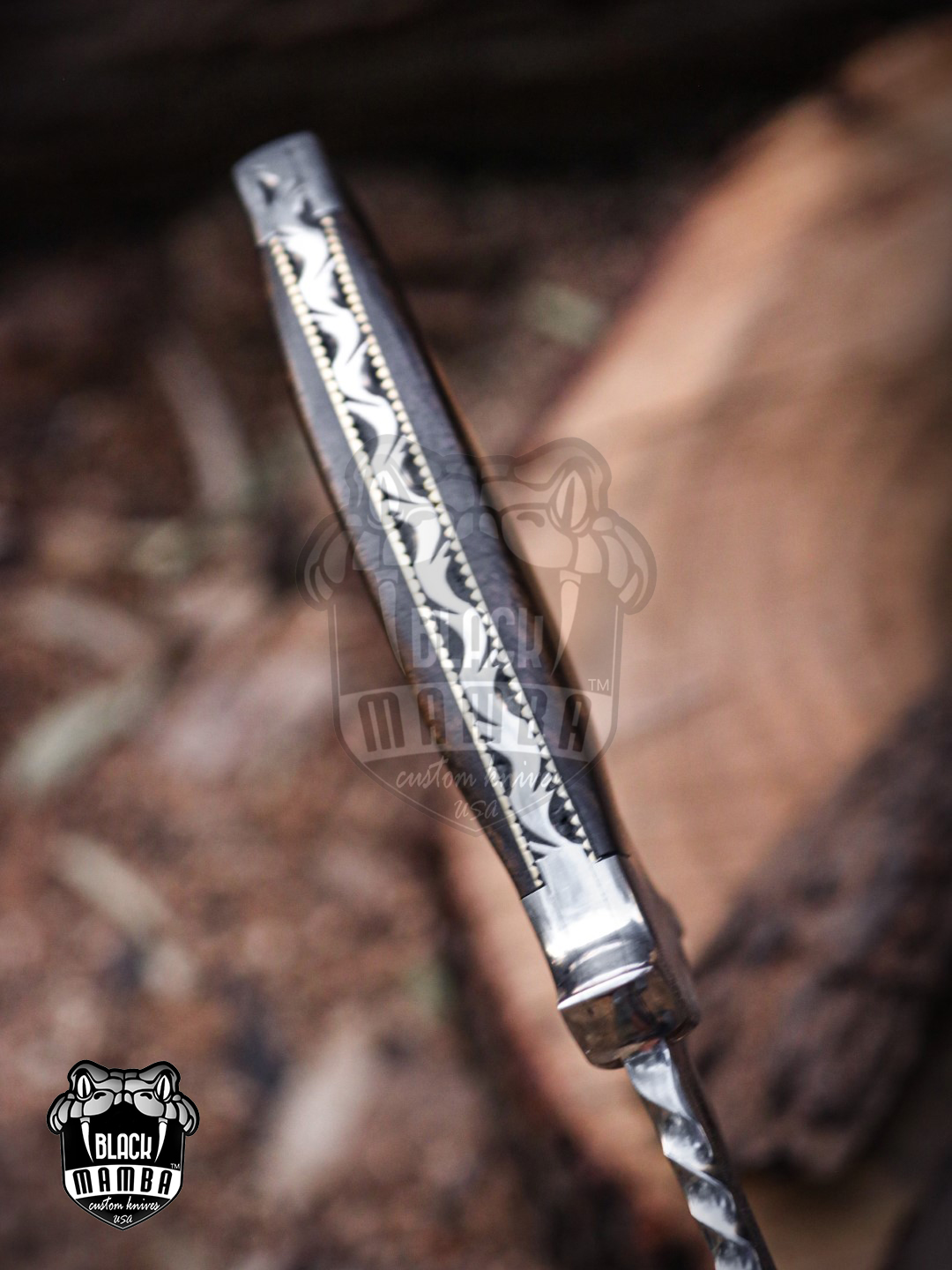
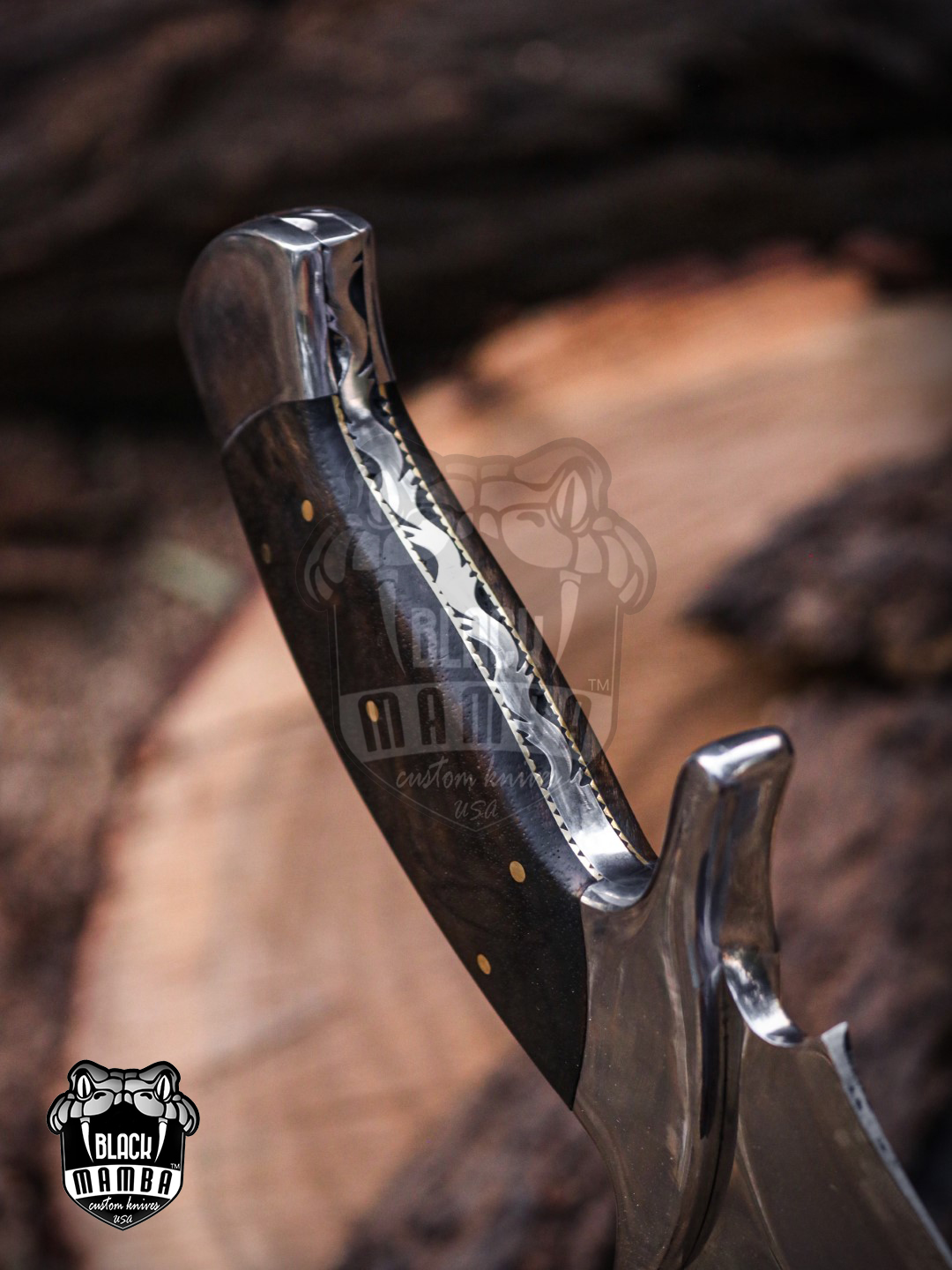
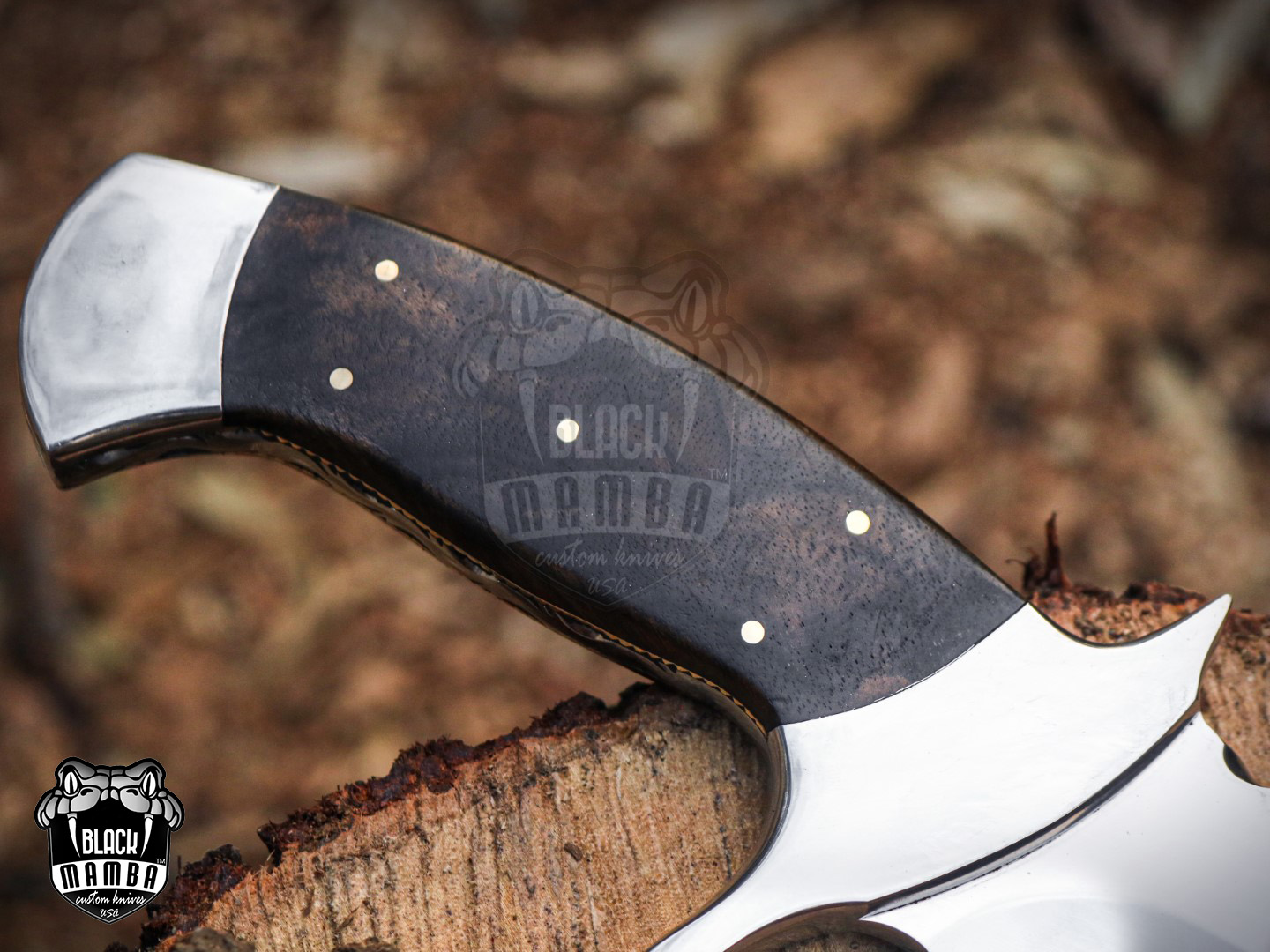
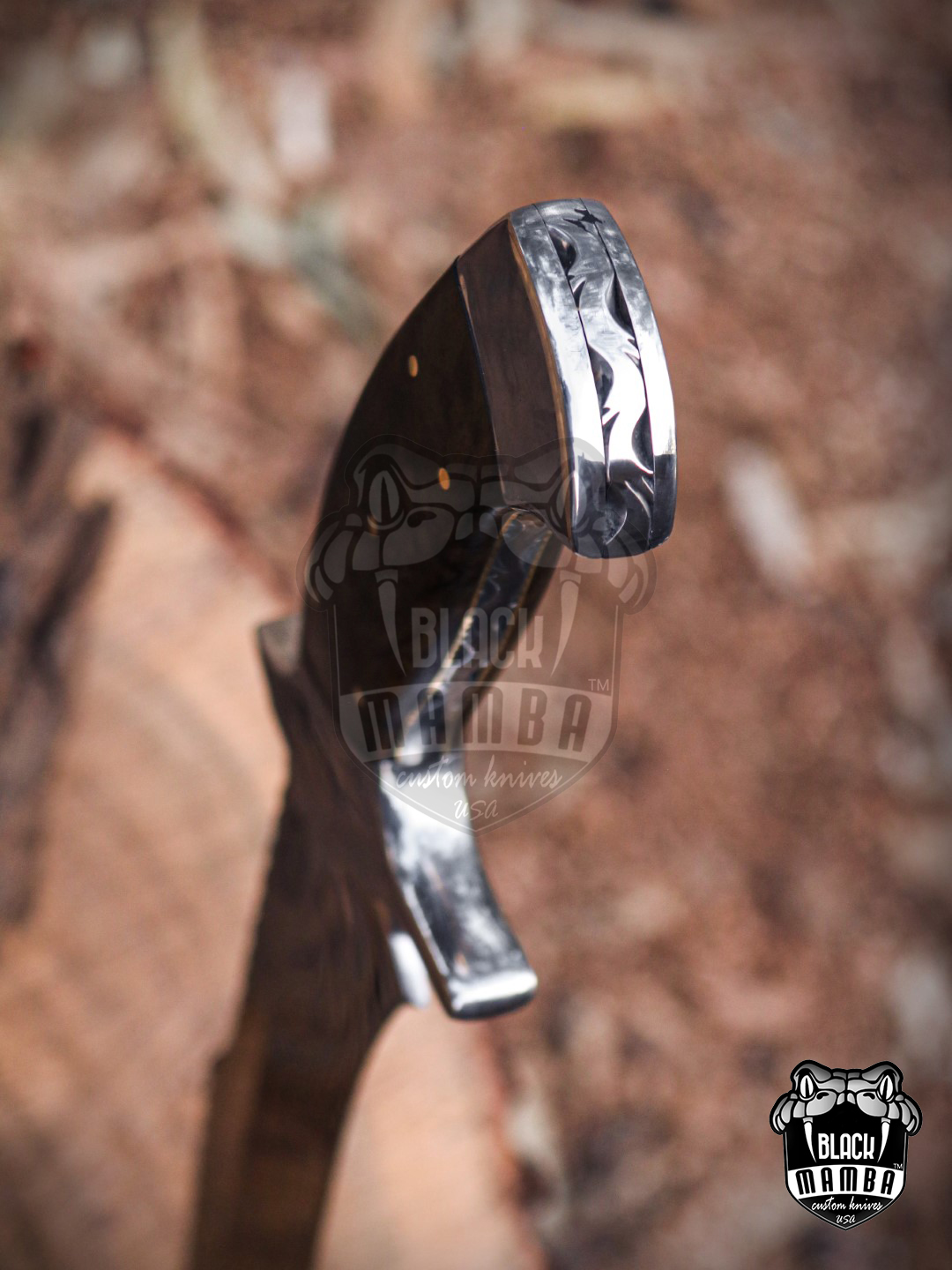
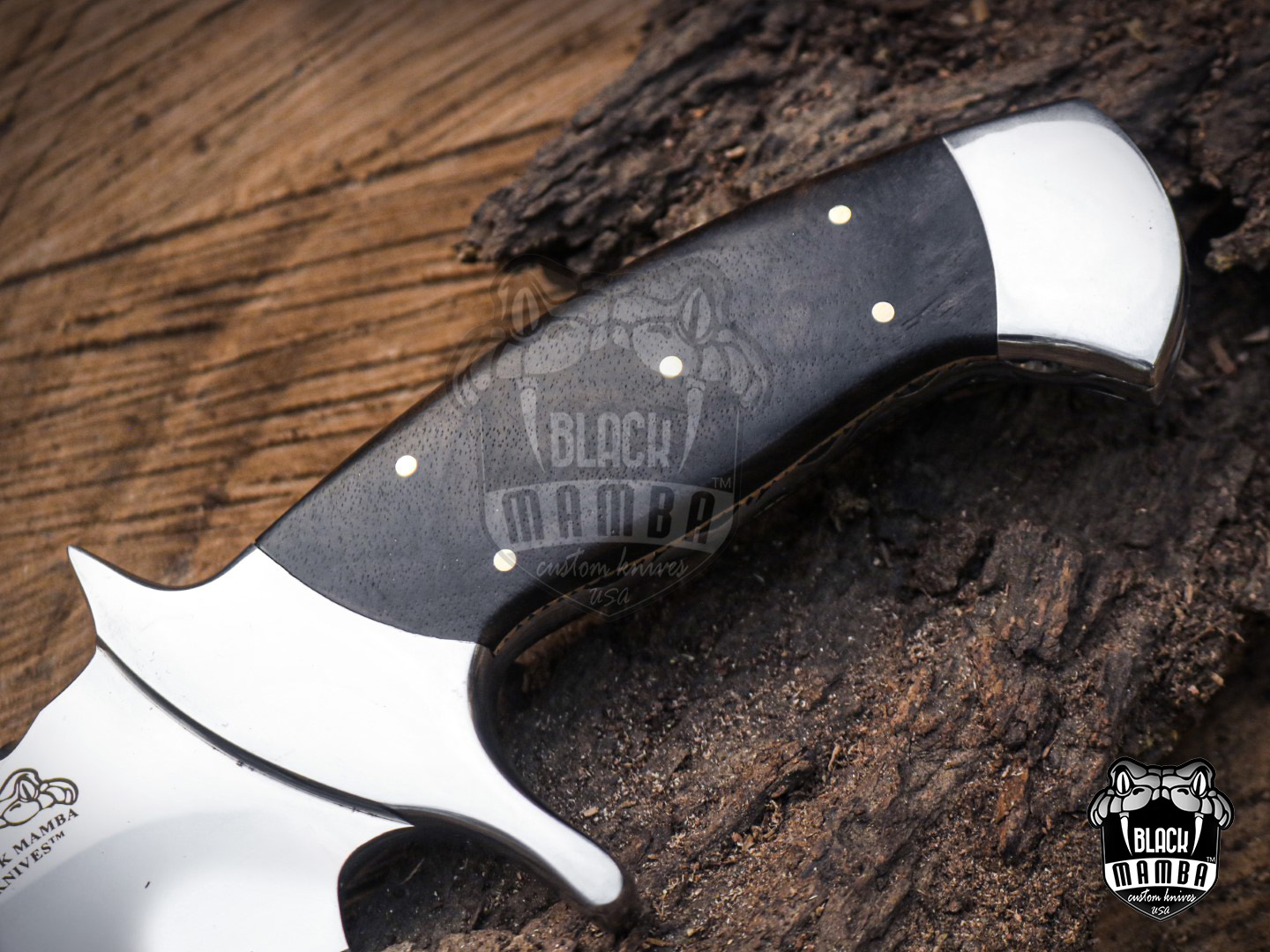
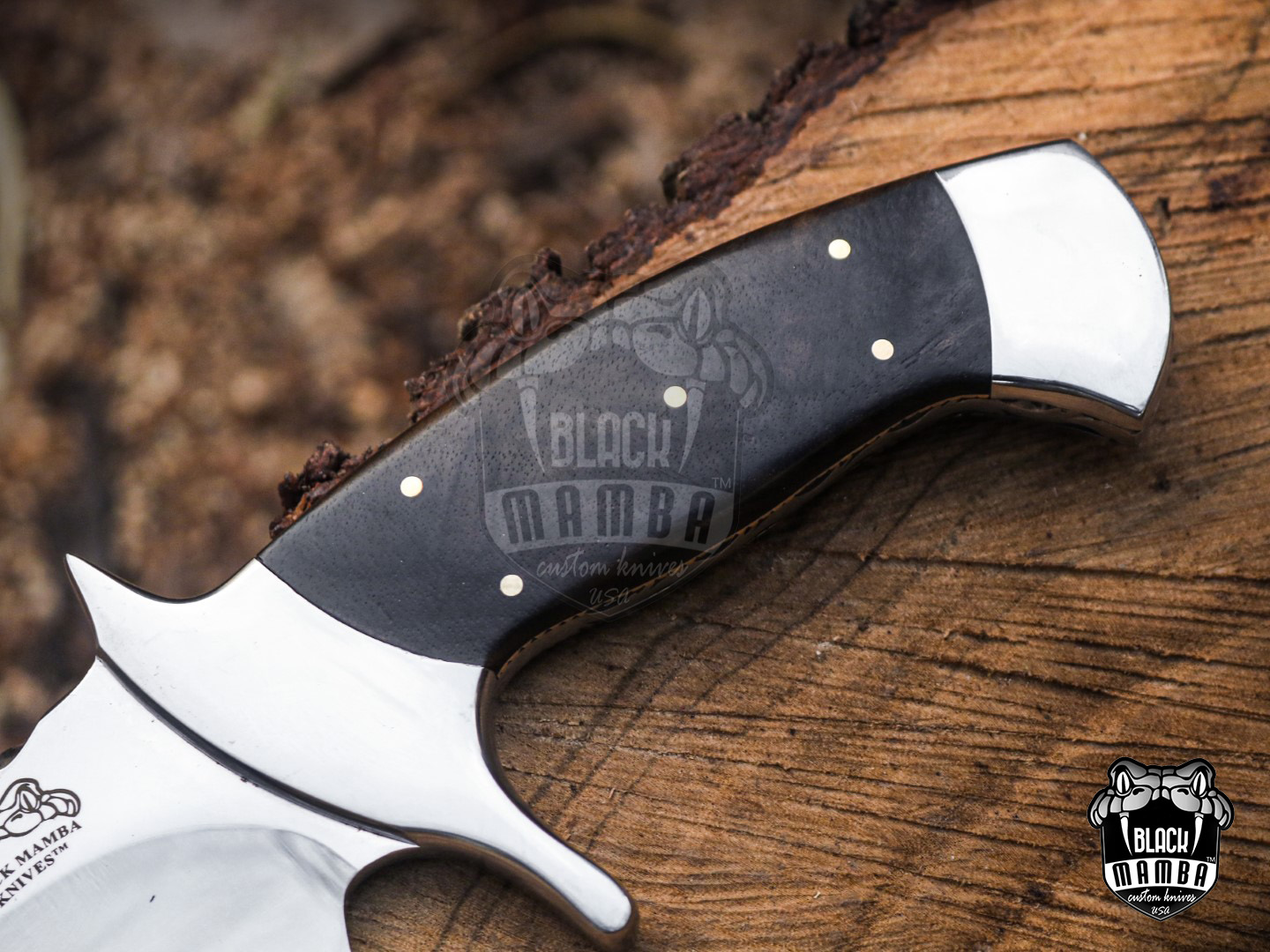
| Handle | Stabilized Electric wood with High Polish Luxury Steel Guard bolster |
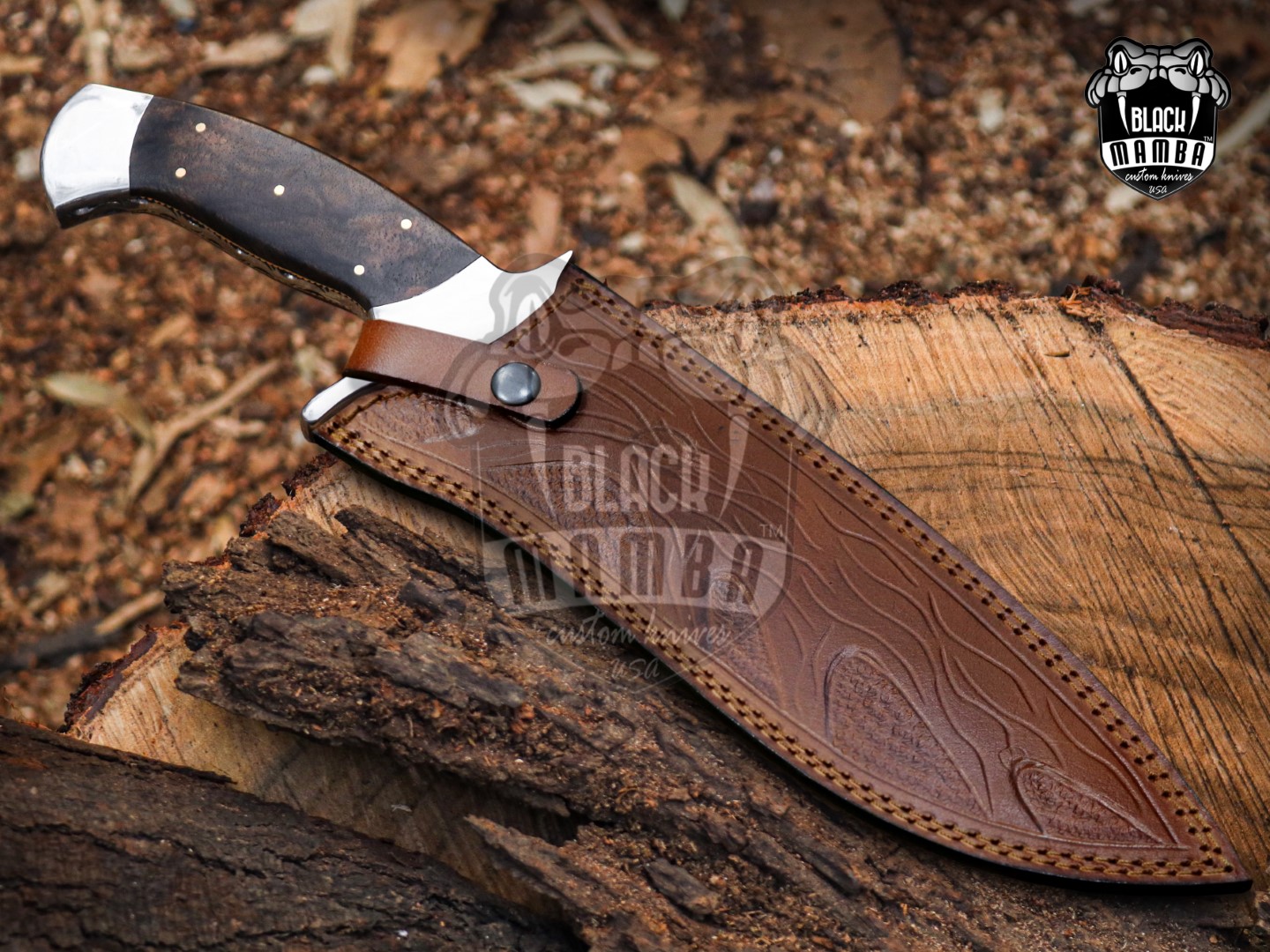
| Included | Hand-stitched leather sheath |
Real-world duty: camp and trail work where you are cutting wood more often than you are cutting game. Limbing, splitting kindling, clearing a trail, driving stakes with the flat. The mass is the mechanism. A twenty-eight-ounce blade swung loosely does work that a light knife cannot do at all, however sharp it is.
What eleven inches costs you
Everything a big blade gains in reach it loses in precision. You cannot work close to your own body with this. You cannot cape an animal with it, or do anything that needs the tip steered by fingertips. Drawing it takes a deliberate motion and enough clearance. Carrying it on a belt all day is genuinely tiring, and a pack or a vehicle is the sensible place for it. Most people who own one also own something small and sharp for the detail work — a three-inch Jaguar fixed blade covers that end well. If you are trying to decide whether you need this much knife at all, the hunting knife selection guide is the place to start.
The guard is a safety feature
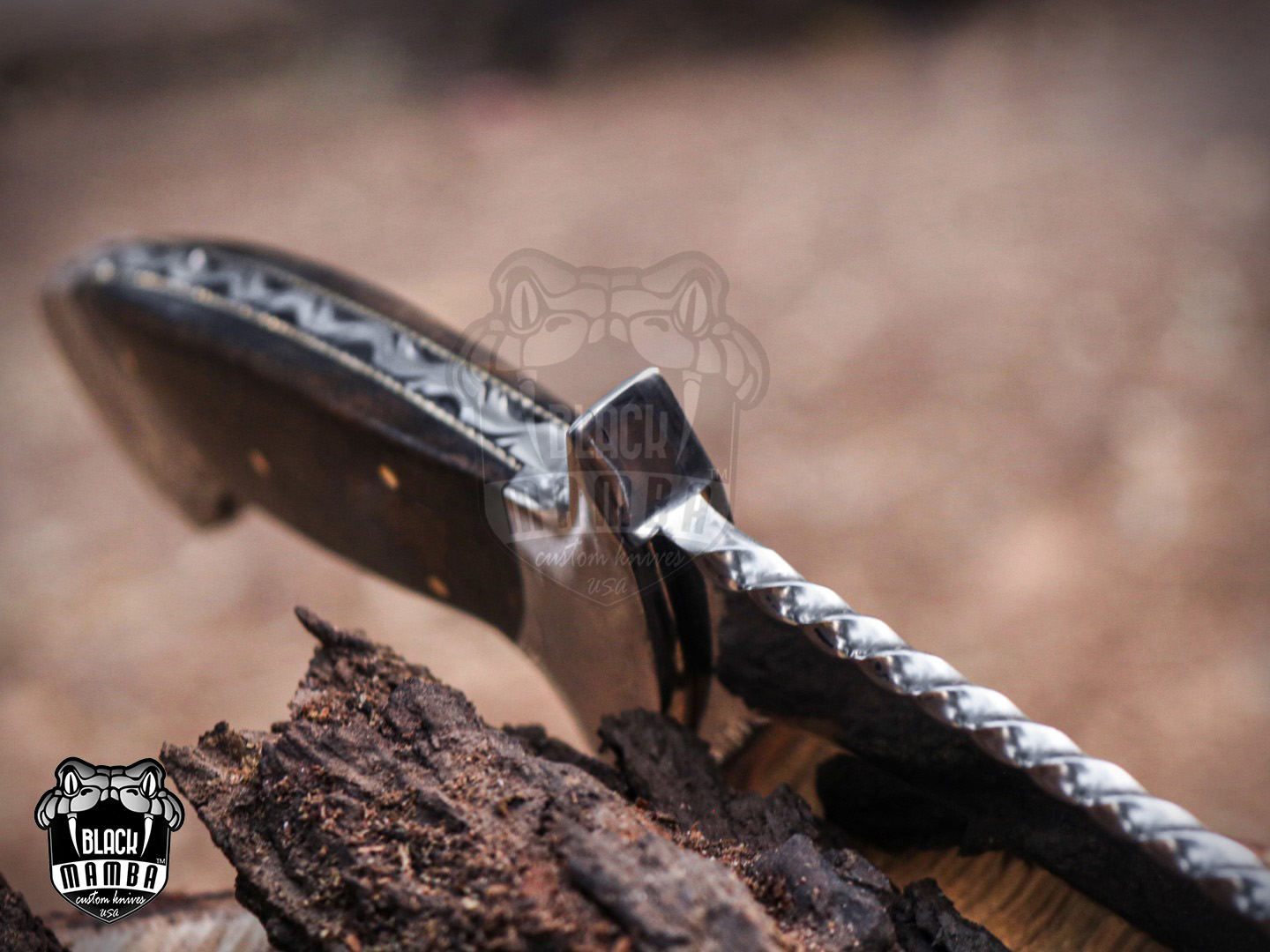
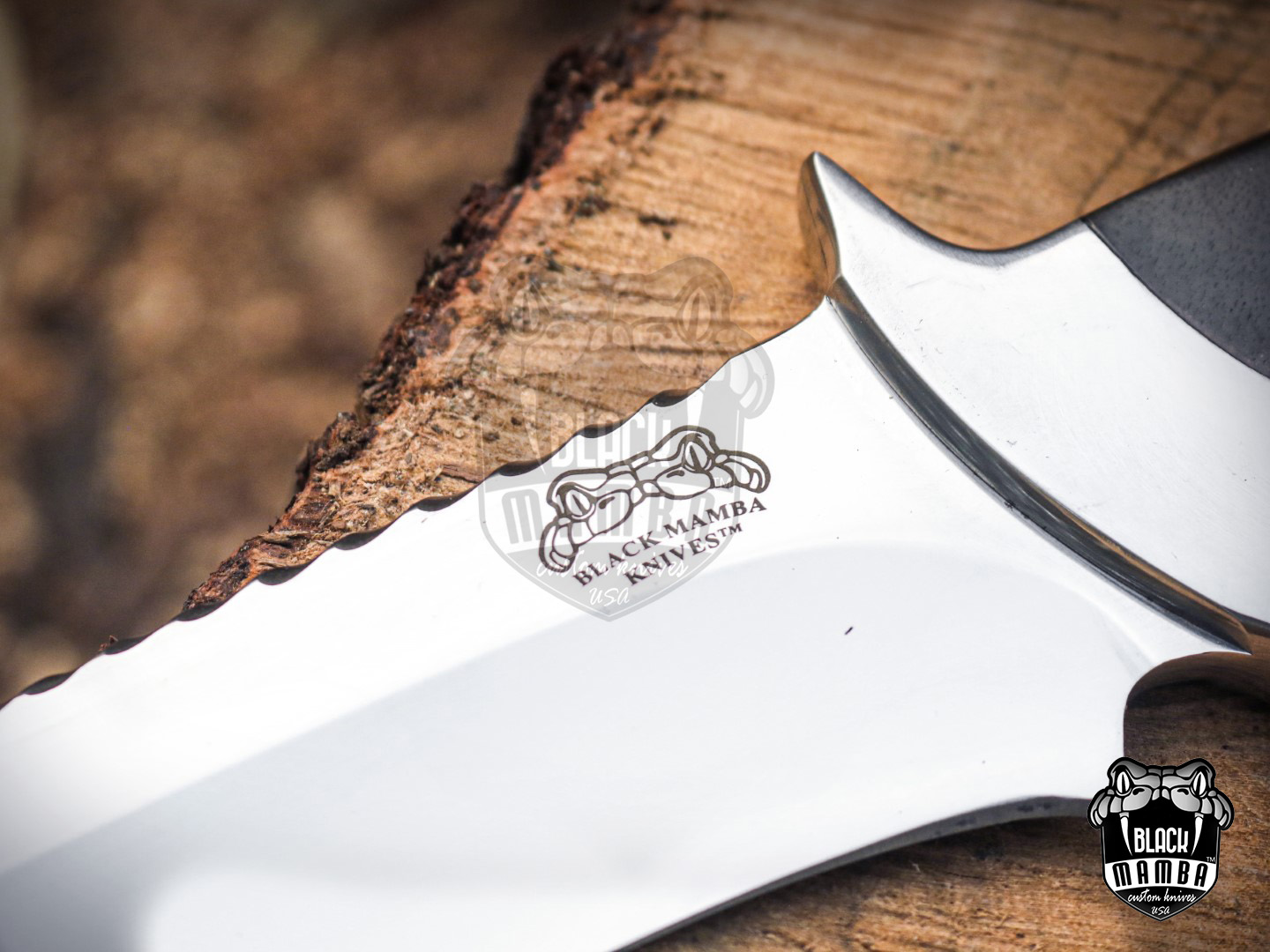
The polished steel guard between the blade and the grip exists because your hand will slide. On a heavy chopper the edge stops abruptly when it bites wrong, and momentum carries your fist forward. The guard is what your fingers meet instead of the edge. Check it is seated tight when the knife arrives, and check it again if you ever notice movement in the handle. Polished steel also marks easily, and fingerprints and fine scratches appear in the first week. That is cosmetic.
Sharpening a chopping edge
A blade used against wood wants a stouter edge than a blade used against food. Sharpen this to a more obtuse angle than you would a kitchen knife, and accept that it will never shave. An overly keen edge on a chopper chips the first time it meets a knot, and a chipped edge takes far longer to repair than a slightly dull one takes to touch up. Work it in sections on a bench stone with the blade braced. See how blade shape drives edge geometry for the reasoning.
Before you commit
Can it replace a hatchet? For limbing and kindling, largely yes. For felling or splitting rounds, no.
Is the tang full length? Yes, and at this weight it needs to be.
How should it be stored? Oiled, out of the leather, hanging or flat. Not sheathed in a damp garage.
Model: BMK-834
Olivia G. (verified owner) –
“The steel knife I purchased from this store has exceeded my expectations. It’s incredibly sharp and versatile. I’m confident it will be a long-lasting addition to my kitchen.”
Michaela H. (verified owner) –
“I’m not easily impressed, but this steel knife impressed me. It’s sturdy, well-balanced, and the blade retains its sharpness. I’m glad I found this store.”
Jonathan B. (verified owner) –
“This steel knife is a kitchen essential. The precision it offers is unmatched, and it’s made cooking so much more enjoyable. I highly recommend it to anyone.”
Emily C. (verified owner) –
“I purchased a steel knife as a gift for my mother, and she’s in love with it. She says it’s made chopping vegetables a breeze, and it’s now her favorite kitchen tool.”
Daniel S. (verified owner) –
“I’ve been using this steel knife for a while, and it’s still as sharp as when I first got it. The quality and craftsmanship are top-notch. A great investment for any cook.”
Sophia K. (verified owner) –
:I received a steel knife from this shop, and it’s become a staple in my kitchen. It’s sharp, durable, and comfortable to use. I couldn’t be happier with my choice.”