
Description
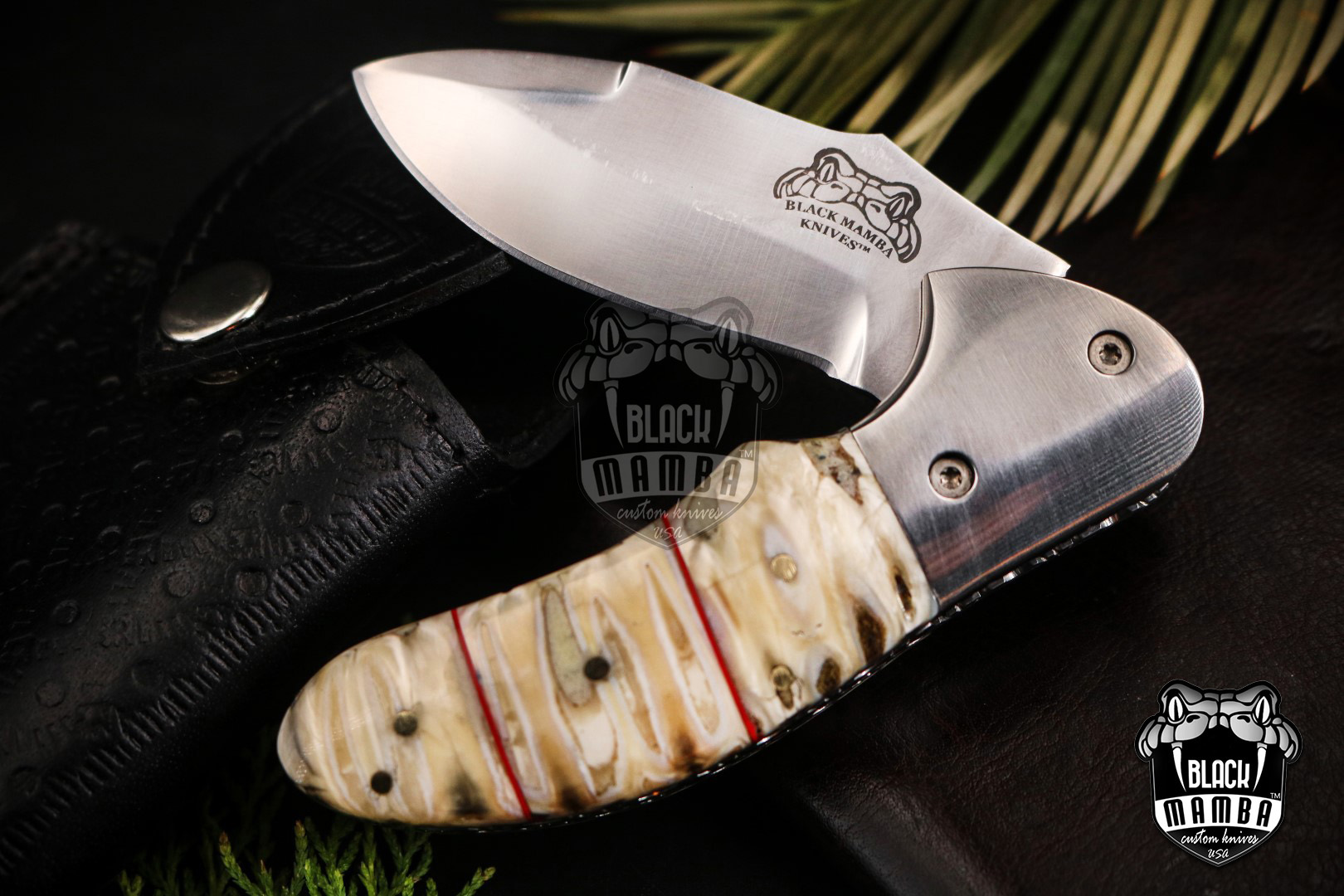
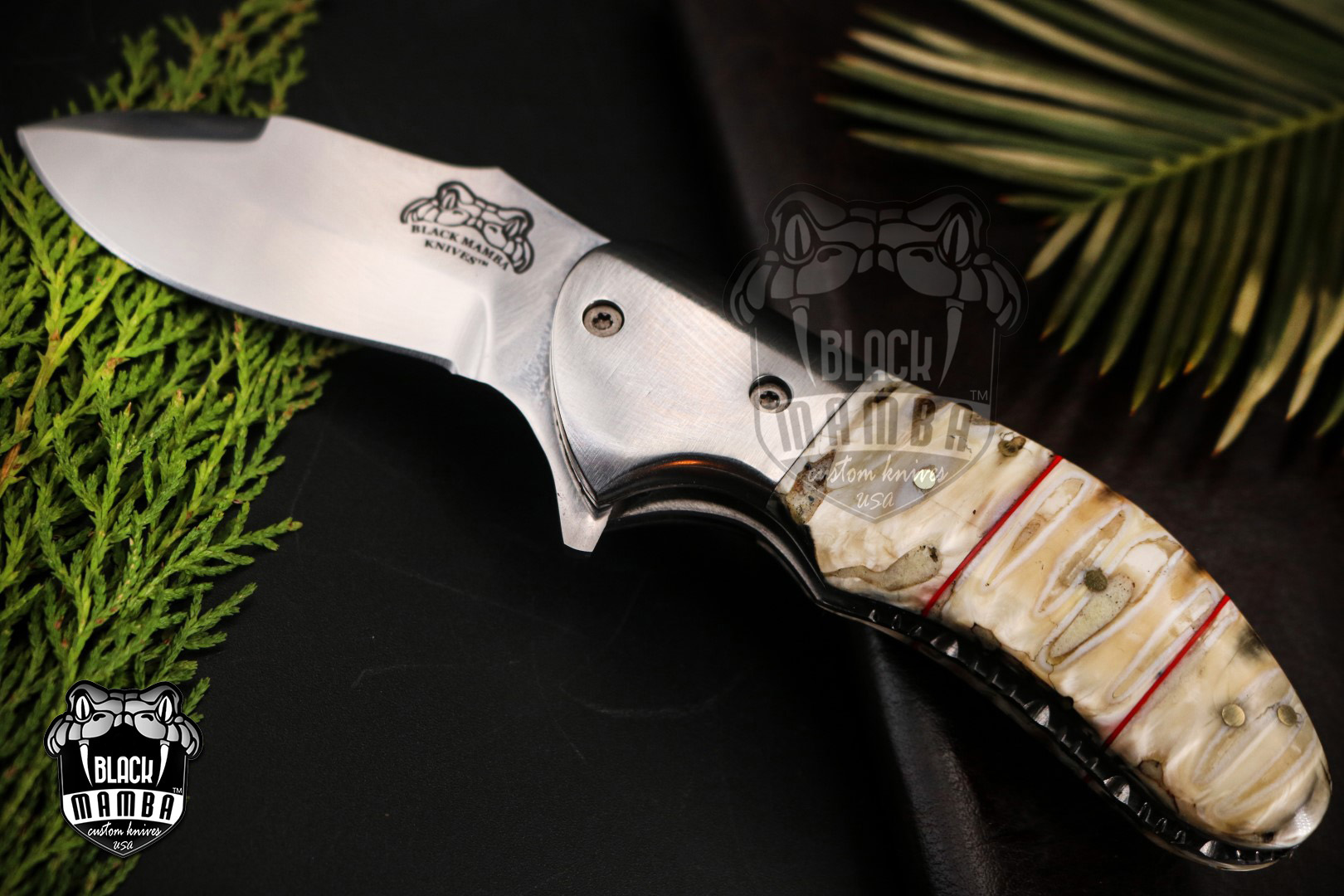
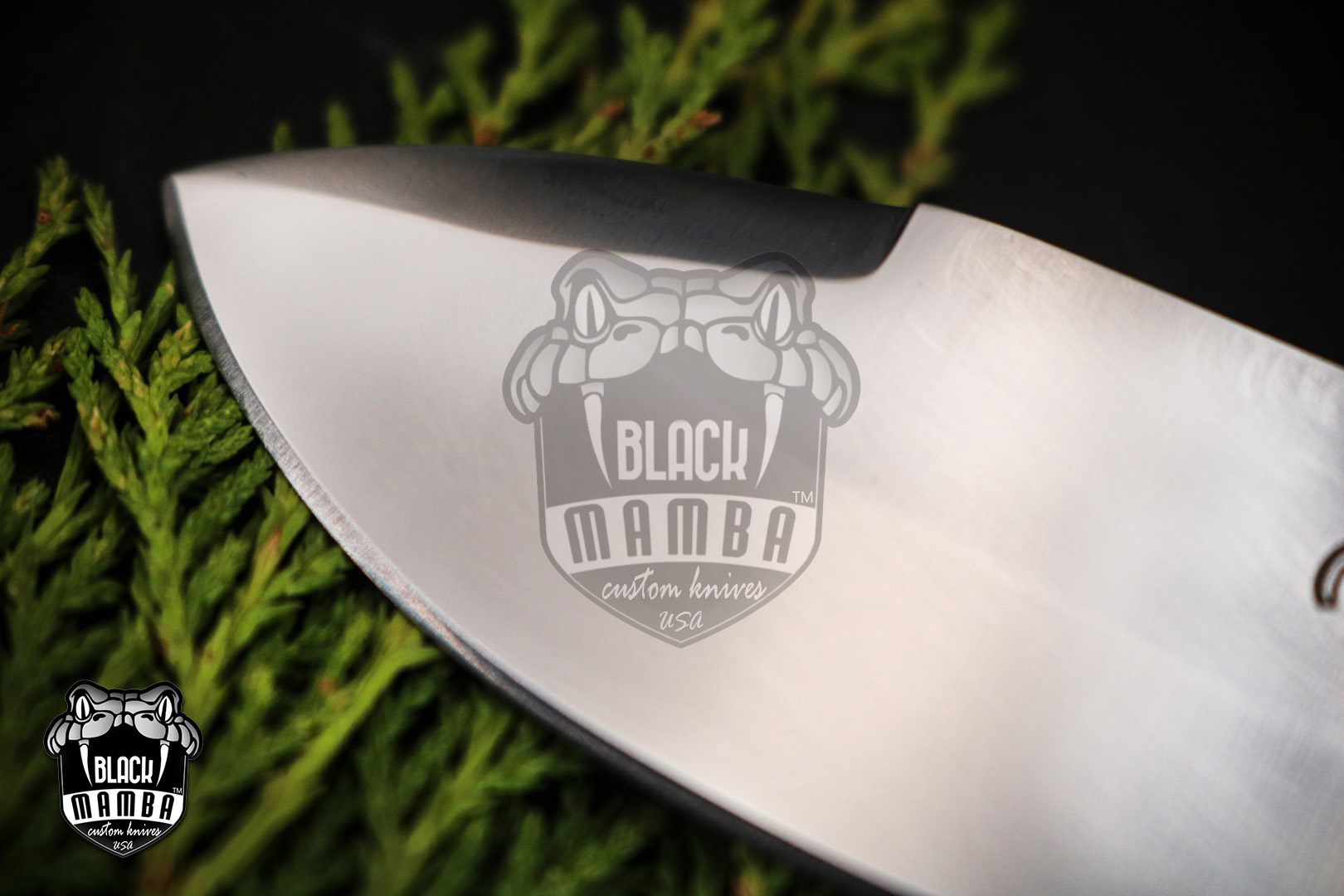
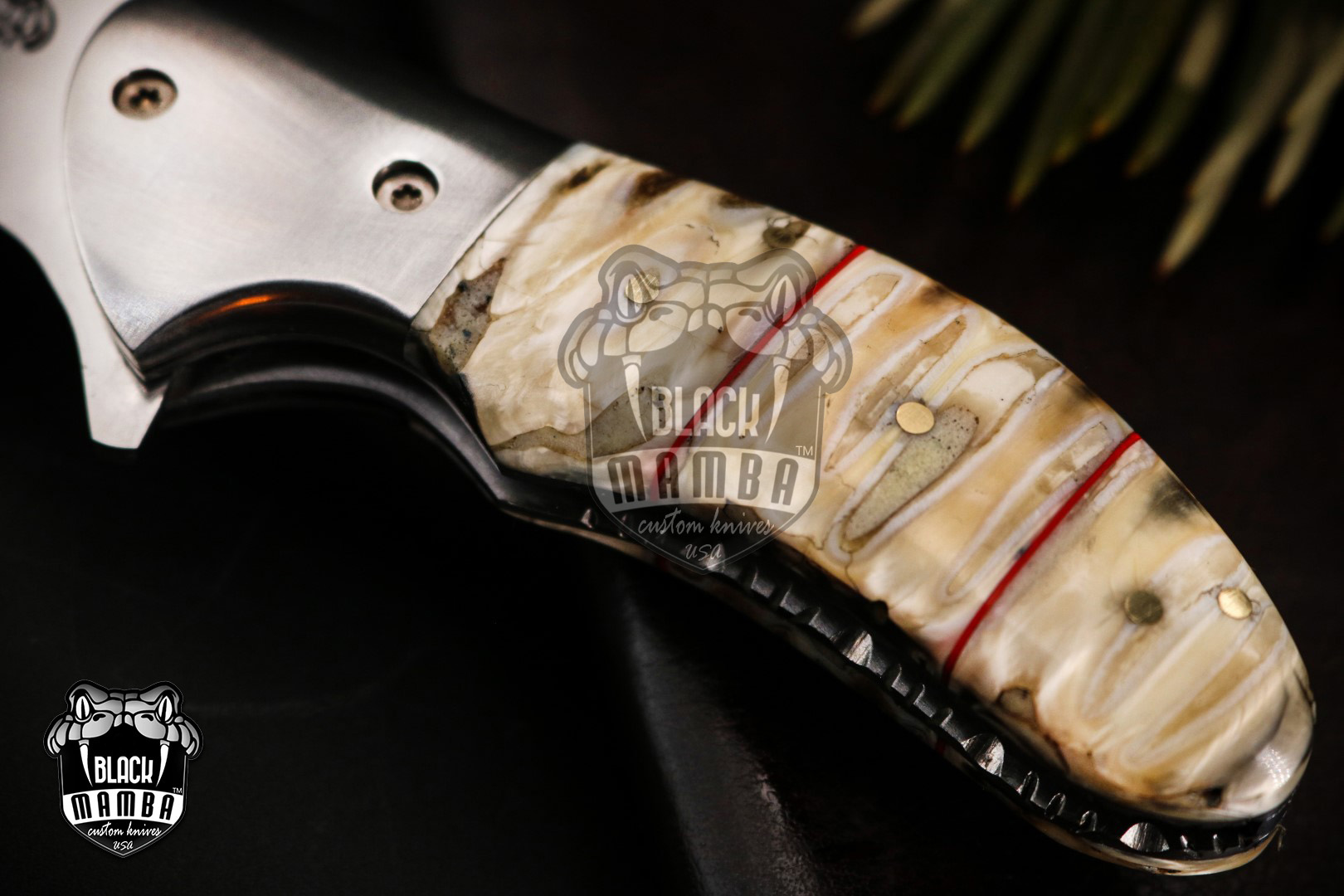
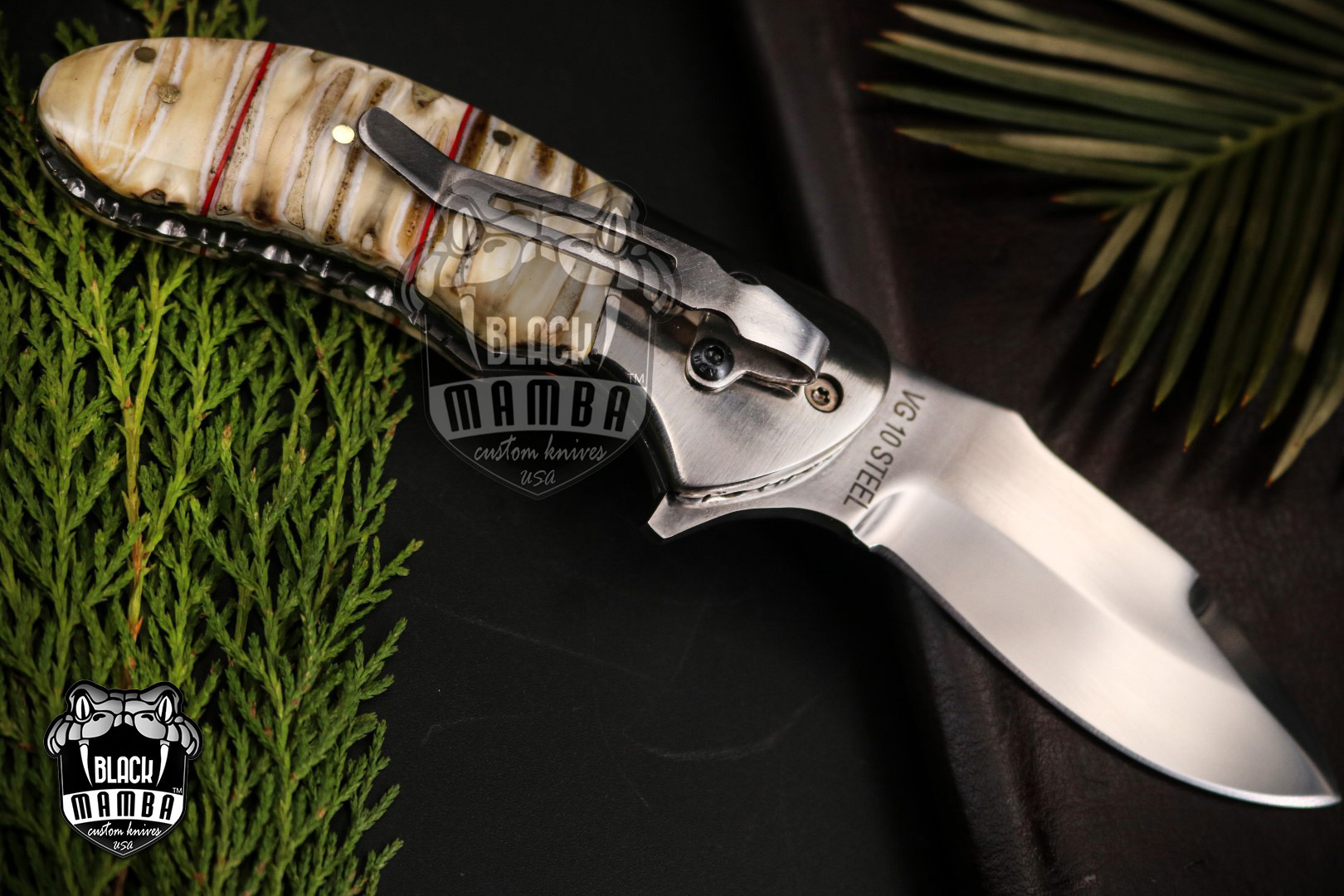
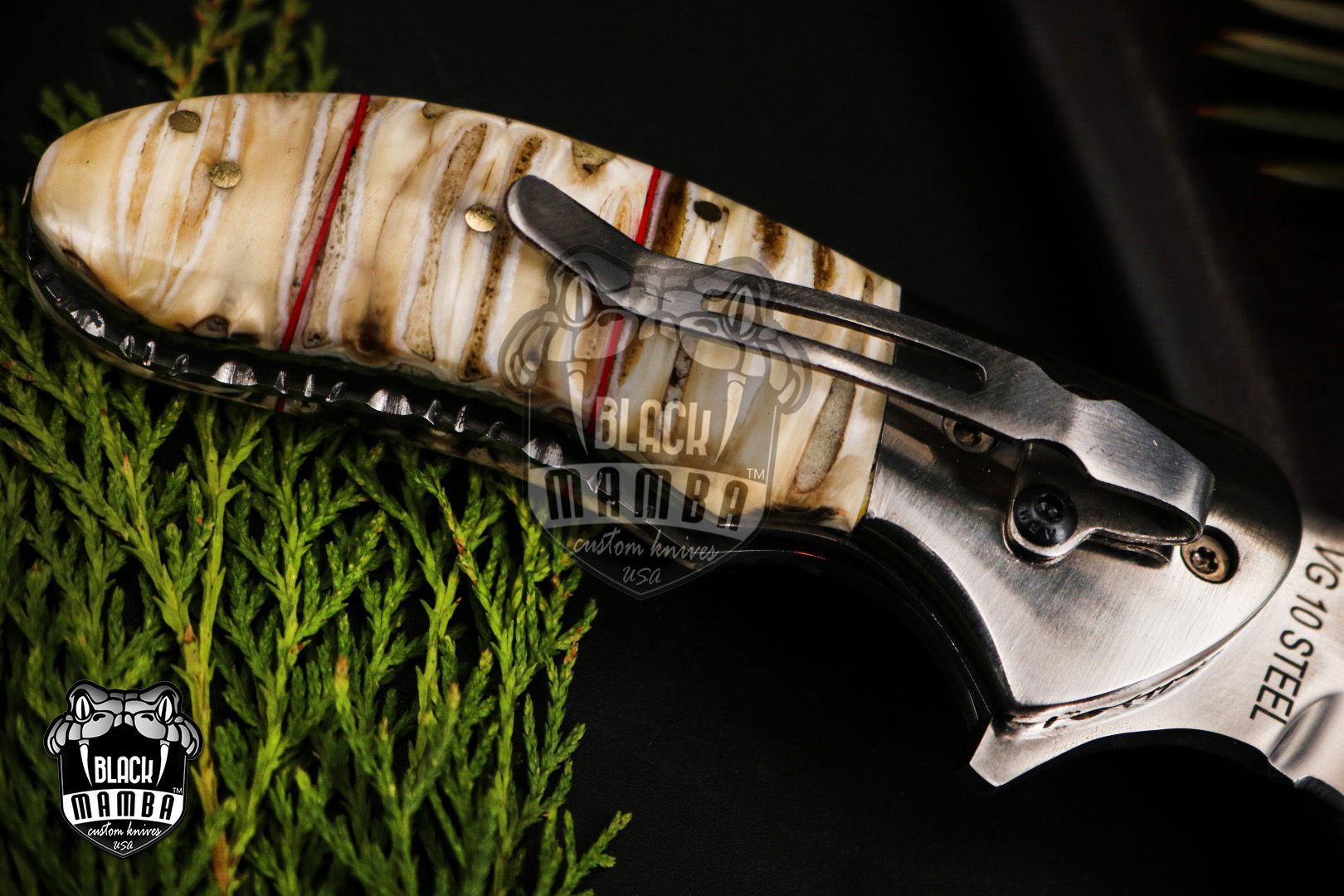
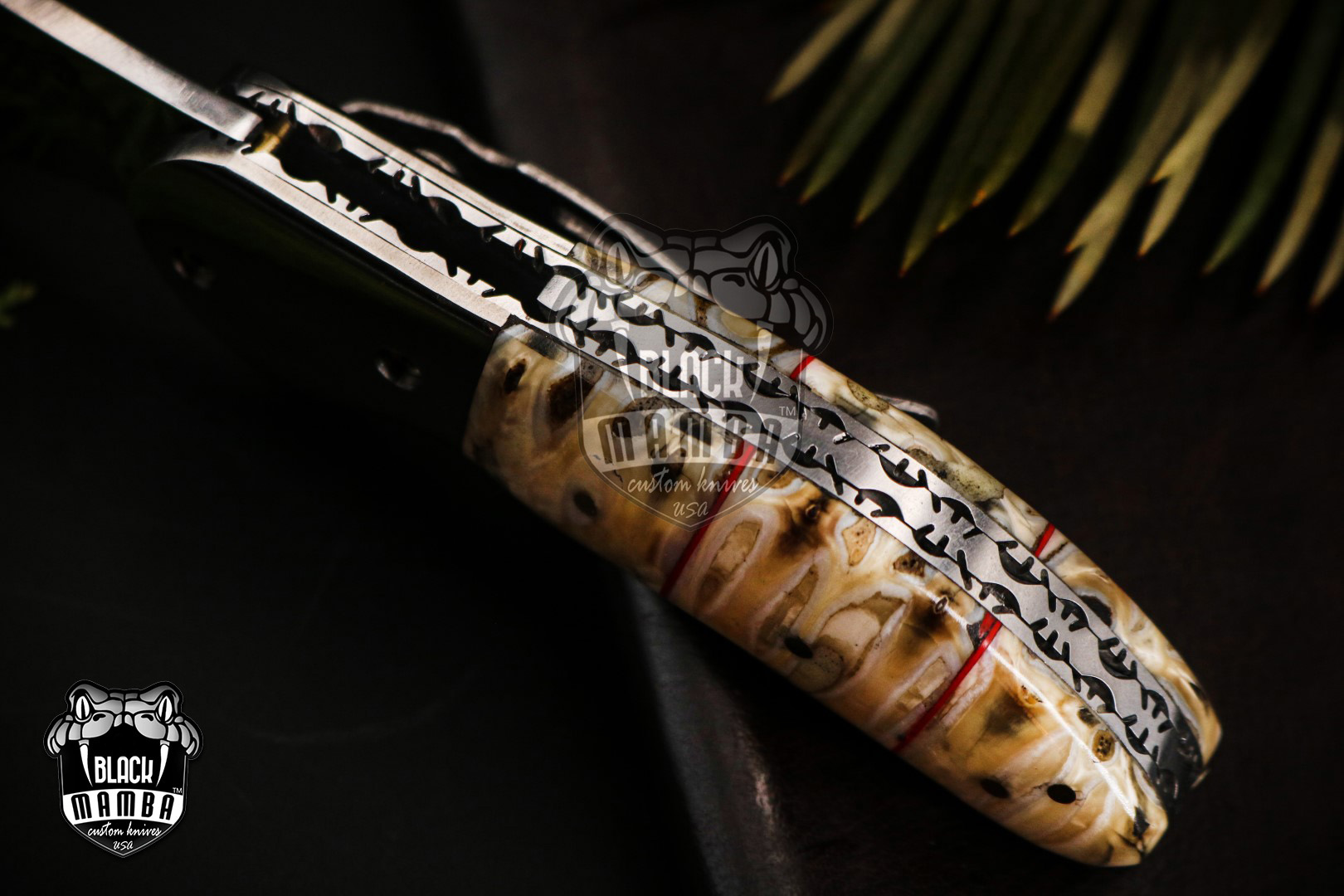
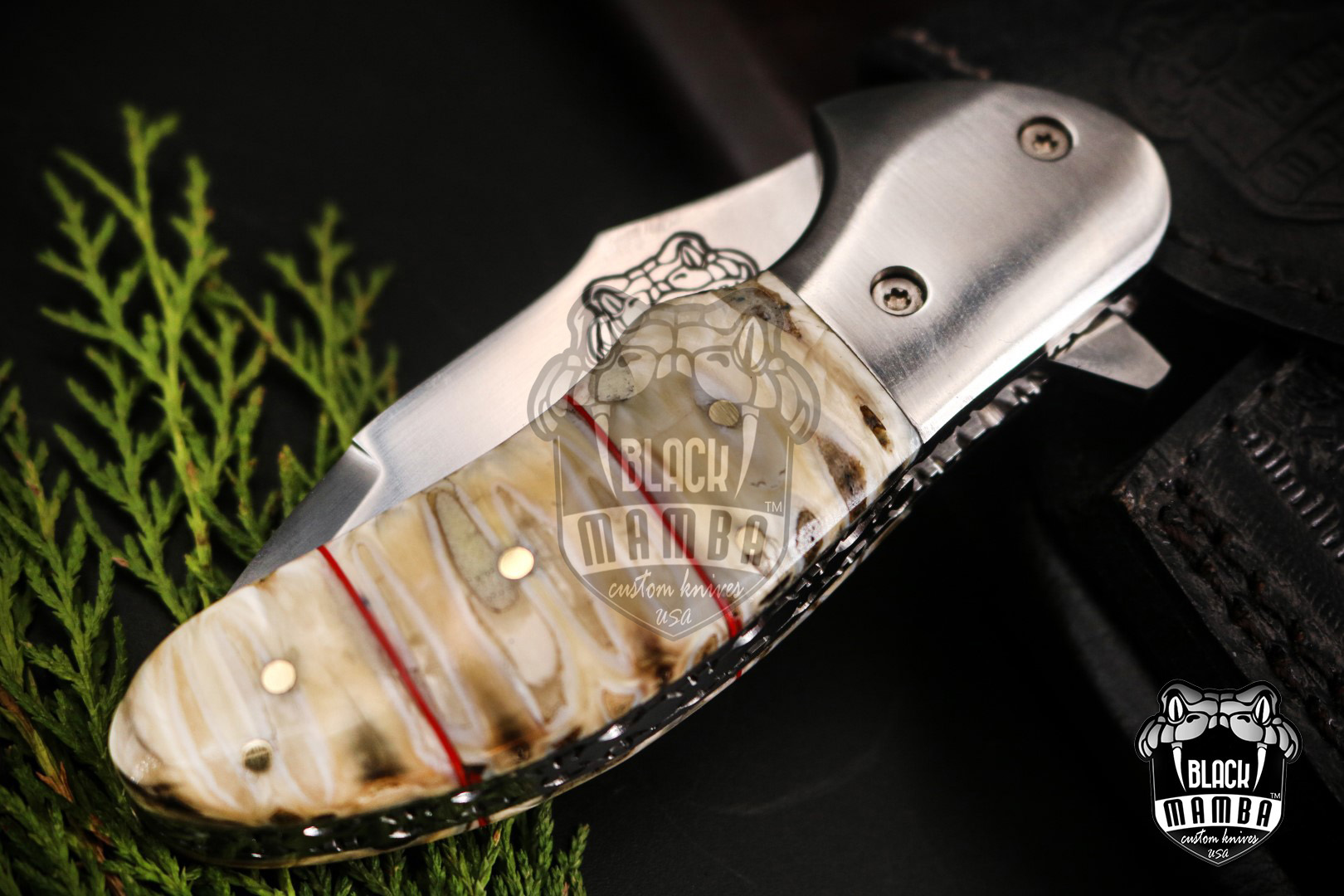
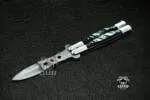
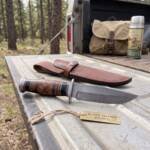
Four inches closed, three inches of mirror-finished VG10, and mammoth ivory laminate slabs with a red spacer running behind them.
| Overall length | 7 inches |
| Blade length | 3 inches |
| Handle length | 4 inches |
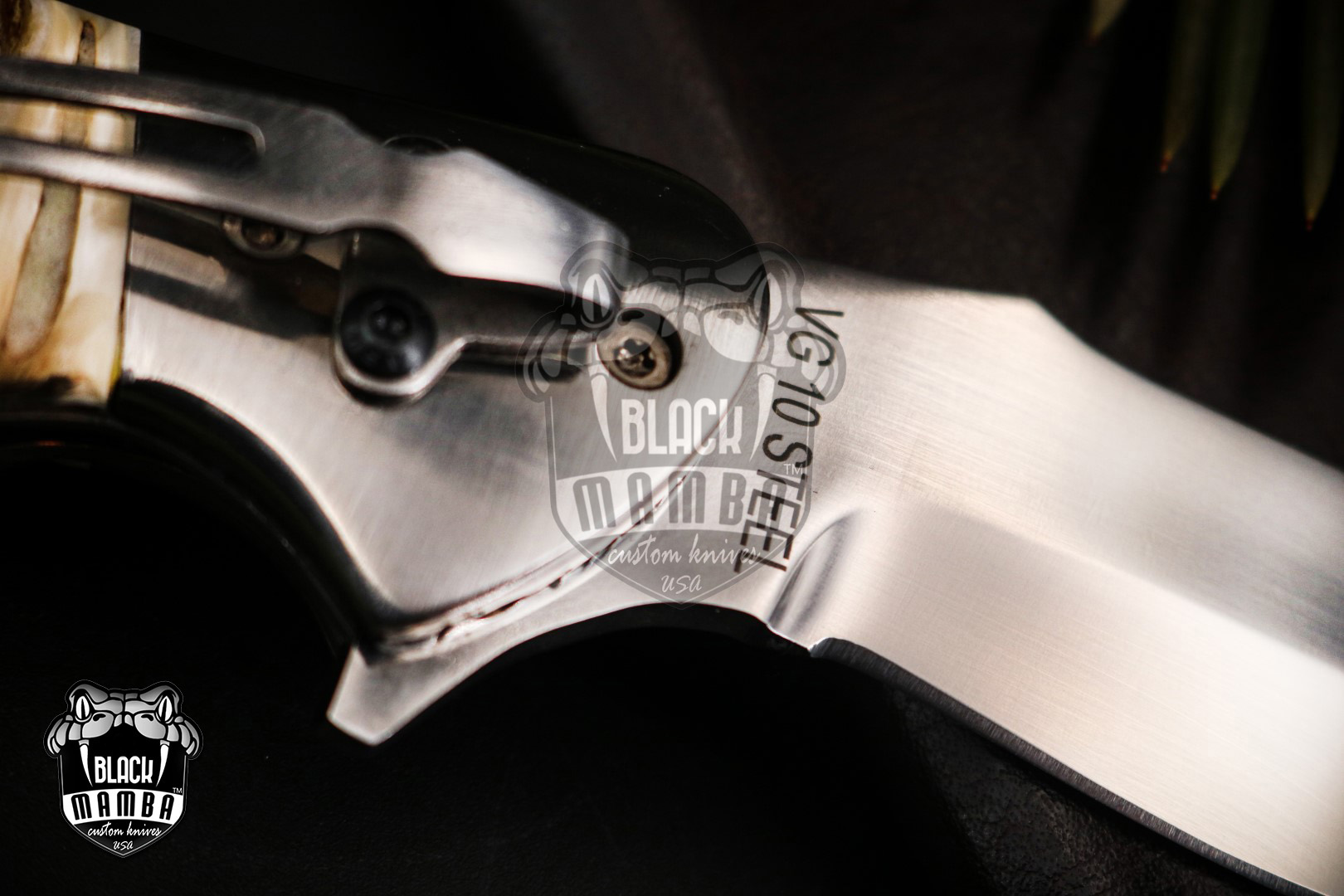
| Steel | VG10 stainless steel |
| Hardness | 58–60 HRC, oil tempered |
| Handle | mammoth handle with Steel bolster |
| Pattern | Mirror Shine VG10 |
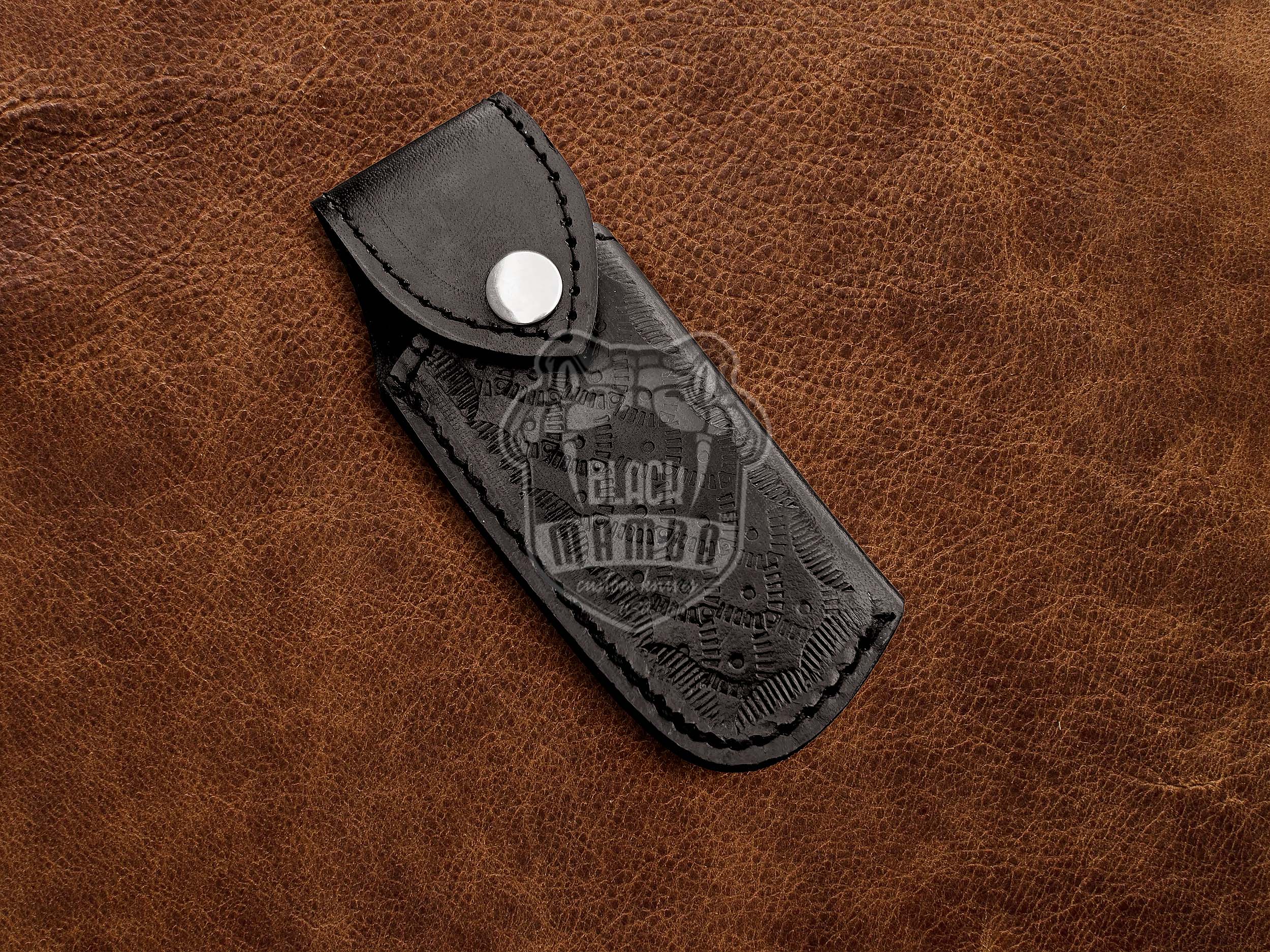
| Included | Hand-stitched leather sheath |
Made for: pocket carry where the knife will be seen. This is a gentleman’s folder in the old sense: small enough to disappear, finished well enough that taking it out is not embarrassing.
Mammoth, and what you are actually buying
Mammoth material is fossil, tens of thousands of years old, and it comes out of the ground already patterned by mineral staining. The cream and dark banding on these scales is not dye. Because it is fossil it is also drier and more fragile than fresh ivory or bone, which is why it is stabilized with resin before it is cut. Treat it as stone rather than wood: it will not warp, but it will chip if you drop the knife on a hard edge, and it hates being left somewhere hot.
Living with a mirror finish
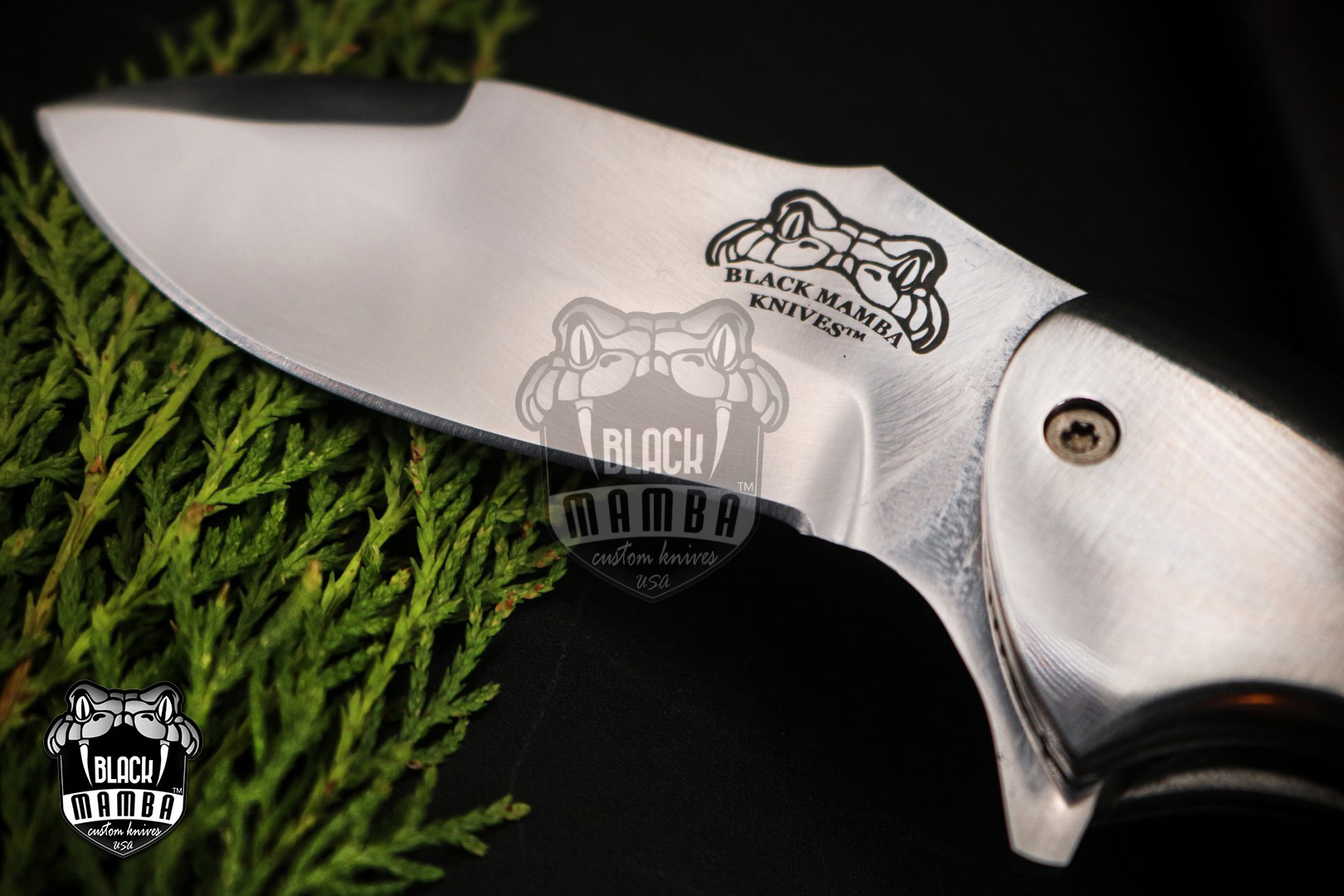
The Mirror Shine finish named in the table is a genuine polish, not a coating, and it behaves accordingly. It shows fingerprints immediately and picks up fine swirls from pocket lint. A microfibre cloth removes the prints; the swirls accumulate and eventually give the blade a soft satin look that many owners come to prefer. If that would bother you, buy a stonewashed blade instead.
Three inches, and where that lands
Three inches is the sweet spot for a folder that gets carried every day: long enough for boxes, cordage, fruit and light food prep, short enough to stay legal in most places and unthreatening in an office. It is not a survival knife, and the slim steel bolster means it is not built for prying either. Our comparison of Damascus, D2, 440C and VG10 explains where this steel sits against the alternatives.
Care: VG10 is stainless, so the blade needs no oil film and will not develop a patina. Wipe it, close it, carry it. The pivot is the part that wants attention: a single drop of light oil every few weeks, worked in by opening and closing, keeps the action smooth. Do not flood the knife under a tap, because water trapped behind the mammoth slabs takes days to dry. The full routine is in how to clean a pocket knife.
Common questions
How does it open? By hand, with a thumb ramp on the blade. It is not an assisted or automatic knife.
Will the scales match the photo? The banding is natural, so the pattern and the balance of cream to brown will vary.
What about a synthetic handle? The titanium handled pocket knife is the harder-wearing option.
Model: BMK-866
Olivia Sanchez –
This turned out to be way better than I thought it would be. Action smoothed out even more after a few days of carry. Already thinking about what to order next from this maker.
Zachary Patel –
Can’t stop showing this off to everyone who comes over. Zero complaints from me on this purchase.
Susan Davis –
Ordered late at night on a whim and woke up glad I did. Cool knowing this was handmade right in Memphis and shipped out fast. Detent is snappy without being stiff to open. Can’t say enough good things about this purchase.