
Description
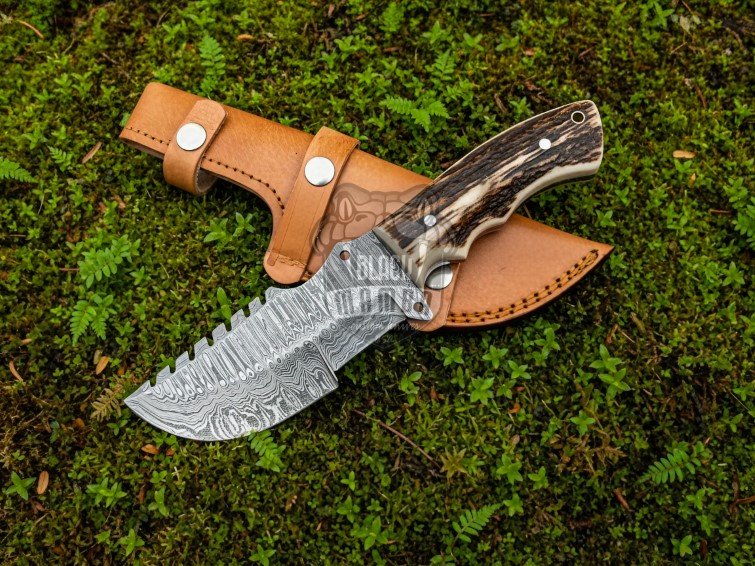
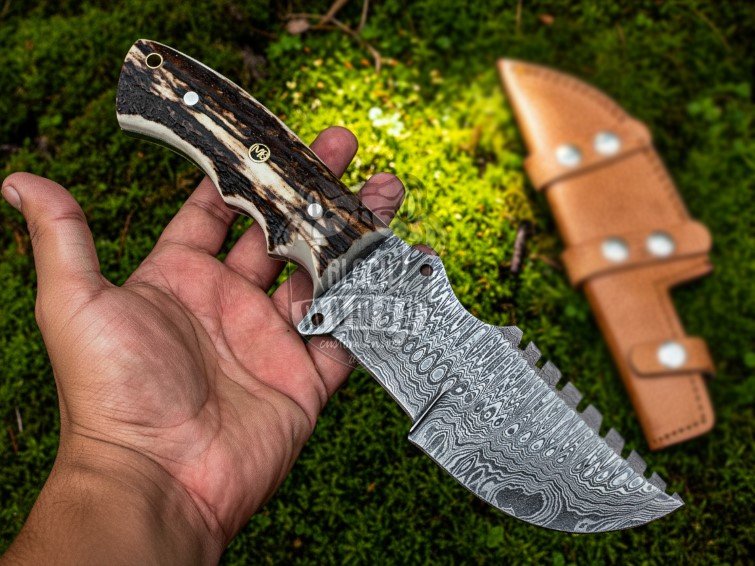
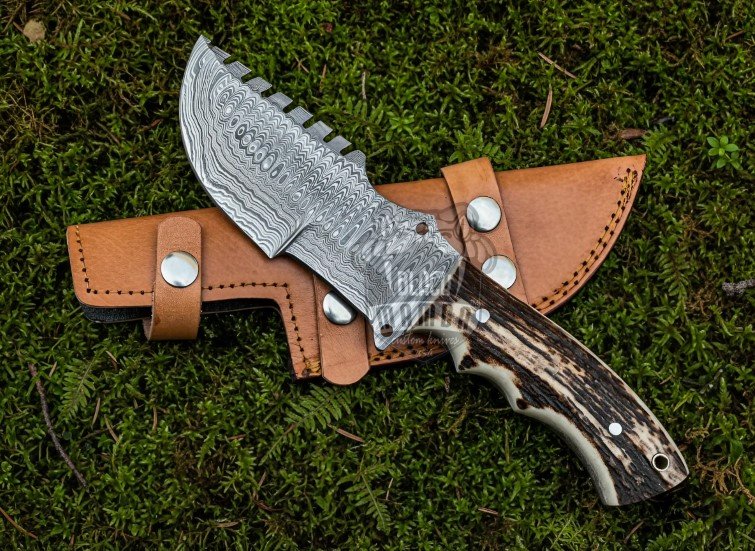
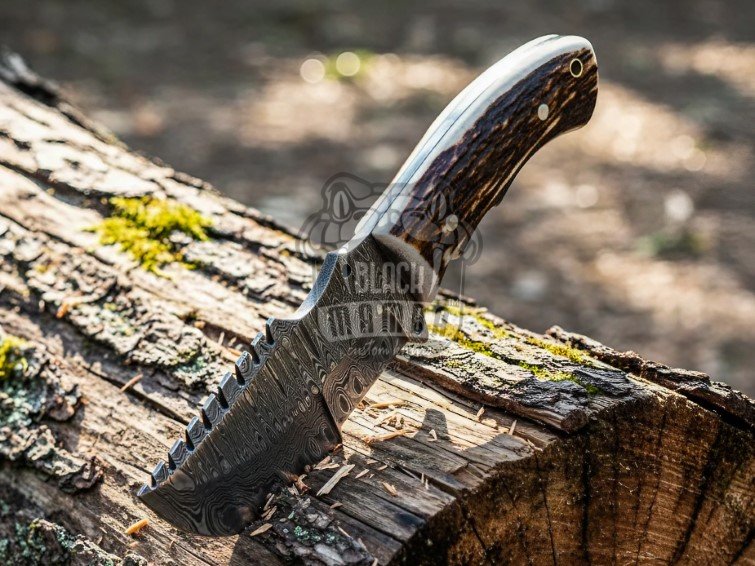
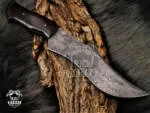
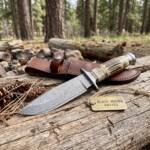
A tracker blade with two working edges and a row of saw teeth cut into the spine.
| Overall length | 10 inches |
| Blade length | 5 inches |
| Handle length | 5 inches |
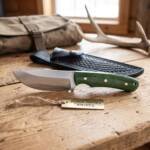
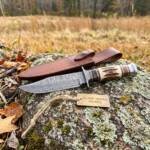
| Handle | Stag antler |
| Steel | 1095 + 15N20 Damascus, 352 layers |
| Hardness | 58–60 HRC, oil tempered |
| Pattern | Damascus Steel |
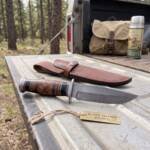
| Included | Hand-stitched leather sheath |
Put to work: field dressing, skinning, and camp tasks that would blunt a thinner knife. The forward section chops, the curved belly skins, and the spine saw handles notching and small limbs.
Care: Clear the sap and blood out of the saw teeth first, then dry the blade and oil it. Take it out of the sheath when you get home rather than at the end of the season. Damp leather against high-carbon steel is how good blades get ruined.
FAQs
What is a tracker blade? A two-part edge on one blade. A straight forward section for chopping and push cuts, and a curved rear belly for skinning and draw cuts, with a row of saw teeth along the spine. One knife covering three jobs is the whole idea.
Will it handle a whole animal? Yes. Five inches of edge across two geometries covers dressing, skinning and quartering without swapping knives.
Is it full tang? Yes, full tang with visible pins through the stag scales. See full tang versus partial tang for why that matters on a chopping blade.
Two edges, one blade
The forward straight section is ground thicker and takes the impact work: batoning kindling, notching, chopping through small stuff. The rear belly is ground thinner and does the skinning. Keeping them separate means you are not compromising one geometry to do both jobs, which is the whole argument for the pattern. Sharpen them as two separate edges, because that is what they are. The forward section wants a slightly more obtuse angle so it survives impact, and the rear belly wants to be thinner so it slices cleanly. Our skinning knife guide covers the geometry in more detail.
The saw on the spine
The teeth are deep and widely set, which is what you want for green wood. Fine teeth clog in sap within a few strokes. Run it flat, let the weight do the work, and do not try to use it on seasoned lumber or bone. It is for notching and for cutting small limbs cleanly. Used that way it stays sharp for a long time, because nothing is loading the teeth sideways.
Stag and the sheath
The scales are stag antler, pinned through the tang, with a lanyard hole at the butt. Every piece has its own crown and color, so no two handles match, and stag grips better wet than any polished material. The sheath is natural tan leather with two snap straps, stitched rather than riveted, so it can be re-stitched in twenty years instead of thrown away. If you want the same profile in a modern tool steel, the Jade Warden D2 tracker runs the other route.
Model: BMK-652
Deborah Rogers –
Ordered late at night on a whim and woke up glad I did. Love that this comes out of Memphis and still ships worldwide this quickly. Every piece of the fit and finish looks hand checked before it shipped. Pommel and guard are solid, no wobble anywhere on the knife. Even the small details in the damascus pattern are crisp and clean. Already telling my friends to check this out.
Devin Hall –
This knife is a genuine work of art. Came in a nice gift box which made it feel even more special. Pommel and guard are solid, no wobble anywhere on the knife. Edge retention has been great even after regular use in the field. Already thinking about what to order next from this store.
Kenneth Wells –
My wife was speechless when I showed them this knife.
Ryan Perez –
This turned out to be way better than I thought it would be. Even the small details in the damascus pattern are crisp and clean. Blade holds a razor edge right out of the box. Edge retention has been great even after regular use in the field. Love it.
Ruth Taylor –
This knife is a genuine work of art. Blade holds a razor edge right out of the box. Would send this as a gift again in a heartbeat.
Ronald Marsh –
Absolutely completely satisfied by this knife. Blade geometry makes it glide through cuts with barely any effort. This will not be my last order from this seller.