
Description
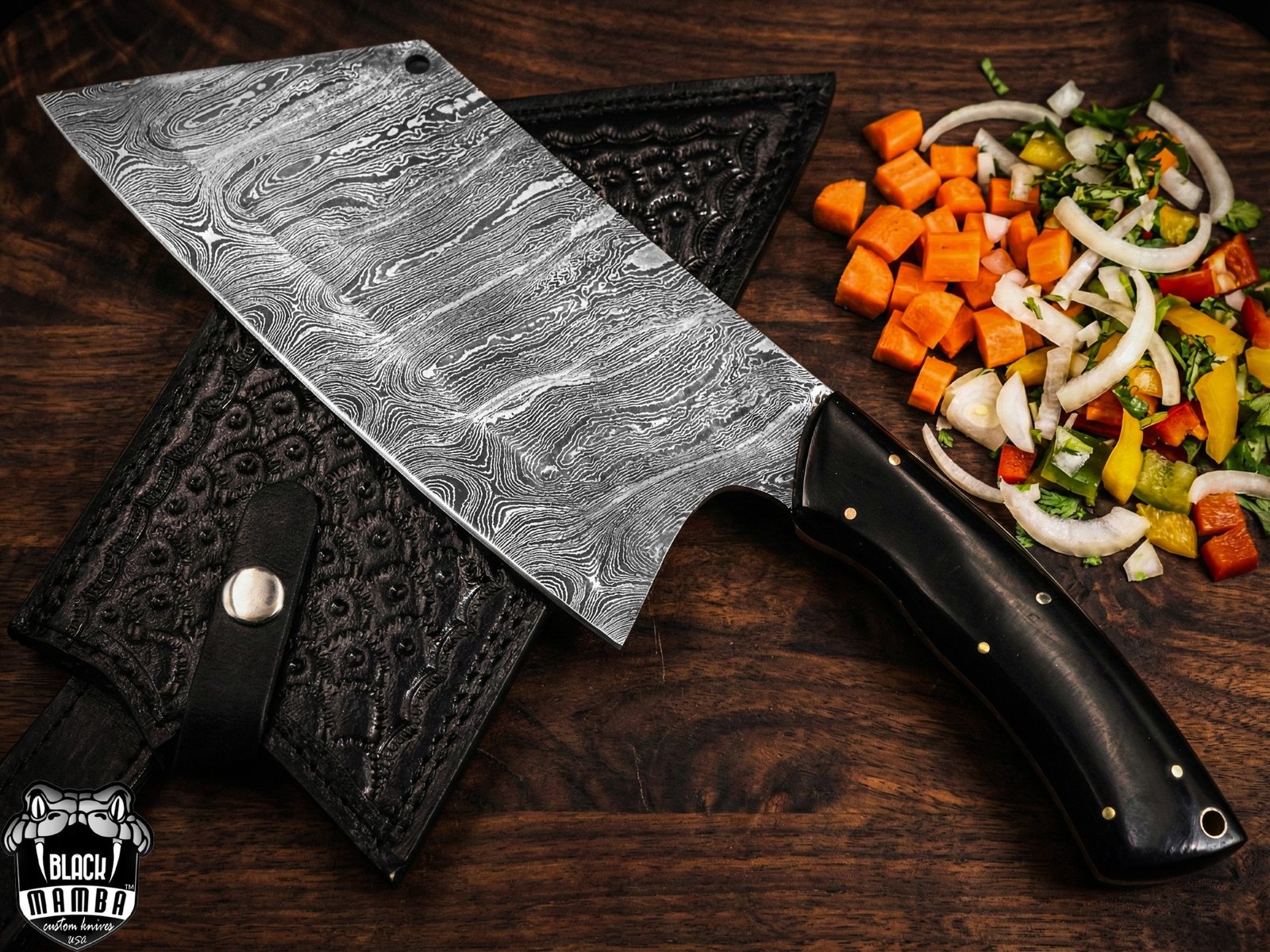
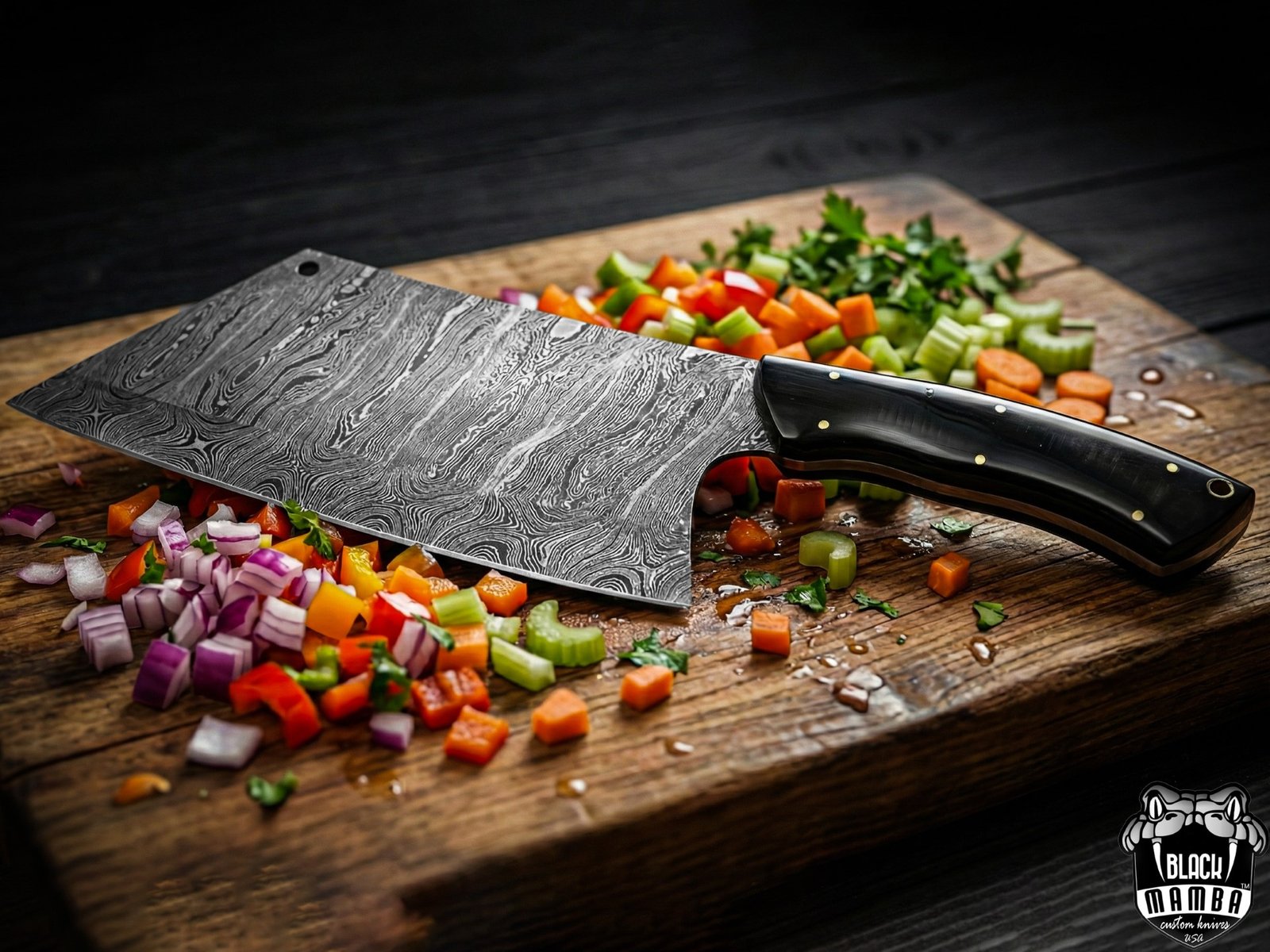
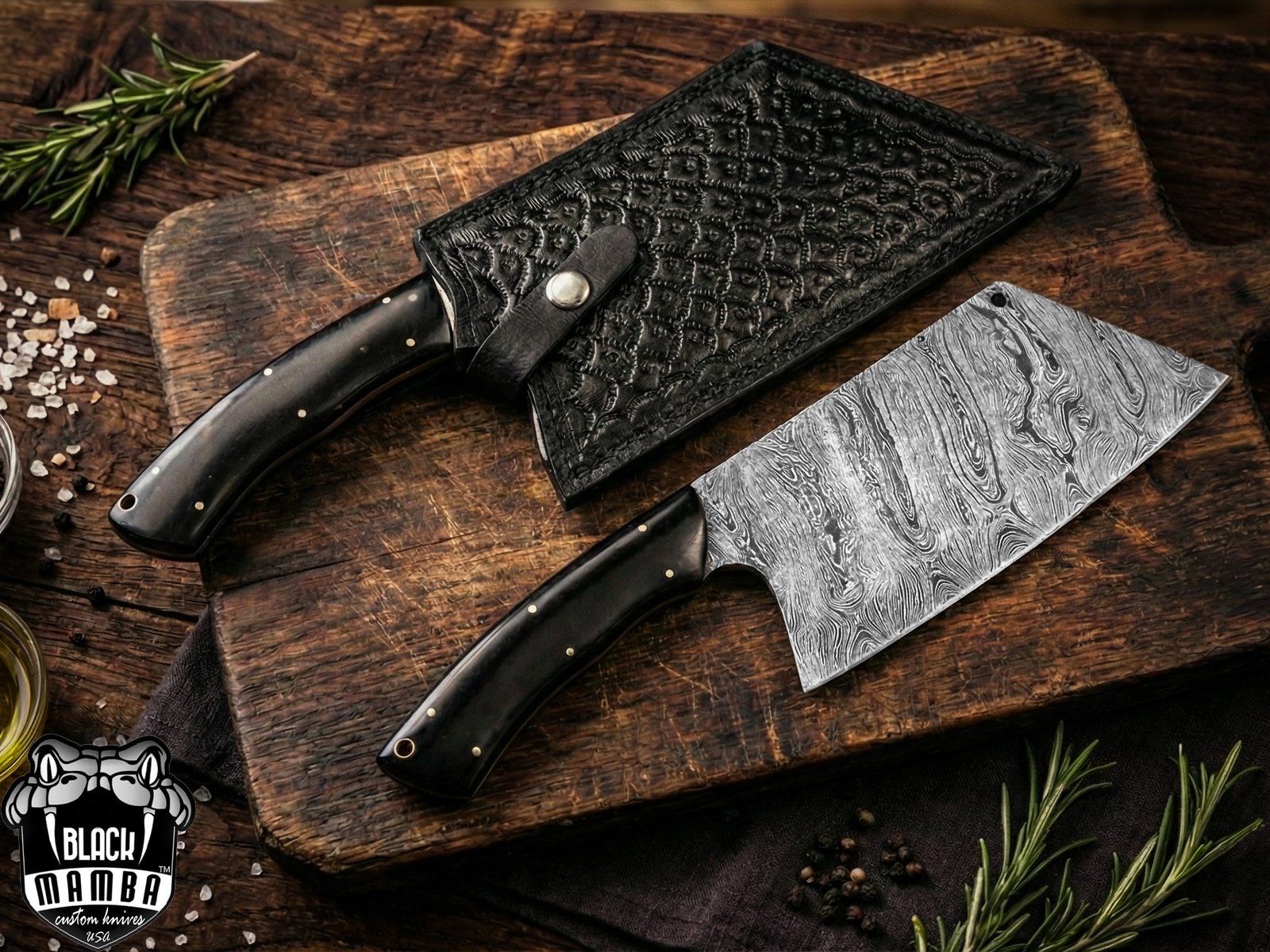
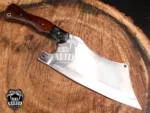
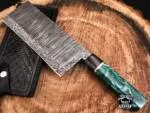
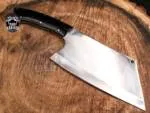
Thirteen inches overall, an 8 inch blade, and buffalo horn scales pinned in brass — a chef’s cleaver with the banding of the forge still visible across the face.
| Overall length | 13 inches |
| Blade length | 8 inches |
| Handle length | 5 inches |
| Steel | 1095 + 15N20 Damascus, 352 layers |
| Hardness | 58–60 HRC, oil tempered |
| Weight | 17 oz |
| Handle | Buffalo Horn Handle |
| Pattern | Mirror shine Blade Super Steel VG10 |
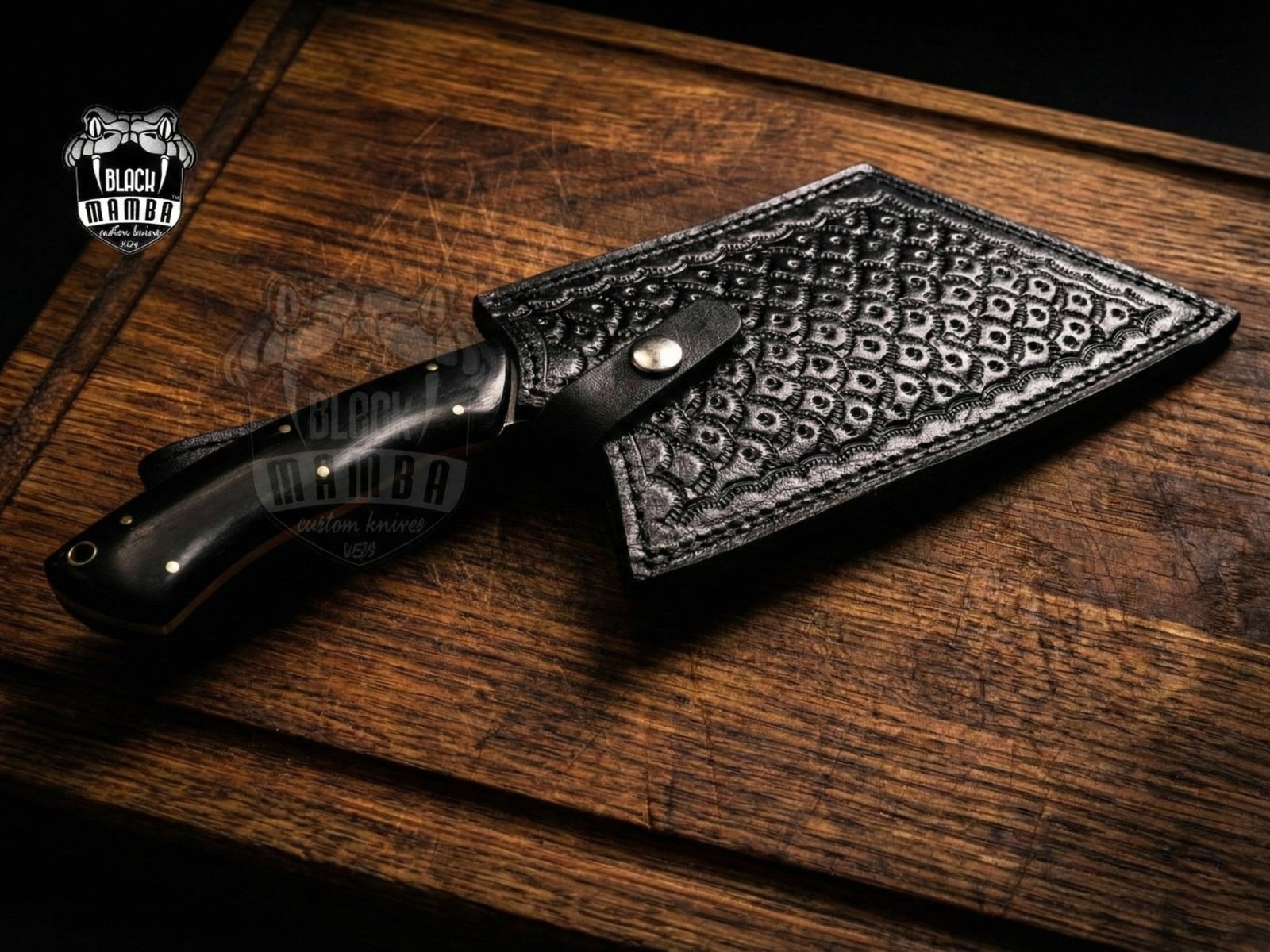
| Included | Hand-stitched leather sheath |
Best suited to: a cook who already owns a chef’s knife and keeps hitting its limits. Cabbage, winter squash, a whole chicken, anything where a thin blade wedges and stops. At 17 oz it is heavy enough to fall through dense produce without you leaning on it.
Buffalo horn
Horn is a natural material, so no two handles are the same color and most have some translucence at the thin edges. It is dense, it does not absorb water the way an untreated wood does, and it warms to your hand quickly. The brass pins are set flush so the grip stays smooth through a long session.
8 inches of blade, 5 inches of handle
Thirteen inches total splits almost evenly between cutting and holding, which is unusual for a cleaver and is what makes this one feel controllable. You can choke all the way up to the heel for fine work and drop back to the butt for chopping without changing knives.
The forged surface
The layered figure across the blade is a consequence of how it was made: two steels folded, drawn out, ground and etched. It is different on every knife, it is not printed, and it goes through the full thickness of the plate. Practically, that means the pattern outlives the knife’s working life.
Working the tall face
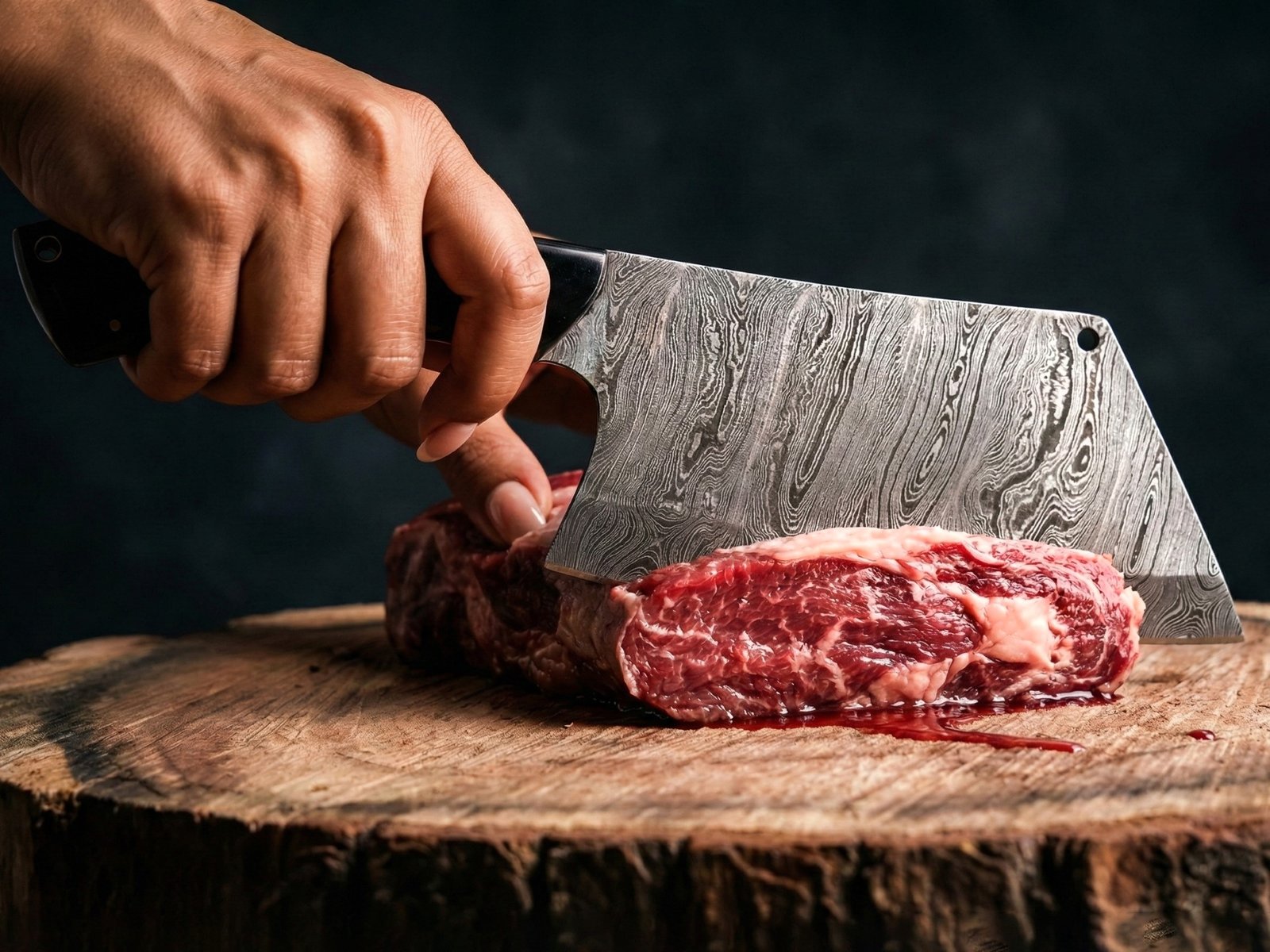
Because the blade is deep as well as long, your knuckles clear the board through the whole cut. That is the quiet reason cooks who switch to a cleaver stop going back: no more knocking your hand on the board halfway through a pile of onions.
Thirteen inches on a home board
This is the largest knife most home kitchens can actually accommodate. It fits a standard board without hanging over the edge, and it still stores flat on a magnetic rail. Anything longer starts to need dedicated space.
Fit and finish
The scales are shaped to the tang after the tang is ground, not before, so the transition from steel to horn is flush under your fingers rather than stepped.
Care: high-carbon steel needs a habit, not a ritual. Wash by hand, dry it now rather than later, and keep a food-safe mineral oil on the blade about once a month. Acidic ingredients will gray the surface if you leave them sitting — wipe as you go. The full care routine is written up here.
FAQs
Is horn fragile? No, but it does not like extremes. Keep it away from a dishwasher and out of direct sun for long periods.
What else works alongside it? A narrow blade for the jobs a cleaver cannot do — the antler-handled slicing knife is the natural partner.
How is the edge set? Our chef knife bevels guide covers the geometry and how to keep it.
Model: BMK-863

Mary Hughes –
It’s a okay knife. Nothing extraordinary though. It’s fine but I expected a little more for the price. Sheath fit is a bit loose for my liking. Wouldn’t say no to it but wouldn’t rave about it either.
Jamal Adams –
Didn’t think a knife at this price could feel this premium. Handle feels amazing and the balance is perfect. Would send this as a gift again in a heartbeat.
Zachary Taylor –
Overall a good buying experience. Balance is good, just wish the handle had a bit more grip texture. Good product. Just not quite perfect.
Victoria Mitchell –
This knife completely won me over the moment I picked it up. Fit and finish is museum quality. You can tell real craftsmen made this by hand. Can’t say enough good things about this purchase.
Zachary Cook –
My whole family passed this knife around at dinner just to look at it. Blade geometry makes it glide through cuts with barely any effort. Even the small details in the damascus pattern are crisp and clean. Definitely bookmarking this maker for future orders.