
Description
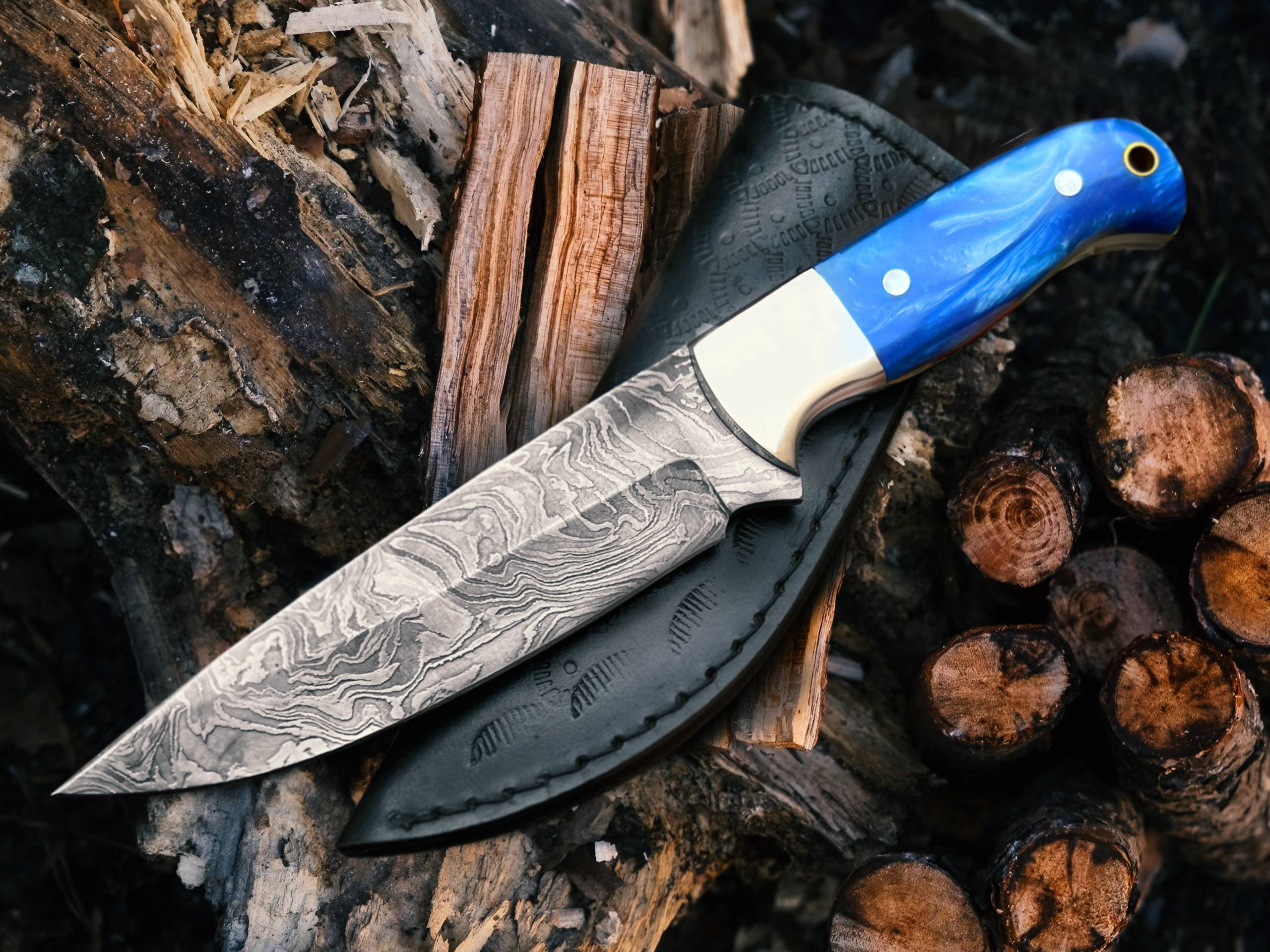
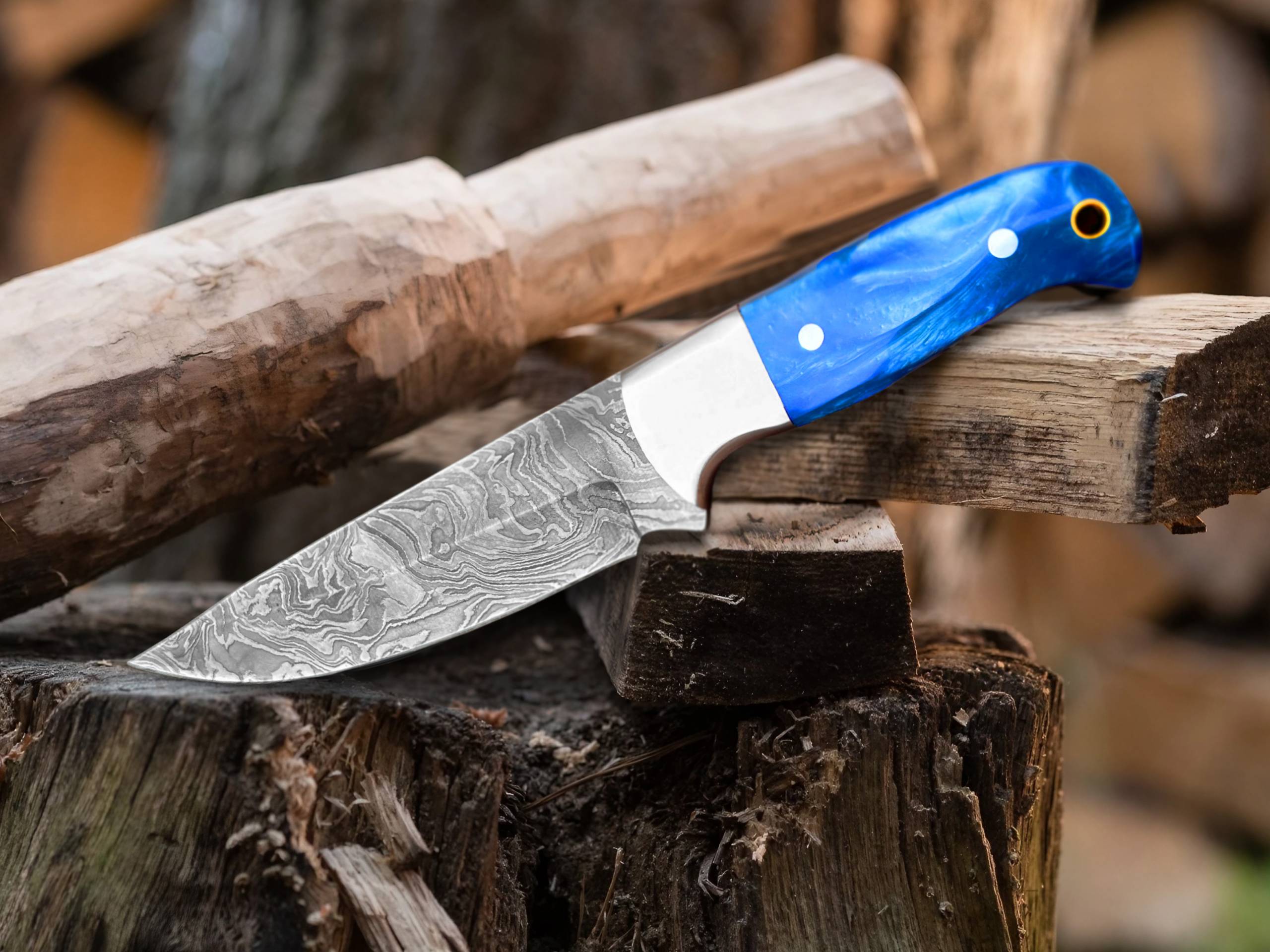
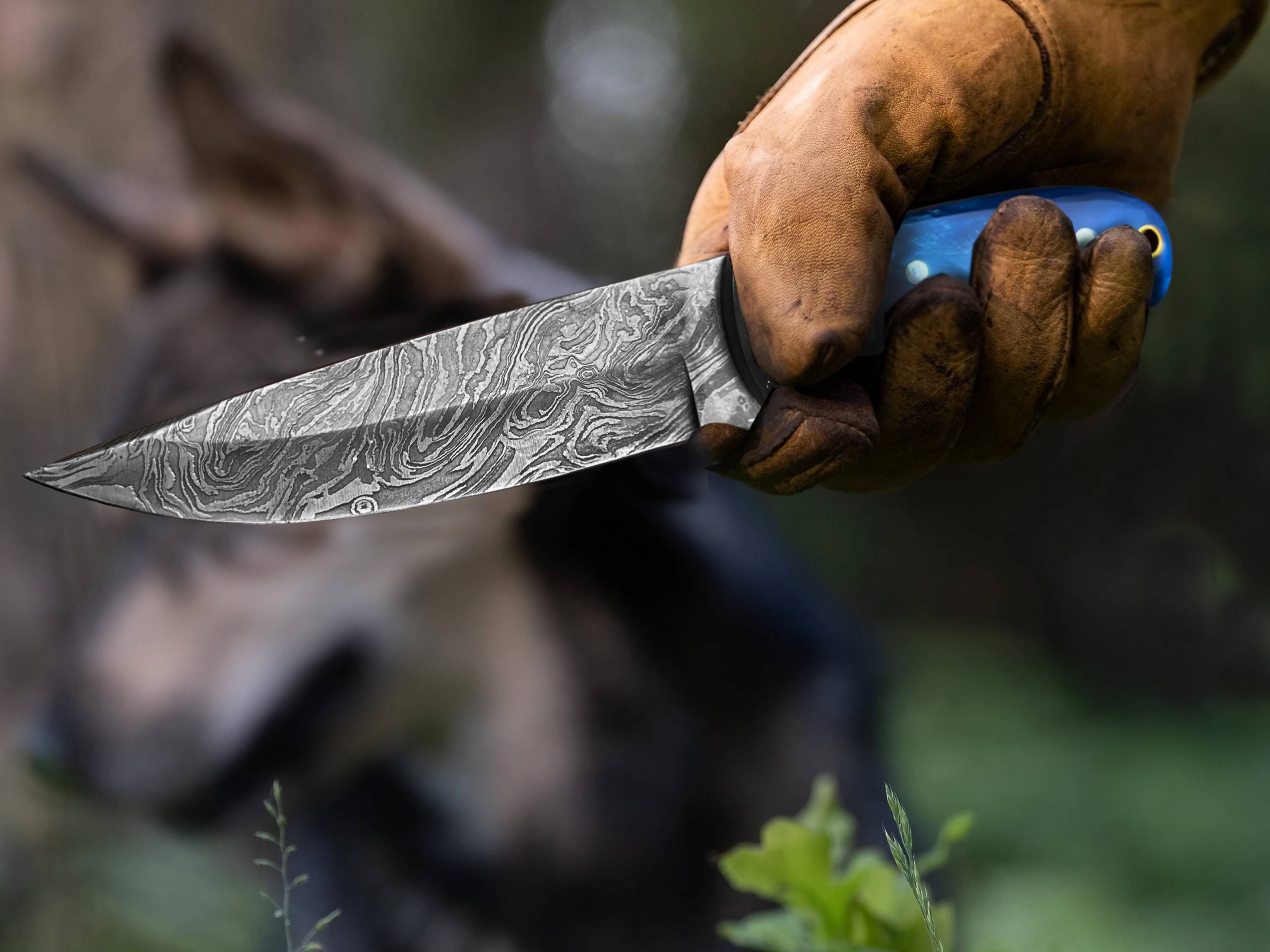
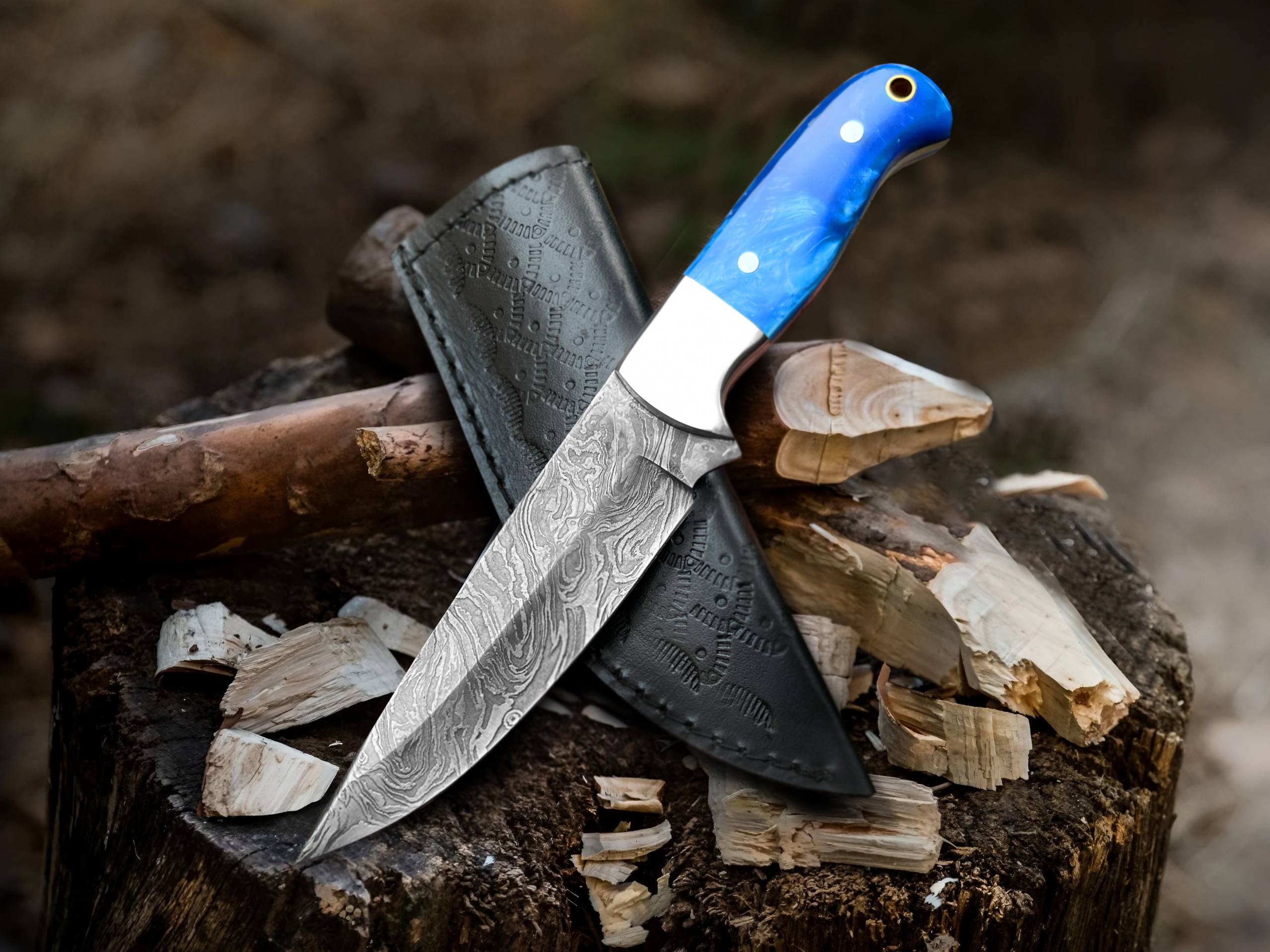
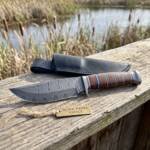
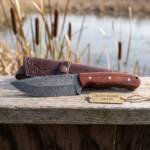
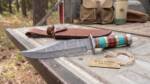
Blue-dyed buffalo bone against a dark etched blade. The Blue Phantom is a hunting knife bought first with the eyes.
| Steel | 1095 + 15N20 Damascus, 352 layers |
| Handle | Blue dyed buffalo bone |
| Hardness | 58–60 HRC, oil tempered |
| Included | Hand-stitched leather sheath |
Built for: hunters who want their skinning knife to be worth looking at, and collectors after a pattern-welded piece with a handle that is not wood. What we will not do is tell you how it handles in a particular job, because the sizing on this listing is incomplete.
Care: pattern-welded 1095 and 15N20 is high-carbon steel and it will spot within a day of contact with blood if you leave it. Clean it in the field, dry it, oil it before it goes back in the truck. For the bone, keep it out of sustained sunlight to slow the fade, and never put it in hot water, because heat can open hairline checks along the grain. The sheath is for carrying, not for storage.
What our spec sheet is missing
The table above records the steel, the layer count, the hardness and what ships in the box. It does not record blade length, overall length, handle length or weight. We would rather leave those blank than fill them with an estimate. If dimensions matter to your decision, send us the model number and we will measure the one that would ship.
Dyed buffalo bone, honestly
Buffalo bone is harder and denser than most cattle bone, which is why it takes dye and polish so well. The blue is not paint sitting on the surface; it is drawn into the structure, so a scratch does not show as a white line the way it would on a coated handle. It will fade, though. Years of sunlight lighten it, and the high spots your fingers wear will go first. Bone is also brittle in a way wood is not. Dropped on tile, a bone handle can chip where a wooden one would only dent.
A high layer count on a working knife
352 layers gives a fine, close figure rather than the wide bands of a low-layer billet. Against a blue handle it reads as texture across a room and resolves into lines up close. It changes nothing about how the knife cuts. Hardness does that, and the range in the table is the working band for a knife used on animals.
FAQs
Does the blue come off on your hands? No. The dye is through the material rather than on it.
Is pattern-welded steel a sensible choice for hunting? It is a choice with a cost. You get a blade that takes a very keen edge and sharpens easily. You pay in an hour a year of maintenance you would not owe a stainless knife, and a real chance of surface rust after a careless season. If you want that same steel family in something built to be beaten on rather than babied, a 1095 tomahawk is the unfussy version.
The title says BMK-463 and the model line says BMK-643. Which is right? The model line at the foot of this page is the number our workshop uses. Quote that one if you are ordering by reference. Our Damascus hunting knife guide covers the field routine in more depth.
Model: BMK-643
Dennis Bennett –
This blade came razor sharp right out of the box. Steel has a gorgeous pattern that looks different in every light. Proud to support American made goods out of Memphis with this purchase. Fit and finish is museum quality. You can tell real craftsmen made this by hand. Took it out camping right away and it handled everything I threw at it. Will definitely order again for another one.
Jack Wilson –
My brother was speechless when I showed them this knife. Handle feels amazing and the balance is perfect. Beyond happy with how this turned out.
Kimberly Alvarez –
This knife looks even better in person than in the listing photos. Love that this comes out of Memphis and still ships worldwide this quickly. Blade holds a razor edge right out of the box. Already planning my next pickup from this store.
Luis Wilson –
This is exactly what I wanted and then some. Even the small details in the damascus pattern are crisp and clean. Would send this as a gift again in a heartbeat. Not my first order from Black Mamba Knives and it won’t be my last.