
Description
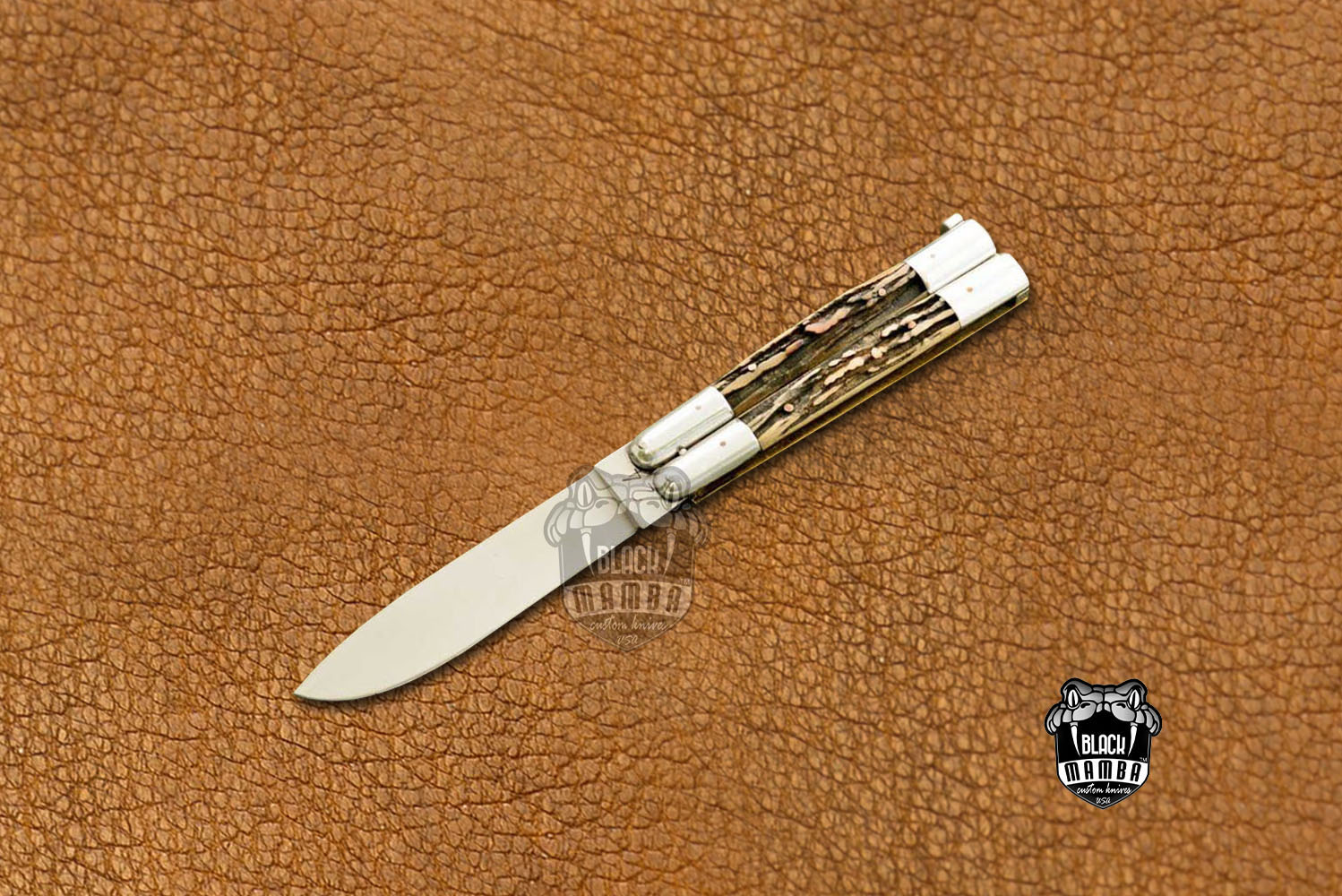
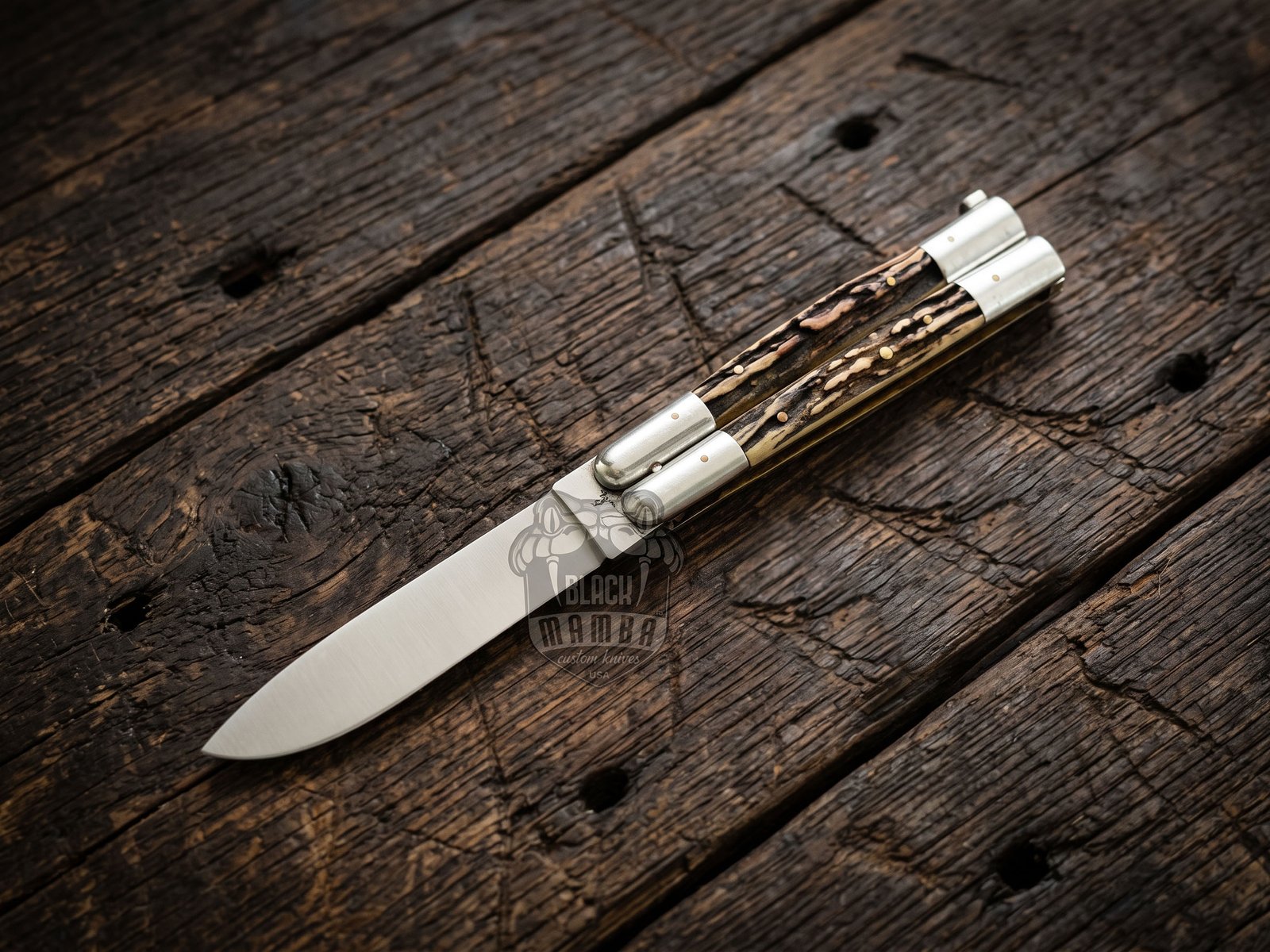
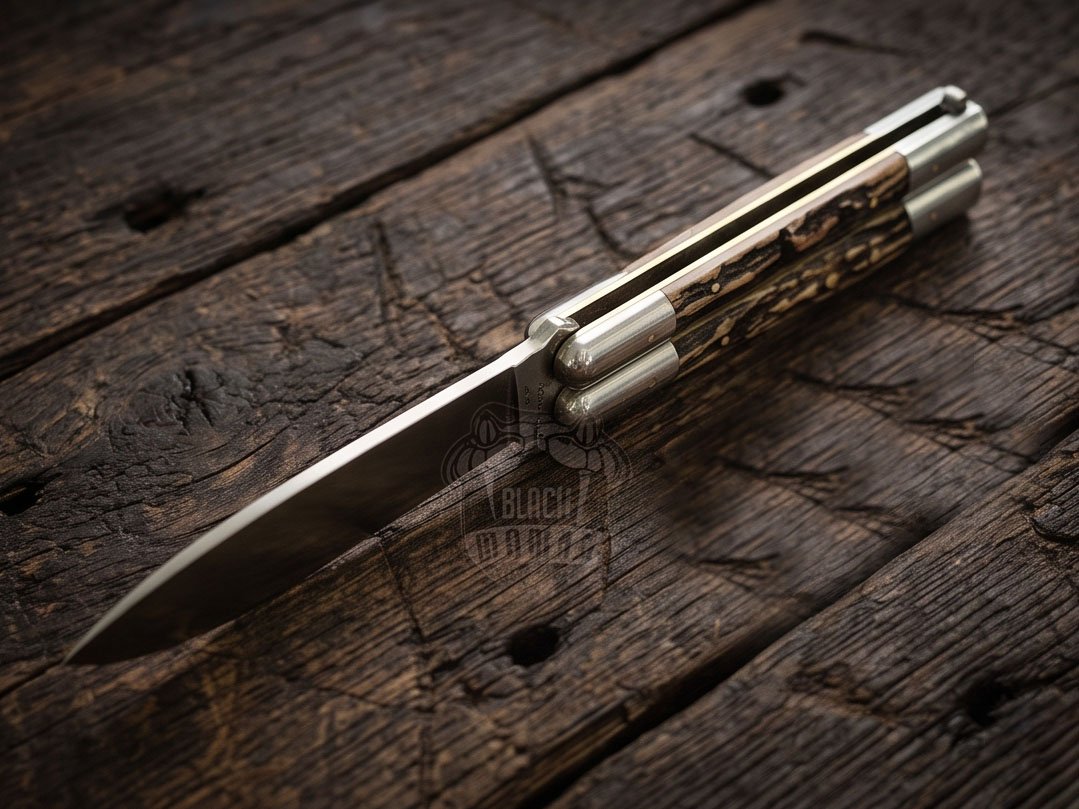
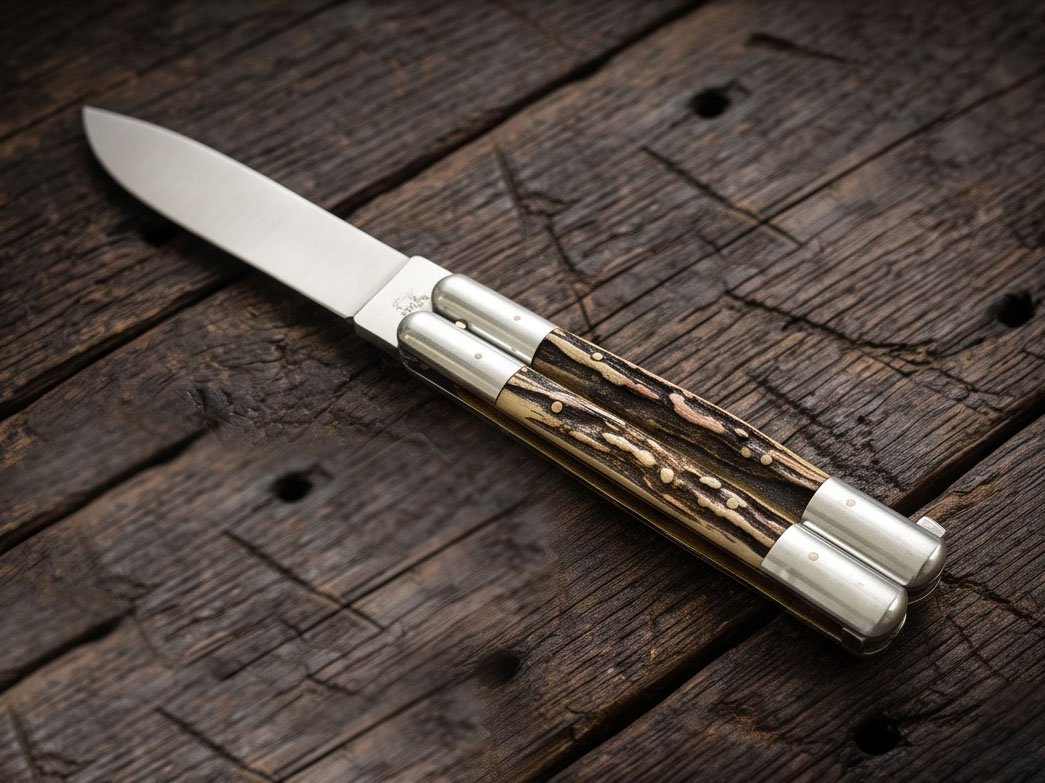
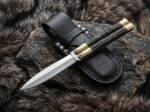
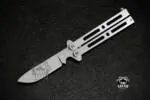
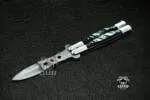
Genuine stag, not a molded imitation of it. The panels on this one still carry the bark texture the antler grew with, tan and warm brown with pale grooves running through it, and no two pieces on the bench look related. Bolsters are polished steel with a brass liner showing along the length of the handle, and the blade is a plain satin drop point with nothing cut into it.
| Overall length | 9.1 inches |
| Blade length | 4.4 inches |
| Handle length | 4.7 inches |
| Steel | D2 tool steel |
| Handle | – Brass with Deer Horn Inserts |
Why the stag costs what it does
Antler is graded and paired by hand, and that is the whole story. Color, density, groove depth and crown texture all vary from one piece to the next, so getting two panels that agree with each other across a single knife means rejecting most of what comes through the door. What ends up on a handle is the small proportion that matched. Nobody has found a way to make that process cheaper without also making it a lie, so the price reflects sorting labor rather than materials cost, and a run of these knives never looks like a run of anything else.
How the handle is put together
The stag is set into the frame rather than laid over the top of it. Metal carries the outer edges and the antler occupies the middle, where your palm lands and where nothing is going to hit it. Drops and tabletop knocks land on the bolsters, which dent and polish back out; the softer material stays out of the line of fire entirely. The brass liner running the length of the handle is doing structural work as well as visual work, spacing the channel and giving the pins something consistent to bear against. If pins, pivots and channel work are unfamiliar territory, how a balisong is assembled walks through the parts one at a time.
Living with a natural handle
Antler is keratin, so heat and prolonged sun are what actually damage it. A closed car in July does more harm in an afternoon than a year of flipping ever will. Skin oil dulls the surface slowly and unevenly, and a drop of the same lubricant you put on the pivots, buffed off with a cloth, brings the shine back without filling the grooves. Our notes on choosing a knife oil cover what is safe to put on natural material and what is not, which matters more here than it does on a synthetic handle.
The steel underneath
Tool steel keeps cutting long past the point where simpler alloys have given up, and when it finally does need attention it asks for diamond abrasive instead of a soft natural stone. It resists staining without qualifying as stainless, so drying it off after handling is ordinary housekeeping and not an emergency.
If the figured brown is not for you
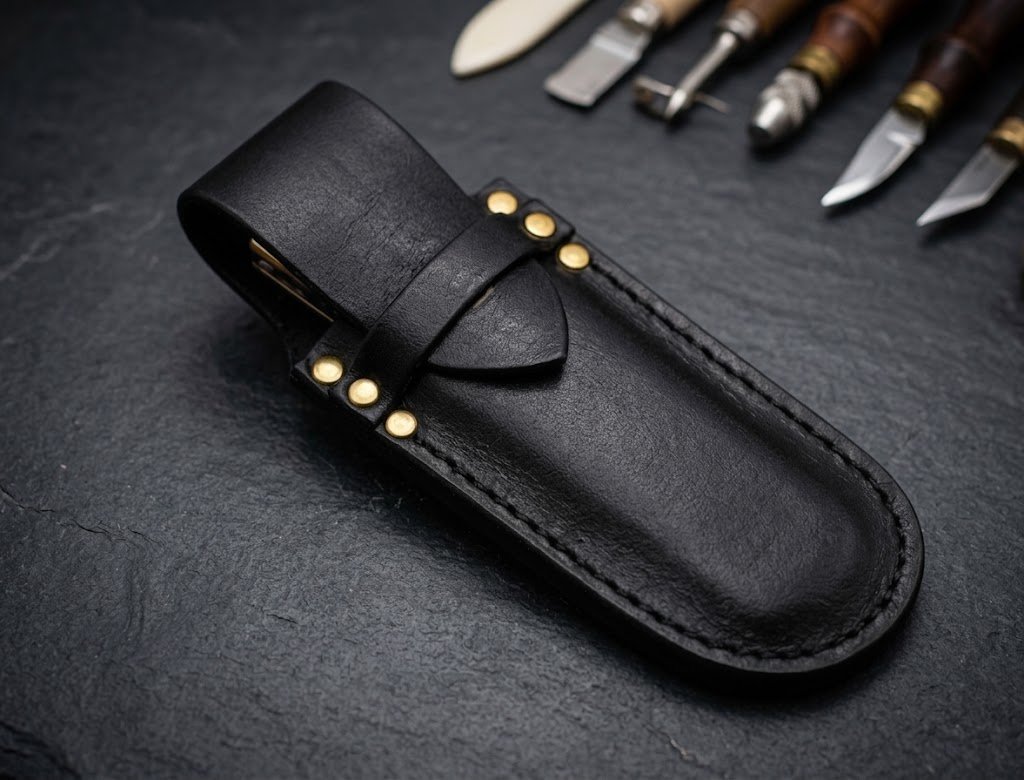
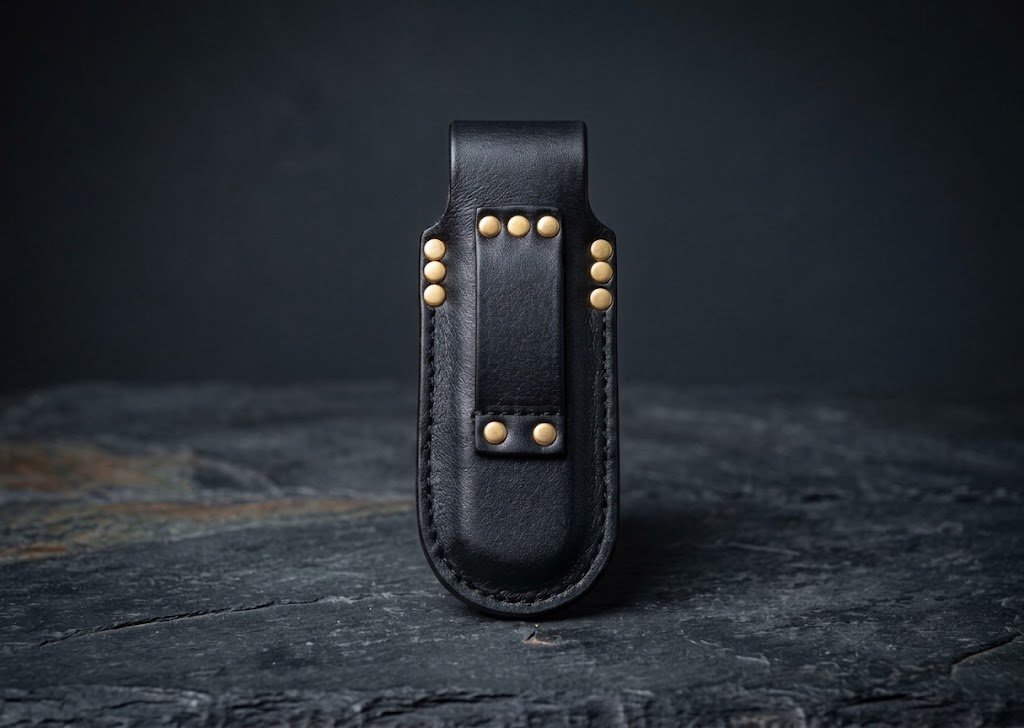
The ram horn version of this balisong is darker, far more uniform and considerably less money. Everything is finished by hand in Memphis and goes out with a riveted black leather carrier. Check how butterfly knives are treated where you live before you order. Guaranteed for as long as you own it.
Model: BMK-460
Not sure this is the one? See every balisong knife we make in one place.
Liam R. (verified owner) –
I’m impressed with the meticulous attention to detail on the steel butterfly knife I got from this shop. It’s not just a tool; it’s a piece of art that I’m proud to own.
Emily S. (verified owner) –
This store is a must-visit for butterfly knife enthusiasts. The knife I received is a masterpiece in steel, and it has quickly become a cherished item in my collection.