

Description
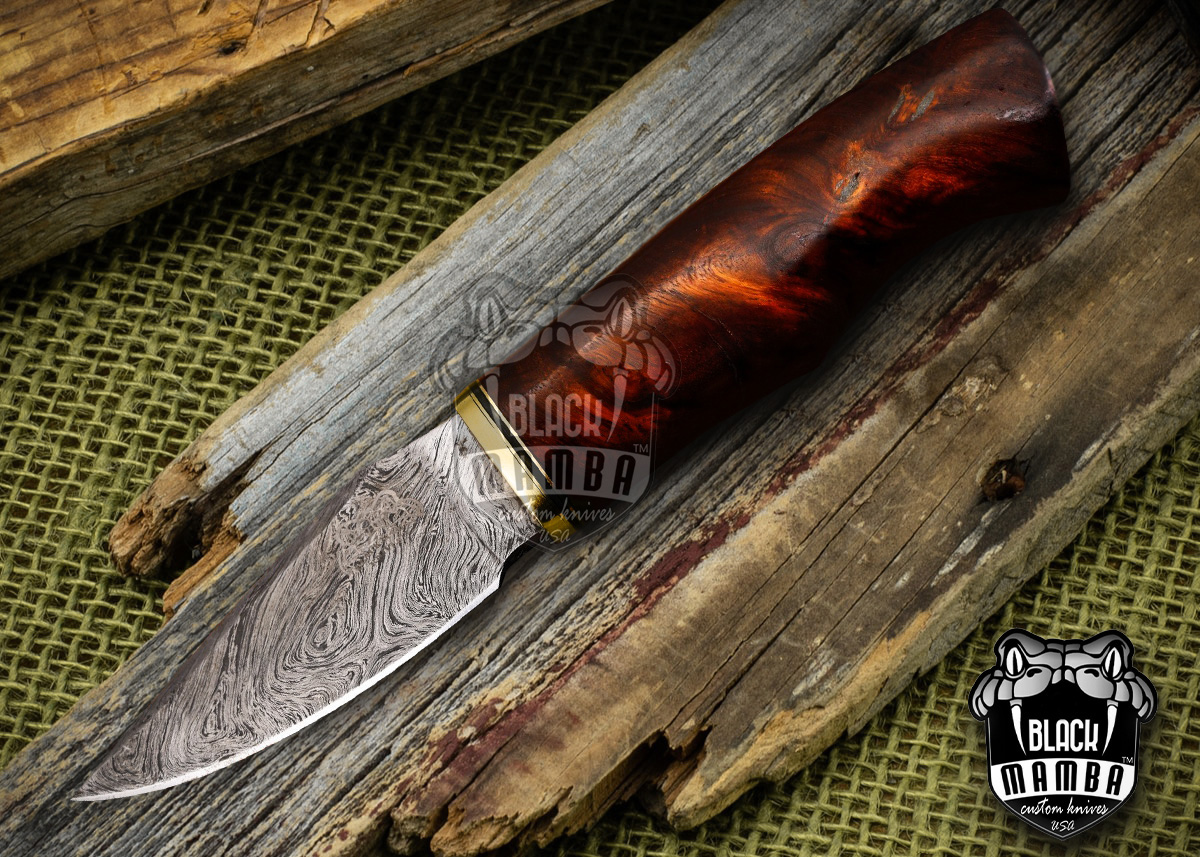
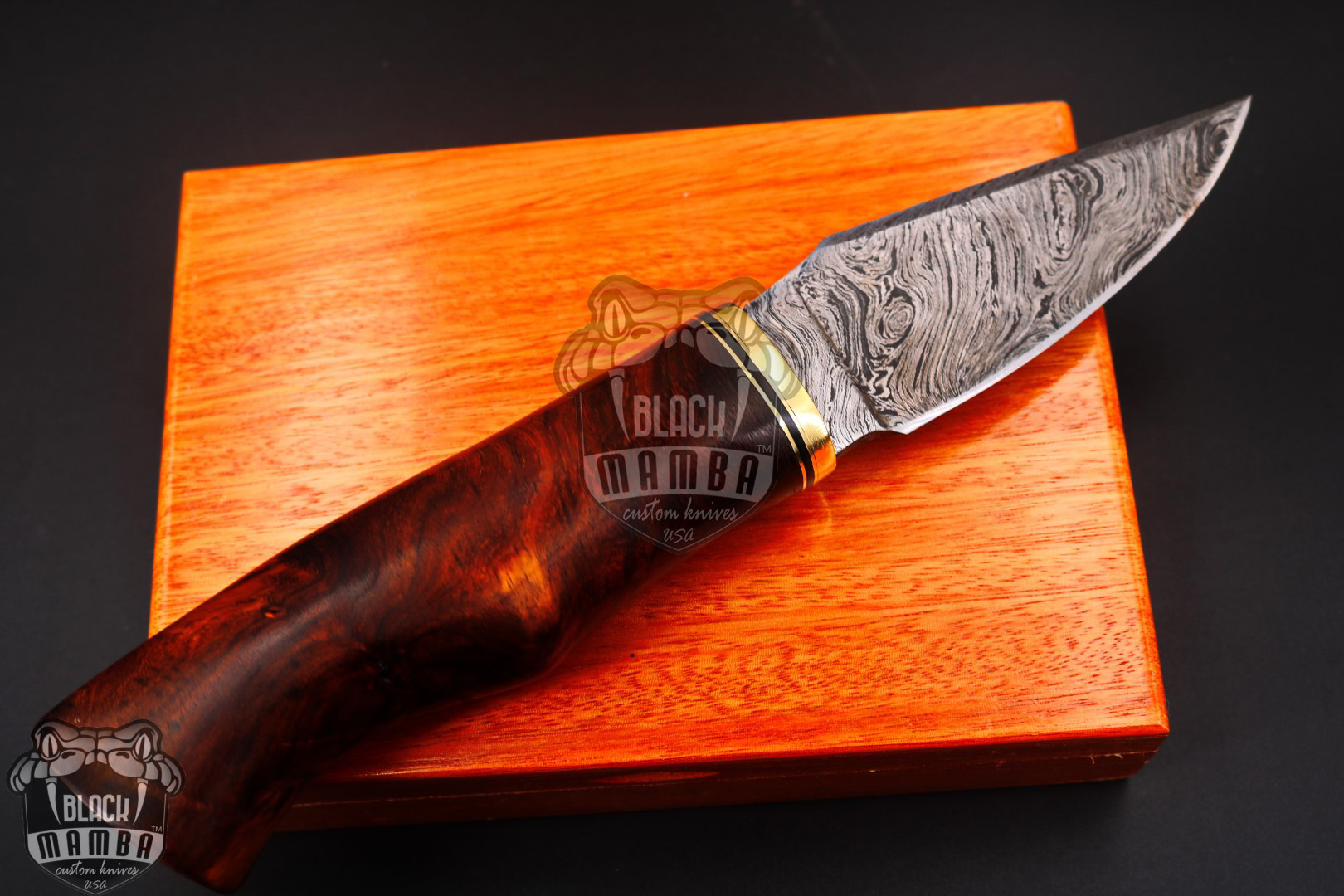
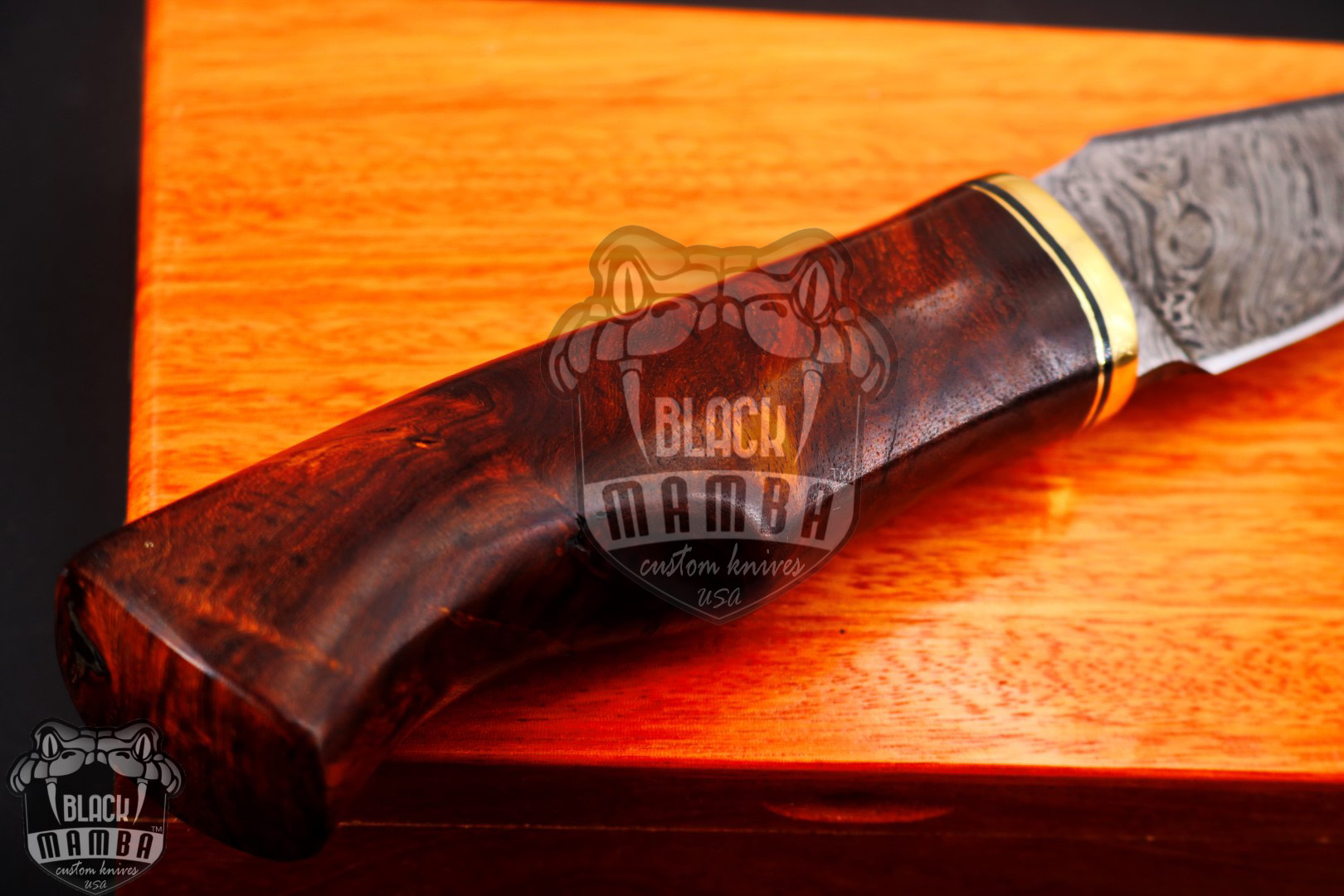
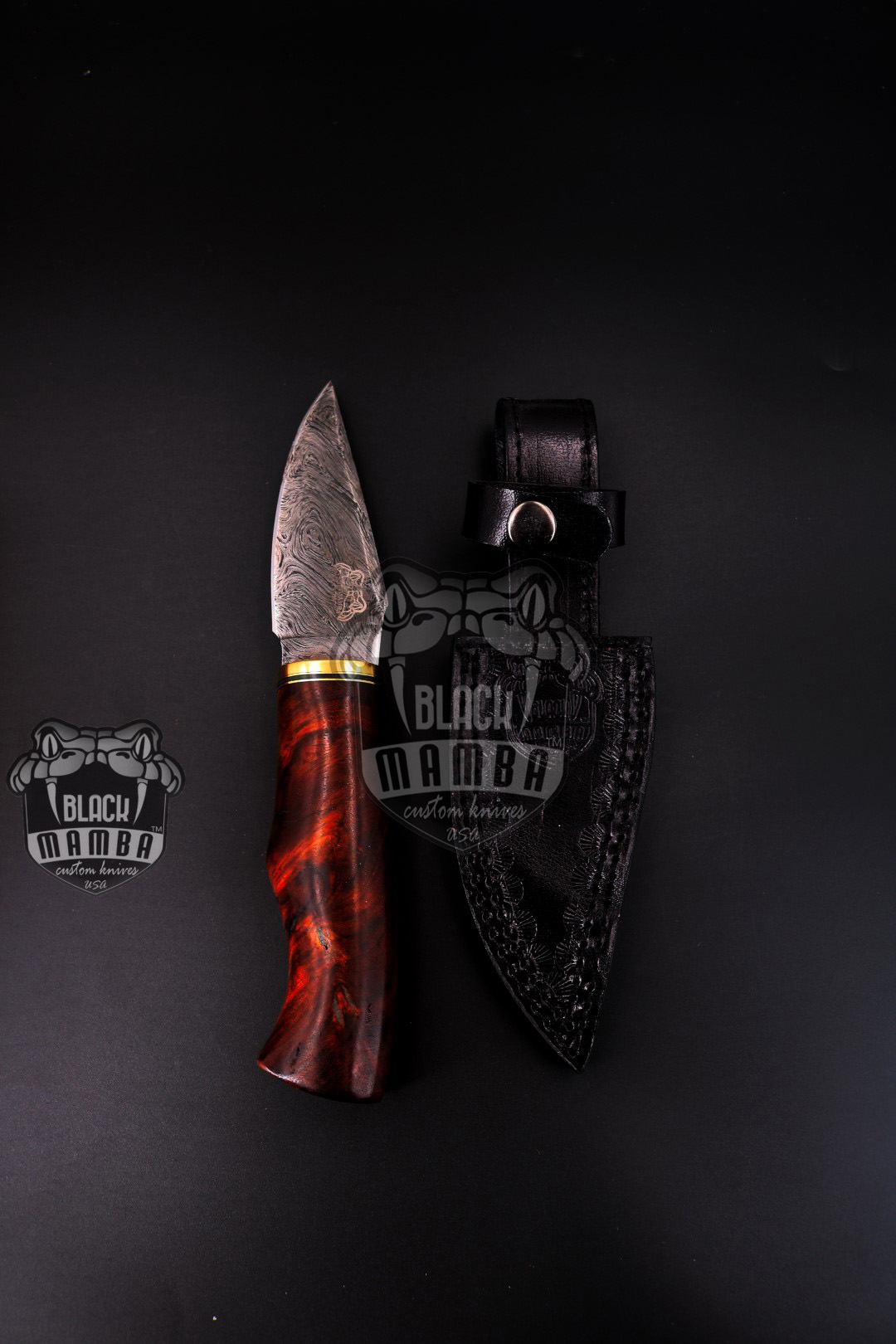
The Cottonmouth is a full-size belt knife: 9.2 inches overall, a 4.1-inch blade, and a deep red burl handle set behind a brass spacer.
| Overall length | 9.2 inches |
| Blade length | 4.1 inches |
| Handle length | 5.1 inches |
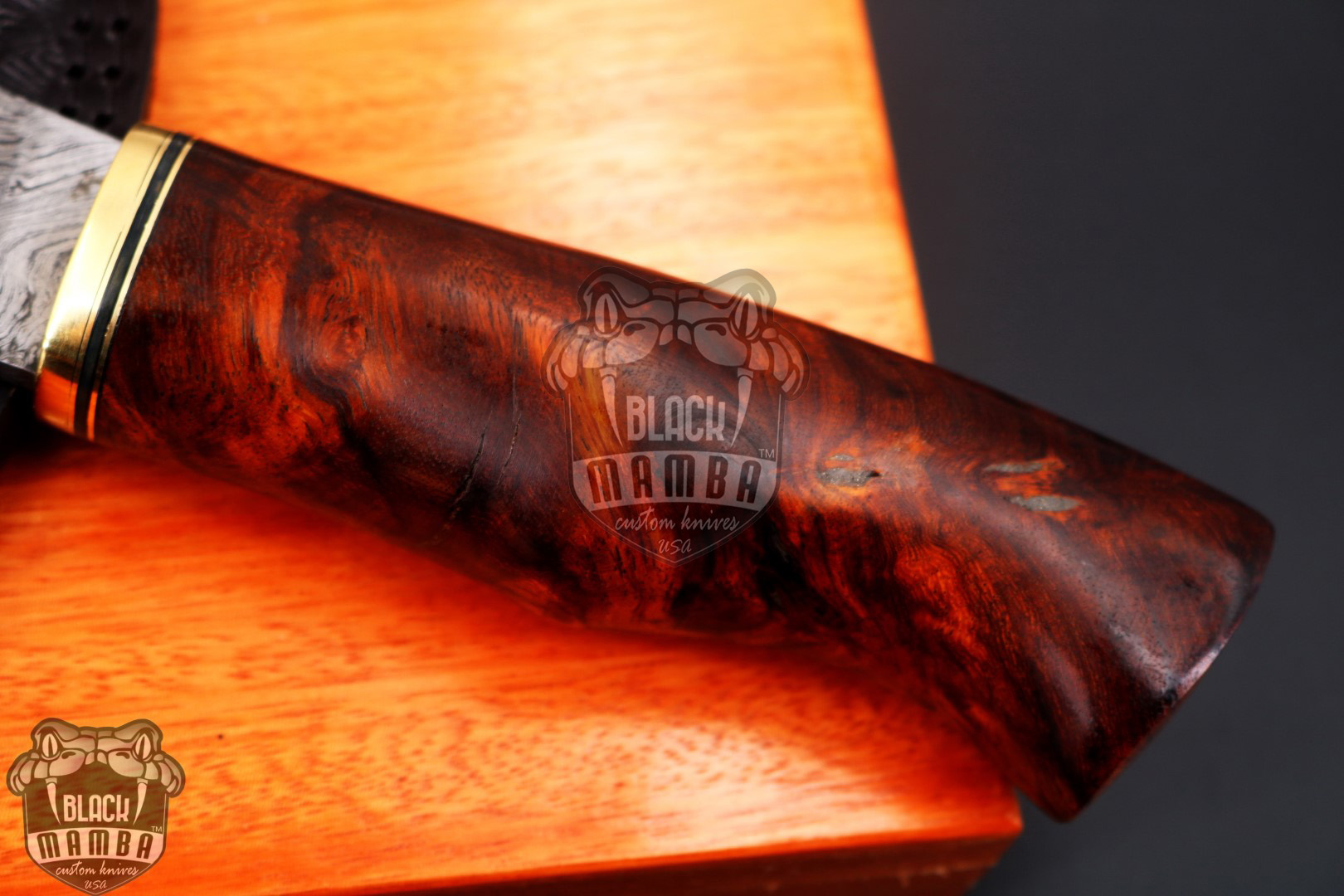
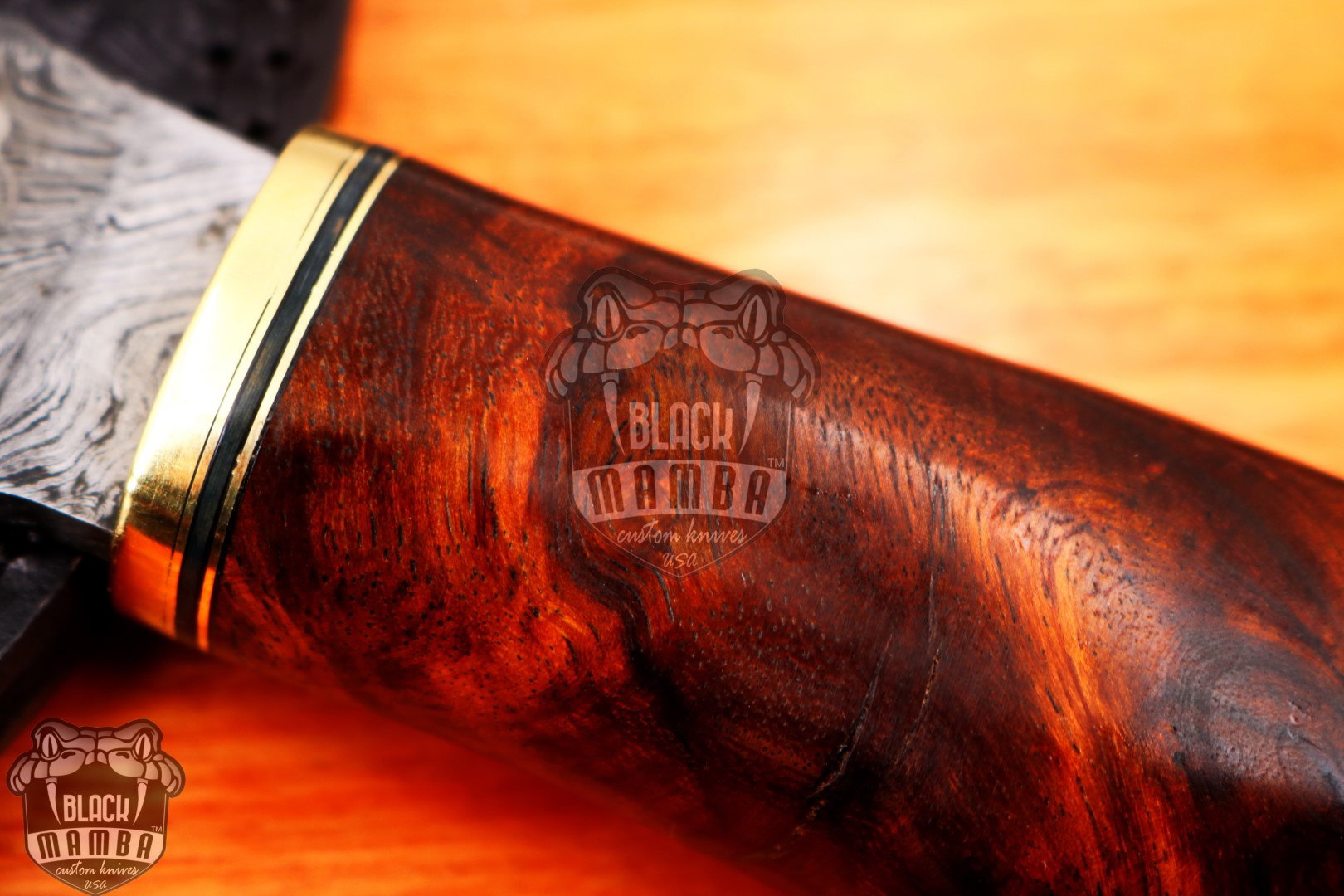
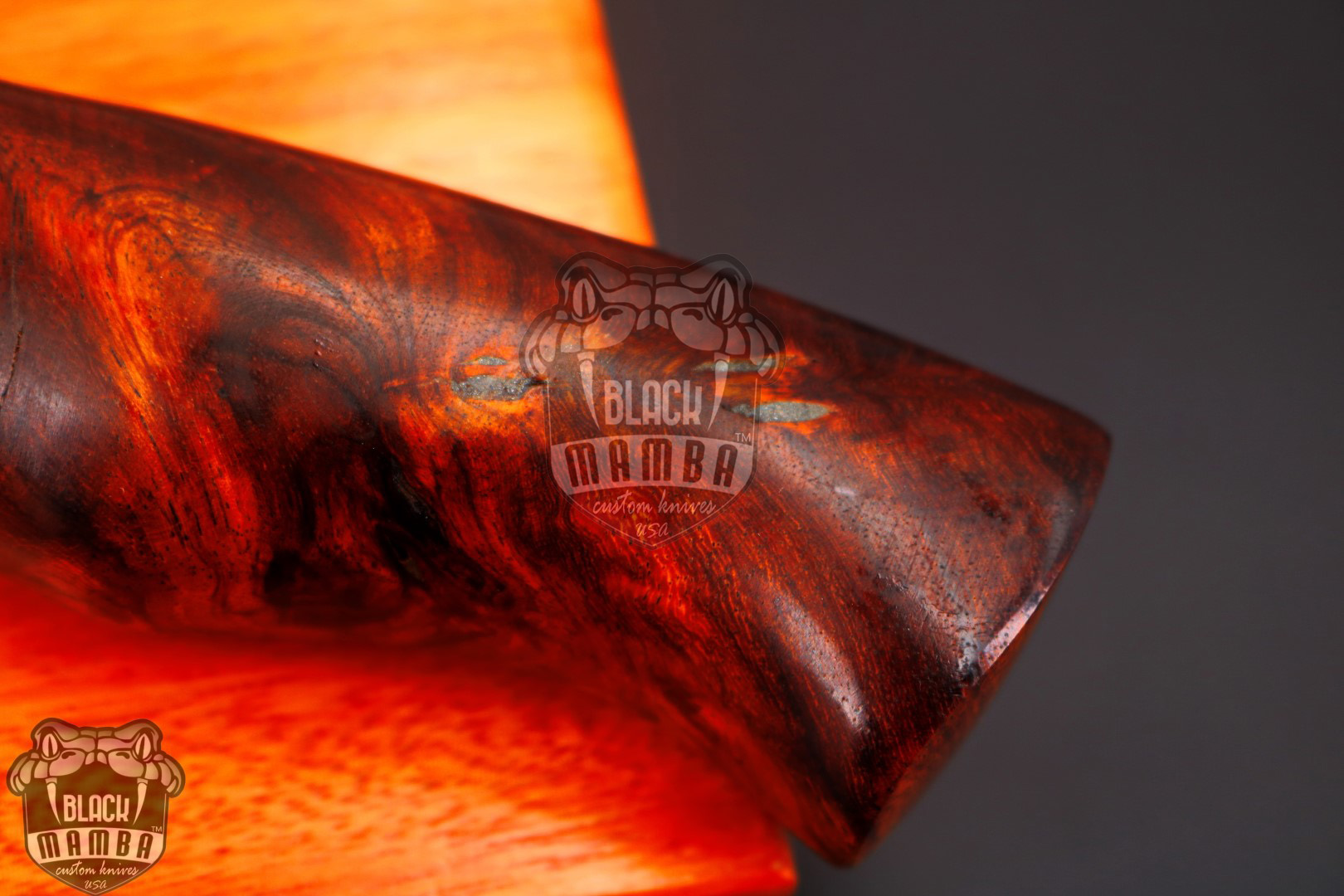
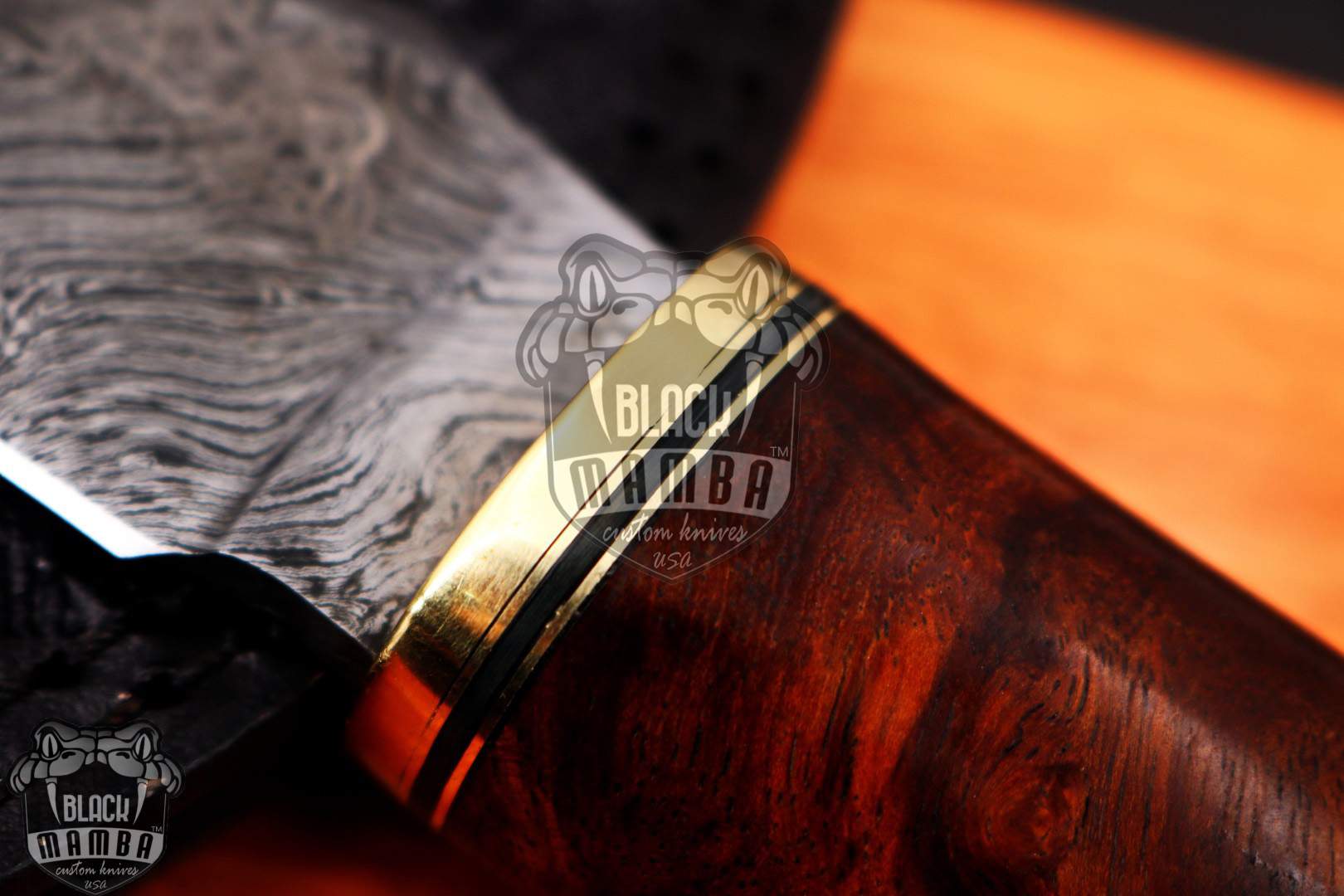
| Handle | Deep red burl wood behind a brass spacer |
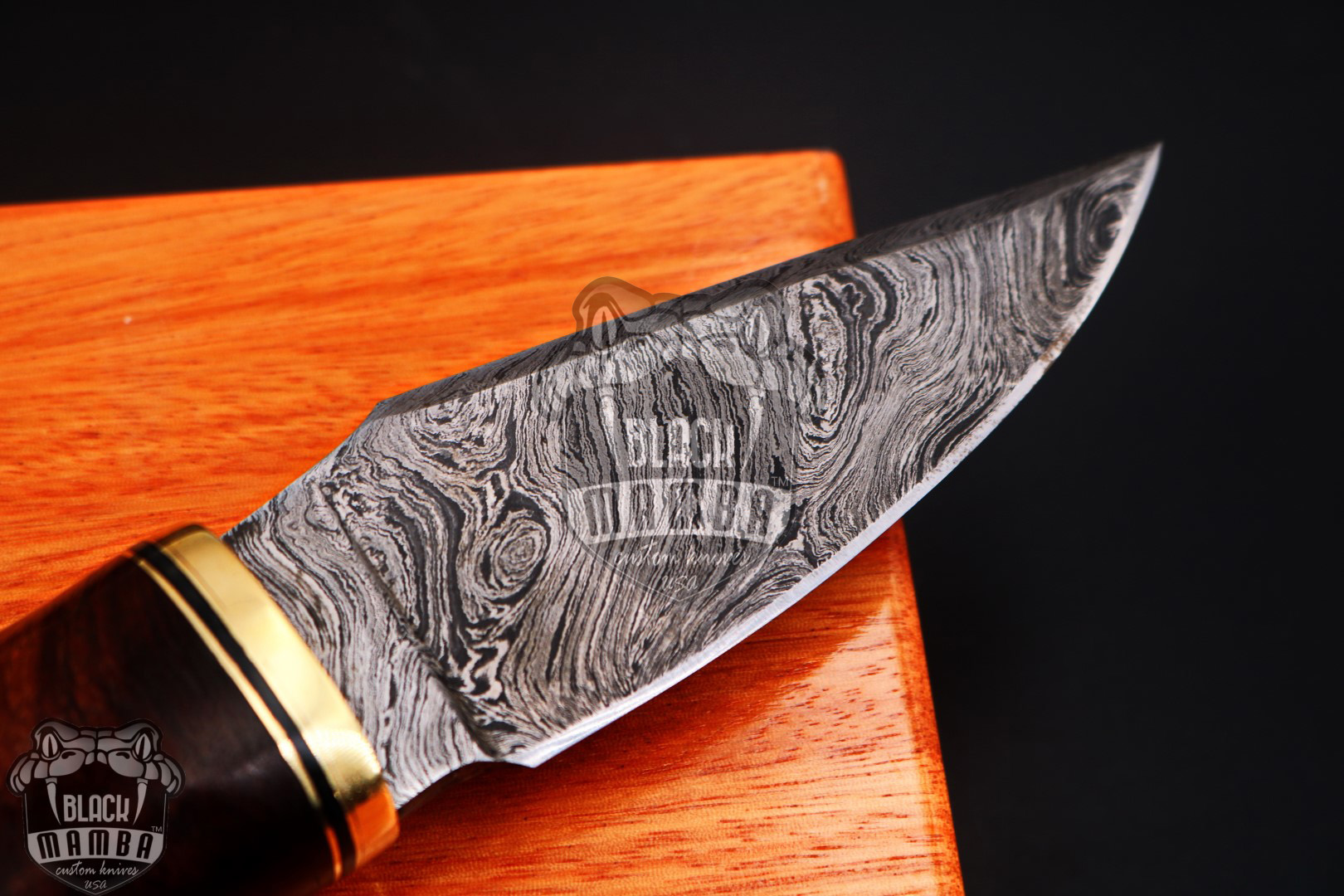
| Steel | 1095 + 15N20 Damascus, 352 layers |
| Hardness | 58–60 HRC, oil tempered |
| Weight | 7 oz |
| Included | Hand-stitched leather sheath |
Built to handle: the jobs where a small knife runs out of leverage. Seven ounces sounds like a lot on a spec sheet and feels correct in the hand once you are cutting through hide, rope or a joint. The handle is long enough that you can move your grip forward for control or back for reach without regripping mid-cut.
Care: the brass spacer at the front of the handle will go dull gold over time and can be left that way or polished bright; either is fine, neither affects the knife. The burl is dense and figured, so a light wax keeps the color deep. For the blade, the rule with plain carbon Damascus is simple: dry it before you put it down, oil it before you put it away, and never leave it in a wet sheath overnight.
Why the extra length changes the knife
A 4.1-inch blade gives you a full stroke through material that a 3-inch blade has to saw at. Long cuts stay straight because the edge is still engaged when the stroke ends. The cost is that it is a knife you notice on the belt, which is the honest trade you make for capability. The best hunting knife ever made works through where that line falls for most people.
Burl, and why it costs more
Burl is a growth deformity in a tree. The grain runs in every direction at once, which is exactly what makes the figure so dramatic and exactly what makes it awkward to shape without tearing out. It is slower on the belt sander and less forgiving than straight-grained stock, and there is more waste per handle. Sand it in the wrong direction and you lift fibers you cannot put back. The upside is that no two burl grips are alike, and the figure runs through the block rather than sitting on the surface, so it stays interesting as the handle wears smooth with years of use.
Patina, rust, and the difference
New owners of carbon steel often panic at the first gray bloom on the blade. Patina is stable oxide and it protects the steel. Rust is orange, it flakes, and it eats. Do Damascus knives rust? shows both side by side. For a shorter, lighter alternative in the same steel, the Amber Star olive wood skinner trades reach for maneuverability.
FAQs
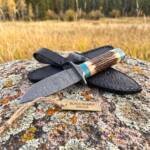
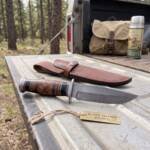
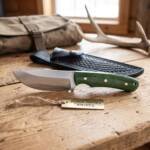
Is the tang visible at the butt? The photographs on this page show how the handle is put together.
What hardness is it? 58 to 60 HRC, oil tempered, as listed above.
Where is it made? Forged, ground and fitted in Memphis, Tennessee.
Model: BMK-172
nick jack (verified owner) –
“This Damascus knife is a conversation starter whenever I have guests over. It’s a functional work of art that I’m proud to own.”
henry . (verified owner) –
“This Damascus knife is a conversation starter whenever I have guests over. It’s a functional work of art that I’m proud to own.”
mark ron (verified owner) –
“I’m a home cook, and this Damascus knife has made a world of difference in my kitchen. It’s a versatile tool that enhances my culinary skills.”
micheal jhonson (verified owner) –
“I’ve recommended this Damascus knife to all my fellow chefs. It’s reliable, sharp, and a true asset in the kitchen.”
Ricardo jerry (verified owner) –
“I received this Damascus knife as a gift, and it’s become my go-to tool in the kitchen. It’s sharp, beautiful, and adds elegance to my cooking.”
Douglas (verified owner) –
Great quality knife
Mark Jones –
Kept picking this knife up just to admire it after it arrived. Black Mamba Knives keeps setting the bar higher with each order. Even the small details in the damascus pattern are crisp and clean. Worth every penny.
Andrew Campbell –
Bought this on a whim and it turned out to be one of my favorite purchases in a while. Blade holds a razor edge right out of the box. Great buy overall.
Sergio Perez –
This knife is a genuine work of art. Sheath snaps shut securely and doesn’t feel flimsy at all. This will not be my last order from this seller.
Logan Robinson –
My skepticism about ordering online disappeared the second this arrived. Came in a nice gift box which made it feel even more special. Handle feels amazing and the balance is perfect. Couldn’t be happier with this.
Timothy Hernandez –
My father in law couldn’t stop talking about this after I unboxed it. Handle feels amazing and the balance is perfect. This maker clearly takes pride in their work.
Elizabeth Bennett –
No regrets on this purchase at all. This has quickly replaced my old go to knife for field dressing. No hesitation recommending this to anyone looking.