


Description
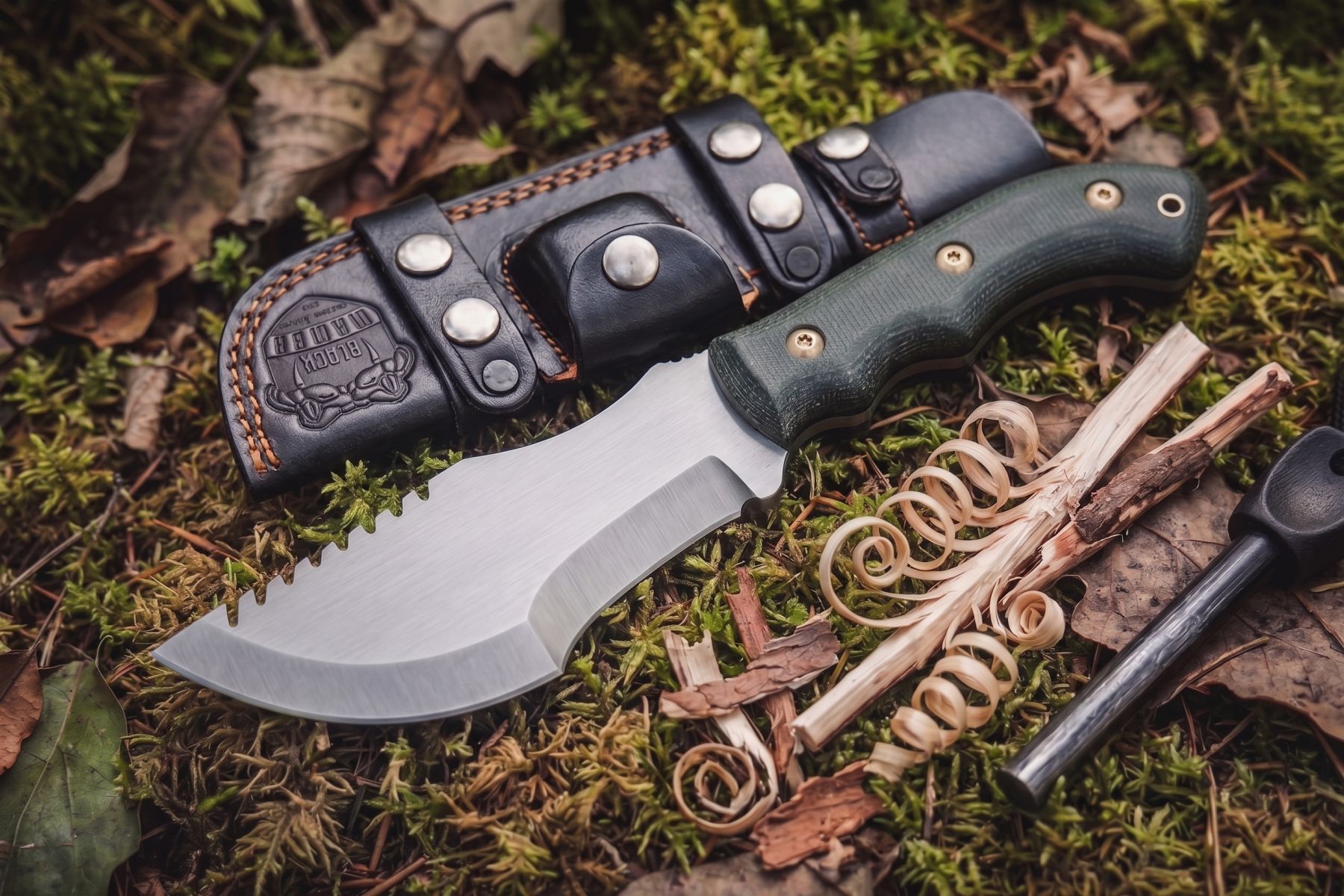
A quarter inch of D2 across the spine is the number that separates this tracker from a camp knife wearing the same outline.
| Overall length | 11.88 inches |
| Blade length | 6.38 inches |
| Blade thickness | 0.25 inches |
| Steel | D2 tool steel, stone washed matte finish |
| Grind | Tom Brown tracker profile — chopping belly, straight fine-work section, sawback spine |
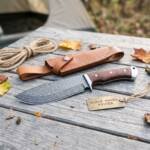
| Handle | Olive green micarta with gold stainless steel screws |
| Lanyard | Drilled lanyard hole through the butt |
| Included | Black leather tracker sheath |
Made for: bushcrafters who would rather carry one thick blade than a hatchet plus a knife. The stone washed finish takes scuffs without showing them, the olive micarta stays quiet against wet bark, and the gold stainless screws let you snug the scales down after a hard season.
Three tools along one edge
The Tom Brown layout divides the cutting edge into jobs. The deep forward belly carries the mass, so it bites into seasoned wood when you swing from the elbow. Behind it the edge runs dead straight, and that flat section is where you do the patient work — shaving a feather stick, squaring a notch, trimming cordage. The sawback along the spine is for scoring and grooving rather than crosscutting; run it across a green sapling to start a trap notch and it earns its place, but nobody is felling anything with it. If blade geometry is new to you, our guide to knife blade shapes shows how a belly like this compares with a plain drop point.
How olive micarta ages
Micarta is linen soaked in resin and pressed hard. It has no grain to lift and no pores to swell, so a soaked handle dries back to what it was. What it does change is texture. New micarta feels slightly glassy; after a few months of skin oil and sanding against a sheath it develops a faint tooth that grips better wet than dry. The olive dye sits through the whole block rather than on the surface, so scratches show up as lighter green rather than as bare white.
What the thickness costs you
Point-two-five inches of stock is stiff enough to pry with, which is the point. The trade is that it wedges: push it through a thick carrot and it splits rather than slices. That is fine — it is not a caping knife. If you want a tracker profile in patterned steel instead of tool steel, the Ridgeback Damascus tracker covers the same ground with a stag handle.
Keeping it right
D2 carries high chromium but is not stainless, so treat it as a tool steel that resists rust rather than one that ignores it. Wipe the blade dry when you put it away and leave a thin film of oil on the flats over winter. The sawback teeth trap sap and bark dust; a stiff brush and hot water clears them. Micarta needs nothing beyond soap if it gets bloody. Sharpen on a coarse diamond plate — D2 has hard carbides that glaze cheap abrasives. Check the handle screws once a year.
Questions buyers ask
Can I baton with it? Yes. A quarter inch of D2 through a 6.38 inch blade takes light batoning in stride. Strike over the ricasso, not the tip.
How is D2 different from the Damascus you sell? D2 holds an edge longer and rusts less; Damascus sharpens more easily and looks like nothing else. Our steel comparison guide lays out the trade honestly.
Is the sheath right or left handed? The tracker sheath is a horizontal-carry design and works either way on a belt.
Model: BMK-1116
Buying for groomsmen? This knife also comes as a matched set of 6, 15% less than buying six singly, and each one can carry its own engraved name.
Reviews
There are no reviews yet.