
Description
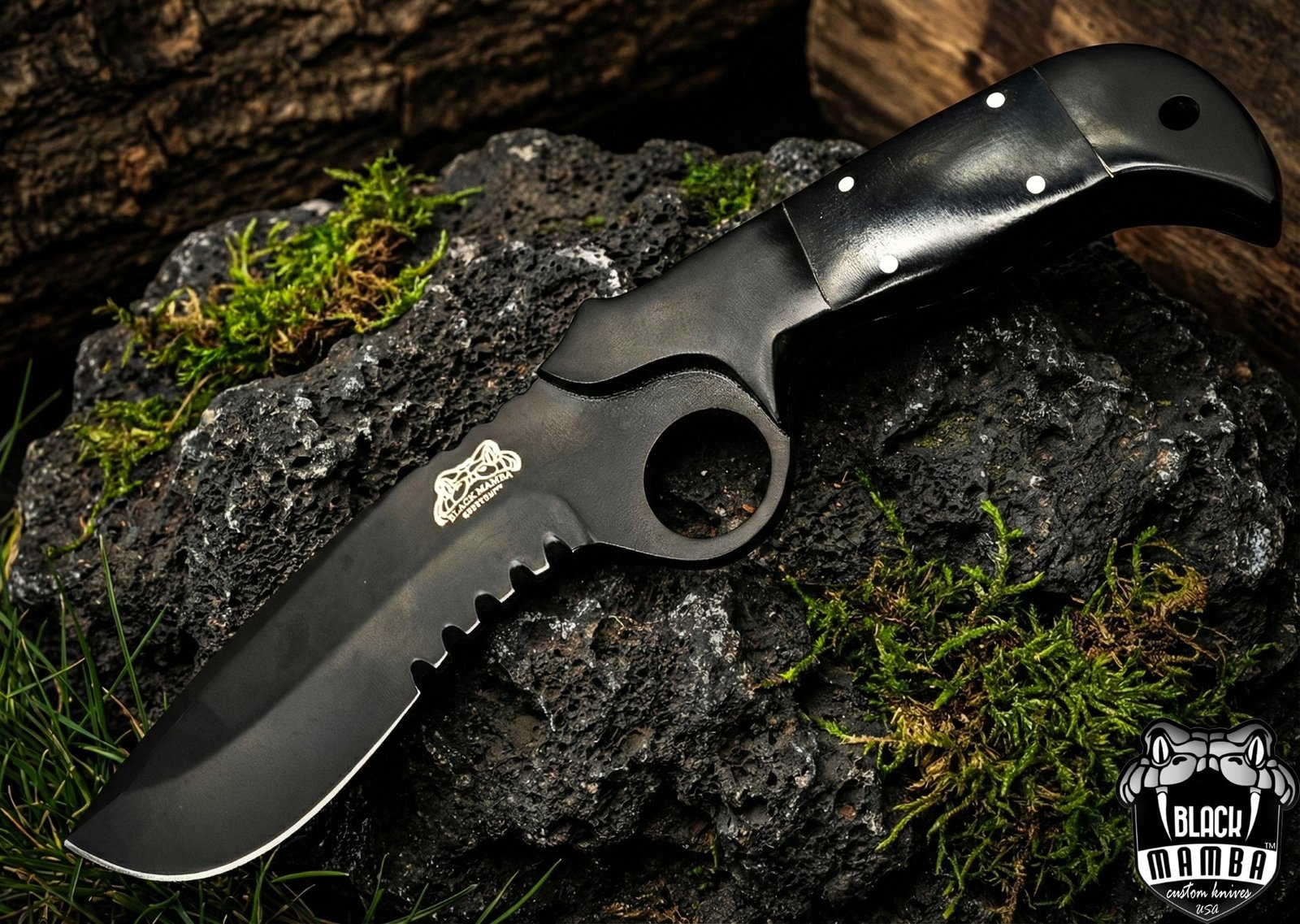
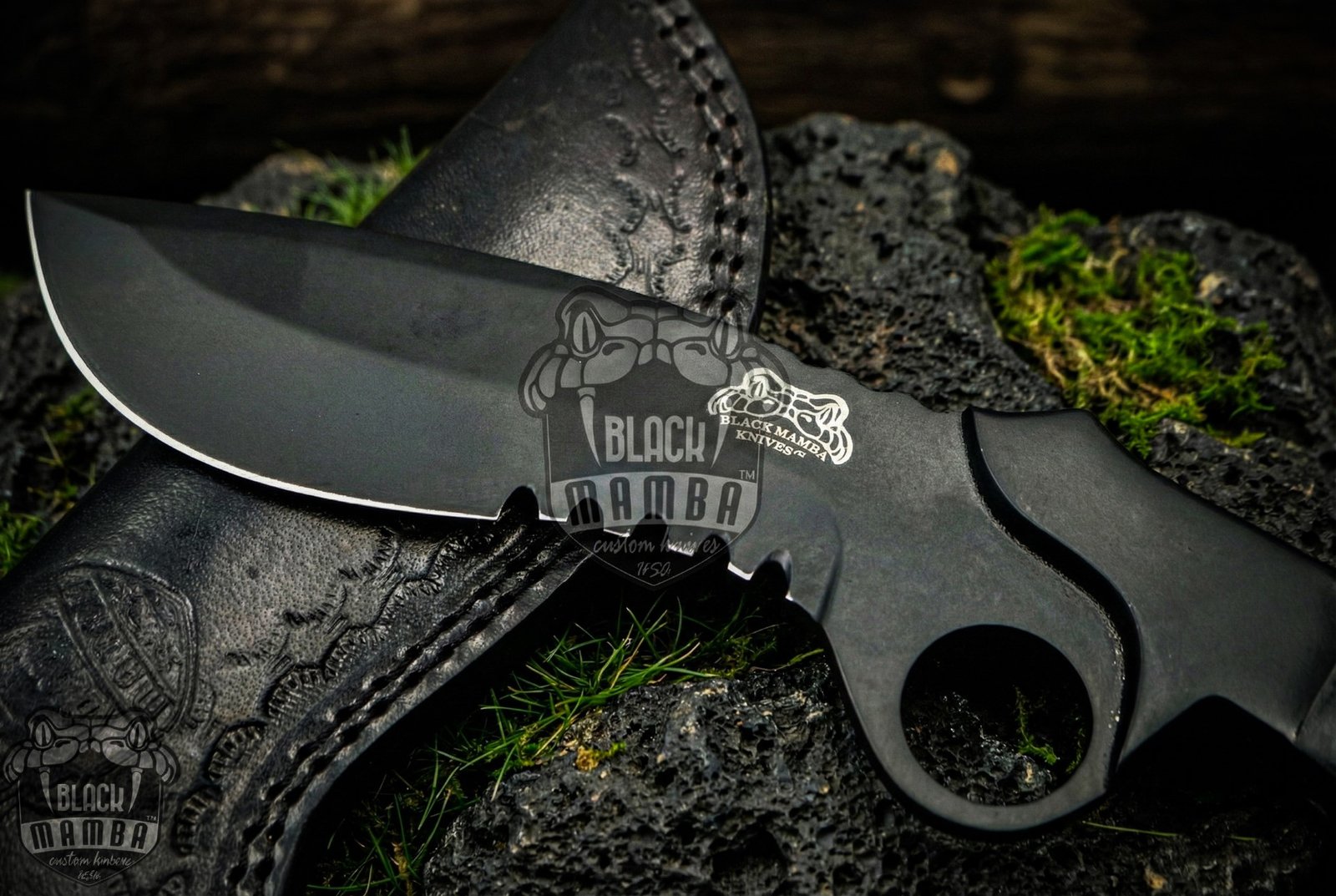
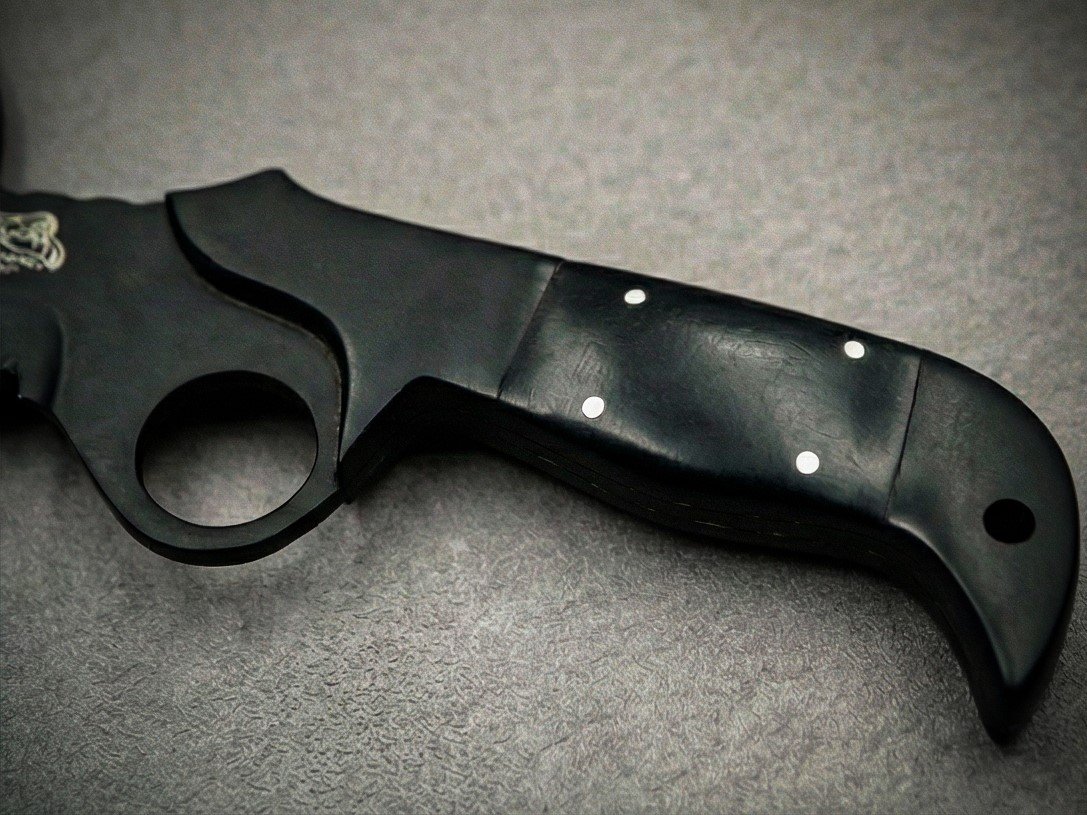
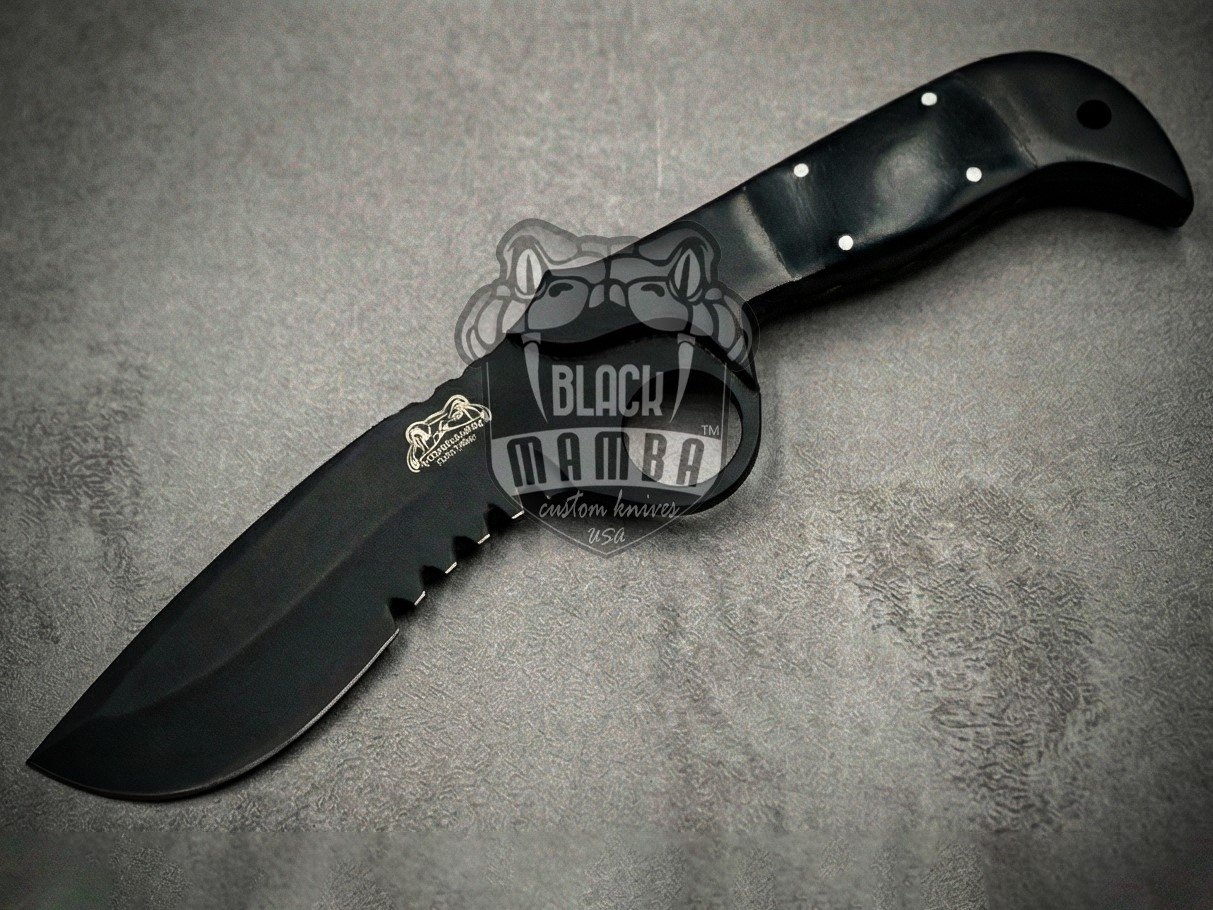
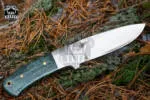
Seven inches of blade and fourteen ounces of knife. The Hognose is built around mass. It is what you pick up when the job means getting through something rather than around it, and it makes no apology for weighing more than a modern hunter strictly needs to.
| Overall length | 12 inches |
| Blade length | 7 inches |
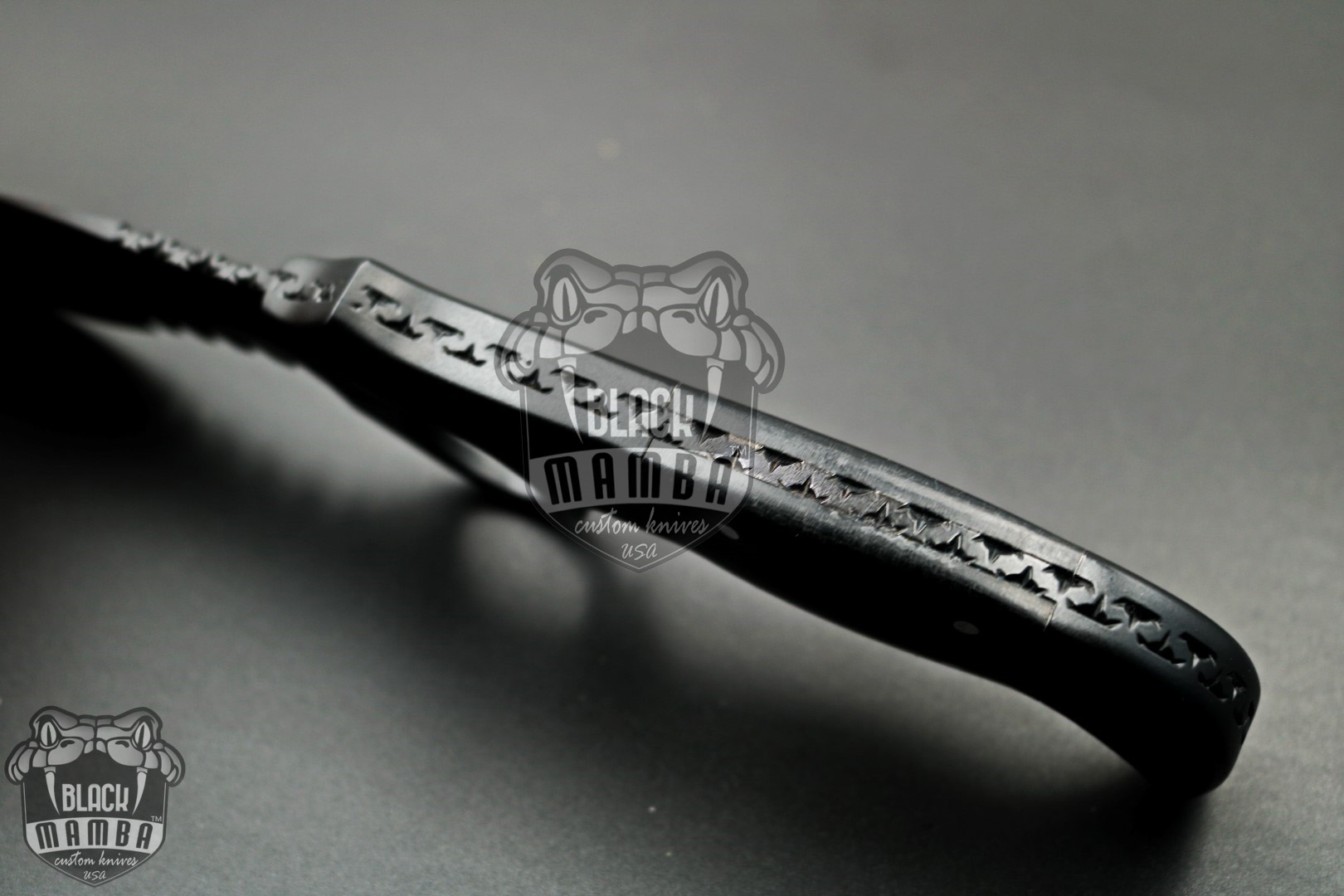
| Steel | High carbon steel, black coated |
| Handle | Black scales on a black coated full tang with a finger ring |
| Hardness | 58–60 HRC, oil tempered |
| Weight | 14 oz |
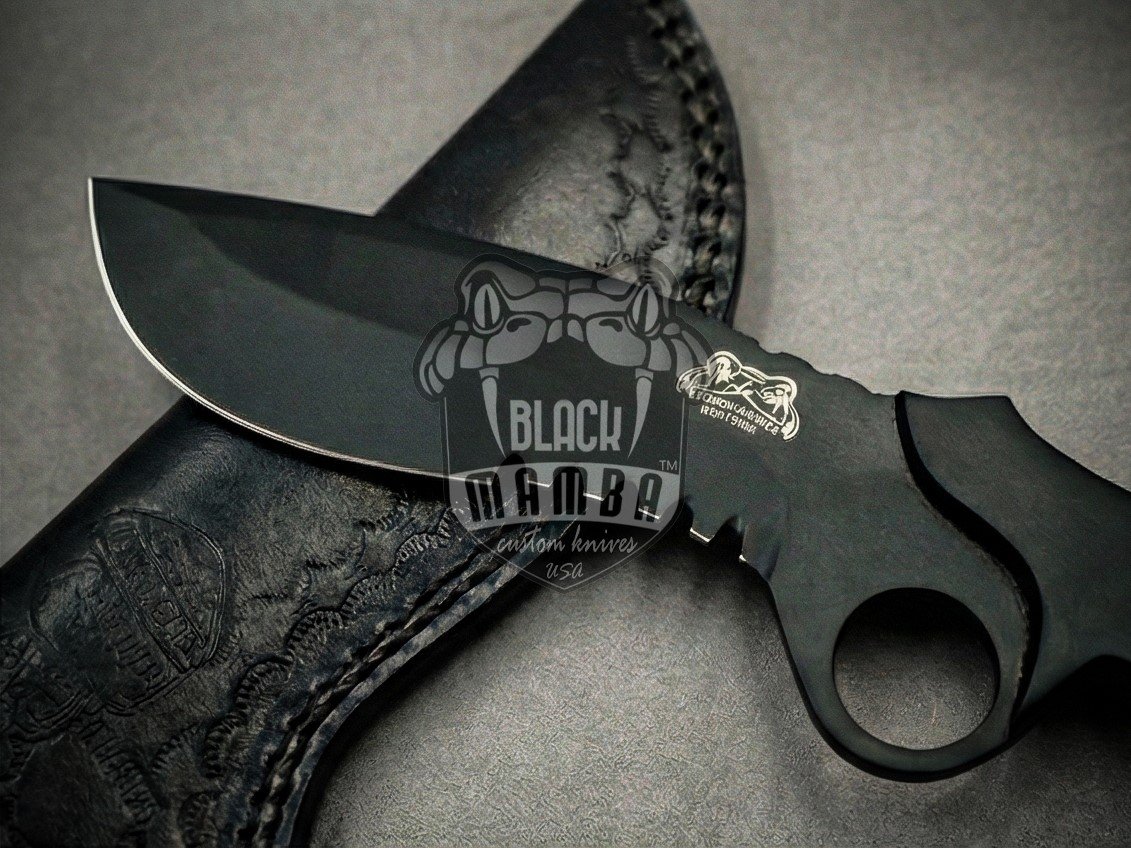
| Included | Hand-stitched leather sheath |
Built for: heavy field work. Quartering, splitting a pelvis, working through joints, and the camp tasks that involve a baton and a length of seasoned wood. On a large animal, the extra weight supplies force you would otherwise have to provide with your arm.
The trade-off you are making
Fourteen ounces is a lot to wear all day. Over ten miles on a belt you will know it is riding there, and the sheath will pull. In the hand, seven inches puts the tip far enough from your fingers that fine work such as caping, or opening a hide around the legs, is noticeably worse than with a short knife. Most people who own one of these also own something small. For the reasoning behind matching a knife to the animal, our piece on the best hunting knife ever made is less romantic than its title suggests.
Edge behavior and what to expect
A heavy blade at this hardness carries an edge through a long day, and it will roll rather than shatter if you meet bone at an angle. Rolls come back easily with a steel or a strop. What to avoid is prying. Mass tempts people into using a knife as a lever, and lateral load is the single thing this geometry does not forgive.
Care
Nothing on this knife is stainless. After a wet day the blade needs drying and so does the inside of the sheath, which will otherwise hold damp against steel for a week. Push a dry rag through the sheath and stand it open overnight. Oil the blade before it goes back in. For the edge, a coarse stone once a season and a fine one after each use is a sensible rhythm, since heavy knives dull slowly and then all at once.
FAQs
Do I need a gut hook as well? Not necessarily, though they make one job much faster. A dedicated tool such as the Fernline gut hook hunter uses D2 and micarta, which shrug off wet weather better than carbon steel manages.
How do I know if this profile suits me? Compare it against the alternatives before you commit. Knife blade shapes explained sets out what each one is good at.
Can it be batoned? Through seasoned wood at this size, yes. Through knots and frozen rounds, no, and that is what an axe exists for.
Model: BMK-158

Gary Phillip Williams (store manager) –
I received my knife.
It looks awesome!
Thanks,
Kyle Davis –
This knife has quickly become my favorite piece in the collection. Even the small details in the damascus pattern are crisp and clean. Couldn’t be happier with this.
Wyatt Scott –
This knife looks even better in person than in the listing photos. Leather sheath is thick and well stitched. Not the cheap stuff you usually get. Handle feels amazing and the balance is perfect. Definitely bookmarking this seller for future orders.
Hannah Murphy –
Got this as my dad and it exceeded what I expected. Every piece of the fit and finish looks hand checked before it shipped. This will not be my last order from this seller.
Nicholas Howard –
Couldn’t ask for a better knife honestly. Shipping was fast and everything arrived well packaged.
Dennis Fox –
This is exactly what I wanted and then some. Blade geometry makes it glide through cuts with barely any effort. Couldn’t be happier with this.
Andrew Stewart –
My husband couldn’t stop talking about this after I unboxed it. Steel has a gorgeous pattern that looks different in every light. Beyond happy with how this turned out.
Cynthia Carter –
Photos don’t do this knife justice at all. Took it out camping right away and it handled everything I threw at it. Blade geometry makes it glide through cuts with barely any effort. 10/10 would buy again.
Nancy Martinez –
Kind of regret ordering this if I’m honest. Arrived with visible damage and a dull edge that needed real work. Would not recommend based on my experience.
Susan Thompson –
This blade came razor sharp right out of the box. Handle has a great grip even with wet or gloved hands. Couldn’t be happier with this.
Frank Bailey –
Best knife I’ve ever owned. Hands down. Came in a nice gift box which made it feel even more special. Highly recommend this one. This is why Black Mamba Knives is my go to for anything knife related.
Antonio Adams –
This turned out to be way better than I thought it would be. Will definitely order again for another one.