


Description
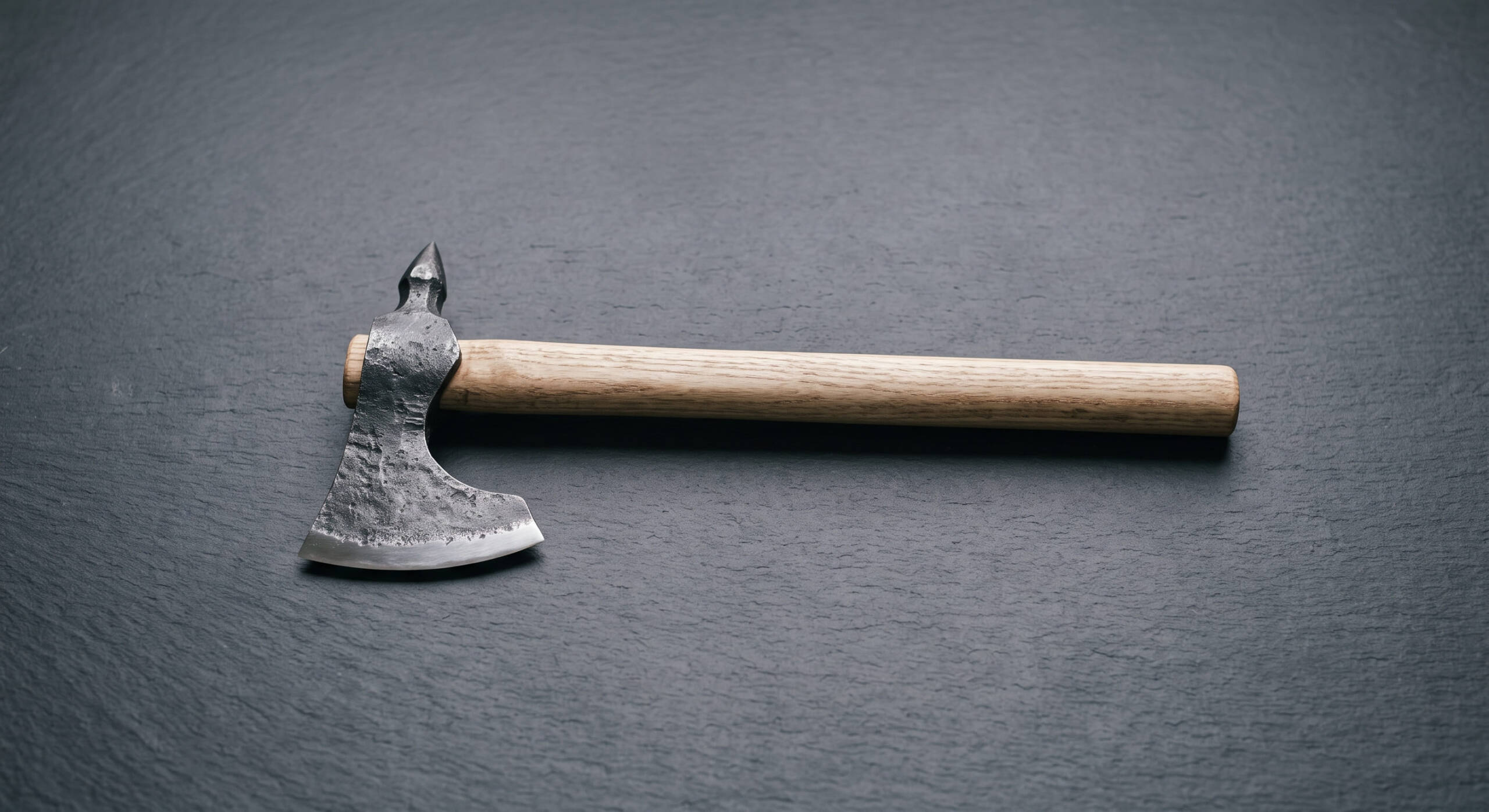
The Raven Spike is deliberately unpolished. The flats of the head keep the scale and hammer marks from the forge, and only the bevel is taken bright, so you can see exactly where the smith stopped working and started sharpening.
| Overall length | 19 inches |
| Head | Hand-forged high carbon steel |
| Poll | Tapered piercing spike |
| Finish | Forge texture on the flats, polished bevel |
| Haft | Straight American oak |
| Included | Fitted leather edge sheath |
Built to be used: bushcraft, camp work and target throwing. The bearded bit handles the cutting and splitting, and the spike on the back of the head punches through what an edge will not — bark, frozen ground, a stubborn knot, a stake into hard soil.
The spike is the reason to buy this one
A spike poll is a different tool from a hammer poll. It concentrates the whole weight of the head onto a tapered point, so it penetrates instead of transferring shock. That is useful for setting an anchor, for breaking crust and for climbing purchase, and it is also why this pattern was carried historically when a plain hatchet would have been lighter to make. It is genuinely sharp at the tip. Treat that end with the same respect as the bit.
Forge texture is a finish, not a shortcut
Leaving the hammer marks means the smith cannot hide anything under a grind. You can read the flow of the metal around the eye where the steel was drifted open, and you can see how the bit was flared out to make the beard. Under that texture is a layer of hard black scale, which is oxide, and which incidentally protects the steel better than bare polished metal would.
American oak, straight, no varnish
Nineteen inches of straight-grain oak with no curve to it, left pale and unfinished. A straight haft is the right choice for a tomahawk because you can index the edge by feel and because the head can be re-seated if you ever need to replace it. Oak is stiff and takes vibration better than most hardwoods at this length.
Care: two materials, two routines. The head is high carbon and the exposed bevel is the only part properly at risk, so dry it and put a smear of oil along the sharpened edge before it goes back in the sheath. The oak matters more than people expect — an unfinished haft will absorb sweat and rain, swell, then shrink as it dries, and that cycle is what loosens a head over a season. Give it a coat of boiled linseed oil once a year, let it cure, and check the head for movement every time you pick it up.
Questions about this tomahawk
Can I throw it? Yes — that is part of what the pattern is for. Expect the haft to take damage from overthrows that hit the target handle-first, and count that as a consumable.
How do I sharpen a curved bit? Work it in sections with the stone following the arc, keeping the angle constant rather than the wrist. Sharpening on a whetstone covers the technique that transfers directly to an axe.
What if the head rusts? Surface rust on a forged head is normal and comes off. Removing rust walks through it without stripping the forge finish. For the same forged construction with a broad beard and no spike, see the Iron Beard bearded tomahawk.
Model: BMK-1121
Brian Ortiz –
So happy I finally pulled the trigger on this one. Love it.
Jose Castillo –
Feels way more premium than the price suggests. Took it out camping right away and it handled everything I threw at it. Shipping was fast and everything arrived well packaged.
Craig Cooper –
I collect knives and this one is excellent. Edge retention has been great even after regular use in the field. Zero complaints from me on this purchase. Made in the USA right in Memphis, and it shipped worldwide without any long wait.
Blake Lopez –
This is hands down one of the best knives I’ve bought online. Took it out camping right away and it handled everything I threw at it. This one’s a keeper for sure.
Sarah Watson –
Set my expectations low going in and this blew right past them. Leather sheath is thick and well stitched. Not the cheap stuff you usually get. This one’s a keeper for sure.
John Freeman –
So happy I finally pulled the trigger on this one. Blade holds a razor edge right out of the box. Handle feels amazing and the balance is perfect. This has quickly replaced my old go to knife for field dressing. This will not be my last order from this seller.
Alan Hunt –
Didn’t think a knife at this price could feel this premium. If you’re on the fence just get it. You won’t regret it.
Sharon Freeman –
Showed up right on time and looked even better than the photos. Every piece of the fit and finish looks hand checked before it shipped. Will definitely order again for another one.
Jerry Coleman –
Good quality knife for the price. Would order again despite the minor gripes.
Joshua Rivera –
Feels way more premium than the price suggests. This has quickly replaced my old go to knife for field dressing. Blade holds a razor edge right out of the box. Already planning my next pickup from this shop.
Jeffrey Hall –
Knew this knife was special the second I opened the box. Leather sheath is thick and well stitched. Not the cheap stuff you usually get. Came in a nice gift box which made it feel even more special. This has quickly replaced my old go to knife for field dressing. Would not hesitate to order again.
Sandra Kelly –
Everyone who’s seen this knife has asked where I got it. Even the small details in the damascus pattern are crisp and clean. Great buy overall.
Kevin Brooks –
This blade came razor sharp right out of the box. 10/10 would buy again.