


Description
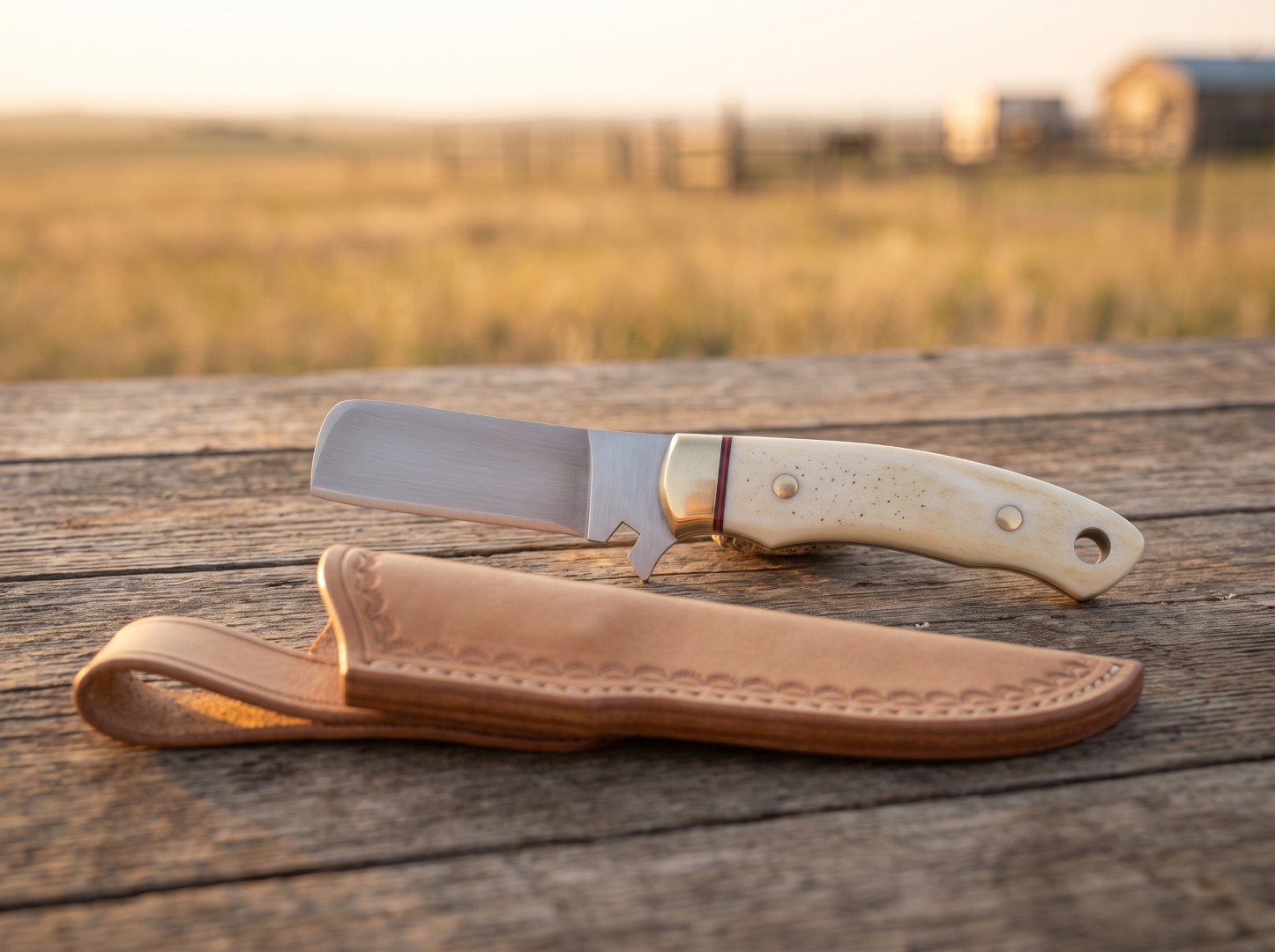
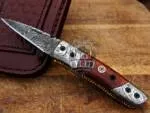
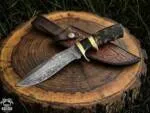
Set this knife on a bench next to the wood-handled bull cutters and it reads completely differently. Camel bone is bright, near-white, faintly translucent at the edges and freckled with the fine pores that tell you it grew. Against a solid brass bolster and a thin red fiber spacer, the effect is closer to a traditional stockman’s pocket knife scaled up into a fixed blade than to a working ranch tool, which is exactly the appeal.
| Overall Length | 7.5 inches |
|---|---|
| Blade Length | 3.5 inches |
| Handle Length | 4 inches |
| Blade Steel | D2 tool steel |
| Blade Finish | Matte gray satin |
| Blade Style | Sheepsfoot bull cutter with notched choil |
| Handle Material | Camel bone with red fiber spacer |
| Bolster | Solid brass |
| Fittings | Brass pins, steel-lined lanyard hole |
| Tang | Full tang |
| Sheath | Handmade tooled leather belt sheath (included) |
D2, and what it is good at
D2 is a high-chromium tool steel that sits in an odd and useful spot. It has enough chromium to resist rust noticeably better than plain carbon steel, but not quite enough to count as stainless, so people call it semi-stainless and argue about the term. What matters in the hand is that it holds an edge for a long time, shrugs off the damp far better than the spring steel blades in this range, and takes rather more patience to sharpen because the carbides that make it wear-resistant also make it stubborn on a soft stone.
For a knife that might sit in a drawer for months between uses, that trade is a good one. We put D2 head to head with Damascus, 440C and VG10 in our steel comparison if you want to see where it falls short as well as where it wins.
Blade geometry
Sheepsfoot, satin finished, straight edge from choil to a rounded front with no usable point. Flat-ground thin enough behind the edge to slice properly rather than wedge. The notched choil lets you pinch the ricasso for fine work. Full tang, pinned through, with the brass bolster capping the front of the handle where the hand meets the steel.
Bone, brass and leather
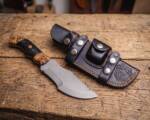
The camel bone is stabilised and polished to a soft sheen rather than a glassy gloss, so it does not turn slippery when your hands are wet. Brass pins run through the scales and a slim red liner separates bone from bolster. The knife carries in a hand-tooled natural leather belt sheath, undyed except for the finish, with a stamped border and a broad loop; it will darken to a honey colour with handling, which is the nicest thing veg-tanned leather does.
Everything is ground, heat treated, fitted and stitched at our bench in Memphis, Tennessee.
Care
Bone is the part to think about, not the steel. It does not like sustained heat or very dry air, so keep the knife out of a sunlit window and away from a heat source, and it will not check or crack. A trace of oil on a cloth restores the sheen if it ever looks dull. The D2 blade is forgiving but not immune; a wet blade left in a leather sheath will eventually spot, so dry it and store it loose if it is going away for a long stretch. Sharpen on diamond or ceramic rather than a soft natural stone, and use a light touch. For the same steel and bolster treatment in an even more decorative shell, see the mother of pearl River Pearl.
Model: BMK-1149
Reviews
There are no reviews yet.