
Description
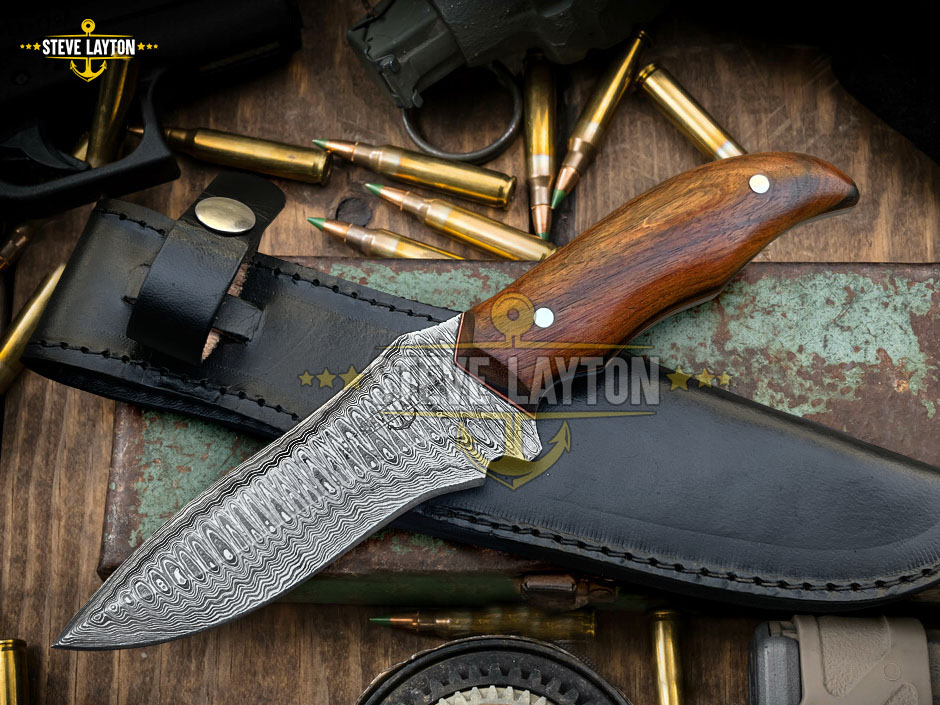
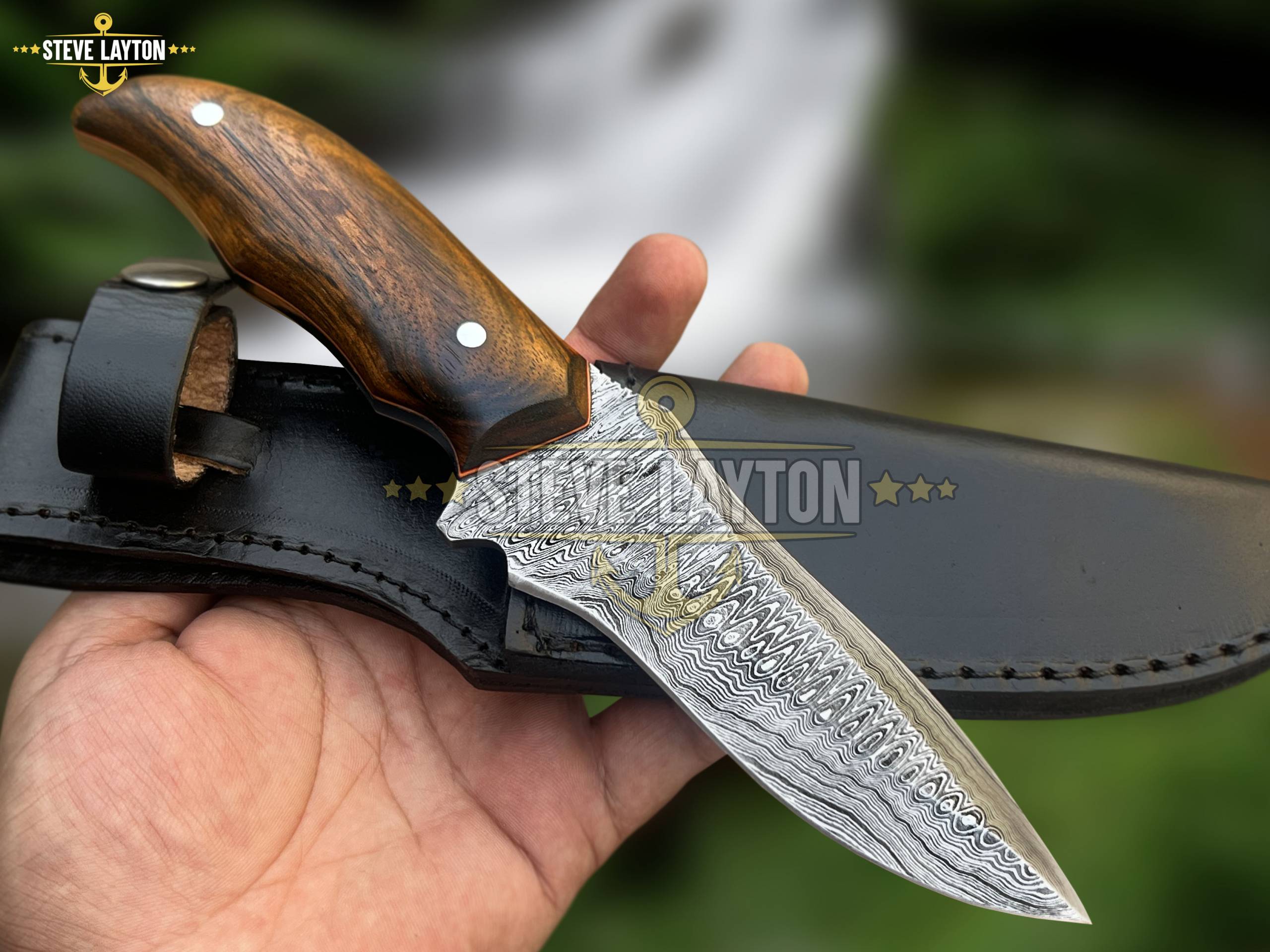
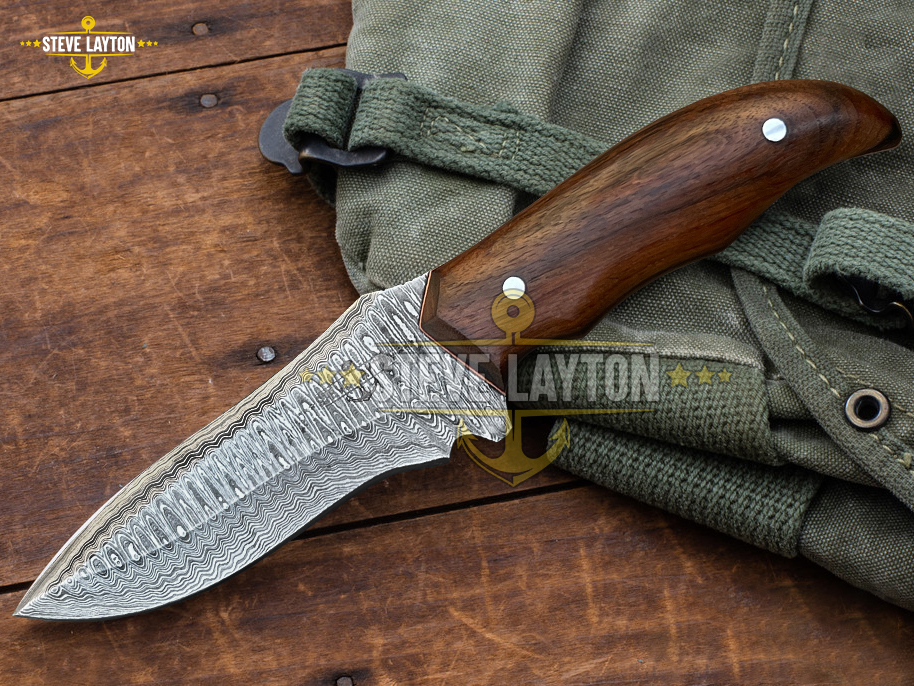
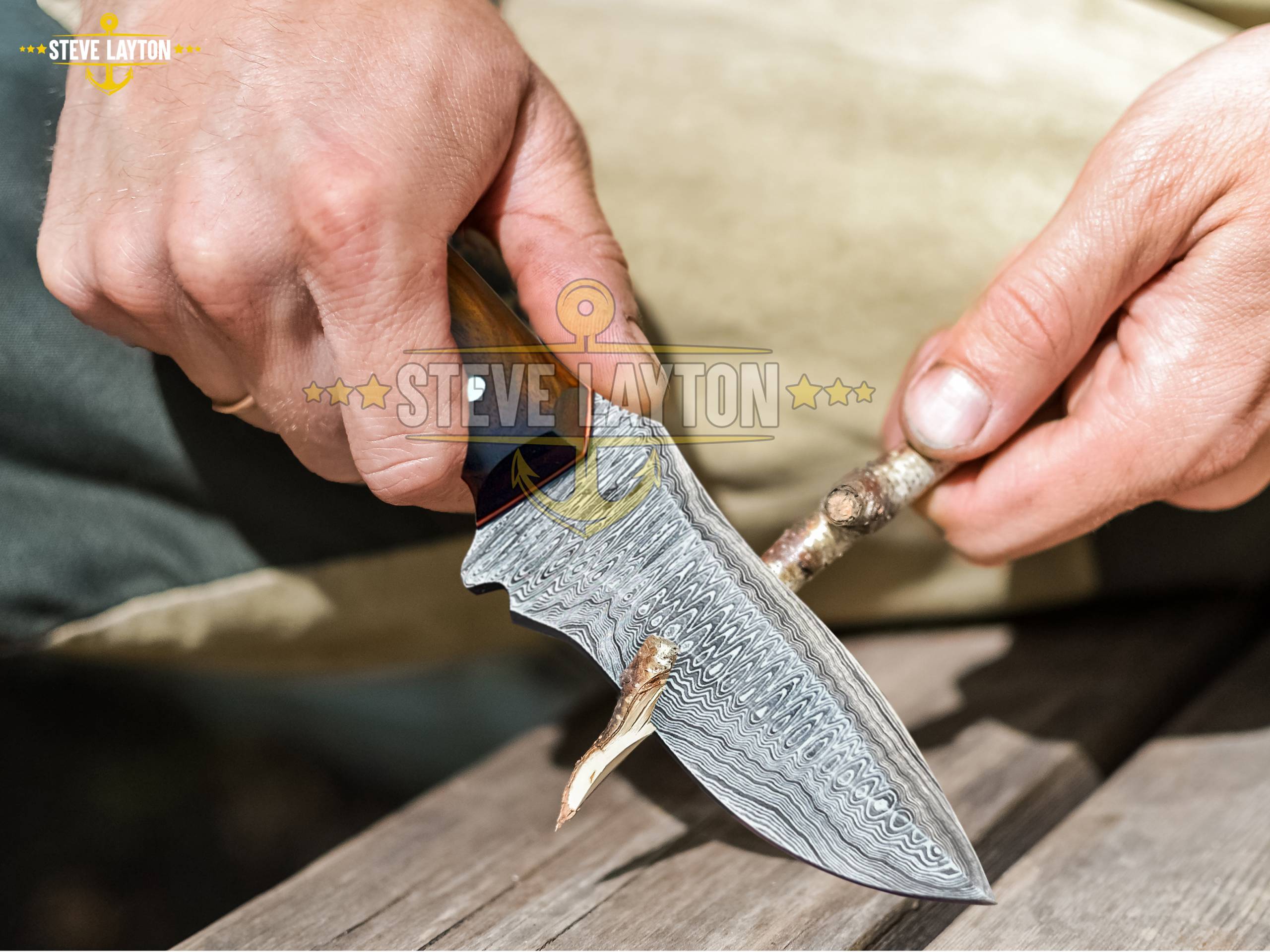
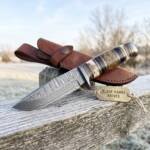
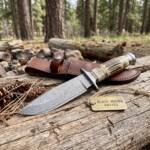
The Jarhead is a working hunting knife with a broad belly, a deep drop toward the point, and a stepped notch cut into the spine where the thumb naturally lands. It is not a display piece pretending to be a field knife. Pick it up and the weight sits right at the front of the handle, which is exactly where you want it when you are skinning by feel with cold fingers rather than watching what you are doing.
| Overall length | 9 inches |
| Blade length | 5 inches |
| Handle length | 4 inches |
| Handle | Walnut |
| Steel | 1095 + 15N20 Damascus, 352 layers |
| Hardness | 58–60 HRC, oil tempered |
| Weight | 7 oz |
| Included | Hand-stitched leather sheath |
Why this shape works on game. A long sweeping belly does the caping and the hide work, because a curved edge stays in contact with the material as you draw it and does not stall the way a straight edge does. The tip drops below the spine line so it enters shallow and stays shallow, which is what keeps you out of the paunch. The choil notch behind the ricasso gives you a choked-up grip for detail cuts around joints. If you want the longer argument about which profiles suit which jobs, our skinning knife guide gets into it properly.
The steel
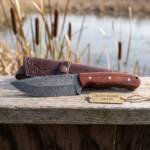
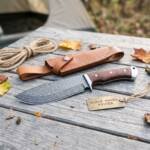
1095 and 15N20 forge-welded into a Damascus billet, drawn out, folded, and etched to bring up the banding. You can read the pattern in the photographs as tight nested ovals running the length of the blade, which is the signature of a billet that has been ground into rather than merely stamped. The 1095 supplies the carbon that takes and keeps a keen edge; the 15N20 carries nickel and lends toughness across the weld lines. Oil-quenched and tempered into the high fifties on the Rockwell scale, which is a deliberate compromise: harder would hold longer and chip in the field, softer would roll on bone. Our broader Damascus hunting knife guide covers what that range means in daily use.
Walnut in the hand
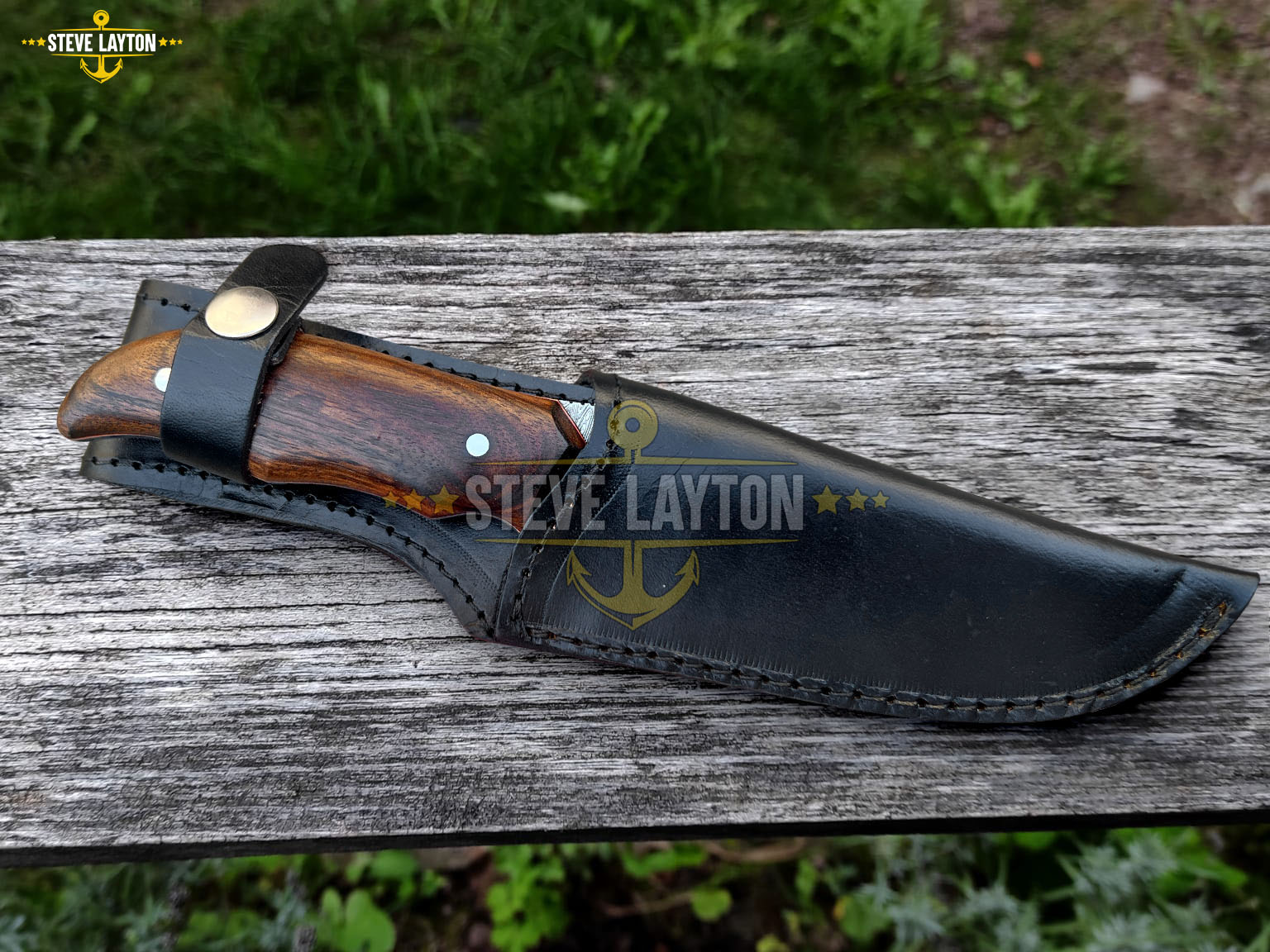
The scales are walnut, dark at the butt and shading warmer where the grain opens up toward the bolster, seated over a red fiber liner and pinned through. Wood is the right call on a hunting knife for an unglamorous reason: it stays warm to the touch in the cold and it does not turn slick the way polished synthetic can when things get wet. The scales are contoured rather than flat, with the swell falling into the middle of the palm.
Sheath, shop, and upkeep
The knife travels in a hand-sewn black leather sheath with a snap retention strap, built around this blade and broken in slightly before it ships. Forging, grinding, heat treat, fitting, and stitching all happen in our Memphis, Tennessee workshop.
Damascus of this kind is high-carbon steel and it will react. Blood and fat are acidic, so clean the blade before you put it away rather than at the end of the weekend; warm water, a cloth, then dry it completely. A thin film of oil once a month keeps the etch crisp, and the walnut is happy with a rub of paste wax twice a year. The stacked-leather KA-Bar pattern is the natural companion piece if you prefer a clip point.
Model: SL-023
Robert Grace (verified owner) –
Order process was easy, order has not shipped yet.
Timothy Nguyen –
Can’t stop showing this off to everyone who comes over. Will definitely order again for another one.
Deborah Chavez –
This knife is really solid. No question about it. Edge retention has been great even after regular use in the field. Ordered from Black Mamba Knives before and the quality stays consistent every time. Would send this as a gift again in a heartbeat.
Gregory Walker –
I collect knives and this one is rock solid. Took it out camping right away and it handled everything I threw at it. Blade geometry makes it glide through cuts with barely any effort. Already thinking about what to order next from this shop.
Stephen Gonzalez –
Wasn’t sure what to expect but this knife nailed it. Edge retention has been great even after regular use in the field. Handle has a great grip even with wet or gloved hands. Definitely bookmarking this seller for future orders.
Daniel Taylor –
Feels way more premium than the price suggests. Sheath snaps shut securely and doesn’t feel flimsy at all. This has quickly replaced my old go to knife for field dressing. Every piece of the fit and finish looks hand checked before it shipped. This maker clearly takes pride in their work.