
Description
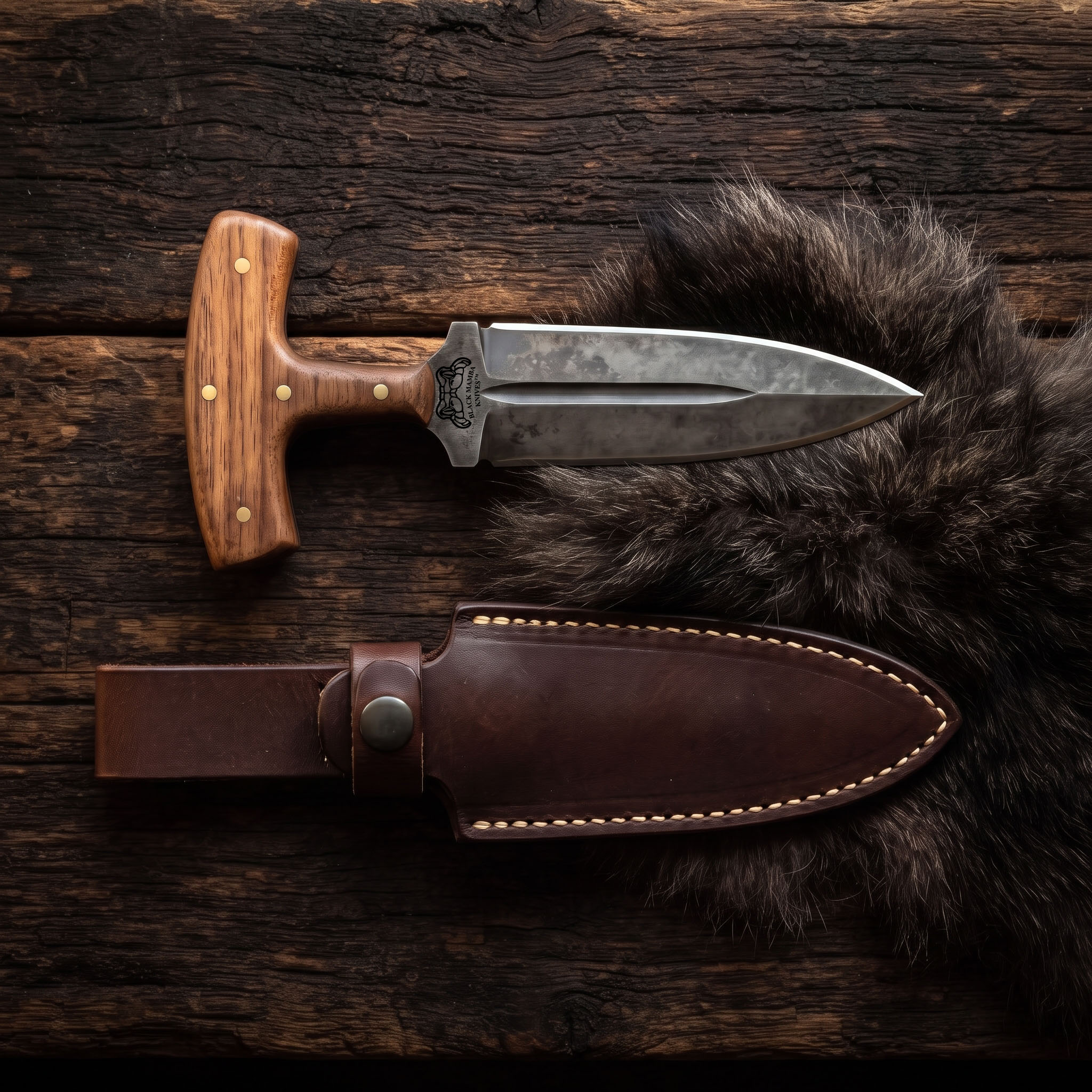
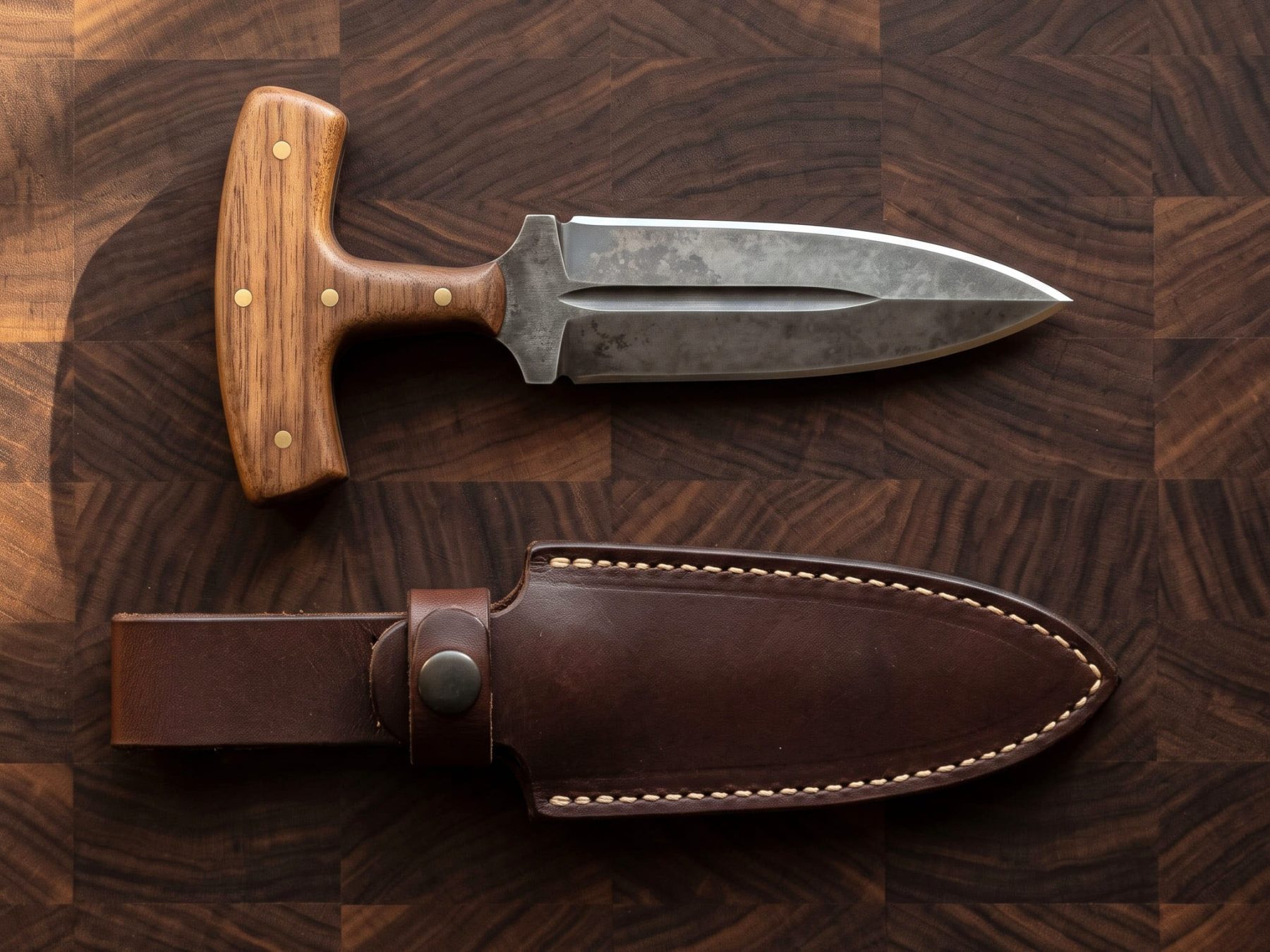
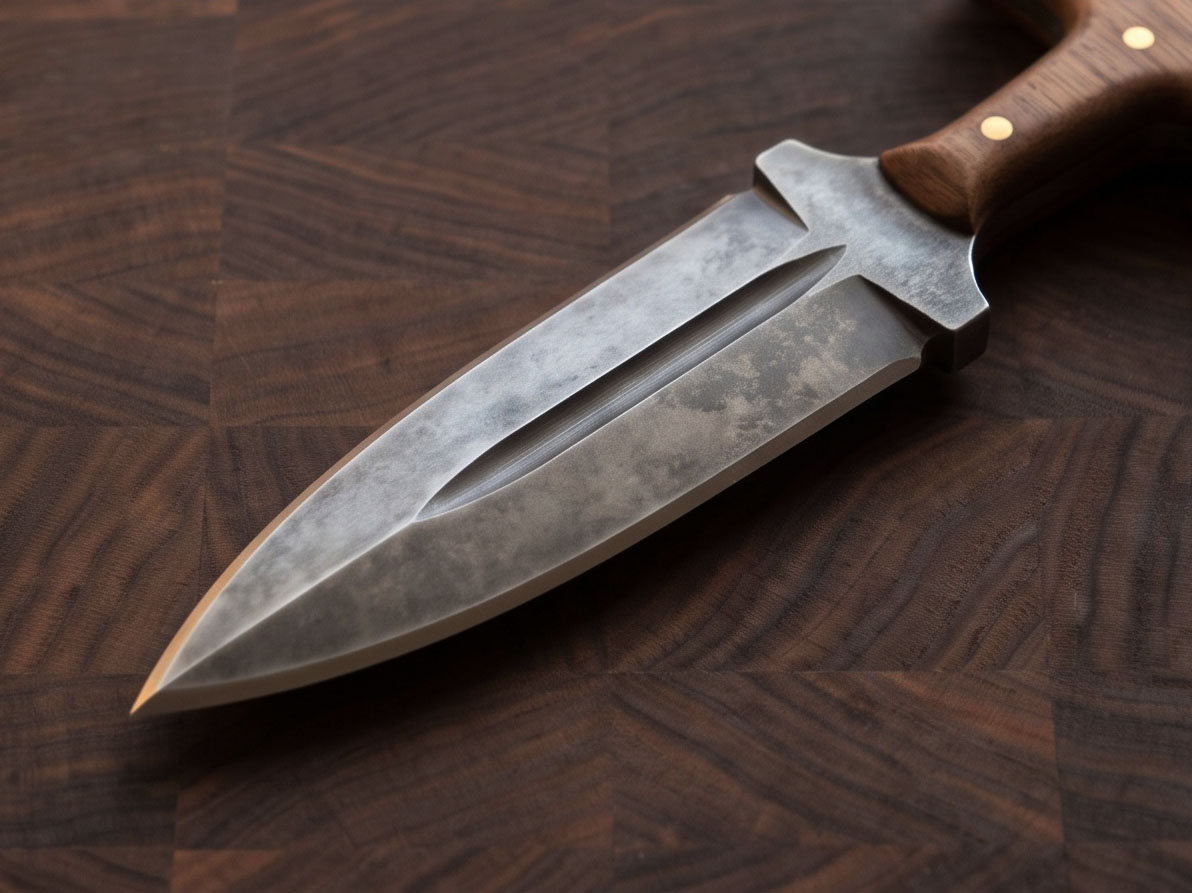
Not everything needs to shine. The Forgepoint keeps the dark, cloudy skin the steel wears when it comes off the anvil, cleaned back only far enough to true the bevels and expose bright metal along the fuller and the cutting edges. What you get is a surface with real depth to it, mottled and uneven in the way that only heat and hammer produce, sitting under a plain rosewood T-grip with four brass pins and nothing else going on. It is the least decorated push dagger we build and quietly the one the shop likes most.
Forge finish is a decision, not a shortcut
It would be faster to belt-sand the whole flat to a uniform satin. Leaving the forge skin means grinding carefully around it, which is slower and less forgiving, and it means every blade comes out looking different because no two pieces come out of the fire the same. That variability is the honest signature of hand work — we go into what actually separates hand-forged from factory-ground stock in our comparison of forged and factory-made knives.
| Overall Length | 7 inches |
|---|---|
| Blade Length | 4 inches |
| Handle Width | 3.5 inches (T-grip) |
| Blade Steel | High carbon steel |
| Blade Finish | Forged matte gray with mottled texture |
| Blade Style | Double-edged spear point, center fuller |
| Handle Material | Rosewood |
| Fittings | Brass pins |
| Tang | Full tang |
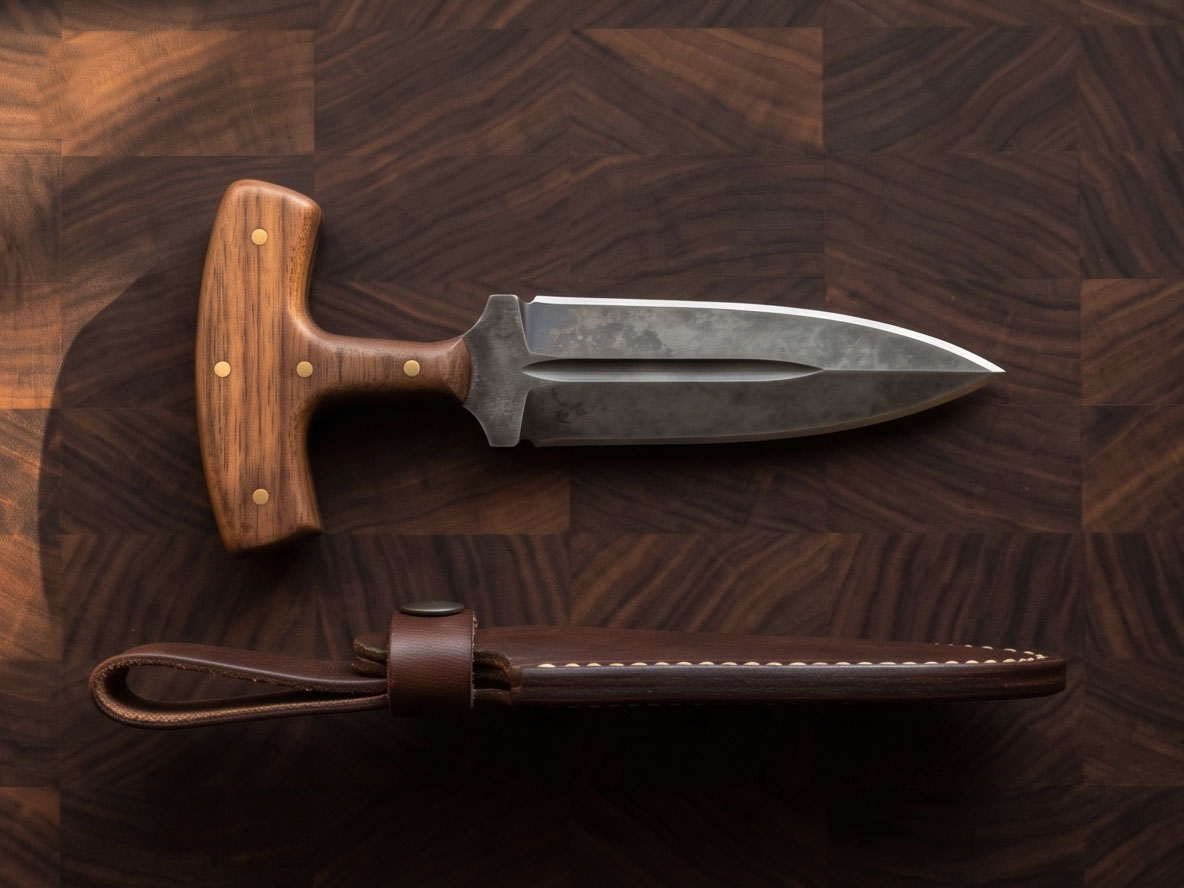
| Sheath | Handmade oxblood leather sheath with brass stud and belt loop (included) |
High carbon steel and why it still wins
Plain high carbon steel is simple, it hardens deeply and predictably, and it takes a screaming edge with very little effort at the stone. It has no exotic carbides to fight you when you sharpen, which is why anyone who sharpens often tends to end up liking it. The cost is corrosion resistance, of which it has essentially none. This is a blade that wants a dry cloth and a wiped film of oil, and it will reward the habit with an edge that comes back in thirty seconds on a stone. If sharpening freehand is new to you, work through our walkthrough of using a whetstone properly before you start.
The handle
Rosewood, sanded fine and burnished rather than lacquered, cut as a symmetrical T with the corners rounded so the crossbar does not bite into the base of the fingers. Four brass pins through a full tang. There is no bolster and no collar; the wood runs right up to the ricasso, which is how the simplest and oldest examples of this pattern were made. The grain is straight and quiet compared with a figured piece, and on a working knife that is a virtue.
Grind
Double edged, symmetrical, with a fuller running down the center of each flat and a fine hand-put edge on both bevels. The bright ground surfaces contrast hard against the dark forge skin, so the geometry of the blade reads clearly even at a glance.
Sheath
Deep oxblood leather, molded over this blade, stitched around the perimeter in pale thread, retaining strap with a stud and a fixed belt loop. Oxblood darkens beautifully with handling and picks up the reddish notes in the rosewood.
Keeping it alive
Dry the blade properly every single time, including the fuller where water likes to sit. Keep a light oil on the flats. Do not store it in the sheath. The rosewood wants a rub of oil or wax once or twice a year and nothing else. A blade like this one will pick up a gray-brown patina from use, which is protective and, to most eyes, an improvement.
Before ordering: the law
Push daggers face specific restrictions across a number of US states and municipalities and are banned in many other countries. This is one pattern where you genuinely cannot assume that what is legal for a belt knife is legal here. Look up your own jurisdiction; the responsibility for that check rests with the buyer, and rules are amended regularly.
Common questions
Is the dark finish a coating? No. It is the oxide skin the steel formed in the fire, cleaned back and left in place. It cannot flake off because it is not applied.
Will it rust in my pocket? If you sweat on it and leave it, yes. Wipe it. That is genuinely the whole maintenance routine.
Is it as sharp as the polished ones? Sharper, generally. Simple carbon steel takes a finer edge more easily than a high-alloy tool steel does.
Something with more presence? The Blackhorn with a polished buffalo horn grip shares the steel and dresses it up.
Memphis built
Forged, ground, hardened, handled and sharpened in Tennessee, sheath included and made under the same roof. Covered for life if a material flaw or a bench error ever turns up. Mention a gift in the order notes and it will be packed accordingly.
Model: BMK-1201
Buying for groomsmen? This dagger also comes as a matched set of 6, 15% less than buying six singly, and each one can carry its own engraved name.

Reviews
There are no reviews yet.