
Description
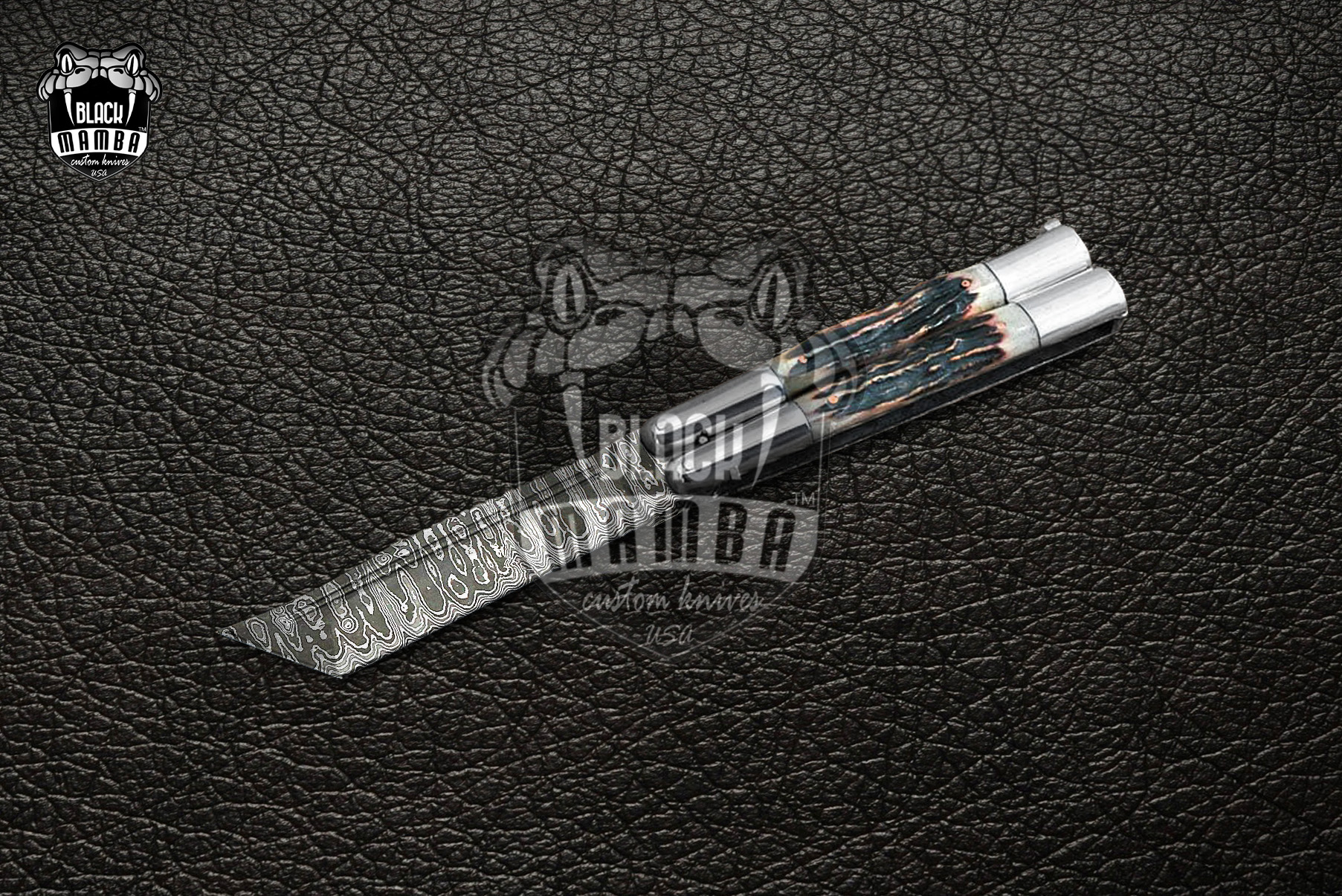
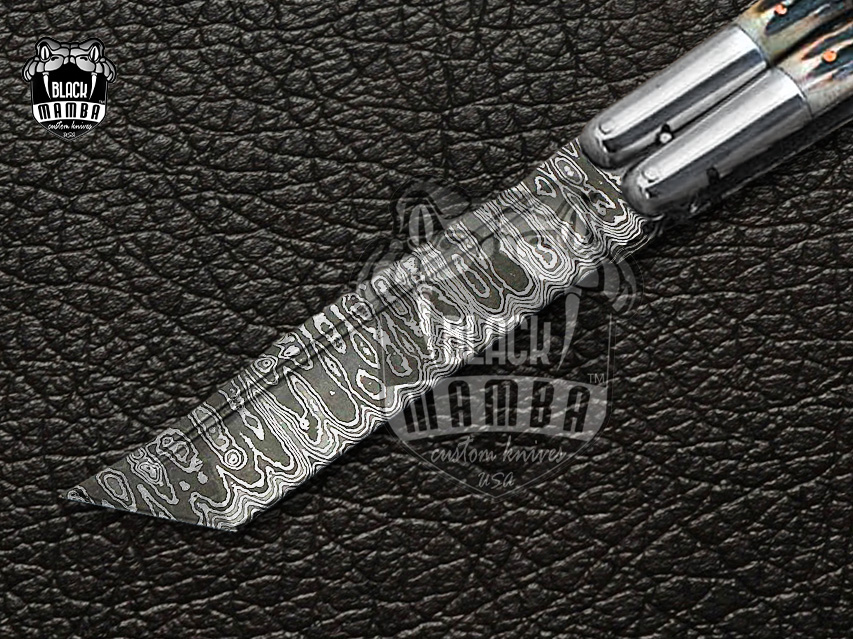
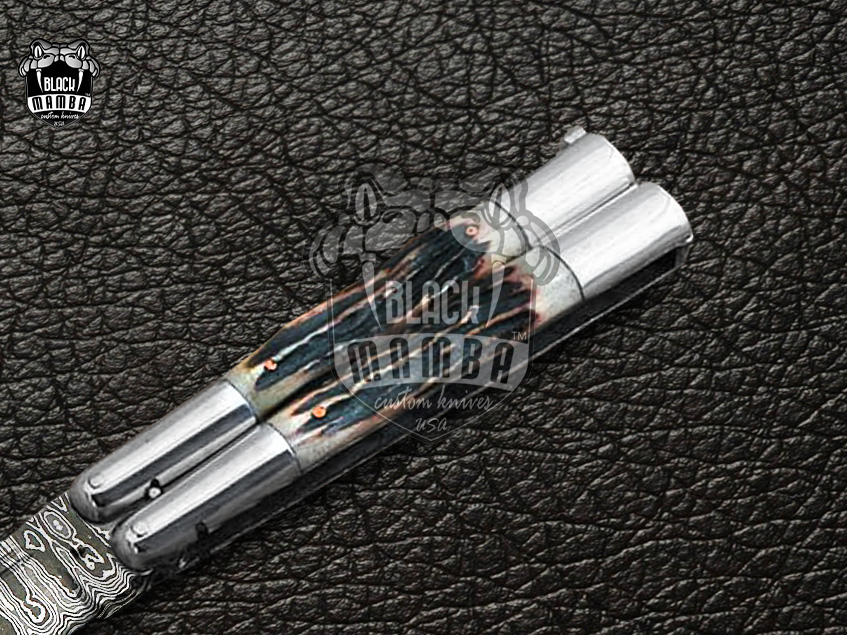
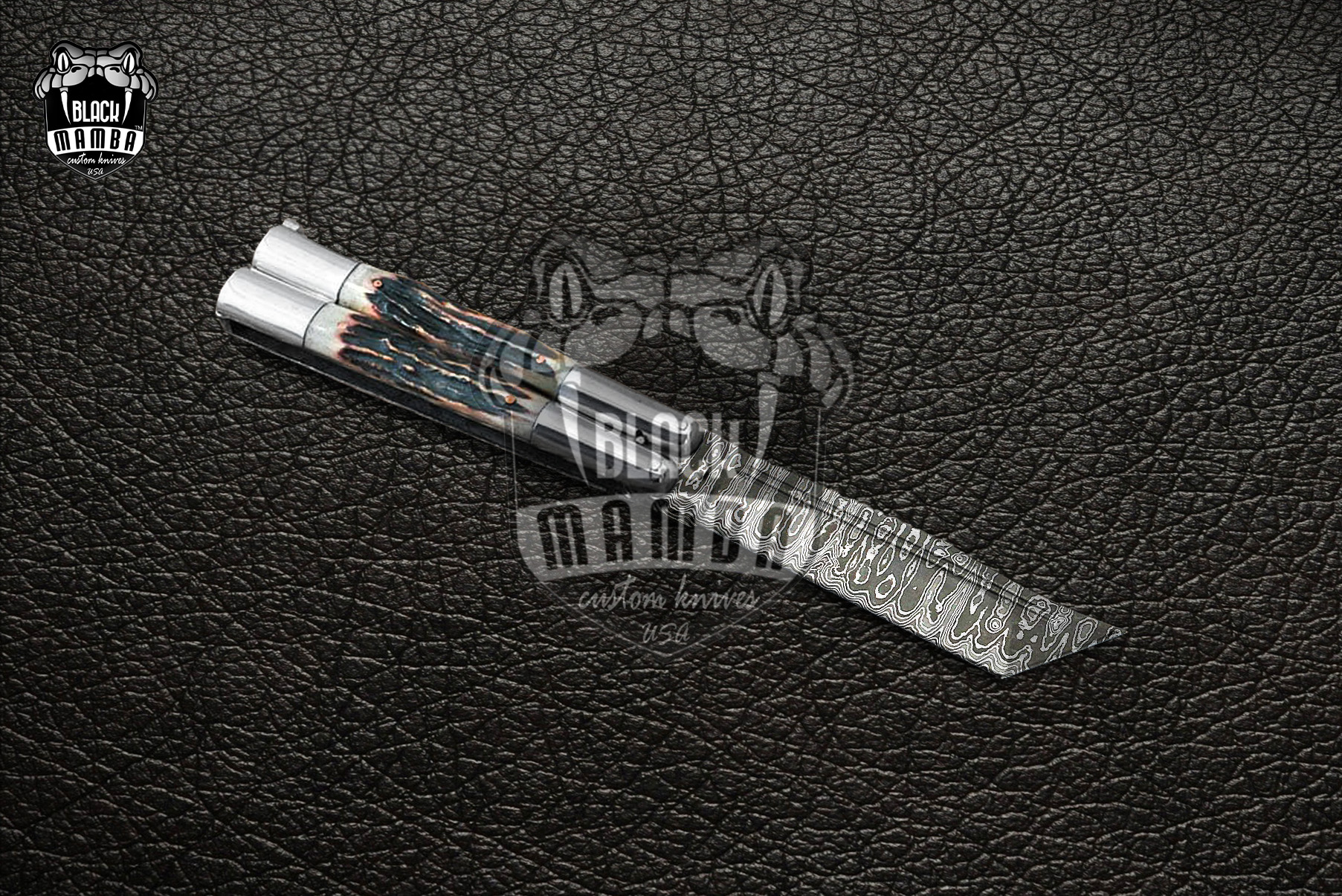
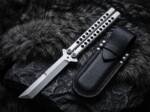
A compact butterfly knife with stag antler panels and a raindrop Damascus blade, at six and a bit inches open.
| Overall length | 6.2 inches |
| Blade length | 3.1 inches |
| Handle length | 3.1 inches |
| Steel | 1095 + 15N20 Damascus, 352 layers |
| Hardness | 58–60 HRC, oil tempered |
| Weight | 6.5 oz |
| Handle | Stag |
Who it fits: anyone who has decided that a nine-inch balisong is more knife than they want in a hand. Short handles turn fast, and this one turns very fast.
Small and dense
Six and a half ounces packed into 6.2 inches is a lot of metal for the size, and it changes how the knife behaves. There is enough inertia to carry a rollover cleanly, but the short arc means everything happens quickly. Beginners tend to over-rotate for the first week. Once your timing adjusts, the compact size is genuinely easier to work with in a seated position or anywhere you cannot swing your arm freely.
The blade shape
The blade is short and broad with a squared, angular tip rather than a needle point. That is a durable arrangement. There is no fine tip to snap off if the knife lands badly, and the flat forward section gives you a usable straight edge for cutting against a surface. What it is not is a piercing shape, and the squared tip means the knife looks blunter than it cuts.
Living with stag
Stag is naturally shed antler, so the panels carry their own bark texture and colour, from bone-white through grey to a dark tan in the grooves. No two knives look alike and no photograph will match your piece exactly. Antler gives grip without any machining, which is why it survived as a handle material for centuries. It is also porous. Keep it out of prolonged wet, do not soak it, and do not leave it baking in a car, which dries antler and can open fine cracks along the grain.
Care: the raindrop pattern comes from an acid etch on carbon steel, so this blade will rust if it is left damp. Dry it after handling, put a thin film of light oil across the flats, and re-oil after any humid session. If a spot appears, it lifts with a soft eraser or fine abrasive and a little oil rather than a wire brush. The pivots want a drop of oil occasionally and nothing else. See do Damascus knives rust for the longer answer.
Things people ask
Is this a trainer? It can be. The Live Blade has a sharpened edge, so treat it accordingly and learn openings slowly. Pick the Trainer Blade option on this page for a blunt edge to practice on.
What should I practise first? Basic and reverse openings until they are boring. There is a sequence in tricks worth learning first.
Is there a larger natural-handle version? The ram horn and resin balisong is the bigger sibling.
Model: BMK-DB-24
Not sure this is the one? See every balisong knife we make in one place.
Jack Jimenez –
Genuinely super impressed with how this turned out. Bushings feel buttery smooth after just a bit of use. Action is smooth right out of the box, no break in needed. Already telling my friends to check this out.
Pamela Roberts –
Bought this on a whim and it turned out to be one of my favorite purchases this year. If you’re on the fence just get it. You won’t regret it.
Jacob Nguyen –
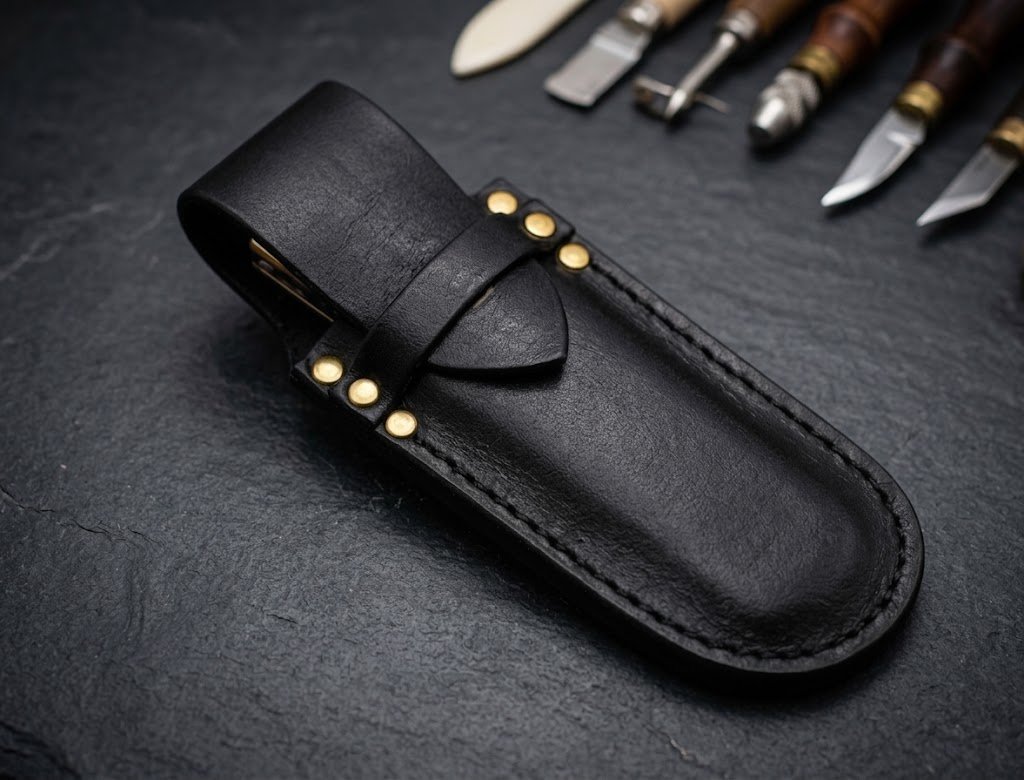
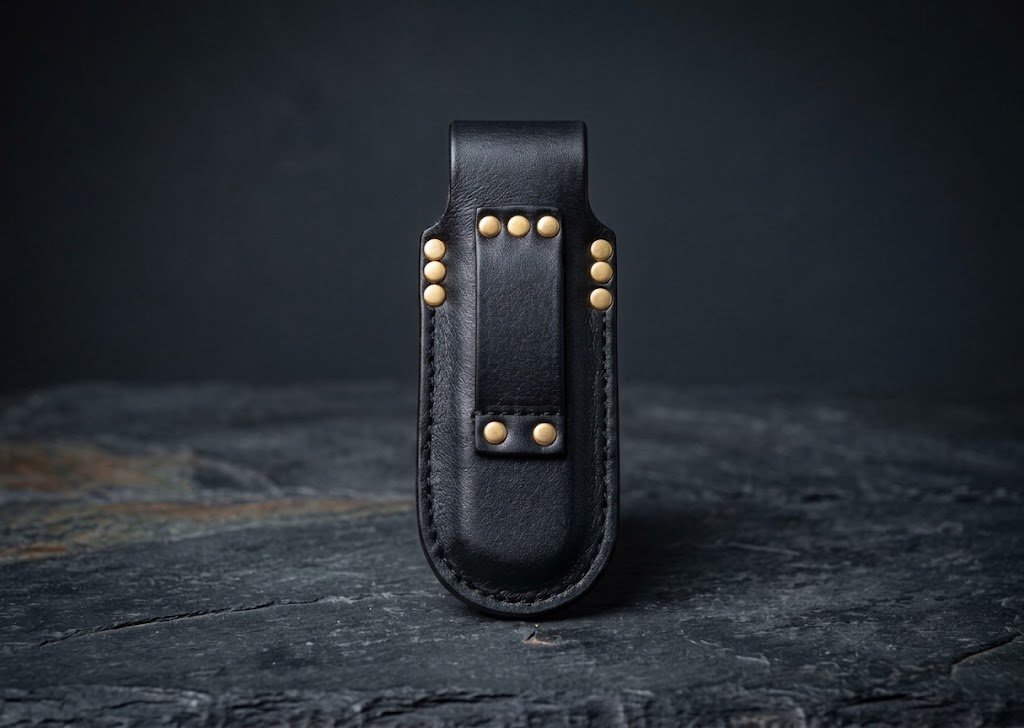
This company clearly knows what they’re doing with quality like this. Comes with a nice pouch which is a nice touch. This is the kind of purchase that makes online shopping worth it.
Natalie Morales –
Wish I had gone with a different shop for this one. Would think twice before ordering again.
Rafael Wood –
This is exactly what I wanted and then some. Happy customer here, through and through.