
Description
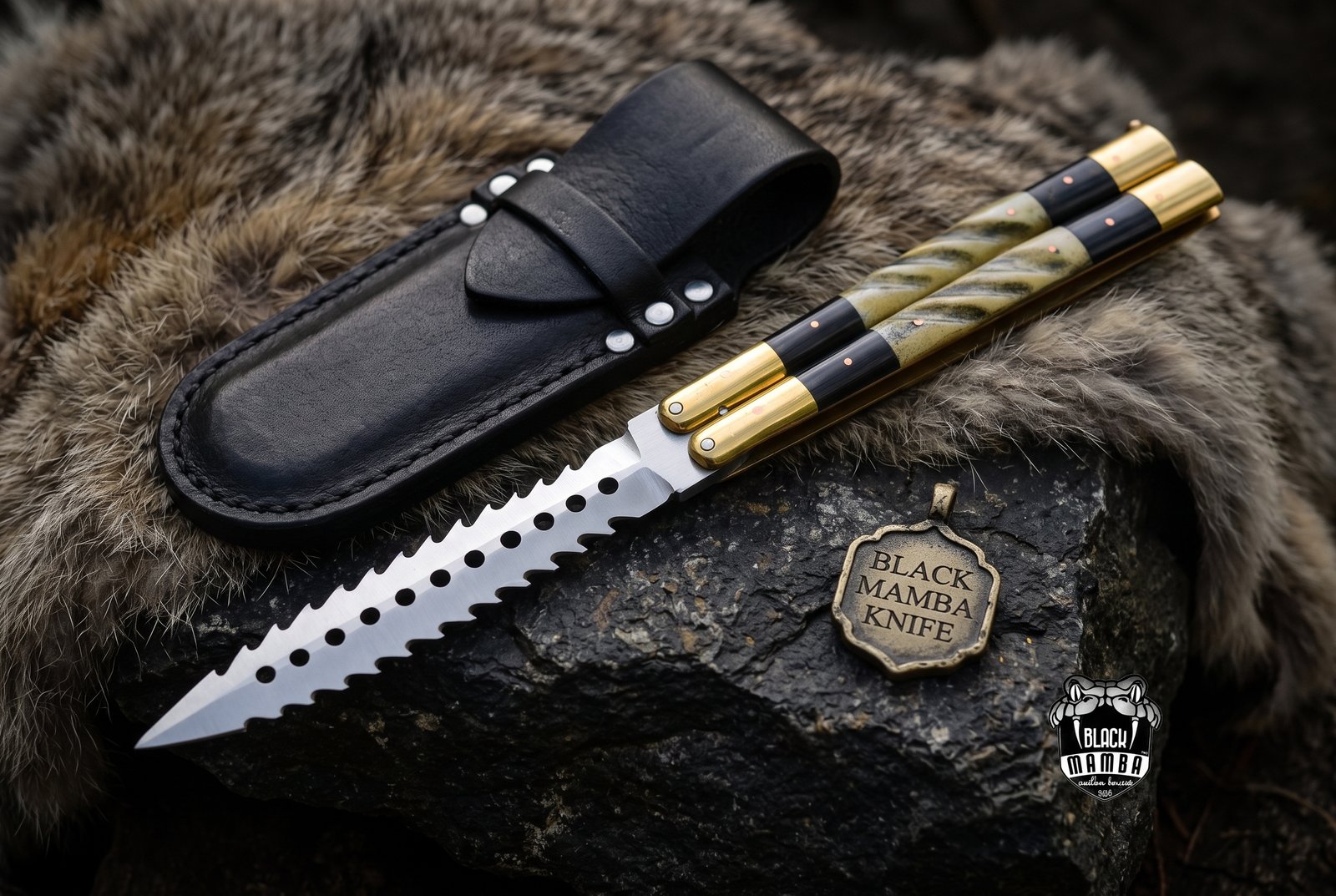
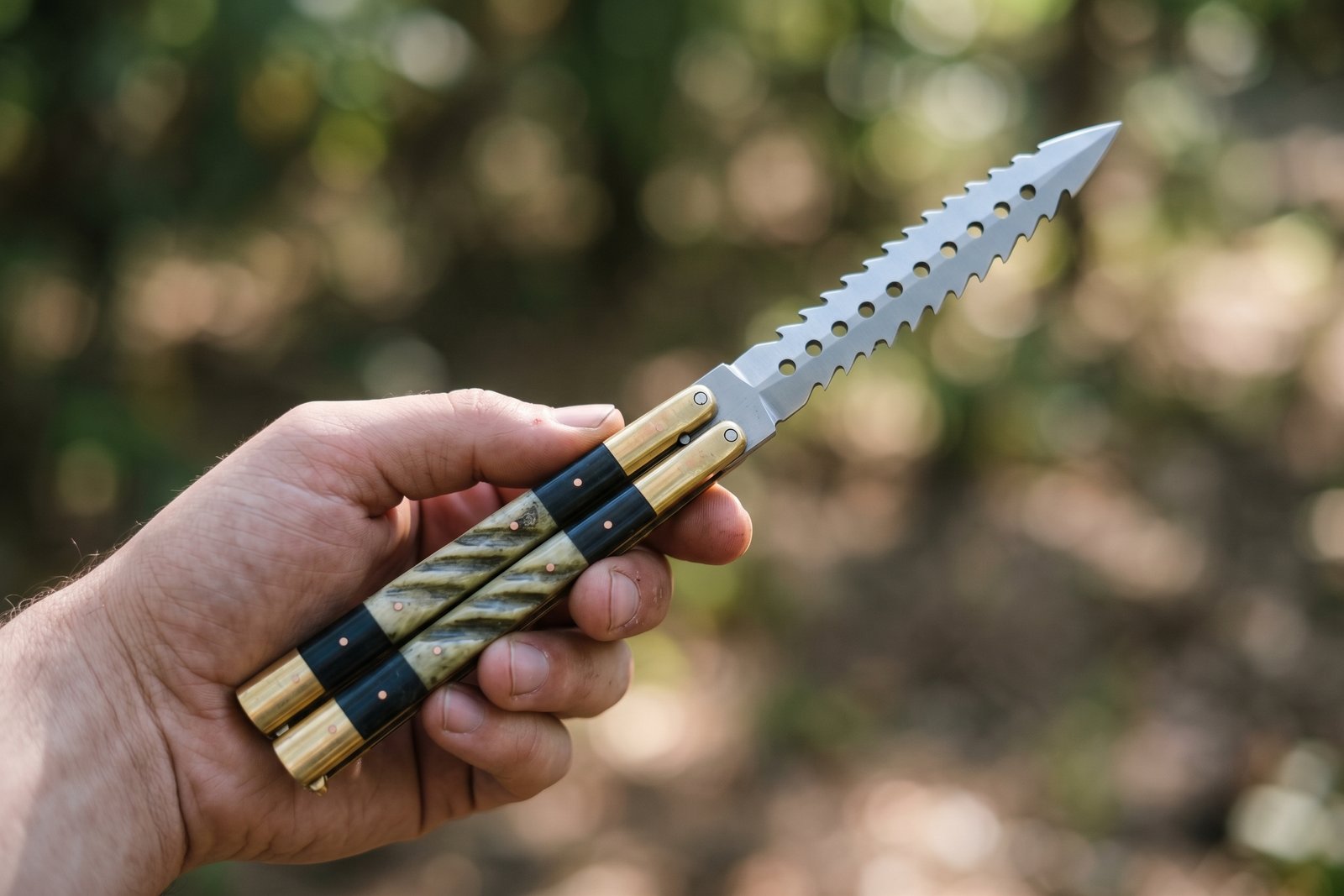
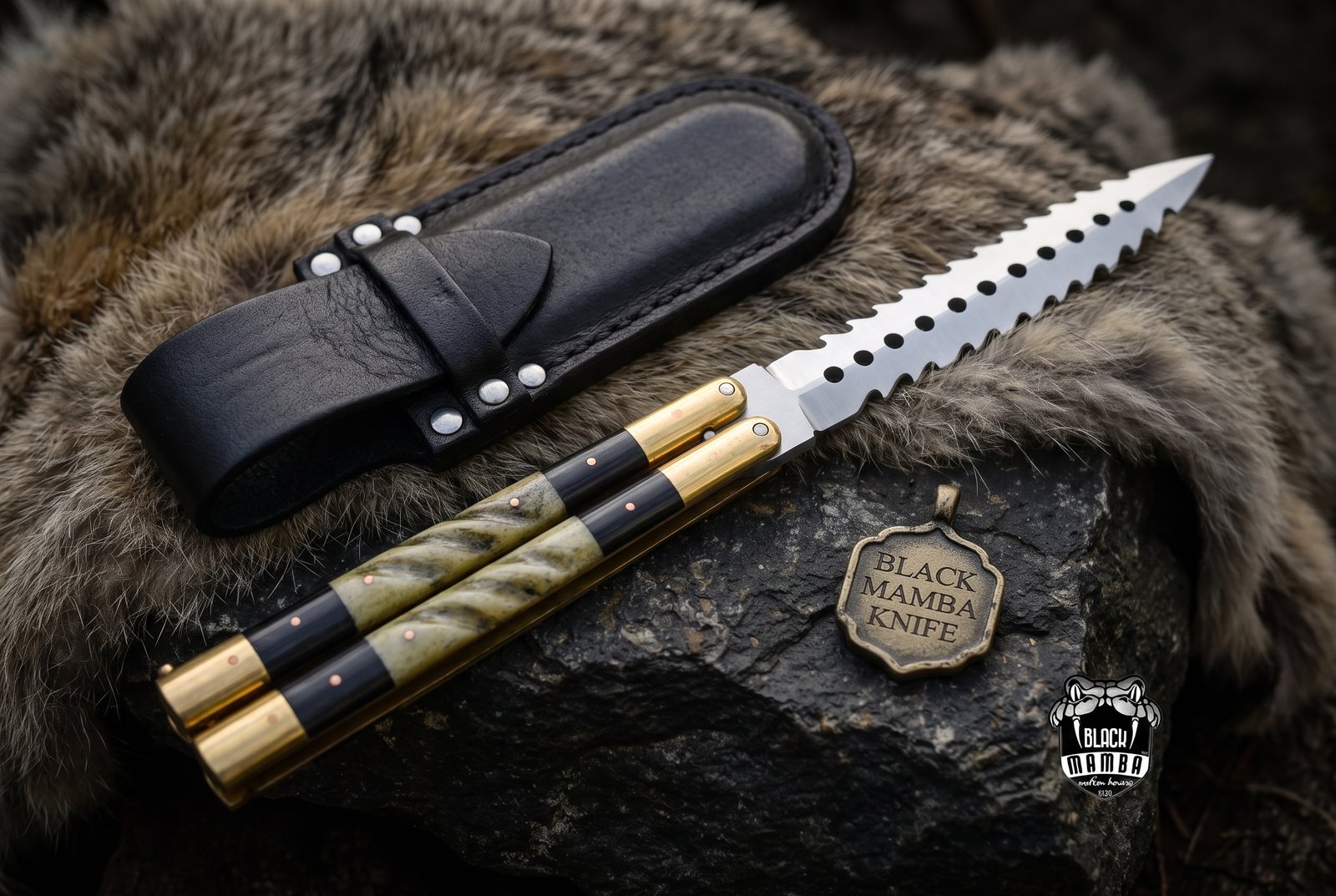
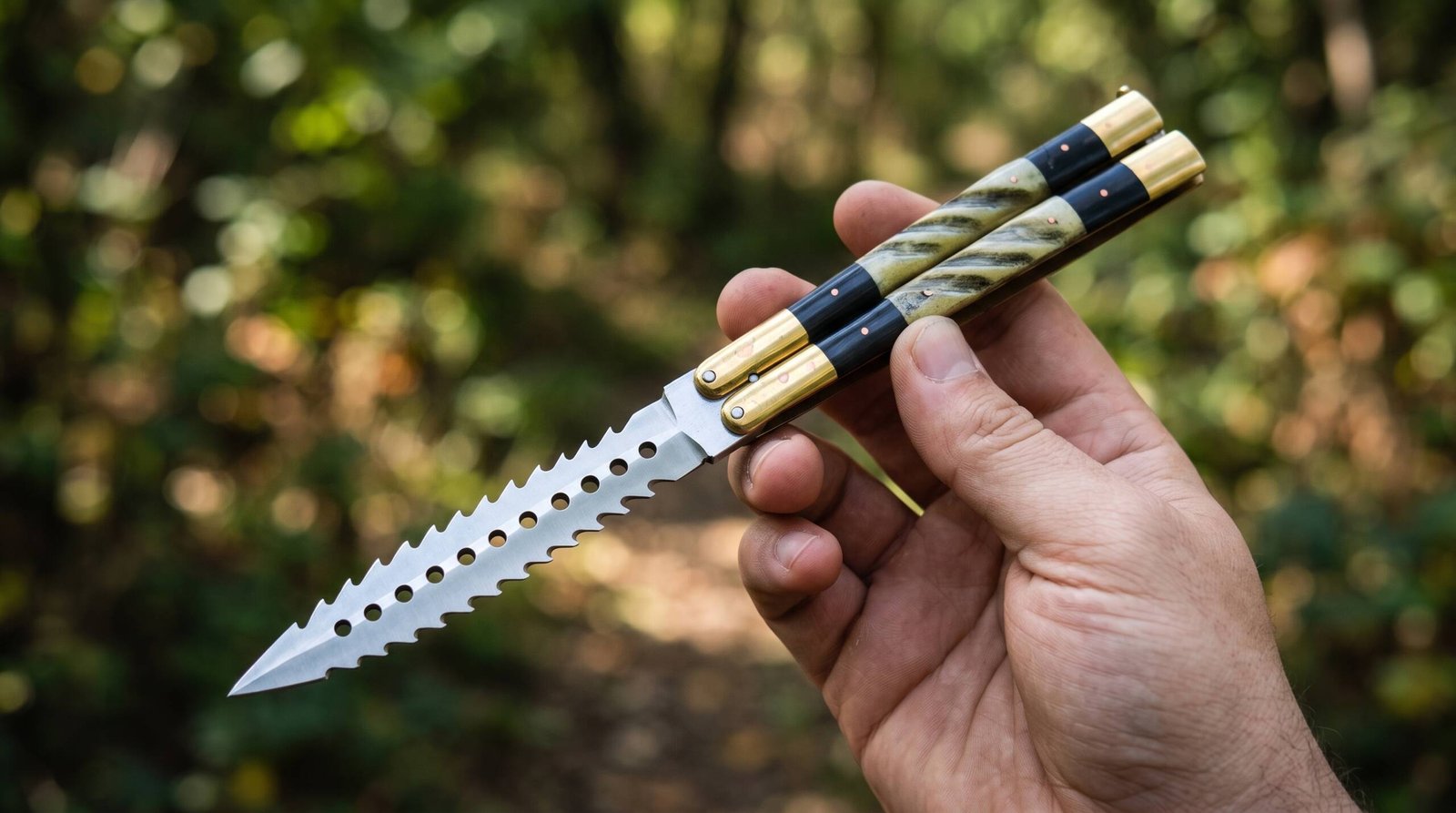
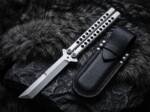
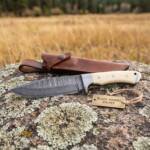
Brass bolsters, alternating bone and rosewood inserts, and a blade cut with a full row of holes and a heavily scalloped spine. Nothing about this one is restrained.
| Overall length | 9.1 inches |
| Blade length | 4.4 inches |
| Handle length | 4.7 inches |
| Steel | D2 tool steel |
| Handle | – Brass with Bone and rose Wood Inserts |
Made with one buyer in mind: the collector who already owns the plain models and wants something that stops people mid conversation. It is the most ornamented balisong in the D2 group.
Two materials in one handle
The inserts alternate bone against dark rosewood down the length of each handle, separated by pinned joints. That is more work than a single material and it introduces a real consideration: the two move at different rates. Wood swells and shrinks with humidity more than bone does, so over a few years you may feel a hairline step at a joint in a dry winter that vanishes by summer. It is cosmetic. It is also the reason mixed handles are rare.
That spine
The scalloped upper edge is not a saw and will not cut anything. It is a decorative treatment ground into the spine, and it does two things worth knowing. It removes weight from the top of the blade, which shifts balance very slightly toward the edge, and it gives dirt somewhere to hide. Cleaning the scallops needs a corner of cloth pushed into each one rather than a wipe down the flat.
Who it is wrong for
Anyone who wants to use a knife. The pierced blade, the ornamented spine and the mixed handle all exist for the eye, and every one of them is a place for moisture to sit. If your interest is a knife you can throw in a bag and forget, buy something plain in the same steel and spend the difference on stones. It is also awkward to hold reversed, because the scallops sit under your thumb.
Cleaning something this fussy
Compressed air is more useful here than a cloth. Blow the holes and the scallops out after handling, then wipe the flats and let it dry completely before it goes away. Keep water away from the joints between bone and wood. Brass takes fingerprints instantly and comes clean with a dry buff, or you leave it and let it dull evenly, which most owners do. Understanding how handle construction differs helps you see where dirt can and cannot reach.
Things people check first
Are the scallops sharpened? No, and they should not be. The sharpened edge is the underside only.
Do the holes make the blade weak? Not in handling. They would matter if you pried with it, which you should not.
Which shape is this called? Blade shapes explained covers it, and the engraved brass and camel bone model shows what the same instinct looks like in Damascus.
Model: BMK-479
Not sure this is the one? See every balisong knife we make in one place.
Olivia F. (verified owner) –
The precision in the craftsmanship of the steel butterfly knife I received is truly remarkable. It’s not just a tool; it’s a functional work of art that I’ll treasure.
Samuel W. (verified owner) –
I’ve been collecting knives for years, and this store ranks among my favorites. The steel butterfly knife I purchased here is a shining example of craftsmanship and excellence.
Sophia B. (verified owner) –
The steel butterfly knife I received from this store is visually captivating and incredibly functional. It’s now my primary tool for various tasks. Highly recommended!
Caleb L. (verified owner) –
I recently added a steel butterfly knife from this shop to my collection, and it’s quickly become one of my most cherished pieces. The design and quality are exceptional.
Steven Russell (verified owner) –
Excellent craftsmanship with attention to detail.
Antoine Murphy –
Bought this on a whim and it turned out to be one of my favorite purchases in a long time. Blade came shaving sharp straight out of the box. Definitely bookmarking this shop for future orders.
Blake Gonzalez –
This balisong is a genuine work of art.
Craig Collins –
Not going to lie. This exceeded my expectations by a lot. Good to know real Memphis craftsmen are behind this, and shipping was quick too. Black Mamba Knives’ attention to detail is honestly unmatched.
David Thompson –
Everyone who’s seen this balisong has asked where I got it. Handles have a great grip even during fast flips. Already thinking about what to order next from this shop.
Melissa Wilson –
Wasn’t expecting to be this impressed but here we are. Definitely bookmarking this company for future orders.
Diego Smith –
This balisong is really solid. No question about it. You can tell it’s real American craftsmanship out of Memphis. Shipping was quick too. Can’t say enough good things about this purchase.
Dorothy Turner –
Didn’t think a balisong at this price could feel this premium. This flips cleaner than knives twice the price. This store just earned a repeat customer.
Ashley Ramirez –
Absolutely blown away by this balisong. Pivots feel dialed in with zero blade play. If you’re on the fence just get it. You won’t regret it.
Alejandro Johnson –
Perfect gift. Perfect quality. No complaints. Latch snaps shut clean every time. Will definitely order again for another one.
Scott Kelly –
Didn’t think a balisong at this price could feel this premium. Bushings feel buttery smooth after just a bit of use. Weight is perfectly balanced for flipping. Comes with a nice pouch which is a nice touch. Already planning my next pickup from this store.
Natalie Alexander –
Did not expect this level of quality for the price. Latch snaps shut clean every time. This is exactly why I keep coming back to this seller.
Justin Adams –
Happy with this one for the most part. Blade is sharp but not quite razor sharp out of the box. Action is good though it needed a little tightening on the pivots. Minor nitpicks aside, good quality knife.
Dustin Brooks –
Set my expectations low going in and this blew right past them. You can tell it’s real American craftsmanship out of Memphis. Shipping was quick too. Blade came shaving sharp straight out of the box. Great buy overall.