
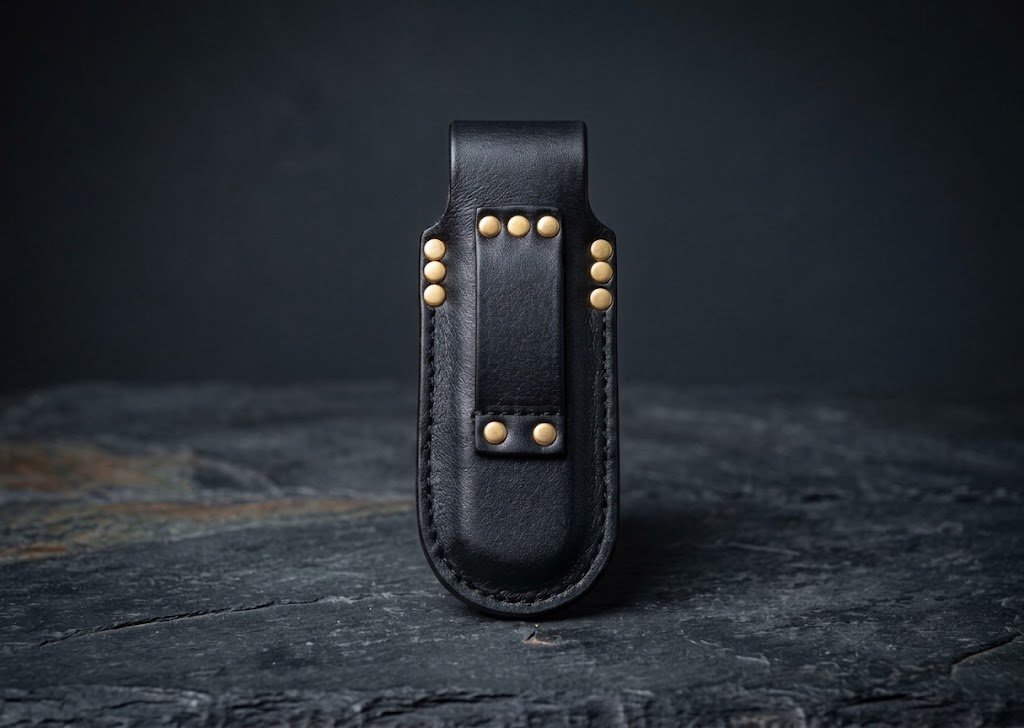
Description
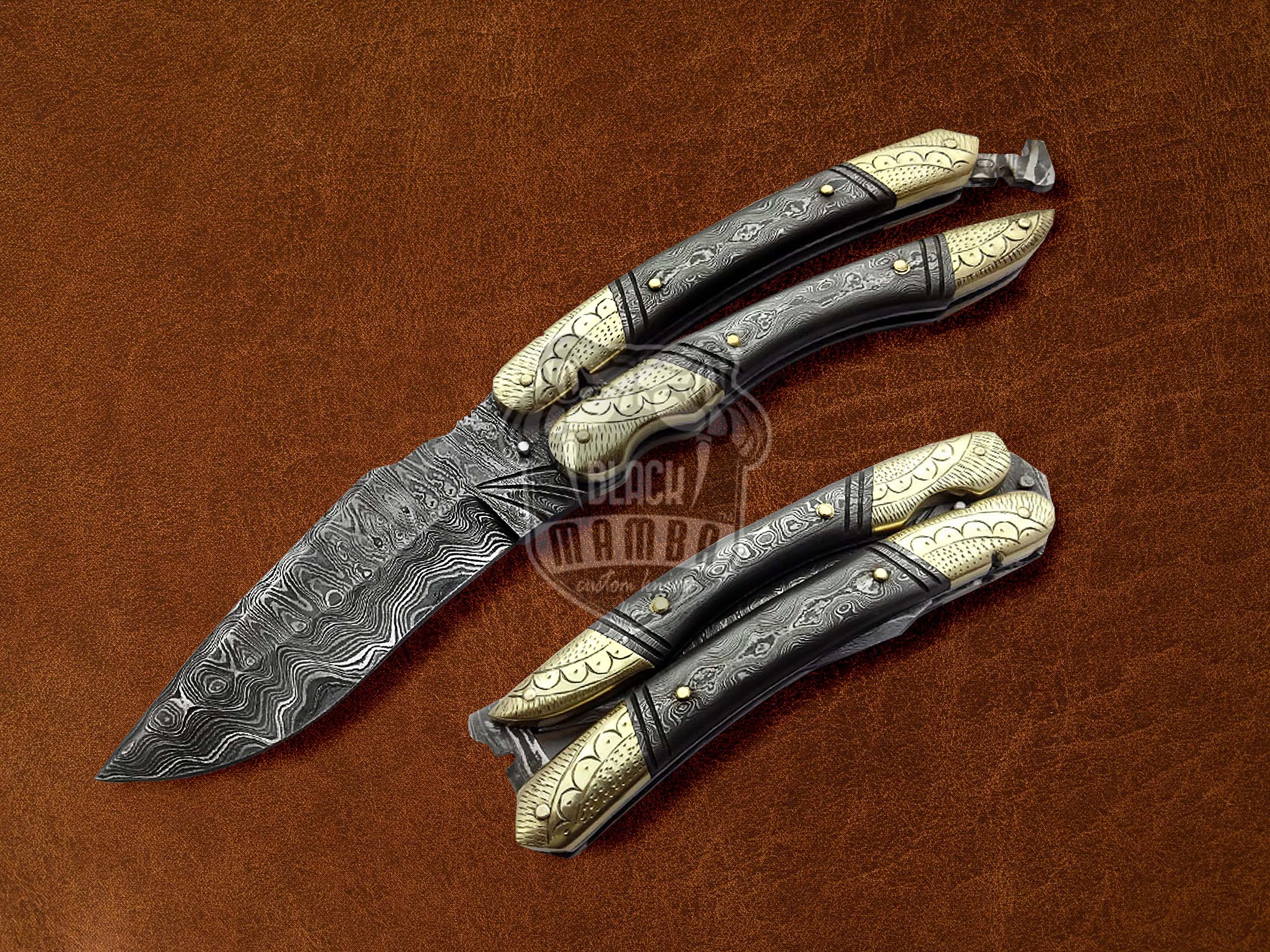
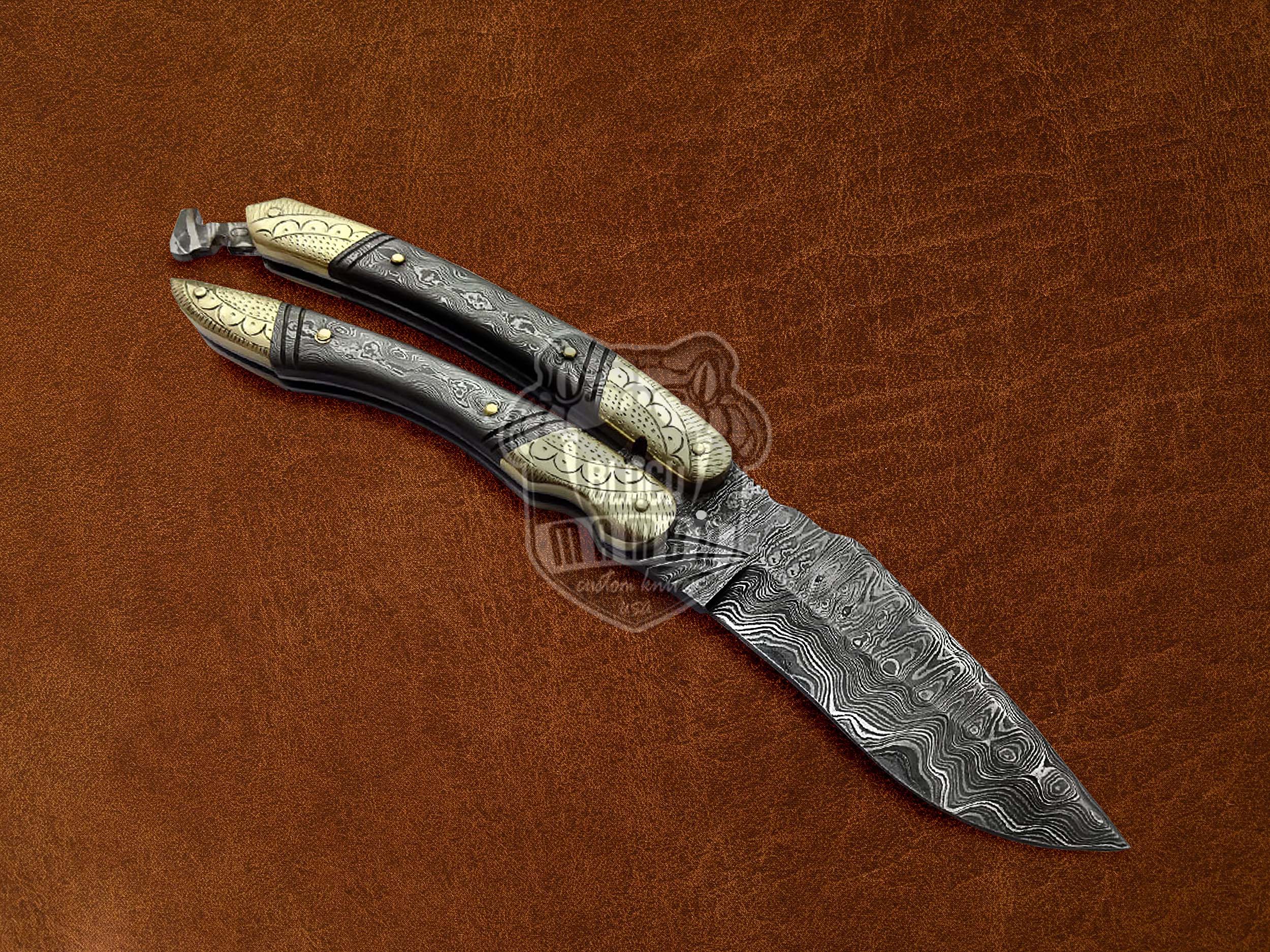
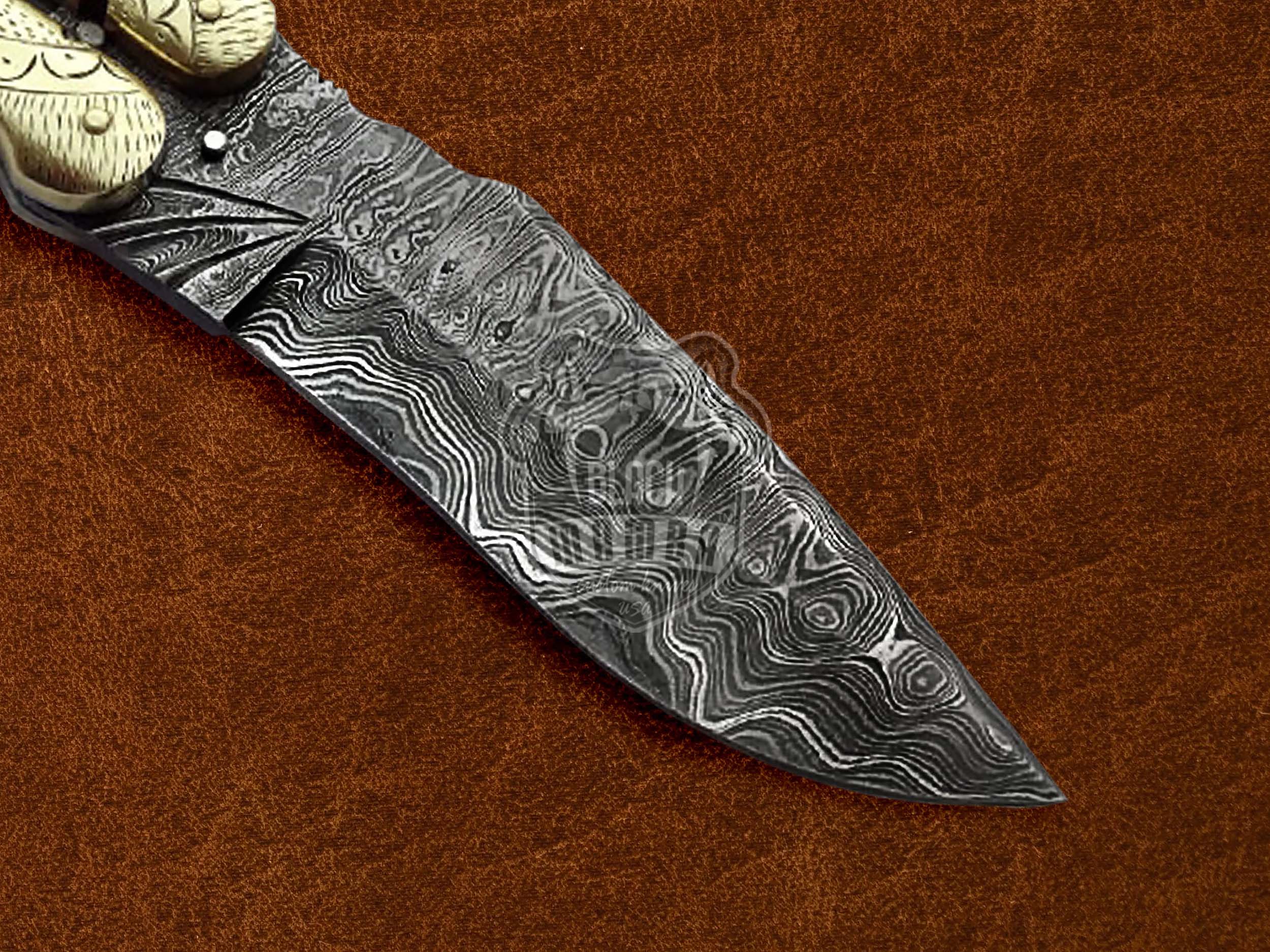
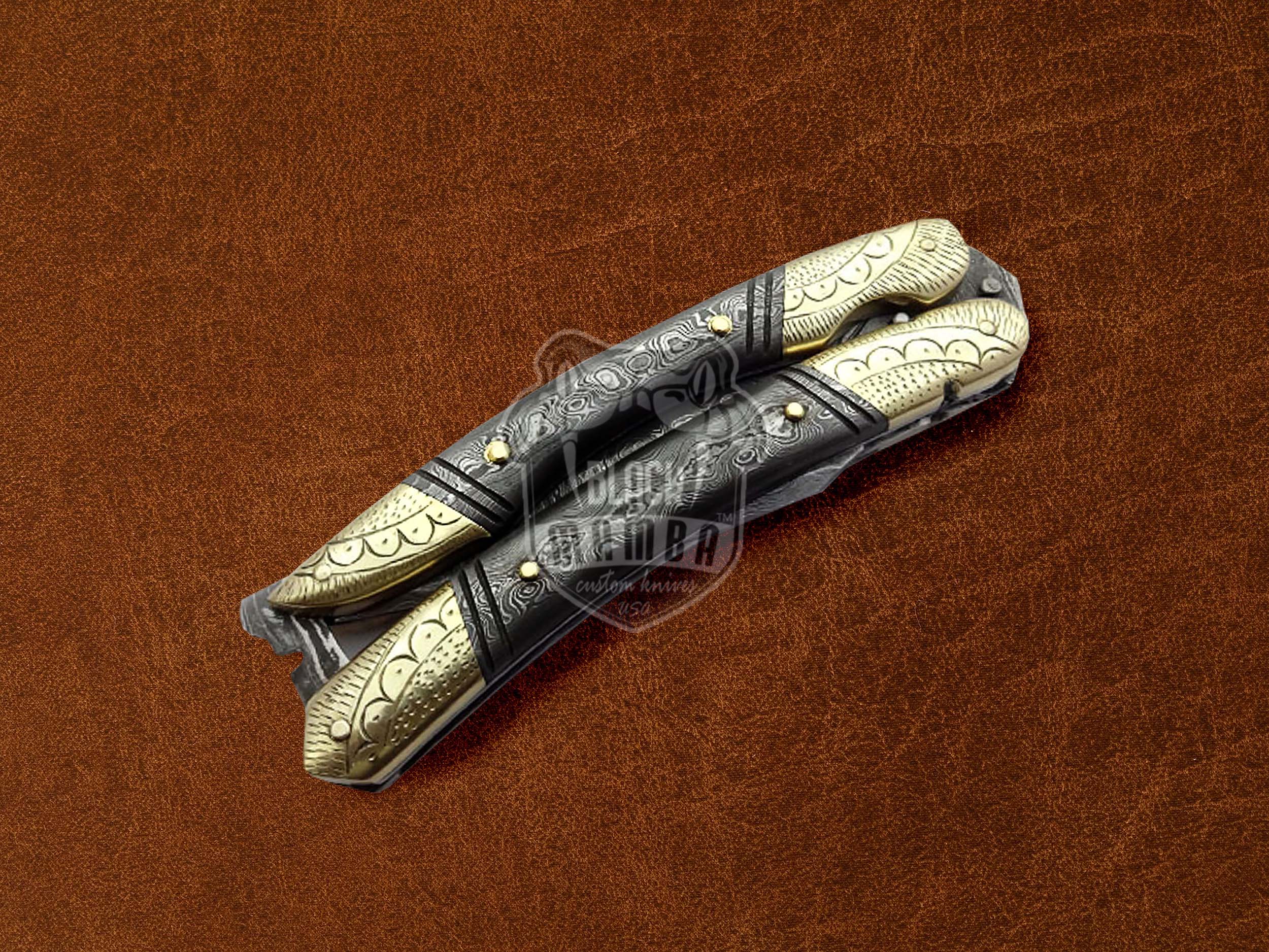
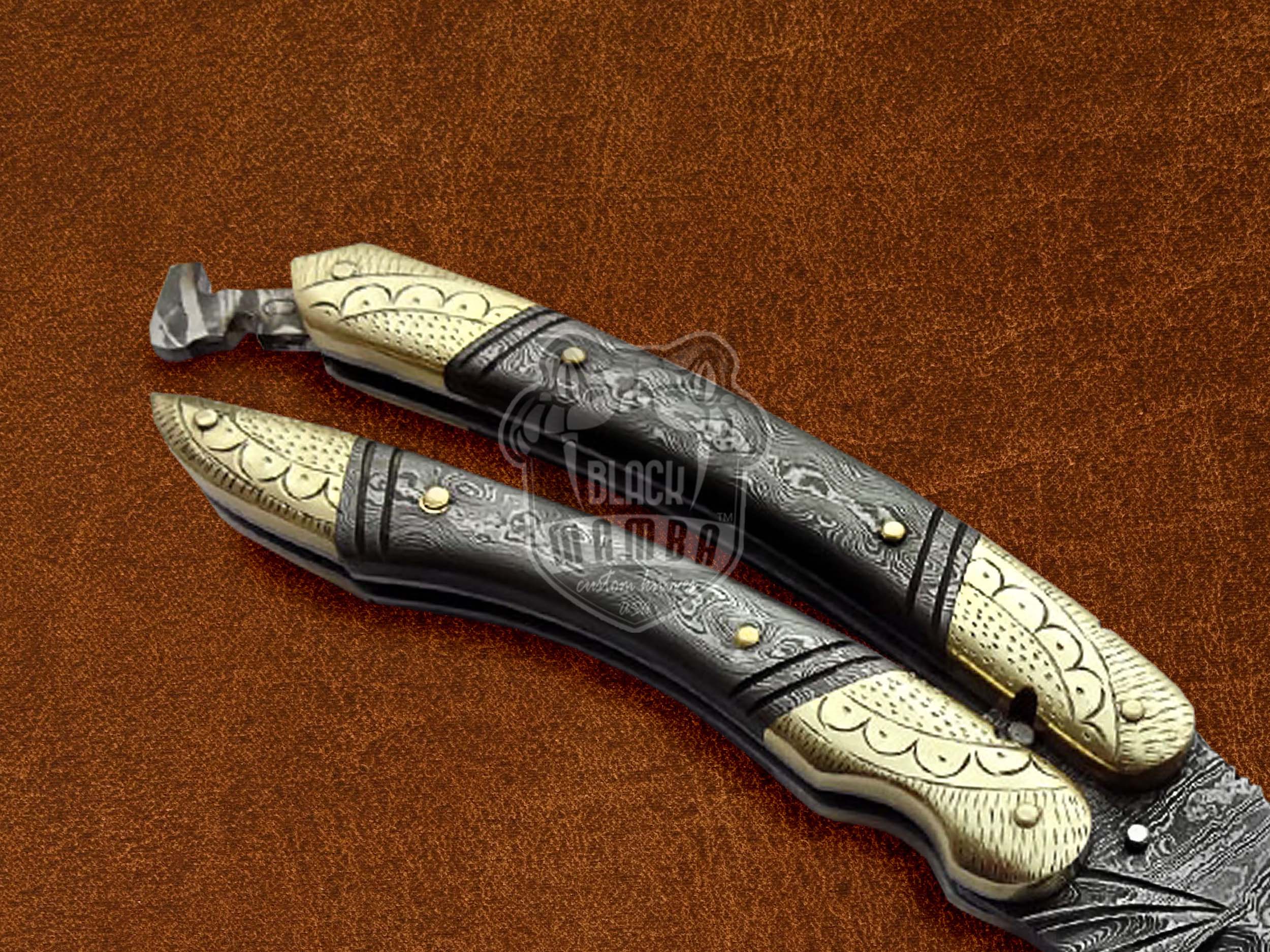
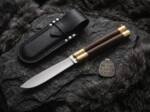
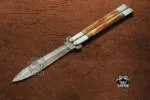
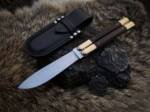
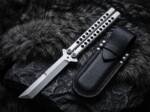
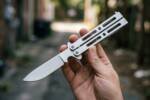
Damascus blade, Damascus handle slabs, and engraved brass caps at both ends. There is very little plain surface anywhere on this balisong.
| Overall length | 8 inches |
| Blade length | 3.5 inches |
| Handle length | 4.5 inches |
| Steel | 1095 + 15N20 Damascus, 352 layers |
| Hardness | 58–60 HRC, oil tempered |
| Weight | 7.23 oz |
| Handle | Brass And Damascus Handle |
Built as: a display and collection piece first, a flipper second. Pattern-welded handles cost several times what milled steel channels cost, and nobody forges them for a knife that is going to be dropped on concrete learning aerials.
What 7.23 ounces does to the action
This is heavy for an eight-inch balisong, and the mass sits out in the handles rather than in the blade. Rollovers are slow and stable, with real momentum once you start them and real momentum to stop. That makes basic openings feel smooth and makes fast trick chains hard work. If you are chasing speed, buy something lighter. If you like a knife that feels substantial in the hand, this is exactly the sensation you are paying for.
Damascus in the handles as well as the blade
Forging pattern-welded billets thin enough for handle slabs is fiddly, because the layers have to survive being drawn out without delaminating at the edges. The reward is that the grain runs continuously along the handle and picks up light at a different angle from the blade. How Damascus steel is forged covers why the two steels etch to different tones in the first place.
How the brass changes
The engraved end pieces are solid brass and they will not stay bright. Brass oxidises to a warm amber and then to brown, quickly on a knife that gets handled. Most collectors leave it. If you prefer it bright, use a wadding polish sparingly and stay clear of the cut lines, because repeated polishing rounds over hand engraving and softens the detail permanently.
Care: the blade and the handle slabs are both carbon steel, so both will spot. Wipe every surface dry after handling and leave a light film of oil on the Damascus, including the handle faces, which people forget. A little oil worked into both pivots after a few sessions keeps the action honest. Do not store it in a sealed pouch that traps humidity.
Questions we get
Should I flip this one? Gently, and over carpet. The Live Blade is sharp and the finish marks easily.
Where does the balisong come from? The Philippines, and the story is longer than most people expect. See balisong history and origins.
What should I learn on instead? Something plain and hard. The D2 balisong with bone scales takes abuse far better than pattern-welded handles do.
Model: BMK-2006
Still comparing? Our full range of butterfly knives for sale is one click away.
Sophia D. (verified owner) –
“I recently added a unique knife to my collection from here, and it’s a true gem. The design is captivating, and it’s a conversation starter.”
William L. (verified owner) –
“I’m extremely satisfied with my purchase from this website. The knife I got is both functional and a piece of art. Worth every penny.”
Olivia C. (verified owner) –
“I recently purchased a knife from this website, and it’s exceeded my expectations. The craftsmanship is outstanding, and it’s a joy to use.”
Grace H. (verified owner) –
“I stumbled upon this store by chance, and I’m so glad I did. The knife I purchased is a testament to the maker’s skill. It’s a treasure.”
Jacob P. (verified owner) –
“The knife I received is more than I could have hoped for. The blade is sharp, and the design is unique. It’s a fantastic addition to my collection.”
Christine Flores –
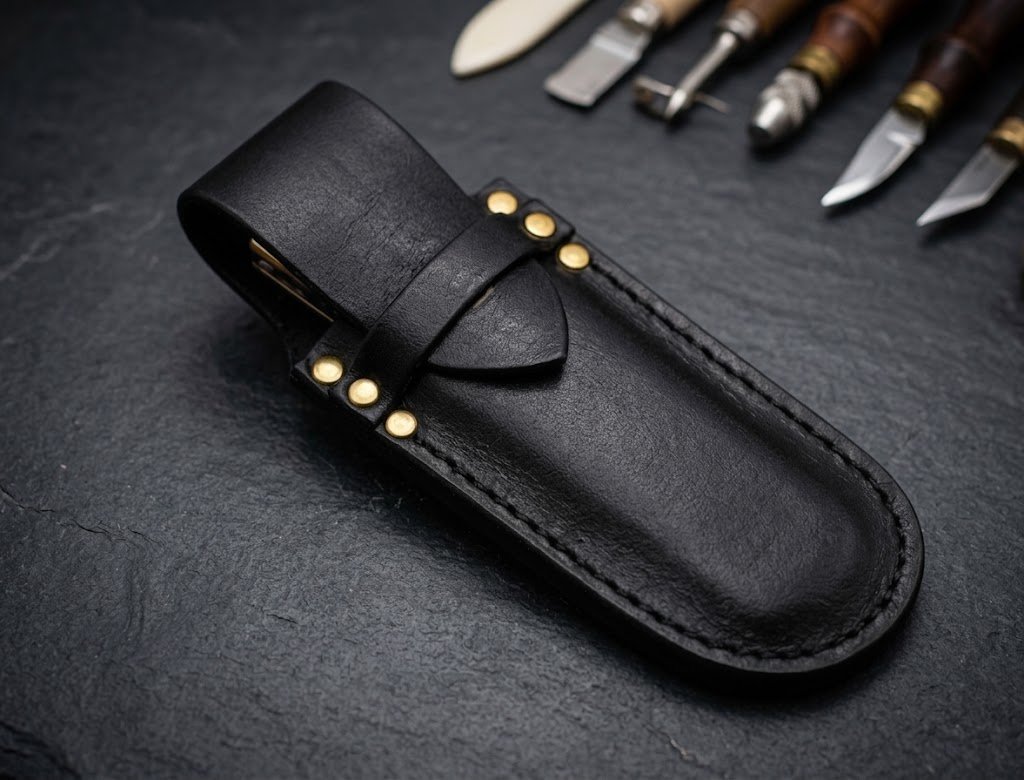
Best balisong I’ve ever owned. Hands down. Comes with a nice pouch which is a nice touch. Can’t recommend this enough.
Richard Wright –
The moment I saw this in person I knew it was a keeper. Comes with a nice pouch which is a nice touch. Already added a few more items from this maker to my cart. Cool knowing this was handmade right in Memphis and shipped out fast.
Emily Gutierrez –
Honestly one of my better purchases in a while. Pivots feel dialed in with zero blade play. This is my new favorite in the collection.
Stephanie Bailey –
Not going to lie. This exceeded my expectations by a lot. Pivots feel dialed in with zero blade play. Latch snaps shut clean every time. Blade came shaving sharp straight out of the box. Exactly the kind of quality that keeps me coming back.
Kevin Taylor –
This is one of those purchases that just makes you smile. Pivots feel dialed in with zero blade play. Great buy overall.
Brandon Alvarez –
Would call this a solid pickup for the price. Latch works fine, just a bit stiff at first. Would buy from this shop again.