
Description
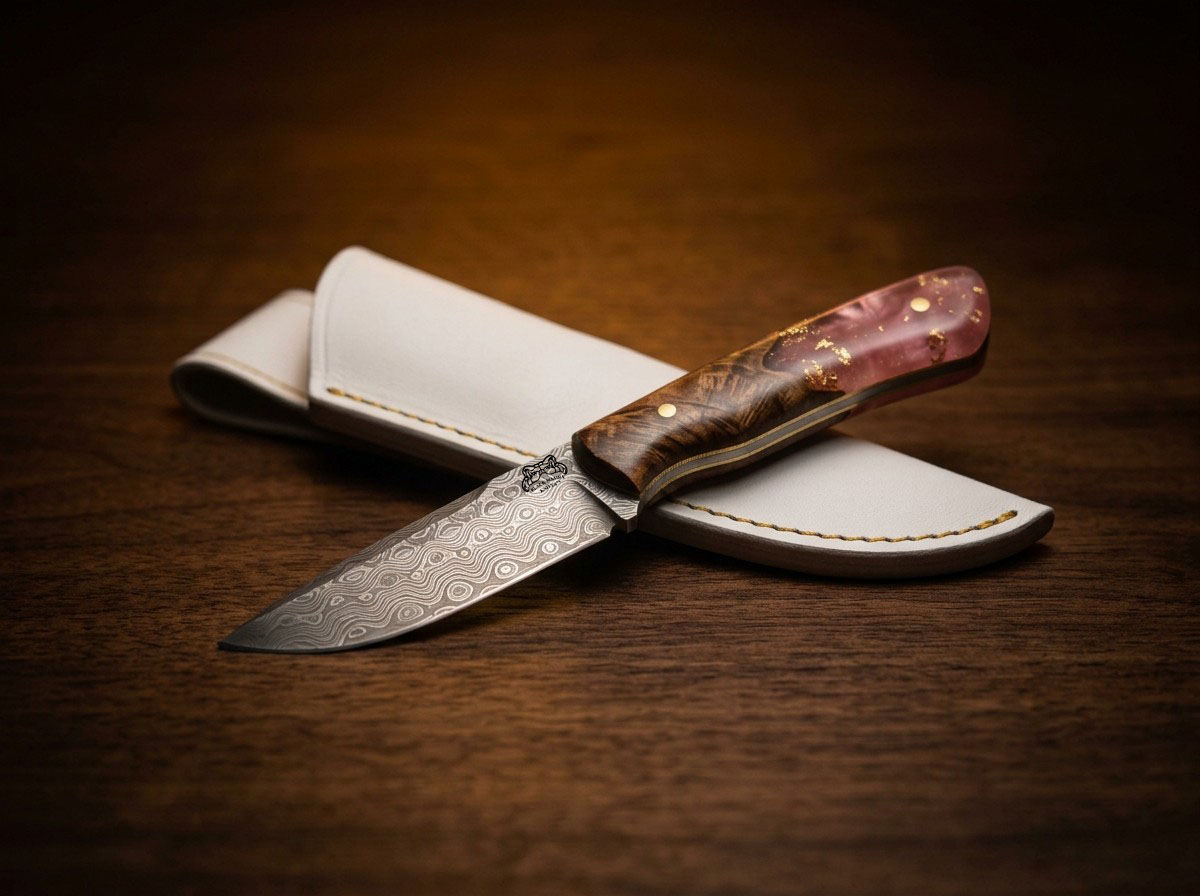
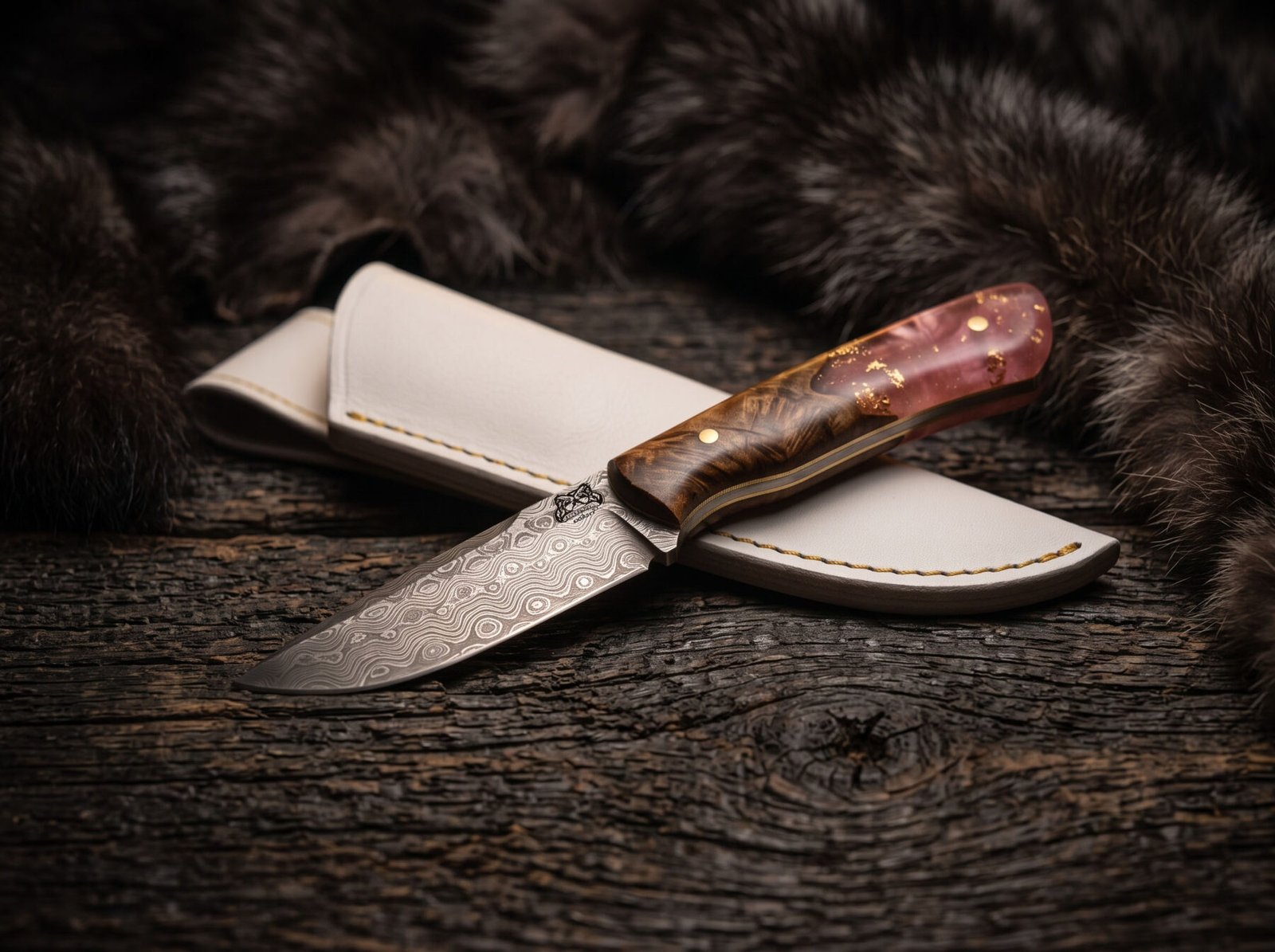
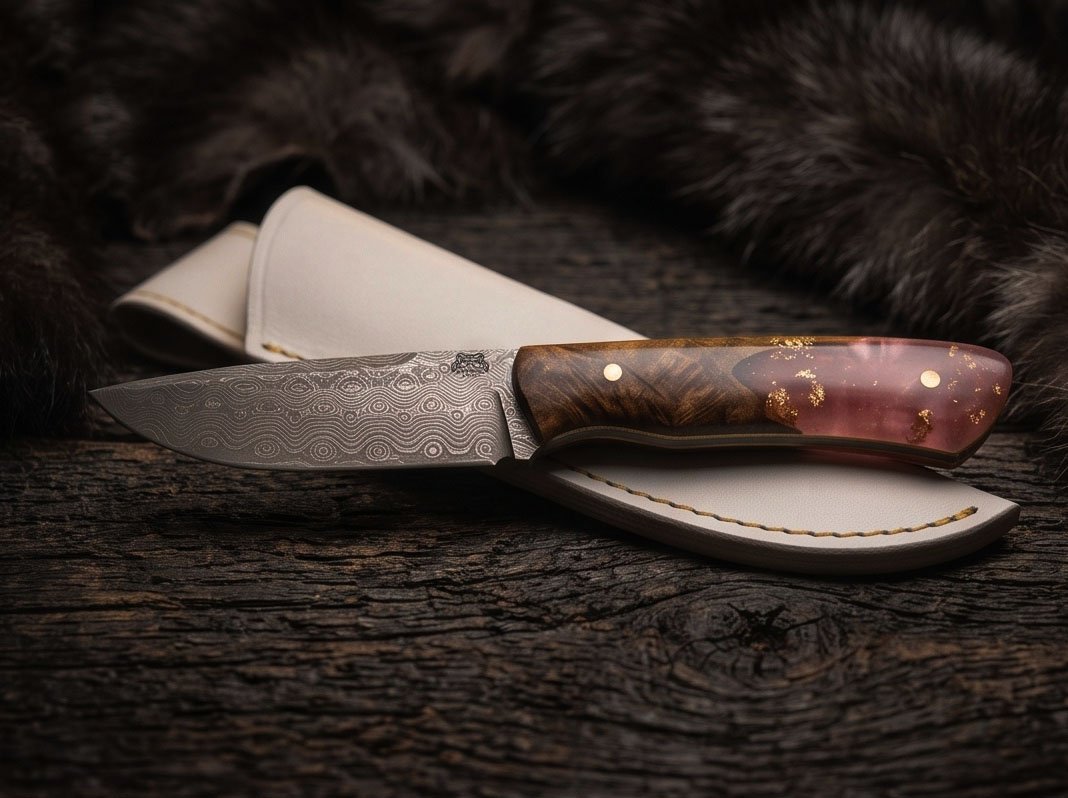
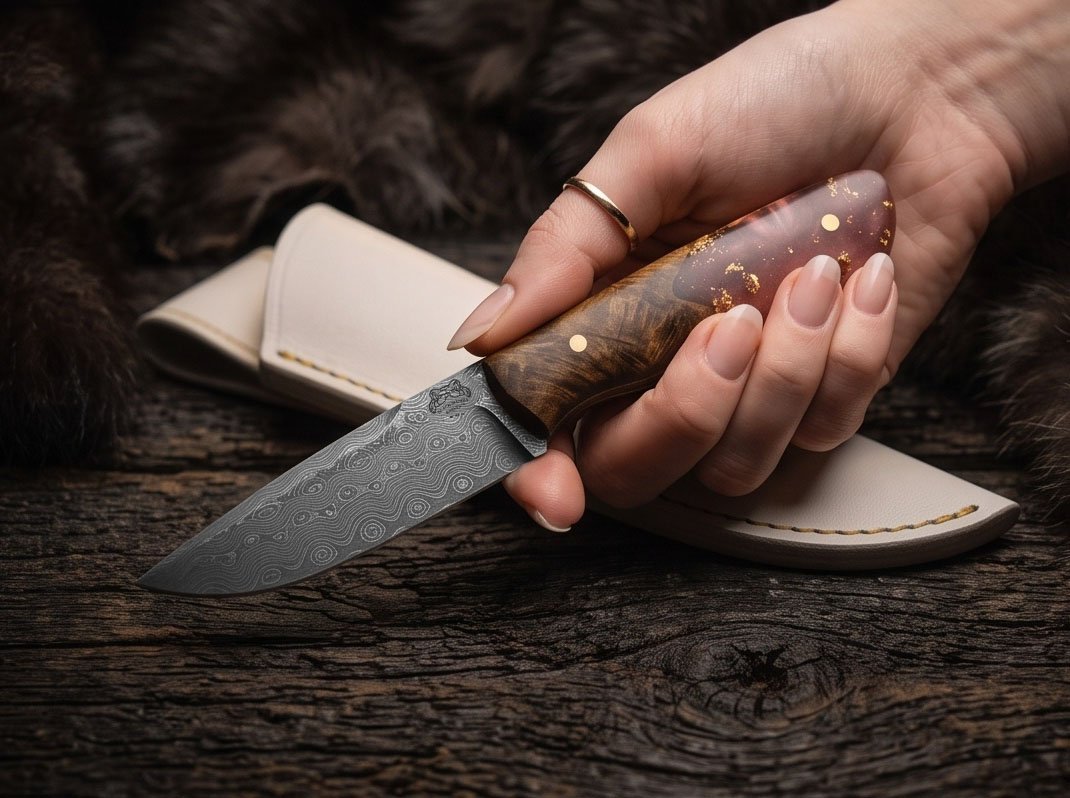
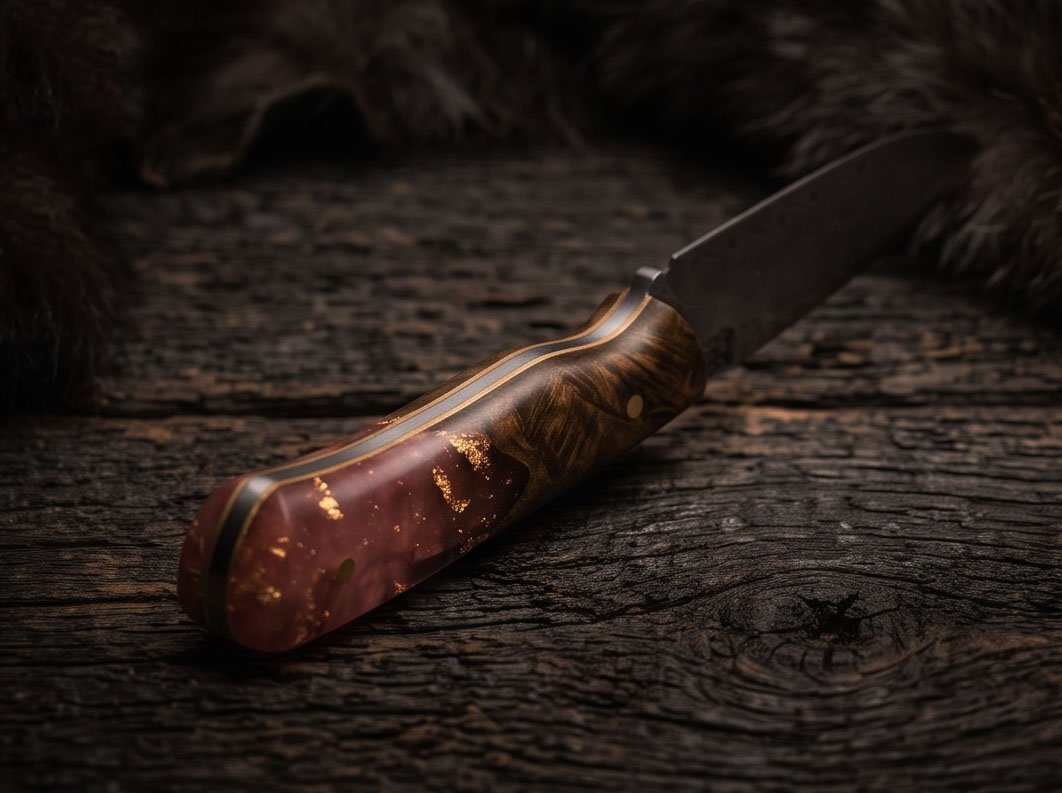
Rose Quartz is a knife of two halves, and the seam down the middle of the handle is the point of the whole thing. The front is stabilized burl — real wood, chaotic figure, browns and golds swirling around old dormant buds. The back is hand-poured rose resin shot through with gold flake, translucent where the light gets behind it. Between them runs a fine bright liner. Above, a forged Damascus drop point with the layers etched into clean concentric rings.
Joining wood to resin
This is harder than it looks. Wood and cast resin do not sand at the same rate, they do not take polish at the same rate, and they move differently with temperature. Getting a joint that stays invisible means stabilizing the burl first so both halves behave like the same material, then working the whole handle as one piece from the coarse grits up. Rush any stage and a shadow line appears along the seam within a year.
| Overall Length | 8 inches |
|---|---|
| Blade Length | 3.75 inches |
| Blade Style | Drop point |
| Blade Steel | Hand-forged Damascus, acid etched |
| Blade Finish | Acid etched Damascus |
| Handle Material | Stabilized burl wood with hand-poured rose resin |
| Fittings | Hidden pins |
| Tang | Full tang |
| Sheath | Hand-stitched cream leather belt sheath (included) |
The Damascus
The blade is forge-welded from alternating layers of two steels, drawn out, folded, welded again and finally etched so the softer bands sit fractionally lower and read as a pattern. What you see on this blade is a tight concentric figure, the result of manipulating the bar before it was ground. It is structural, not surface-applied — sharpen this knife for twenty years and the pattern will still be there. If you are weighing up what a genuinely forged blade should cost, our breakdown of Damascus knife pricing is a useful reality check against what gets sold cheaply online.
Drop point, and what it is good at
A gently falling spine, a strong low tip and a generous curved belly. It is the least specialized and most useful blade shape there is. On a knife this size it handles kitchen prep, camp cooking, cutting cord and tape, opening everything, and light game work without complaint.
Honest talk about rust
Damascus is carbon steel, which means it can and will spot if it is stored damp or put away after cutting acidic food. This is the single most common question we get and the answer is not complicated: dry the blade, keep a whisper of oil on it, and do not leave it sitting in its sheath for months. Do that and you will never see a speck. We answered the question at length in our explanation of whether Damascus knives rust, including what to do if one already has.
Handle care
Neither half of this handle needs feeding. The burl is resin-impregnated and effectively waterproof; the cast section is inert. Wash with soap and water, dry it, and avoid abrasive scouring pads, which will dull the polish. Fine scratches in the resin buff out with a plastic polish.
Sheath
Cream leather, saddle stitched and shaped over the blade on a form, carrying a belt loop. Supplied with the knife.
Questions
Will mine look like the photograph? The shape and build will match exactly. The burl figure, the way the gold flake settled and the etch pattern will not — those are unique to each piece and that is the reason to want one.
Is the pink dyed into the wood? No. The pink is resin, cast separately and joined to natural burl.
Is it too pretty to use? It is sharpened, heat treated and sheathed like everything else we make. Plenty of these go camping.
Something in white? The Turquoise Dawn with a white buffalo bone handle is the paler counterpart.
From our Memphis bench
Forged, ground, hardened, cast, shaped and honed in Tennessee, and the sheath is built alongside it. A lifetime guarantee covers material faults and workmanship. Let us know it is a present and we will dress the box.
Model: BMK-1205
Reviews
There are no reviews yet.