
Description
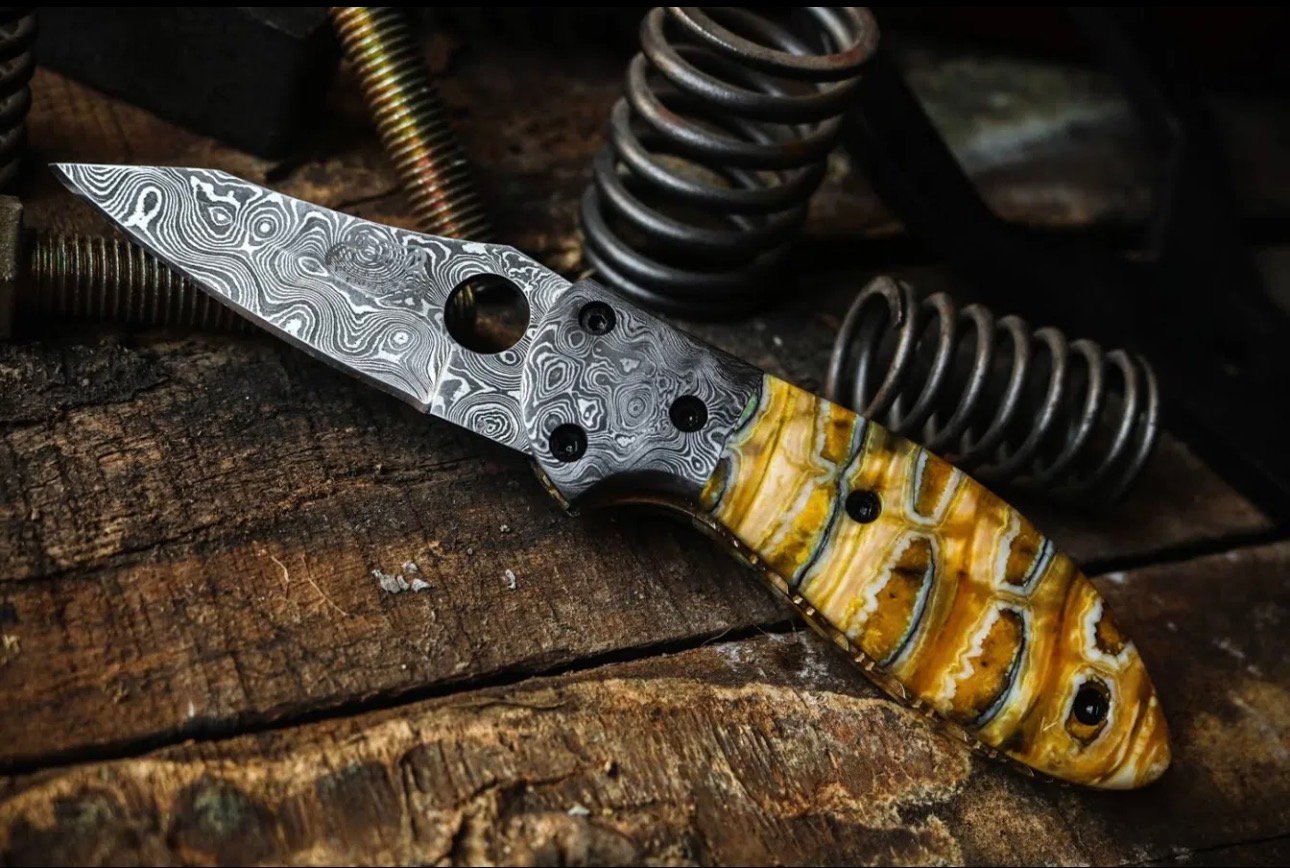
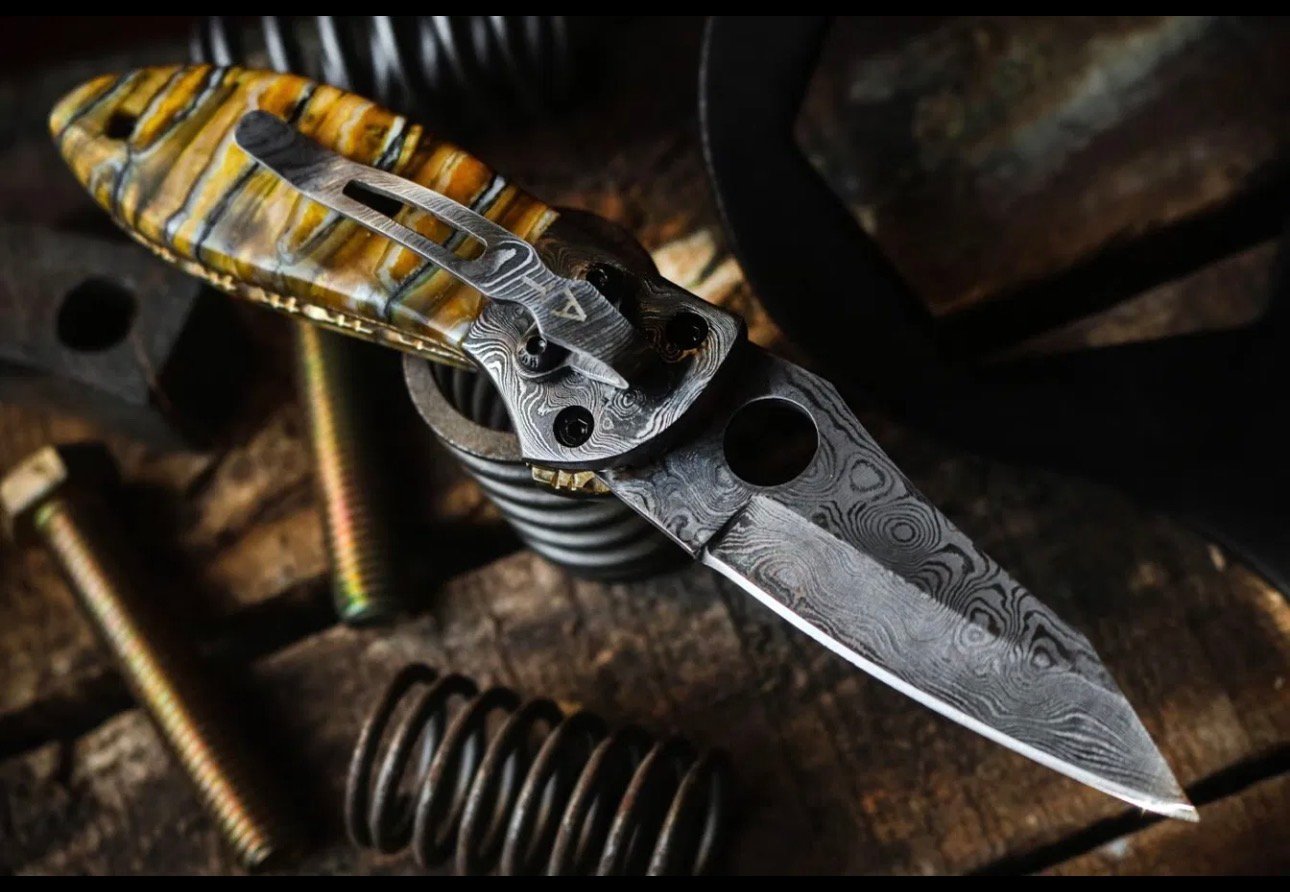
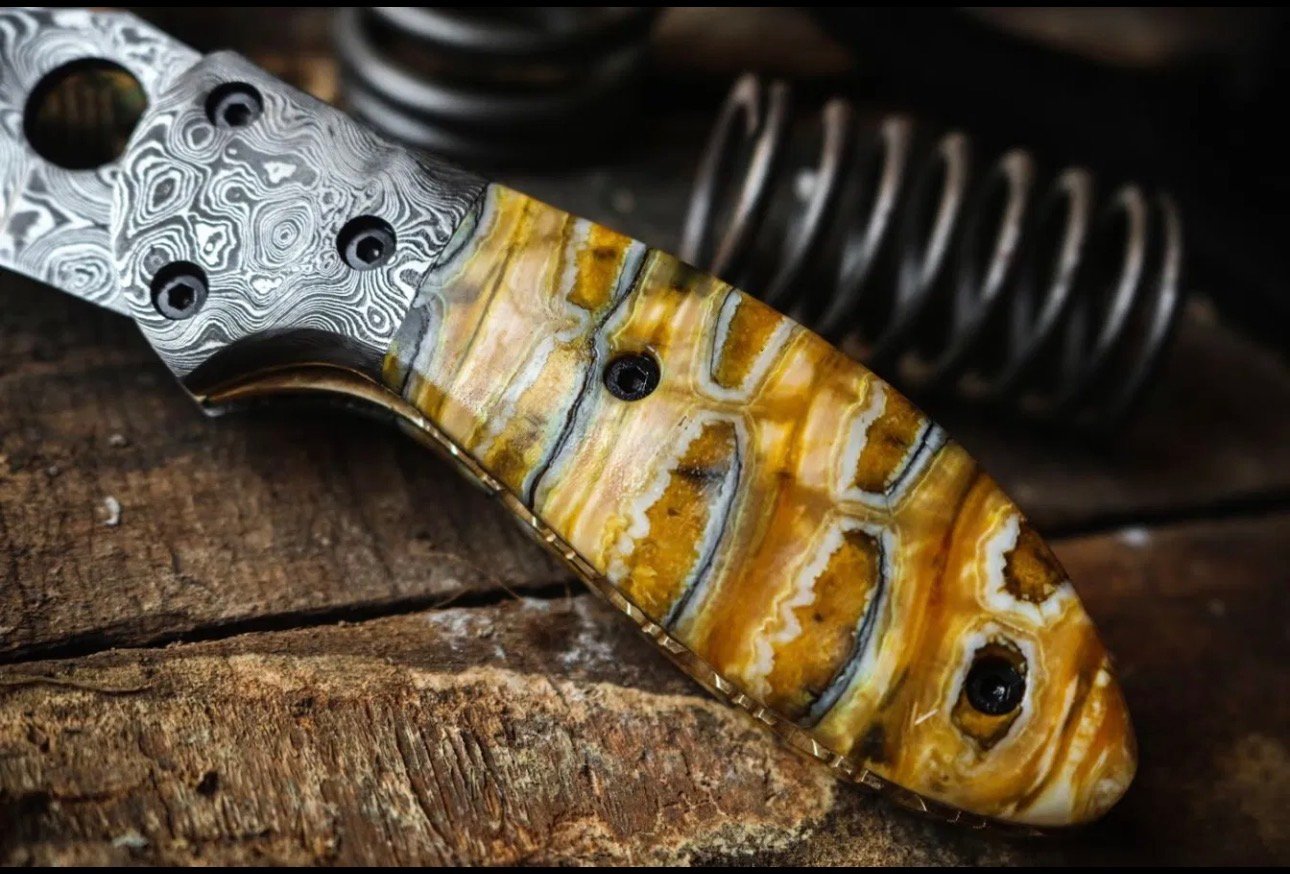
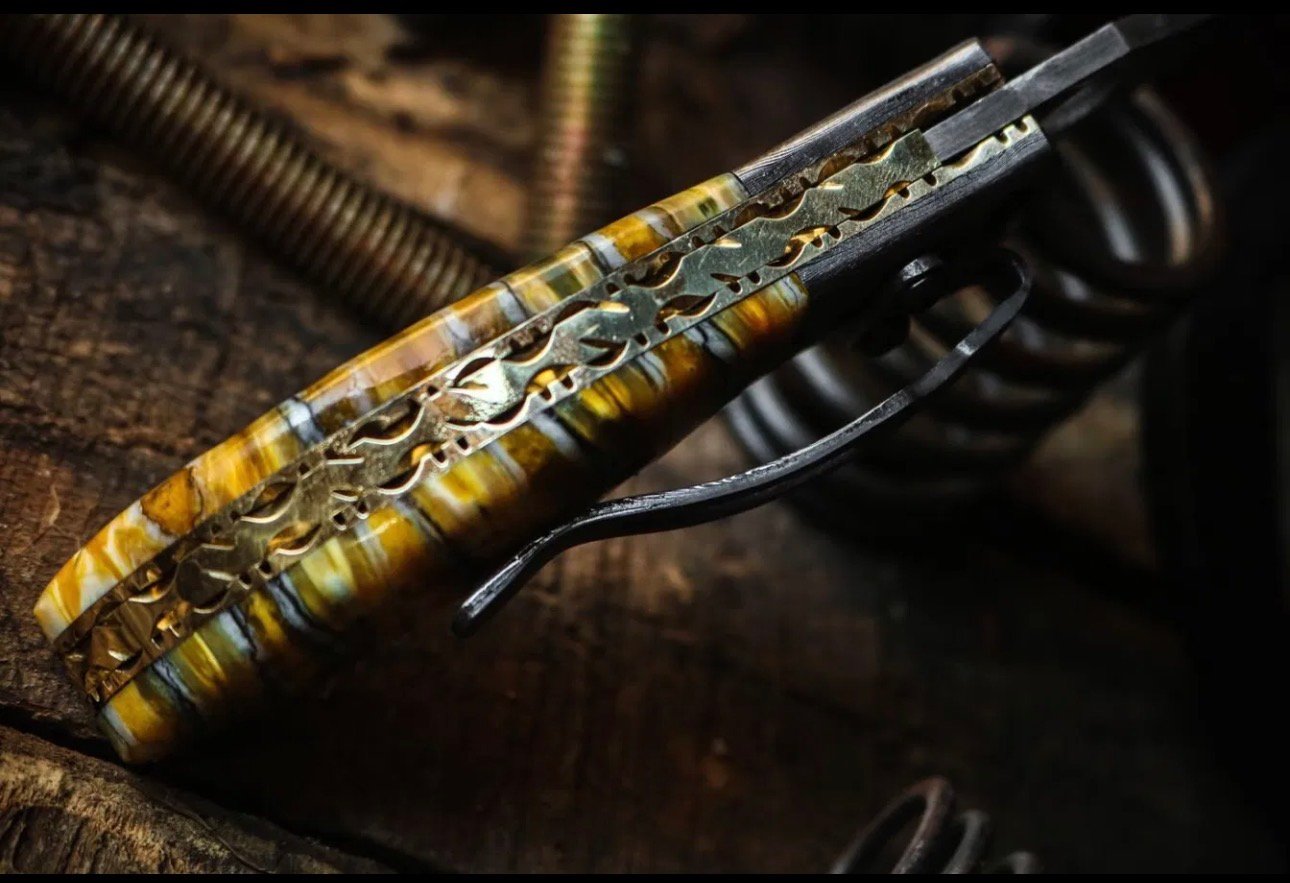
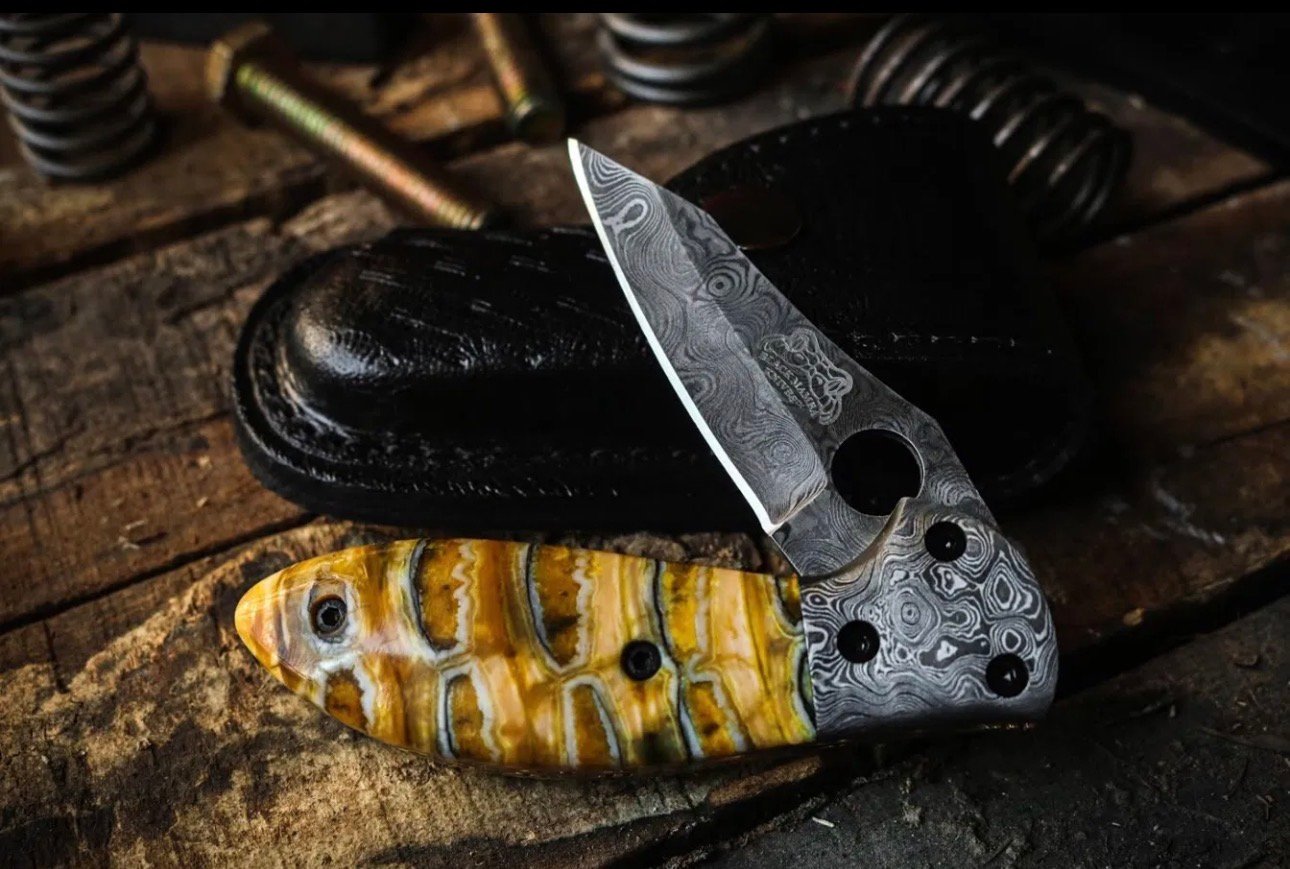
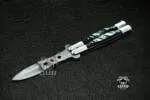
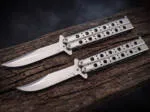
Fossil mammoth tooth scales banded in amber and cream, a Damascus bolster with a filed brass spine, and a 3 inch hand forged blade in a folder that closes down to 4.25 inches.
| Overall length | 7.25 inches |
| Blade length | 3 inches |
| Closed length | 4.25 inches |
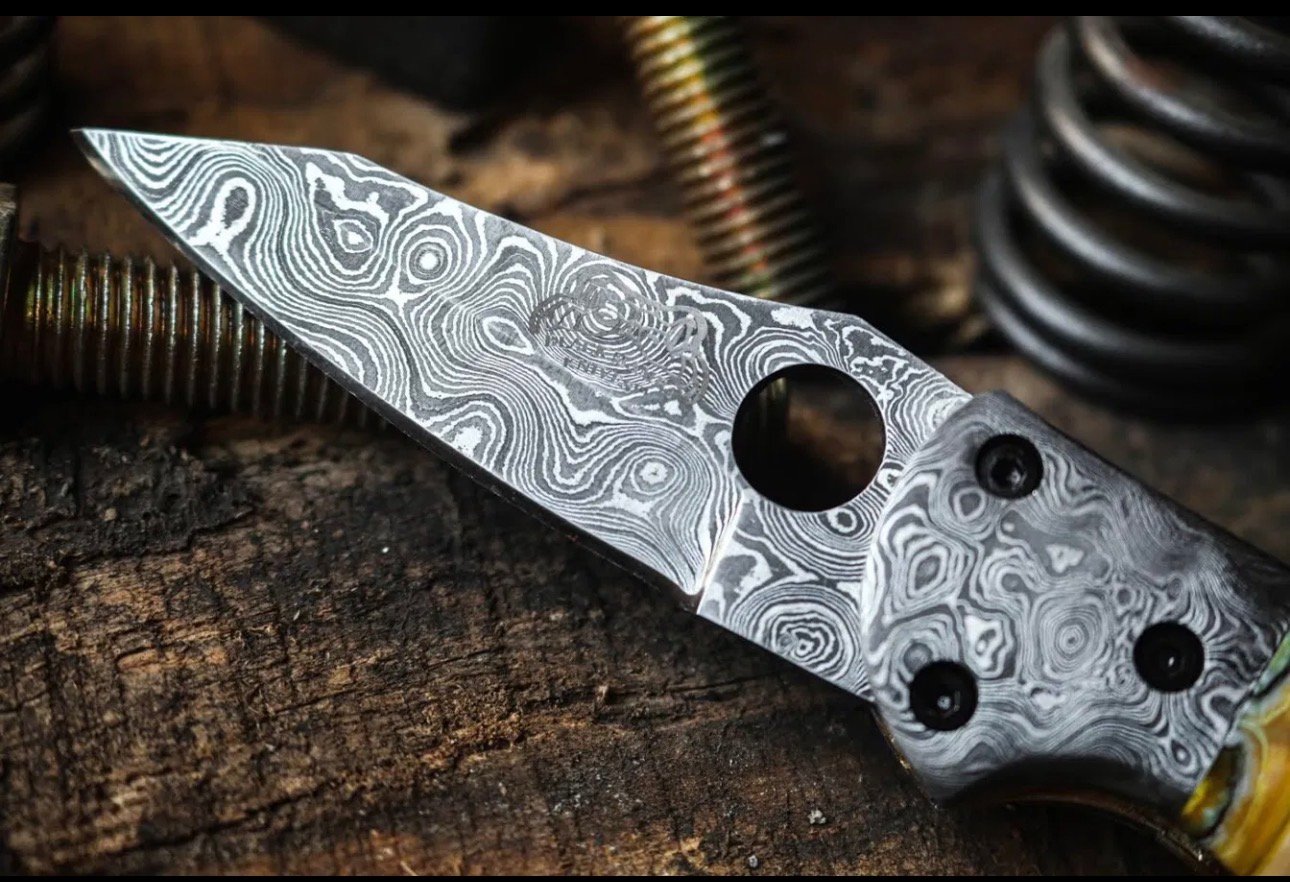
| Steel | 1095 + 15N20 Damascus, 352 layers |
| Hardness | 58 to 60 HRC, oil tempered |
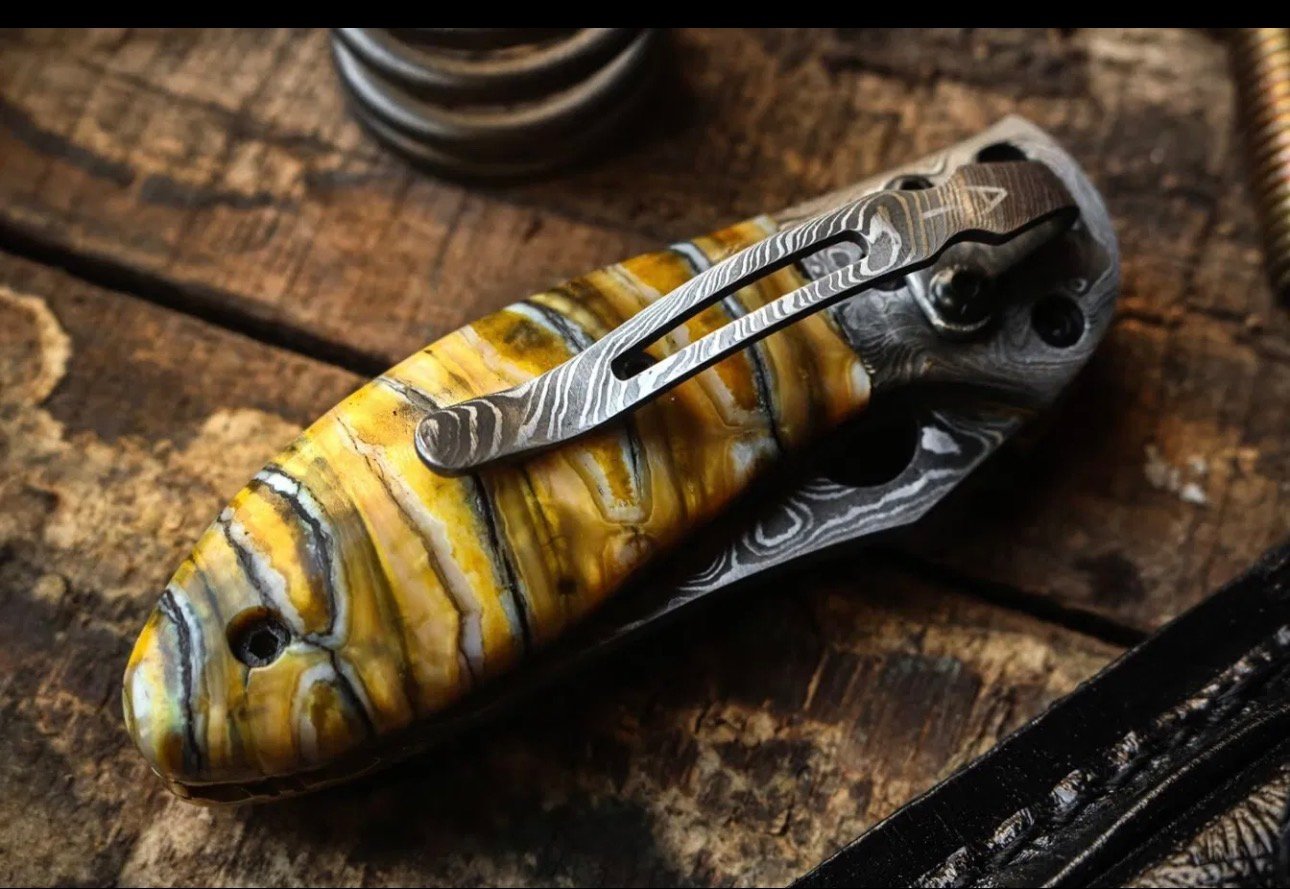
| Handle | Fossil mammoth tooth, amber and cream banding |
| Bolster | Damascus, with a filed brass spine |
| Opening | Round thumb hole, one handed |
| Carry | Damascus pocket clip |
| Included | Walnut presentation box and hand stitched leather pouch |
| Made in | Memphis, Tennessee, USA |
Meant for: someone who wants the handle to be the interesting part. Fossil mammoth tooth is tens of thousands of years old, and the banding running through it is the tooth’s own growth structure stained by minerals while it sat in the ground. No two sets are alike and none of it can be reproduced.
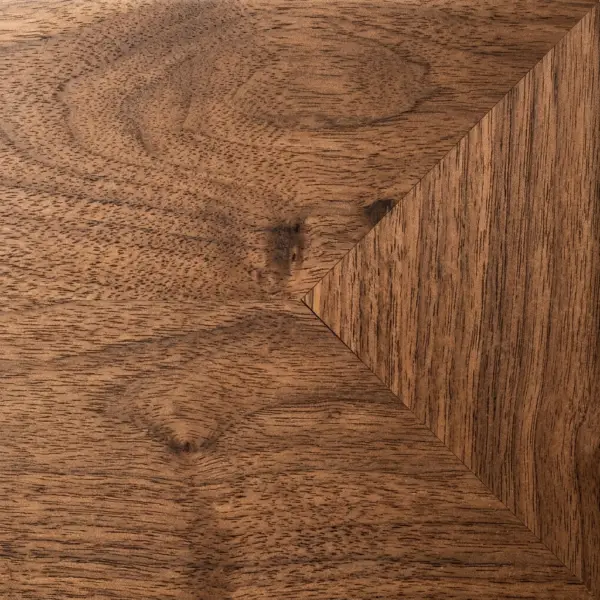
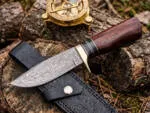
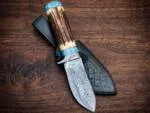
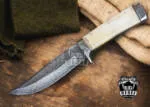
You will not get this exact handle. Every set of scales is cut from a different piece of fossil material, so your knife will be the same model, the same size, the same build and the same material, but the banding, the colour and the pattern will run their own way. The photographs show what the material looks like, not the exact scales that will be boxed for you. That is the whole point of buying fossil ivory rather than plastic.
Care: wipe the blade dry after use and put a light film of oil on it. 1095 and 15N20 are carbon steels, so they will spot if left wet. The handle needs nothing beyond a wipe. Keep the pivot free of grit and it will stay smooth for years.
FAQs
Will my knife look like the photographs? It will be the same knife and the same material, but not the same pattern. Fossil mammoth tooth cannot be matched from one piece to the next, so the banding and the colour balance shift between knives. Everything else is identical.
What is mammoth tooth, and is it legal? It is fossilised material recovered from permafrost, not modern ivory from a living animal. It is stabilised before it is cut into scales, which is what lets it live on a working knife instead of a shelf. It is not covered by the elephant ivory rules that people usually have in mind, though a few states and countries do restrict fossil material, so check your own local law before ordering.
Is the walnut box really free? Yes. It ships in a handmade walnut presentation box at no extra cost. There is no box to tick and nothing to add to the cart.
Can I have it engraved? Yes, using the engraving option above the add to cart button. There is a small fee and the engraving is permanent, so check the spelling before you order.
What is the warranty? Free lifetime craftsmanship warranty. No time limit, no fee and no registration.
Why 352 layers
The blade starts as alternating bars of 1095 and 15N20, forge welded, drawn out and folded until the count reaches 352. 15N20 carries nickel, which resists the acid etch, and that is why the pattern reads as bright lines against dark ones once the blade is finished. The layer count is not decoration for its own sake: the folding is what distributes the carbon evenly through the bar.
Why 3 inches
Three inches is the length that stays out of trouble in most places and still does the great majority of what people actually cut. It also means the closed knife is 4.25 inches, short enough to sit flat in a front pocket without printing through lighter trousers, while 7.25 inches open still gives a full fisted grip.
The Damascus bolster and the brass spine
The bolster carries the pivot and takes the load every time the knife opens, so the wear happens on the part built for it and the fossil material is protected at the end where it would chip first. The spine behind it is filed by hand, which is the detail you only notice when the knife is closed and turned over.
Buying for groomsmen? This knife also comes as a matched set of 6, 15% less than buying six singly, and each one can carry its own engraved name.
Andrew Jones –
Did not expect this level of quality for the price. Ordered from Black Mamba Knives before and the quality stays consistent every time. Detent is snappy without being stiff to open. Deployment is fast and confident every single time. Action smoothed out even more after a few days of carry. Exactly the kind of quality that keeps me coming back.
Jessica Wright –
Wanted to like this more than I actually do. Made in the USA supposedly but the fit didn’t reflect that.
Carlos Reed –
This pocket knife is a genuine work of art. Opens smooth every time with just a flick of the thumb. Pocket clip is sturdy and holds it right in place all day. Made in the USA right in Memphis, and it shipped worldwide without any long wait. This is exactly why I keep coming back to this company.
Victoria Evans –
This turned out to be way better than I thought it would be. Fits great in the pocket without feeling bulky. 10/10 would buy again.
Trevor Evans –
Set my expectations low going in and this blew right past them. This has become my daily carry piece without question. Can’t wait to see what else this company has to offer.
Gregory Foster –
This showed up faster than expected and looked incredible. Black Mamba Knives keeps setting the bar higher with each order. Blade centering is perfect right out of the box. Highly recommend this one.
Brandon Vance –
This pocket knife is decent but not quite perfect. Action is good though it needed a little breaking in. Solid pickup even with the small issues.
Raymond Wilson –
My whole family passed this pocket knife around at dinner just to look at it. Black Mamba Knives has earned a repeat customer with this one. Happy customer here, through and through.
Raymond Lewis –
Pretty impressed. Just a couple minor things I’d tweak. Pocket clip works fine, just a bit tight at first. Glad I made this purchase.
George Mitchell –
Expected better quality for the price. Pocket clip felt loose and shifted around in my pocket. Just an average purchase. Wouldn’t rush to buy again.
Alejandro Ramos –
Five stars isn’t even enough honestly. Liner lock is tight with zero blade play. Shipping was fast and everything arrived well packaged.
Karen Rogers –
This is one of those purchases that just makes you smile. Lockup is rock solid with no wiggle in any direction. This has become my daily carry piece without question. Zero complaints from me on this purchase.
Sandra Castillo –
Best pocket knife I’ve ever owned. Hands down. Liner lock is tight with zero blade play. Shipping was fast and everything arrived well packaged.
Sharon Taylor –
Ordering again from this seller the second I finish writing this review. Lockup is rock solid with no wiggle in any direction. Action smoothed out even more after a few days of carry. Would not hesitate to order again.
Aaron Hernandez –
Really happy with this pocket knife overall. Lockup is solid, just a touch of side to side play. Pocket clip works fine, just a bit tight at first. Would still tell others to give this a try.
Justin Mendoza –
I collect knives and this one is awesome. Scales feel great in hand and don’t feel slippery at all. This is my new favorite in the collection.
Jack Ortiz –
Got this for a hunting trip and now I want one for myself too. Detent is snappy without being stiff to open. Already thinking about what to order next from this store.
Todd Barrett –
Perfect gift. Perfect quality. No complaints. Telling everyone I know to check this seller out.
William Evans –
The moment I saw this in person I knew it was a keeper. No hesitation recommending this to anyone looking.
Dennis Mitchell –
This is hands down one of the best knives I’ve bought online. This has become my daily carry piece without question. Will definitely order again for another one. Made in the USA and shipped worldwide with no issues on my end.
Ashley Ross –
This pocket knife looks even better in person than in the listing photos. Action smoothed out even more after a few days of carry. Not my first order from Black Mamba Knives and it won’t be my last. Fits great in the pocket without feeling bulky. Beyond happy with how this turned out.
Dennis Johnson –
This pocket knife punches way above its price point. Made in the USA and shipped worldwide with no issues on my end. Fits great in the pocket without feeling bulky. Lockup is rock solid with no wiggle in any direction. Opens smooth every time with just a flick of the thumb. Zero complaints from me on this purchase.