
Description
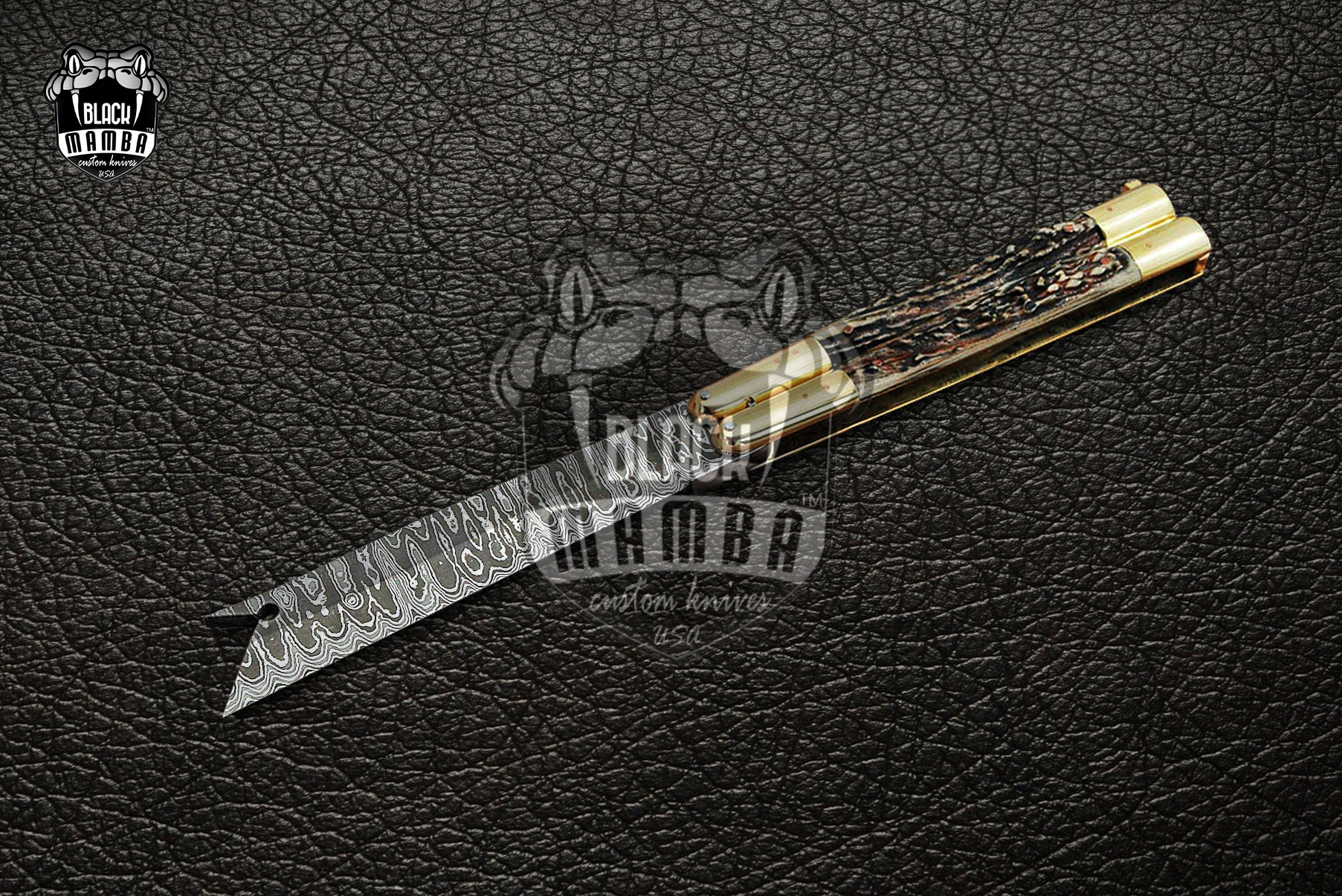
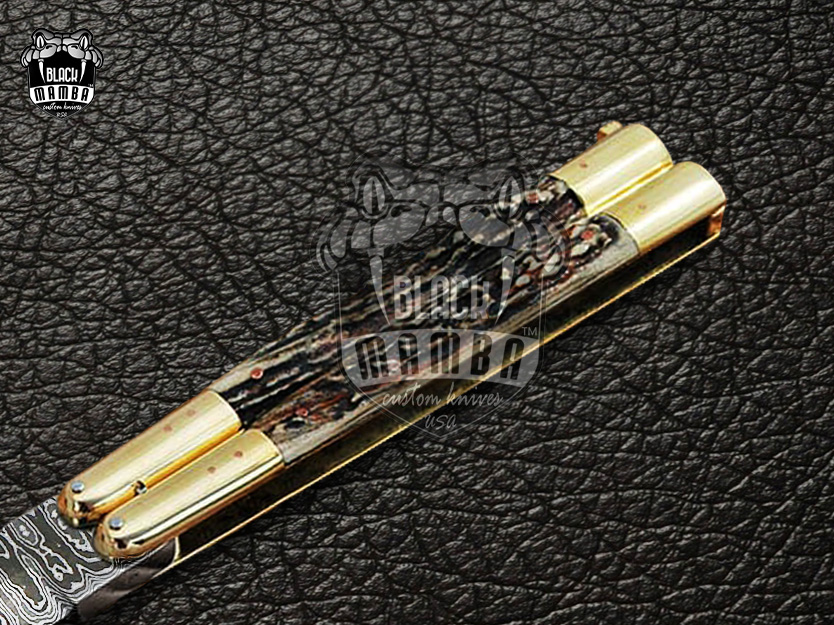
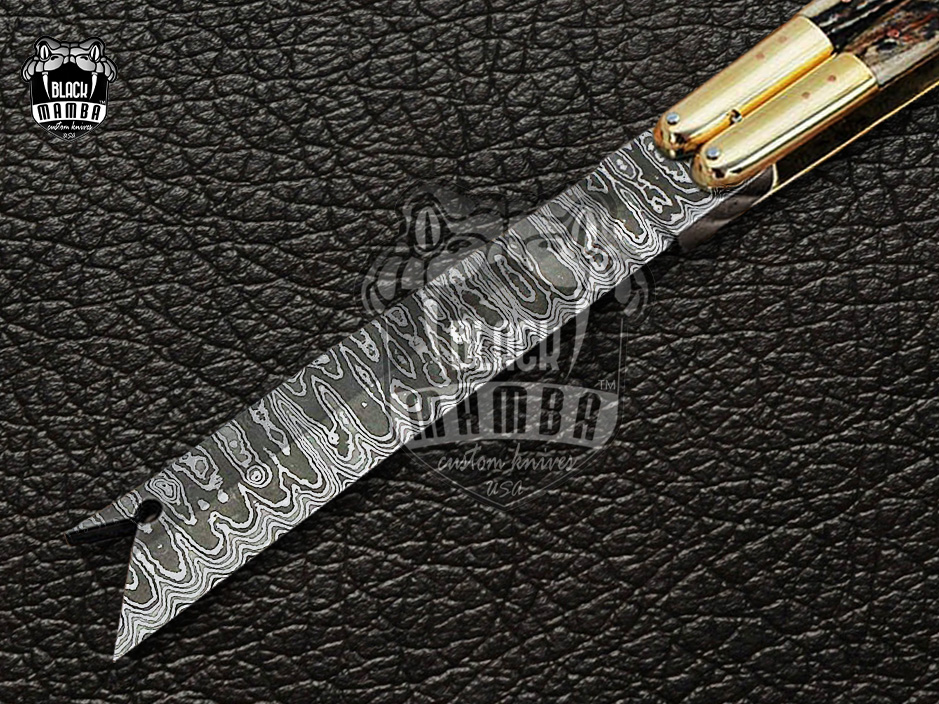
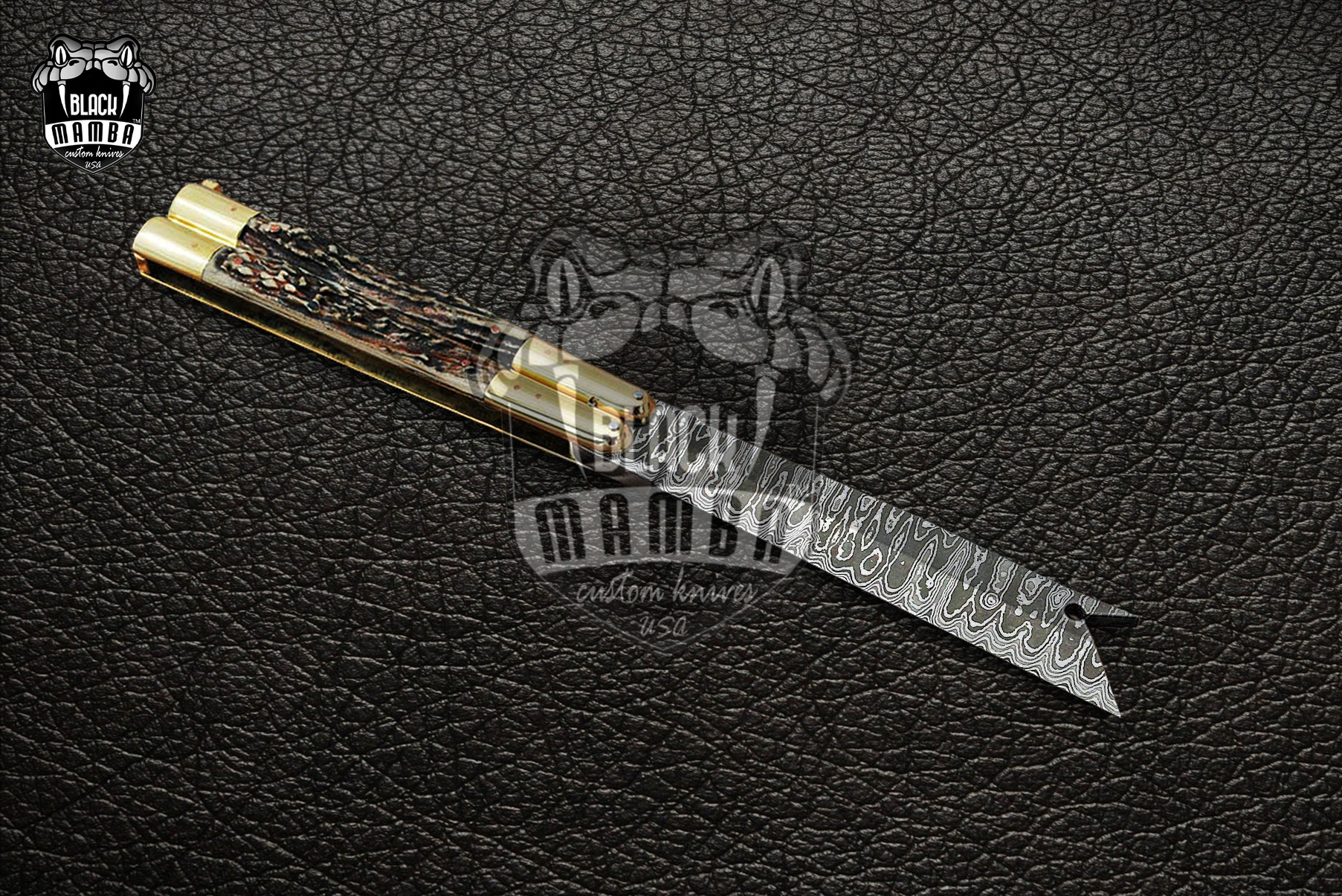
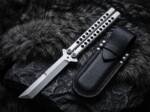
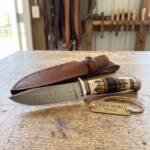
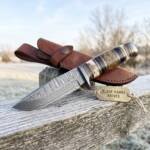
The brass frames on this balisong are solid stock with antler let into the middle of each handle, which is why it weighs what it does.
| Overall length | 9.4 inches |
| Handle length | 4.7 inches |
| Steel | 1095 + 15N20 Damascus, 352 layers |
| Hardness | 58–60 HRC, oil tempered |
| Weight | 7.2 oz |
| Handle | Damascus Balisong Butterfly Knife with Beautiful Brass and stag Handle |
Sits best with: people who collect balisongs for the traditional Filipino construction rather than for modern flipping speed. Brass and stag is the old combination — it is what these knives looked like before aluminum and titanium arrived — and 7.2 oz across 9.4 inches feels like the original article.
Brass as a frame material
Brass is dense and soft, and the density is the entire point in a balisong. Weight held in the handles rather than the blade gives the knife a stable axis, so a fan or a rollover carries through instead of stalling. Softness is the trade: brass dents where steel shrugs, and the handle corners round off over years of drops. Most owners call that character. If you would rather have the same layout in something that resists dings, the D2 bladed brass balisong is the harder-wearing cousin.
Stag inlay and how it settles
The antler is porous and picks up hand oils faster than the brass around it. Over a year the inlay usually deepens a shade or two and smooths where your fingers sit. Antler can also shrink slightly in dry air, which sometimes shows as a hairline gap at the edge of the inlay. That is the material moving, not the build failing, and it settles once the knife acclimates.
The blade shape
This is an angular profile — a straight edge running to a sharply clipped tip rather than the curved bellies you see on most balisongs. The straight edge is genuinely useful for cutting on a board or against a flat surface, and the abrupt tip is strong in a way a needle point is not. What it is bad at is any cut that needs a rolling motion. Understanding the parts you are looking at helps here; our knife anatomy guide names each one.
Care for brass, stag and carbon steel
Three materials, three habits. Brass tarnishes and that is normal — polish it bright or let it go dark. Keep polish off the stag, because the compound lodges in the pores and turns it grey. The patterned blade is high in carbon and wants drying and a thin film of oil after every session. Oil the pivots sparingly, one drop each, and flip to spread it. Never submerge this knife: water trapped between brass and antler is the one thing that genuinely spoils it. Check the pivot and latch screws periodically.
Questions buyers ask
Is it a channel or sandwich build? This is a sandwich construction with brass frames and inset antler scales, the traditional Filipino approach — see our balisong history guide for how that came about.
Does the brass turn my hands green? Occasionally, if your hands are damp and acidic. It washes off and does not indicate a problem with the metal.
How sharp does it arrive? The Live Blade is sharp enough to cut paper. The Trainer Blade option on this page comes with a blunt, unsharpened edge. Balisongs of this style are usually flipped closed-edge first until you are confident.
Model: BMK-DB-21
Not sure this is the one? See every balisong knife we make in one place.
Melissa Harris –
Got this as my brother and it exceeded what I expected. This is the kind of purchase that makes online shopping worth it. Nice to support a Memphis based knife maker, shipping was fast even internationally. Not my first order from Black Mamba Knives and it won’t be my last.
Wyatt Vance –
Bought this on a whim and it turned out to be one of my favorite purchases this year.
Jerome Ramos –
This is exactly what I wanted and then some. Blade came shaving sharp straight out of the box. Can’t wait to see what else this store has to offer.
Sandra Price –
No regrets on this purchase at all. Weight is perfectly balanced for flipping. This shop just earned a repeat customer.
Christine Bailey –
Showed up right on time and looked even better than the photos. Weight is perfectly balanced for flipping. This one’s a keeper for sure. Black Mamba Knives’ attention to detail is honestly unmatched.