
Description
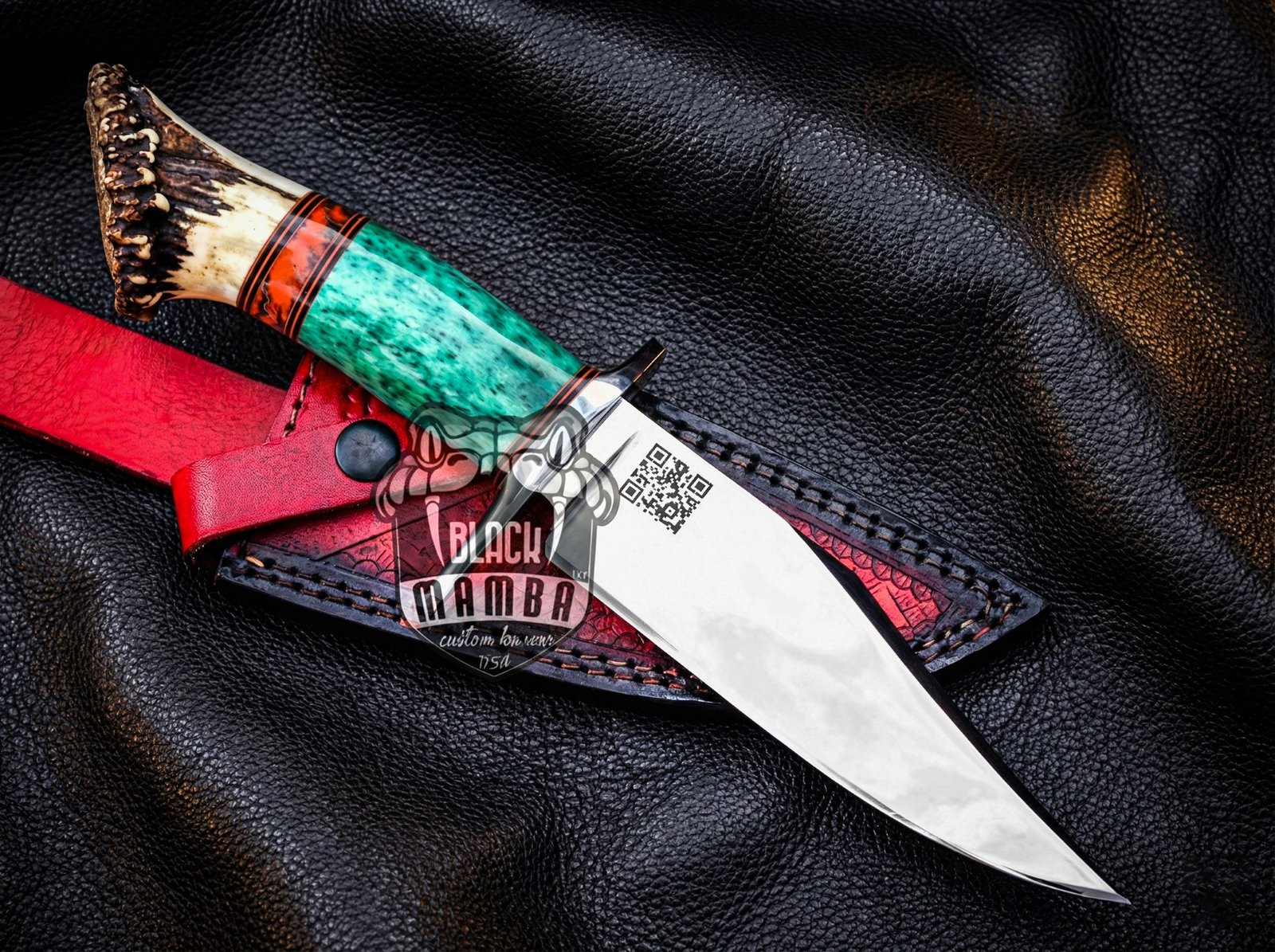
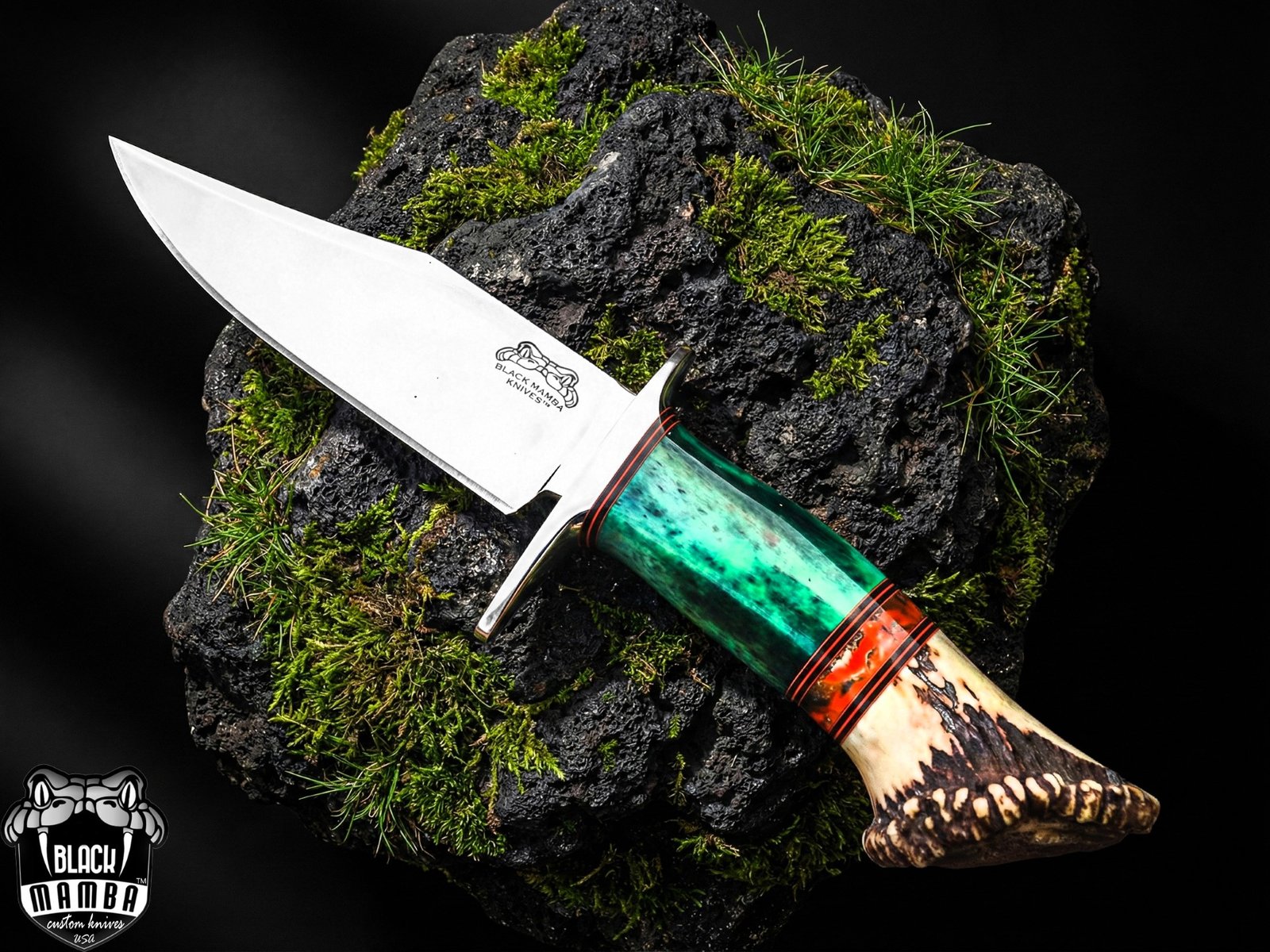
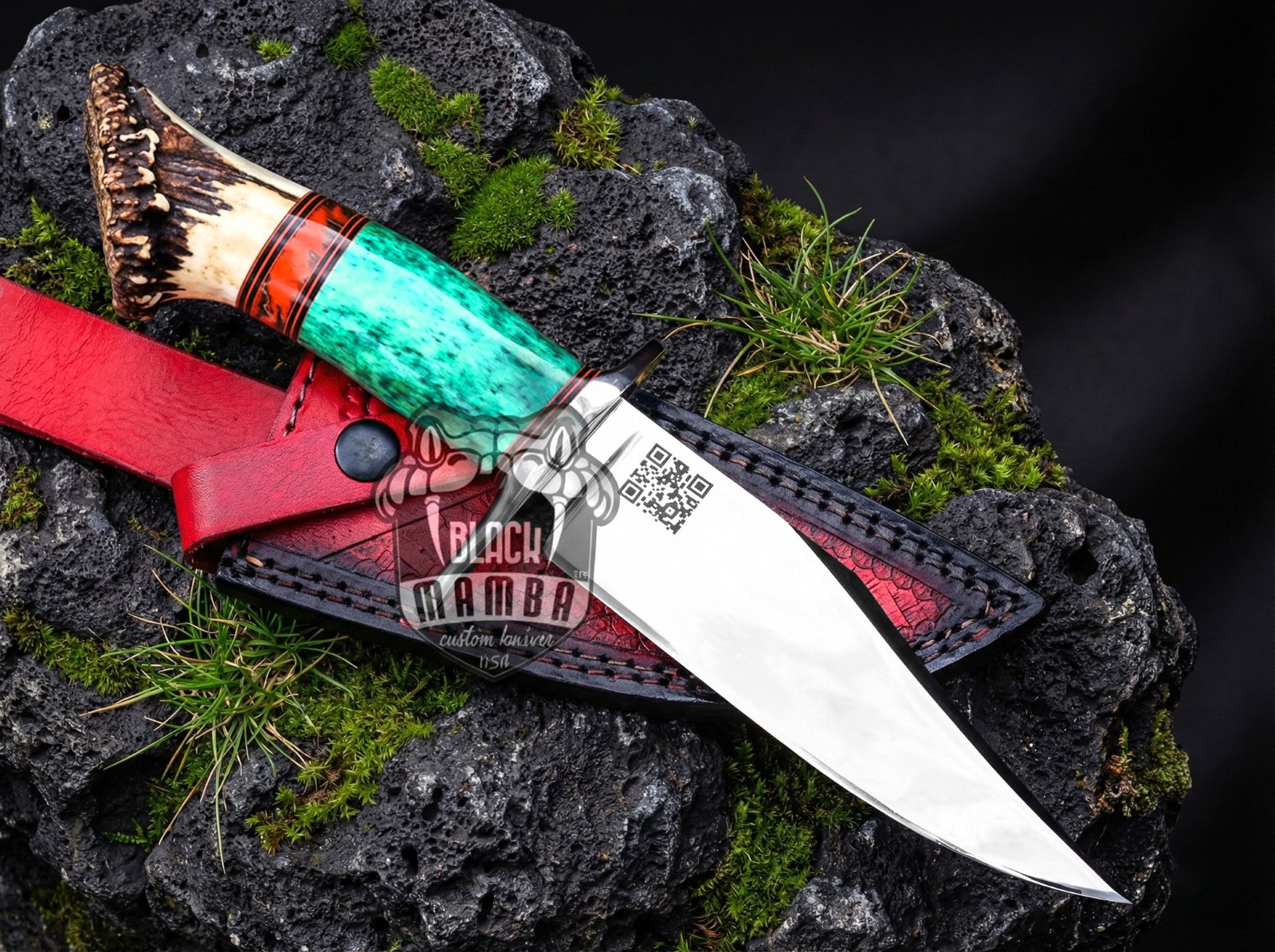
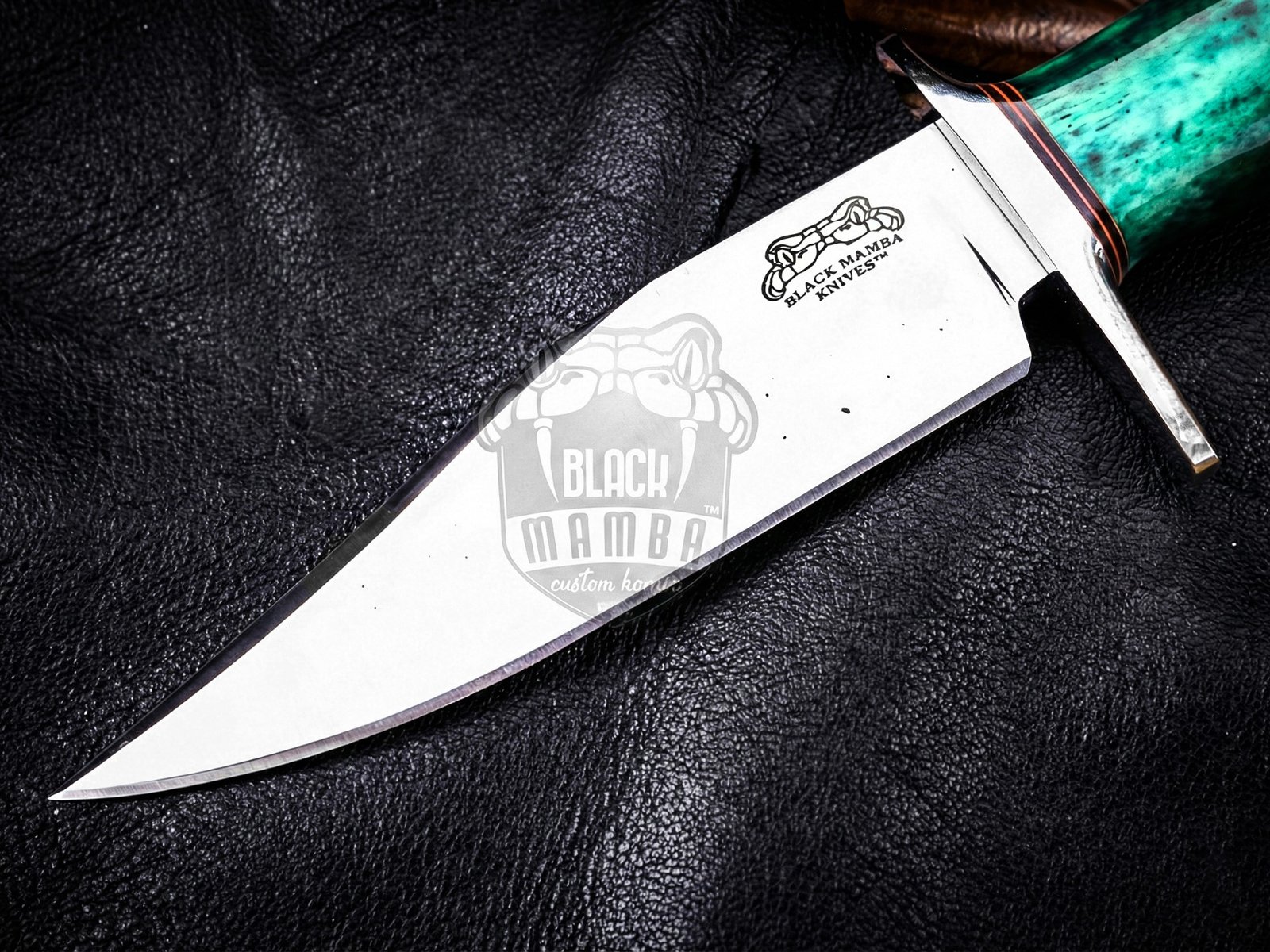
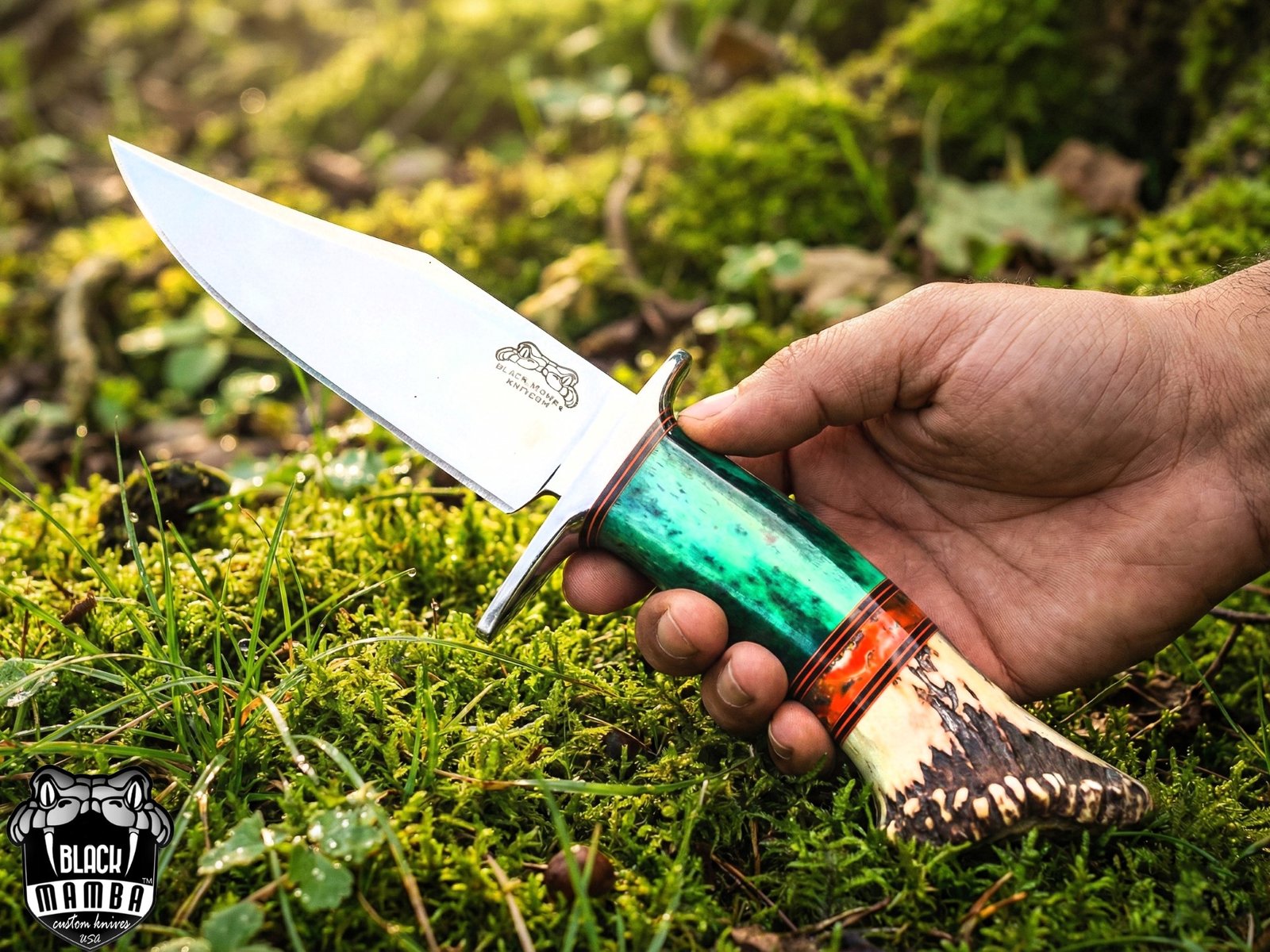
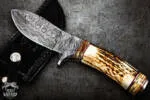
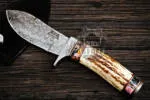
Eleven and a half inches overall, a 6.2-inch blade, and a stag crown at the end of the handle. That crown, the flared burr where the antler met the skull, is the detail that decides whether you like this knife. It gives you a natural pommel your hand cannot slide off, and it means no two of these handles share a shape.
| Overall length | 11.54 inches |
| Blade length | 6.2 inches |
| Handle length | 5.3 inches |
| Steel | 1095 + 15N20 Damascus, 352 layers |
| Hardness | 58–60 HRC, oil tempered |
| Weight | 12.4 oz |
| Handle | Stabilized Bone and Stag Crown with High Polish Luxury Steel Handmade |
| Included | Hand-stitched leather sheath |
Field role: a big-game hunting knife. Six inches of blade is more than you need for a whitetail and about right for elk, moose or hog. At 12.4 ounces there is enough weight behind the edge to split a sternum without reaching for a saw, and enough length to work inside a chest cavity. It is a belt knife, and you will know it is there.
Stag crown: grip, not decoration
A crown pommel does a real job. When your hands are wet and slick, the flare at the back is what your little finger locks against on a pull stroke. Antler comes with it built in. The trade-off is that a crown is irregular by nature: it may sit slightly proud on one side, the texture varies, and a crown that suits a large hand feels bulky in a small one. It is also the part that takes the impact if you drop the knife, and antler cracks. Stabilized bone forms the rest of the scales, so the two materials age at different rates. Expect the bone to stay put while the antler darkens.
Six inches of blade: the honest cost
Longer blades reach further and chop better. They are also harder to control for caping and skinning around the head, where you want the tip within an inch of your fingertips. Plenty of hunters carry a knife this size for the heavy opening work and a small one for detail. If you want that second knife, a nine-inch Bobcat with a five-inch blade splits the difference, and our blade shape guide explains which profiles hold a point and which trade it for belly.
Handle and blade care: the two halves want opposite treatment. Wash the antler and bone with soap and warm water and let them air dry. No oils, which soak into the porous crown unevenly and darken it in patches. The blade wants the reverse: dried immediately and given a film of protective oil, especially at the guard seam where fluid collects. If you hunt in cold weather, dry the knife indoors rather than leaving it sheathed in the truck overnight, because condensation forms as it warms and that is when spotting starts. Our Damascus hunting knife guide covers seasonal care.
Before it ships
Will my crown look like the photo? No. Crowns vary in flare, color and pearling. Yours will be recognizably the same model and visibly a different piece.
Is the antler from a hunted animal? Antler is shed annually and collected from the ground. The deer is not harmed for it.
Does the polished steel scratch? Yes, from sheath friction. It is surface-level and buffs out with metal polish and a cloth.
Model: BMK-842
Lincoln Miles (verified owner) –
“I bought a set of Damascus knives for my restaurant, and they’ve become the talk of the town. They’re sharp, durable, and a chef’s dream.”
Christopher Nathan (verified owner) –
“This Damascus knife is a game-changer in my kitchen. It’s not just a tool; it’s a work of functional art.”
Christopher Nathan (verified owner) –
“This Damascus knife is a game-changer in my kitchen. It’s not just a tool; it’s a work of functional art.”
Ava M. (verified owner) –
“I purchased a Damascus knife for my daughter’s wedding, and it was a hit. It’s a unique and thoughtful gift that she treasures.”
Travis Coleman –
Incredible craftsmanship on this one. Came in a nice gift box which made it feel even more special. If you’re on the fence just get it. You won’t regret it.
Rachel Patel –
This knife is a genuine work of art. Already added a few more items from this store to my cart.
Colton Carter –
Not worth the money in my opinion. Not the experience I expected from Black Mamba Knives given their reputation.