

Description
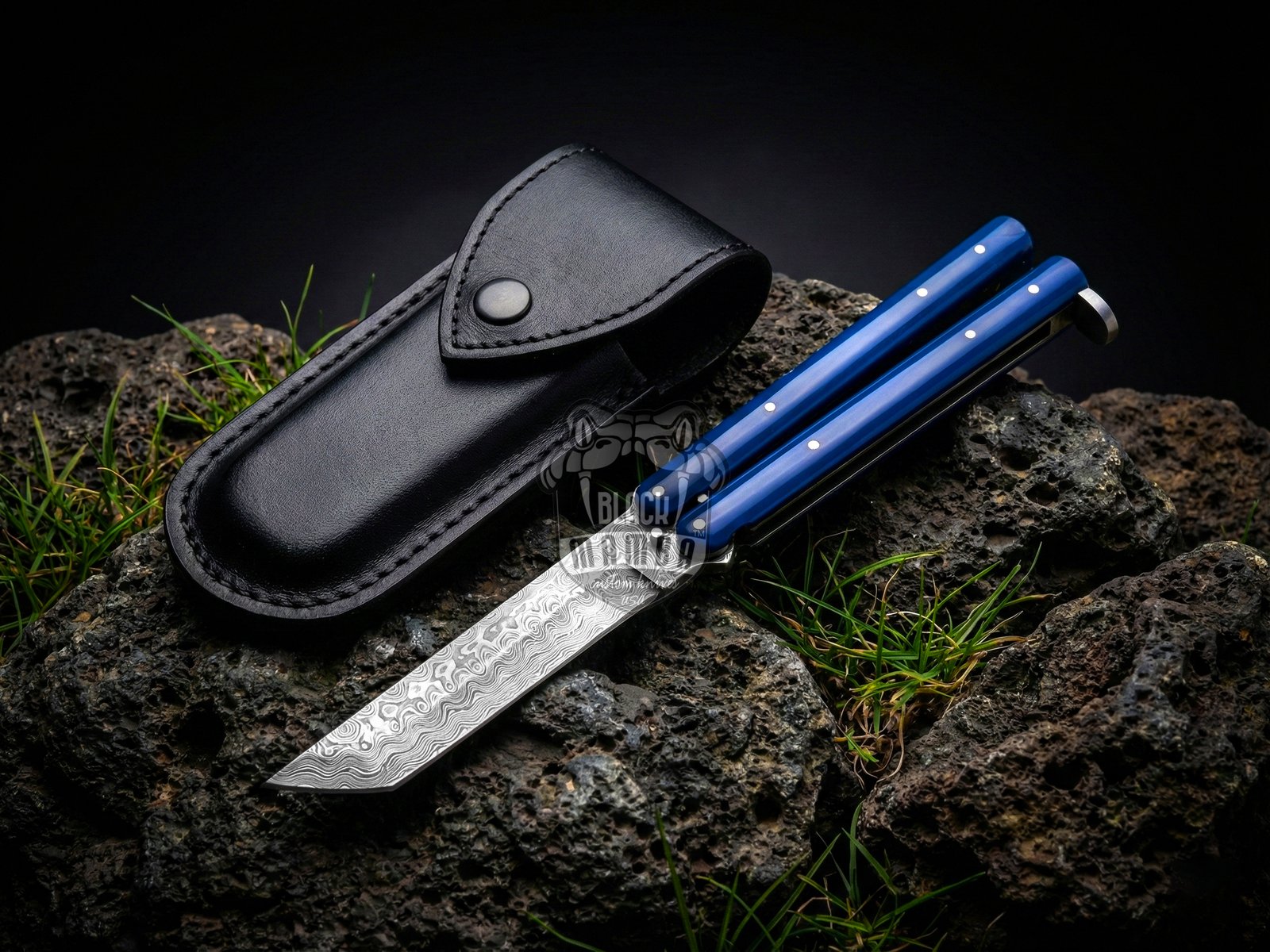
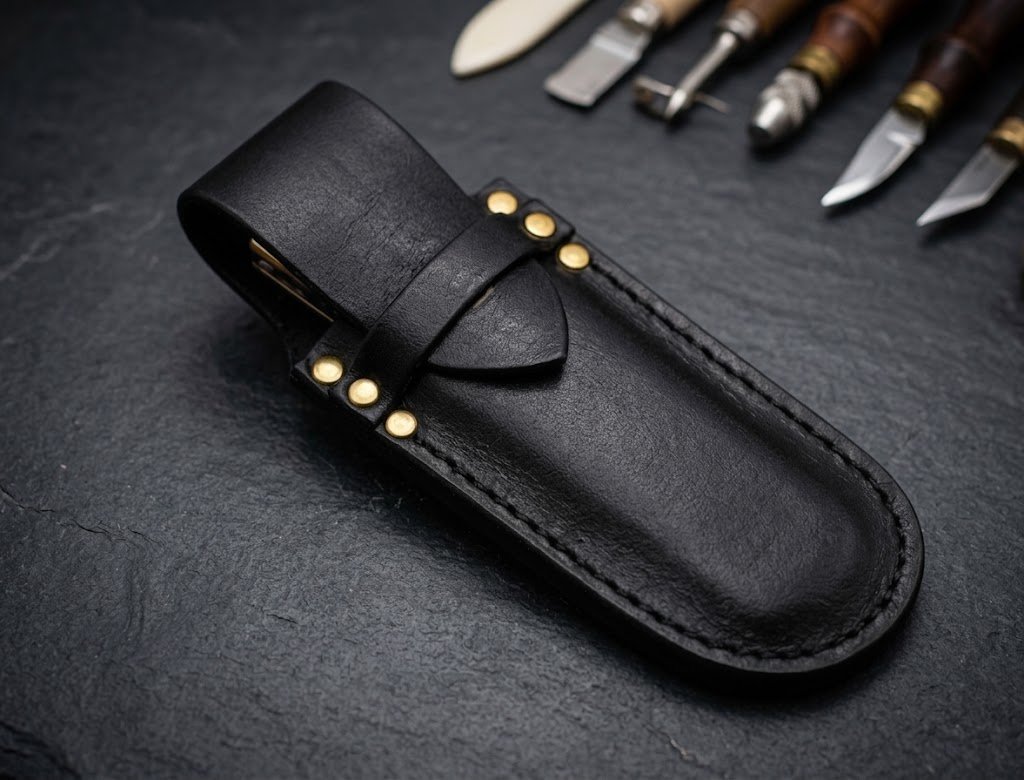
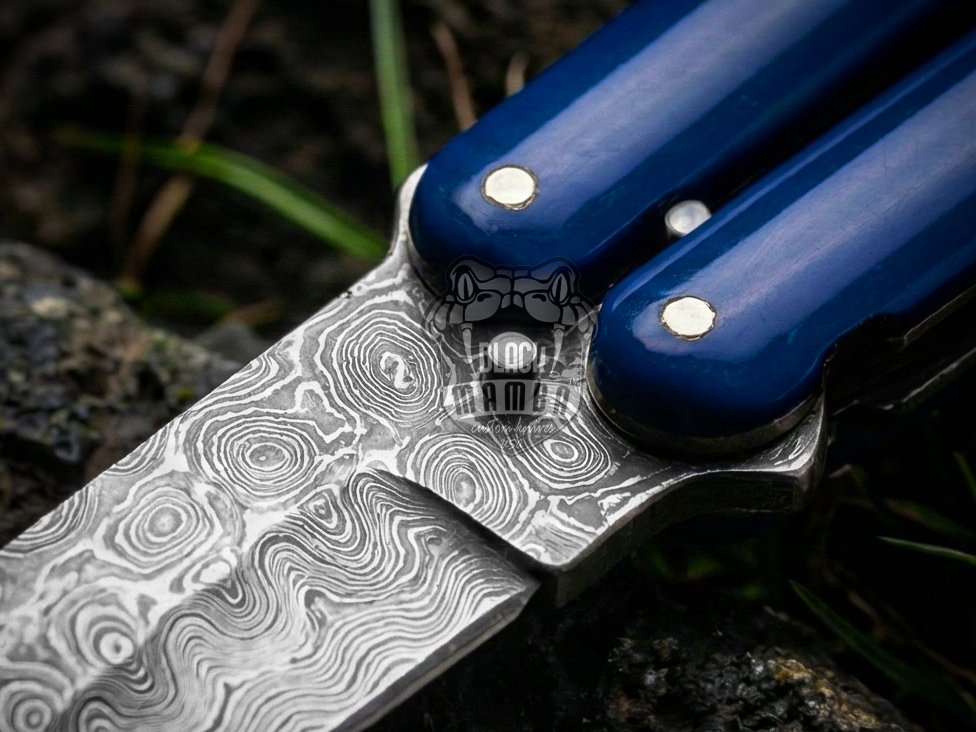
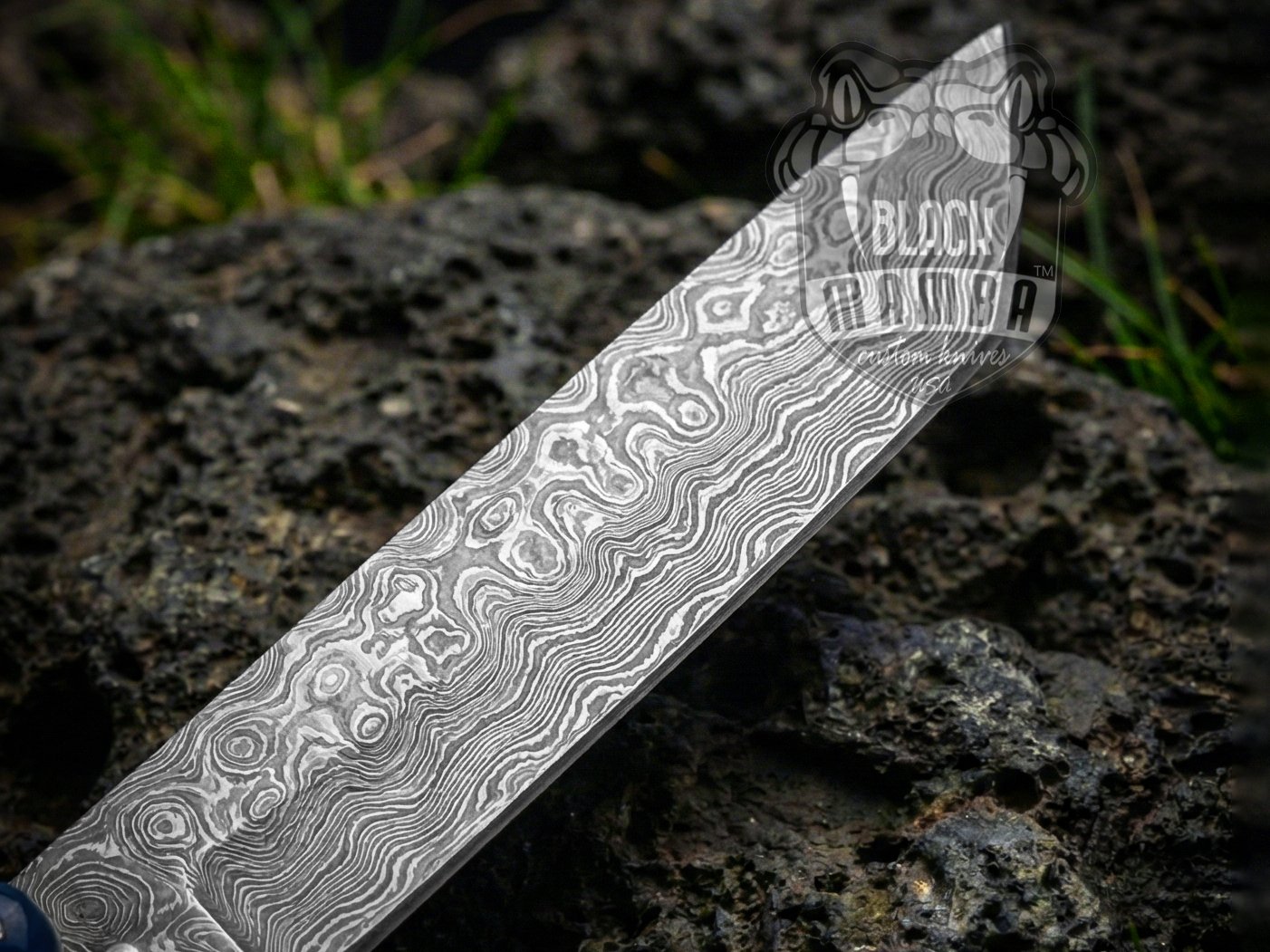
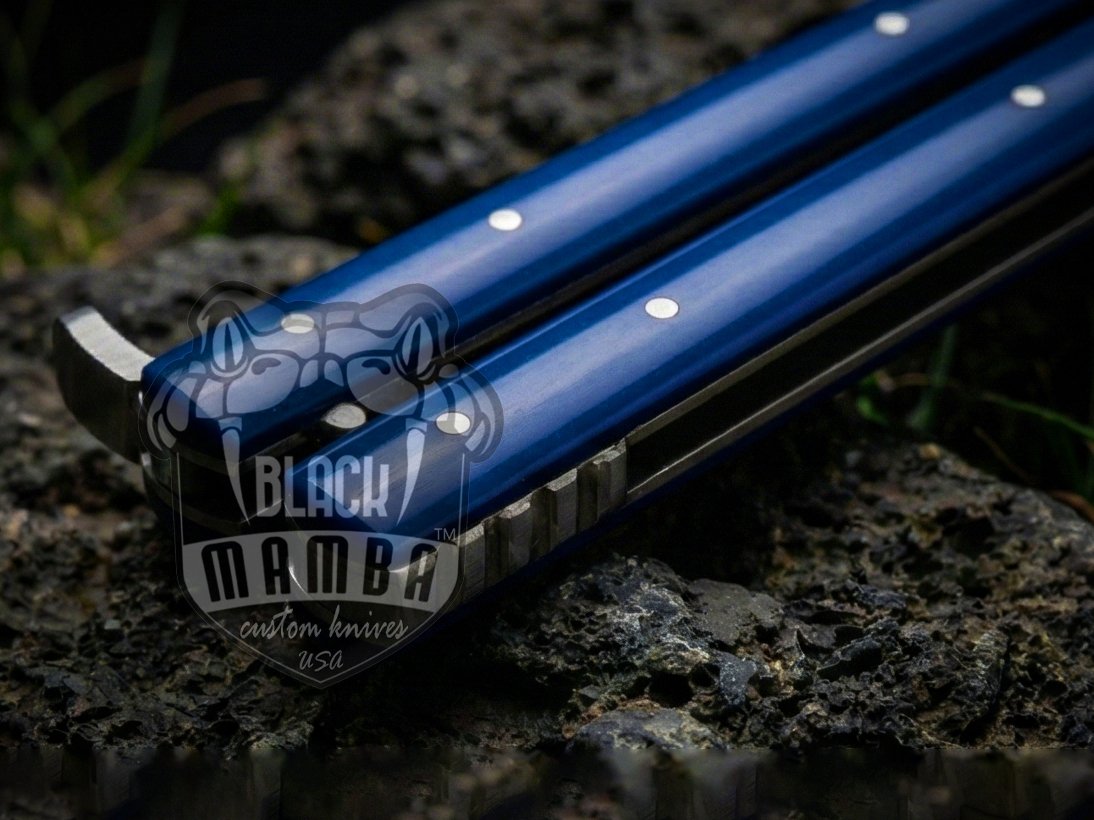
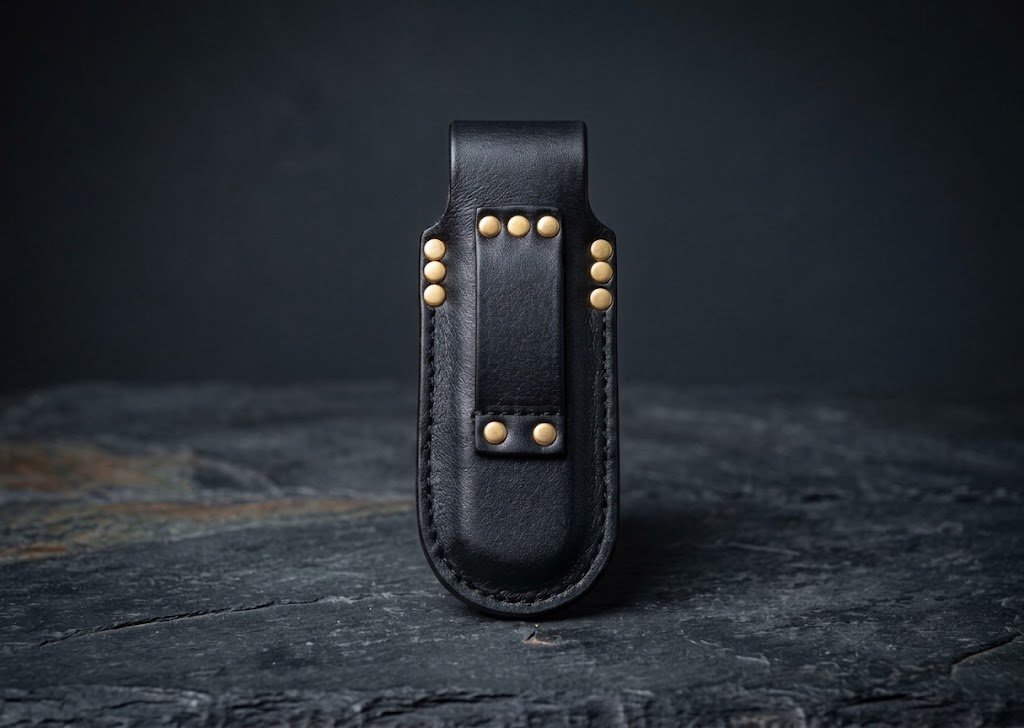
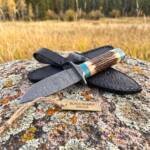
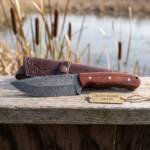
A Damascus tanto balisong with deep blue resin handles and a fitted leather pouch. Modern in every choice it makes, traditional only in the mechanism.
| Overall length | 9.1 inches |
| Blade length | 4.4 inches |
| Handle length | 4.7 inches |
| Steel | 1095 + 15N20 Damascus |
| Hardness | 58–60 HRC, oil tempered |
| Handle | – Blue Resin |
Chosen by: flippers who want a knife they can carry, drop and keep flipping. Resin does what bone and wood cannot, which is shrug off a bad session.
Resin instead of a natural material
The handles are cast resin, colored through the whole thickness rather than surface dyed. That means a scratch shows as a scuff in the same blue rather than a pale line, and it means a chipped corner can be sanded and buffed back rather than replaced. Resin does not swell, does not shrink, does not care about humidity and does not absorb sweat. It also has no depth of grain, no warmth in the hand on a cold day, and no story. Whether that is a gain depends entirely on why you bought a handmade knife.
The tanto point on a balisong
A tanto puts a thick, well supported point at the end of a straight edge, with the transition making a second working corner. On a flipping knife that geometry has one clear advantage: the tip is far stronger than a fine spear point, which matters because balisongs land tip first on hard floors. The disadvantage is that a tanto slices poorly. There is no belly to draw through material, so as a cutting tool it lags well behind the traditional upswept profiles.
What blue does over time
Pigmented resin is stable indoors and less so in a sunlit window. Blue is among the more fugitive pigment families, and a knife displayed in direct summer sun for a year can lose some saturation at the exposed face while the underside stays true. Keep it in the pouch or out of the sun and it will not move. This is a real limit, not a theoretical one.
Looking after the blade
Two carbon steels folded together give you the pattern and none of the corrosion resistance. Get the flats dry once you have finished with it, then leave a thin film of oil across them, especially if the knife is going back into the leather, because leather holds moisture and the tanning chemistry is mildly acidic. Store the knife beside the pouch rather than inside it for anything longer than a day. Whether Damascus rusts gives the full answer.
Straight questions
How do I know the pattern is real? Telling real Damascus from a printed pattern shows you what to look for at the edge and the spine.
Can the resin crack? It can chip on an edge from a hard fall. It will not split down the middle the way bone does.
Is there a version without resin? A classic Damascus balisong keeps this steel and returns to a natural handle.
Model: BMK-728B
Not sure this is the one? See every balisong knife we make in one place.

Barbara Ramirez –
Got this as a housewarming gift and it exceeded what I expected. Blade came shaving sharp straight out of the box. I keep coming back to Black Mamba Knives because it’s always this good. Happy customer here, through and through.
Dustin Hughes –
Couldn’t ask for a better balisong honestly. Handles have a great grip even during fast flips. Beyond happy with how this turned out.
Sarah Jimenez –
Did not expect this level of quality for the price. Bushings feel buttery smooth after just a bit of use. Black Mamba Knives has earned a repeat customer with this one. Comes with a nice pouch which is a nice touch. Would send this as a gift again in a heartbeat.
Jeffrey Foster –
I collect knives and this one is seriously nice. Bushings feel buttery smooth after just a bit of use. This flips cleaner than knives twice the price. This will not be my last order from this company.
Derek Ward –
Was nervous ordering something like this online but so glad I did. Bushings feel buttery smooth after just a bit of use. Action is smooth right out of the box, no break in needed. So worth it.
Richard Watson –
This balisong completely won me over the moment I picked it up. Latch snaps shut clean every time. Definitely bookmarking this maker for future orders.
Jonathan Cruz –
Knew this balisong was special the second I opened the box. Love that this comes out of Memphis and still ships worldwide this quickly.
Malik Reed –
Did not expect this level of quality for the price. Action is smooth right out of the box, no break in needed. Cool knowing this was handmade right in Memphis and shipped out fast. Will definitely order again for another one.
Donna Scott –
Perfect gift. Perfect quality. No complaints. Action is smooth right out of the box, no break in needed. Will definitely order again for another one.