


Description
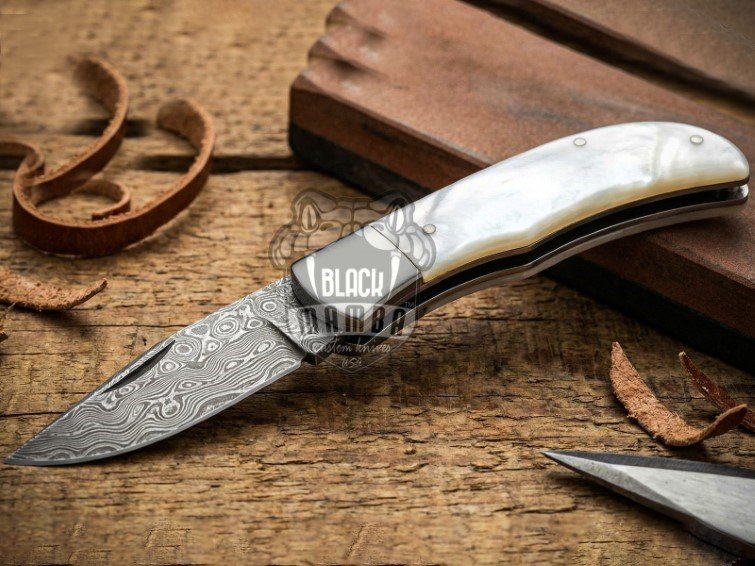
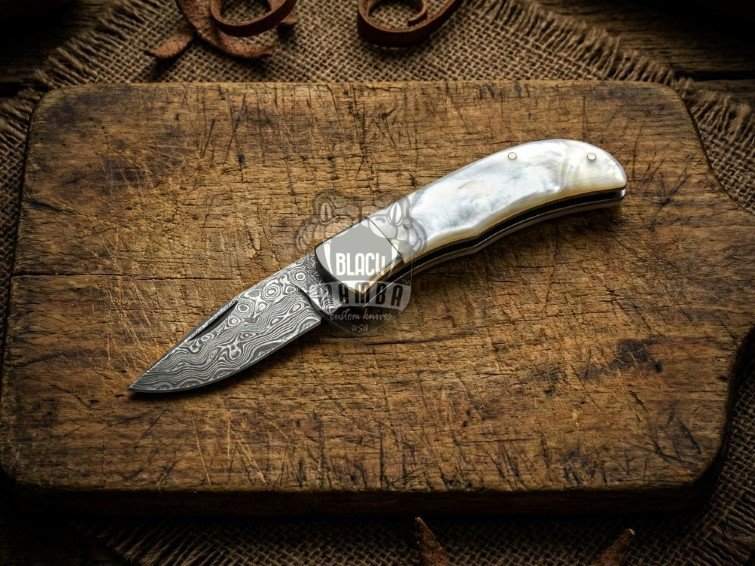
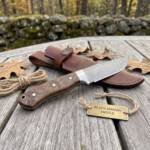
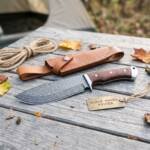
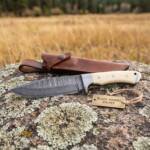
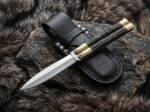
Mother of pearl scales over a Damascus blade, opened the old way with a nail nick and a thumbnail.
| Overall length | 7.5 inches |
| Blade length | 3.5 inches |
| Handle length | 4 inches |
| Steel | 1095 + 15N20 Damascus |
| Hardness | 58–60 HRC, oil tempered |
| Handle | Sea Shell Steel Bolster |
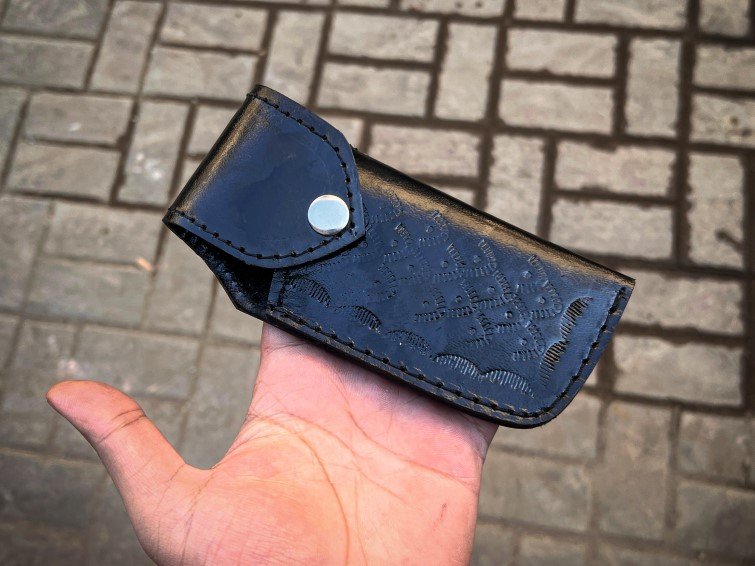
| Included | Hand-stitched leather sheath |
What it is for: the pocket of someone who likes a traditional folder and wants the finish to match. Three and a half inches of Damascus edge on a slim frame with a polished steel bolster.
Care: Dry the blade, then close it and dry the nail nick and the joint behind it. Oil the pivot every few weeks and the flat about once a month. Pearl itself needs nothing beyond a clean cloth and no hard knocks.
FAQs
How does it open? With a nail nick in the blade, two-handed, the way a traditional folder has always opened. There is no thumb stud and no pocket clip, so nothing protrudes from the frame.
Is the pearl real shell? Yes. It is cut from shell, which is why the color shifts as you turn it and why every pair of scales is different.
How long is it open? 7.5 inches overall, from a 3.5 inch blade and a 4 inch handle.
Working with pearl
Mother of pearl is the most difficult handle material in the shop. It is brittle, it chips if it is rushed, and it has to be ground wet and slowly. A pair of scales takes several times as long as wood and a proportion of them break before they are finished. What you get in return is depth that no dyed synthetic reproduces, because the color is a physical property of the layers rather than a pigment. It is also why a pearl-handled knife costs what it does. The material is not expensive by weight. The failure rate and the hours are.
The nail nick
A nail nick means two hands and a deliberate opening. That is not a shortcoming, it is a different design intent. There is nothing protruding from the frame, so the knife rides flat in a pocket and nothing catches on a lining. The bolster is polished steel, thick enough to take the pivot load and shaped flush with the pearl so nothing sits proud under your fingers. A knife that opens deliberately also closes deliberately, which is worth something.
Checking the Damascus
The figure here is a tight pool-and-eye pattern from 1095 and 15N20, etched so the layers separate visually. If you want to know how to tell a forged pattern from a printed one, our page on spotting real Damascus is the short version, and pocket knife bevels explained covers the grind. For something built for hard use instead of pocket carry, look at the Shadowstone D2 karambit.
Model: BMK-681
Wayne Williams –
This pocket knife has already earned a permanent spot in my collection. Pocket clip is sturdy and holds it right in place all day. Deployment is fast and confident every single time. Detent is snappy without being stiff to open. Telling everyone I know to check this seller out.
Thomas Green –
This is hands down one of the best knives I’ve bought online. This is why Black Mamba Knives is my go to for anything knife related.
Susan Anderson –
Ended up ordering a second one after how happy I was with the first. Proud to support American made goods out of Memphis with this purchase. Liner lock is tight with zero blade play. Opens smooth every time with just a flick of the thumb. Exactly the kind of quality that keeps me coming back.
Jacob Brown –
Five stars isn’t even enough honestly. Blade centering is perfect right out of the box. Already thinking about what to order next from this maker.
Joseph Wilson –
Can’t stop showing this off to everyone who comes over. Detent is snappy without being stiff to open. This is going straight into my daily rotation.
Pamela Kim –
This pocket knife looks even better in person than in the listing photos. No hesitation recommending this to anyone looking.
Frank Green –
Happy with this one for the most part. Blade is sharp but not quite razor sharp out of the box. Lockup is solid, just a touch of side to side play. Would order again despite the minor gripes.
Edward Miller –
Showed up right on time and looked even better than the photos. Pocket clip is sturdy and holds it right in place all day. Blade centering is perfect right out of the box. This one’s a keeper for sure.
Pamela Bennett –
Really happy with this pocket knife overall. Action is good though it needed a little breaking in. Would still tell others to give this a try.
Rafael Cooper –
Couldn’t ask for a better pocket knife honestly. Fits great in the pocket without feeling bulky. Great buy overall.
Alexander Stewart –
This is hands down one of the best knives I’ve bought online. Not my first order from Black Mamba Knives and it won’t be my last. Deployment is fast and confident every single time. Lockup is rock solid with no wiggle in any direction. Exactly the kind of quality that keeps me coming back.
David Hunt –
Nice piece for the price. Pocket clip works fine, just a bit tight at first. Blade is sharp but not quite razor sharp out of the box. Would buy from this shop again.
Sharon Scott –
This pocket knife has quickly become my favorite piece in the collection. Action smoothed out even more after a few days of carry. Definitely bookmarking this seller for future orders.