
Description
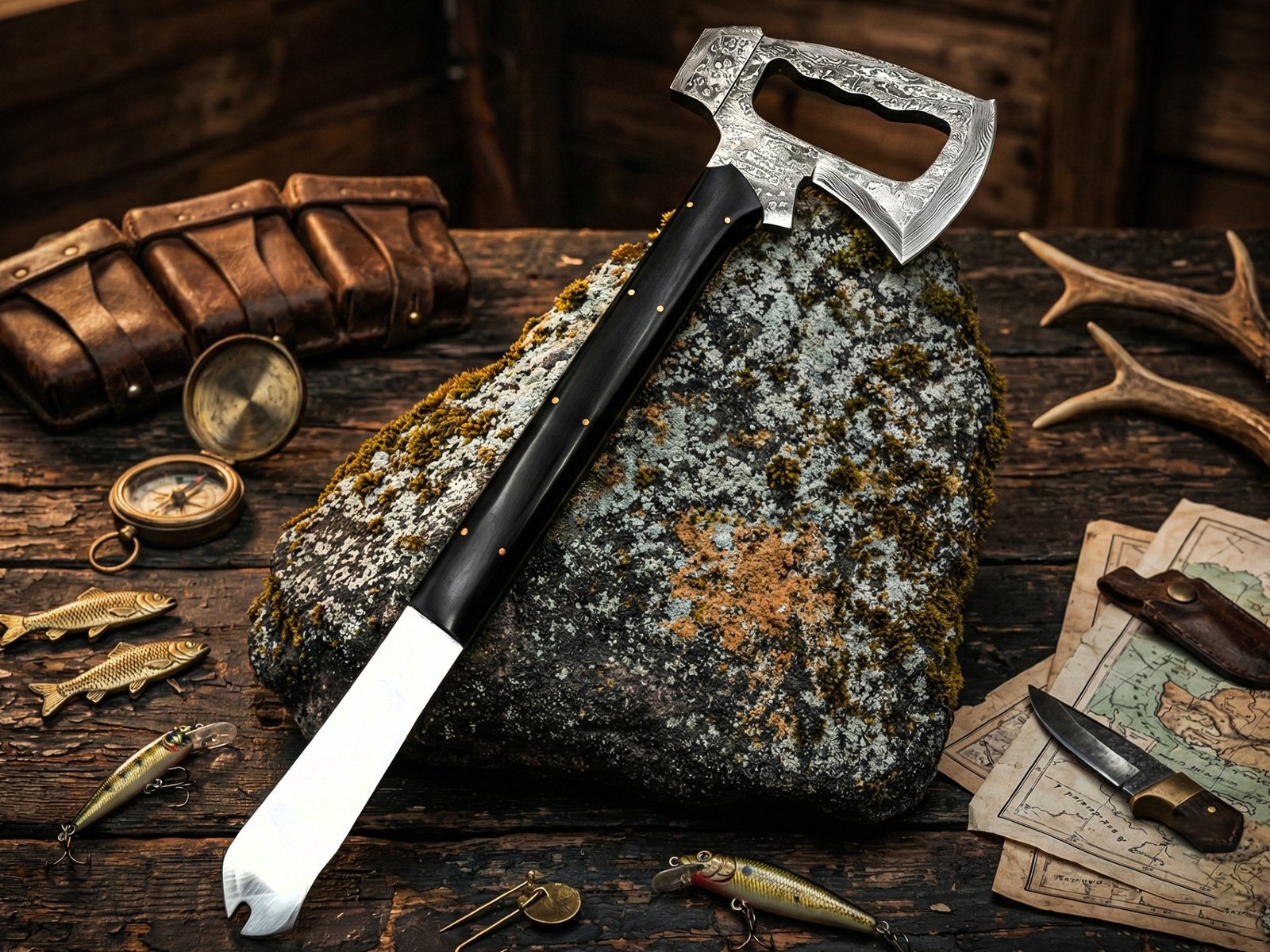
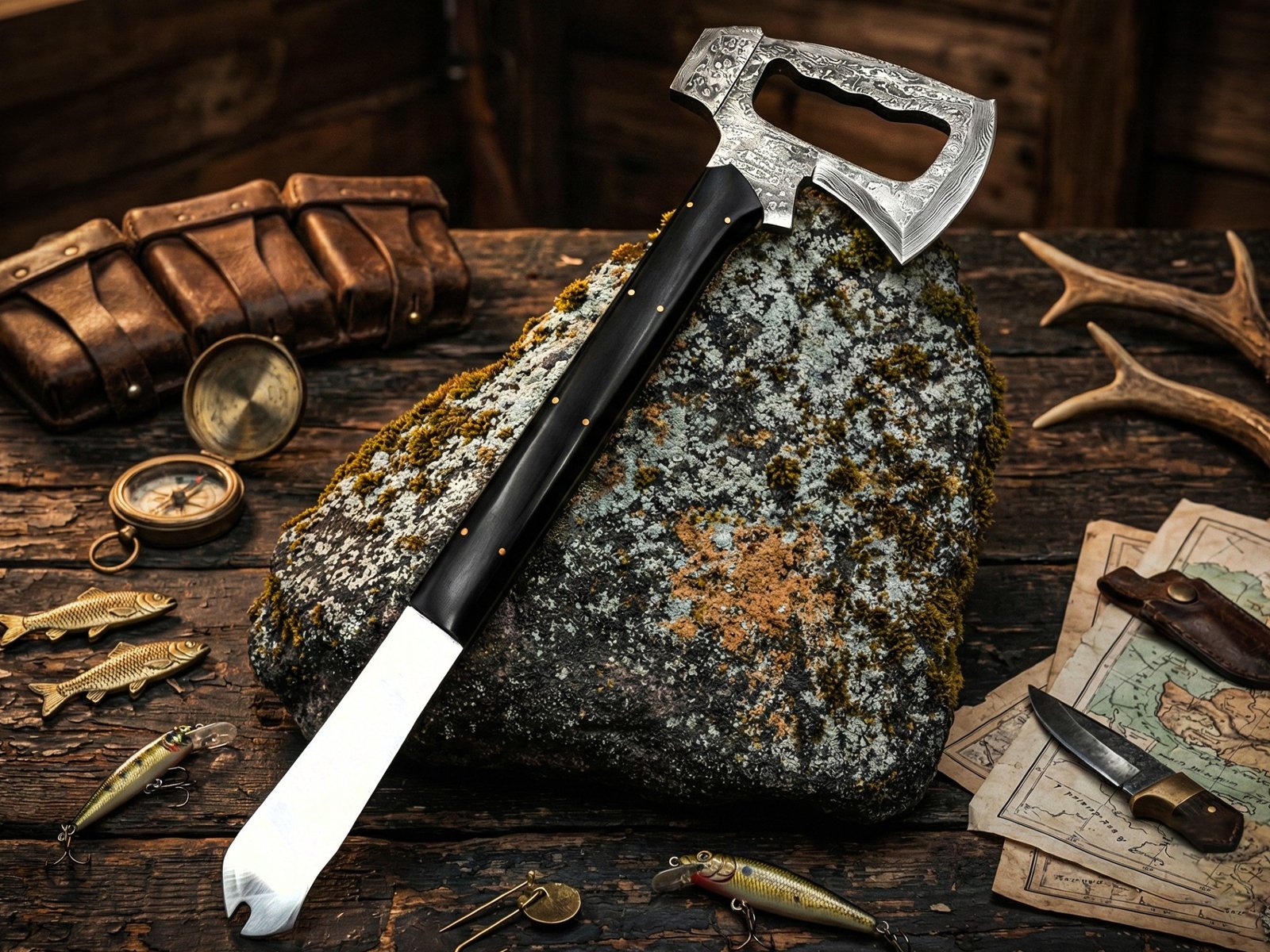
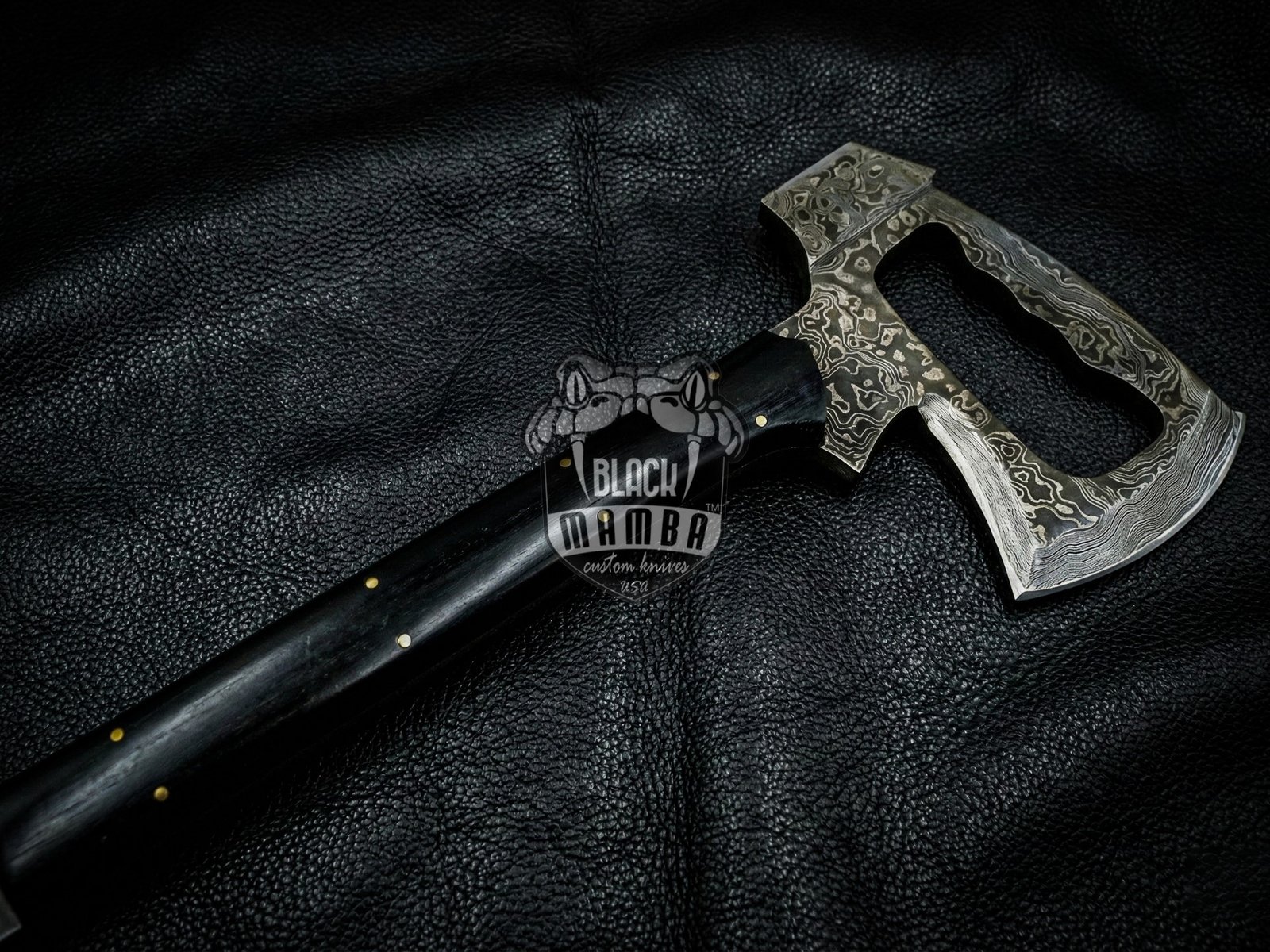
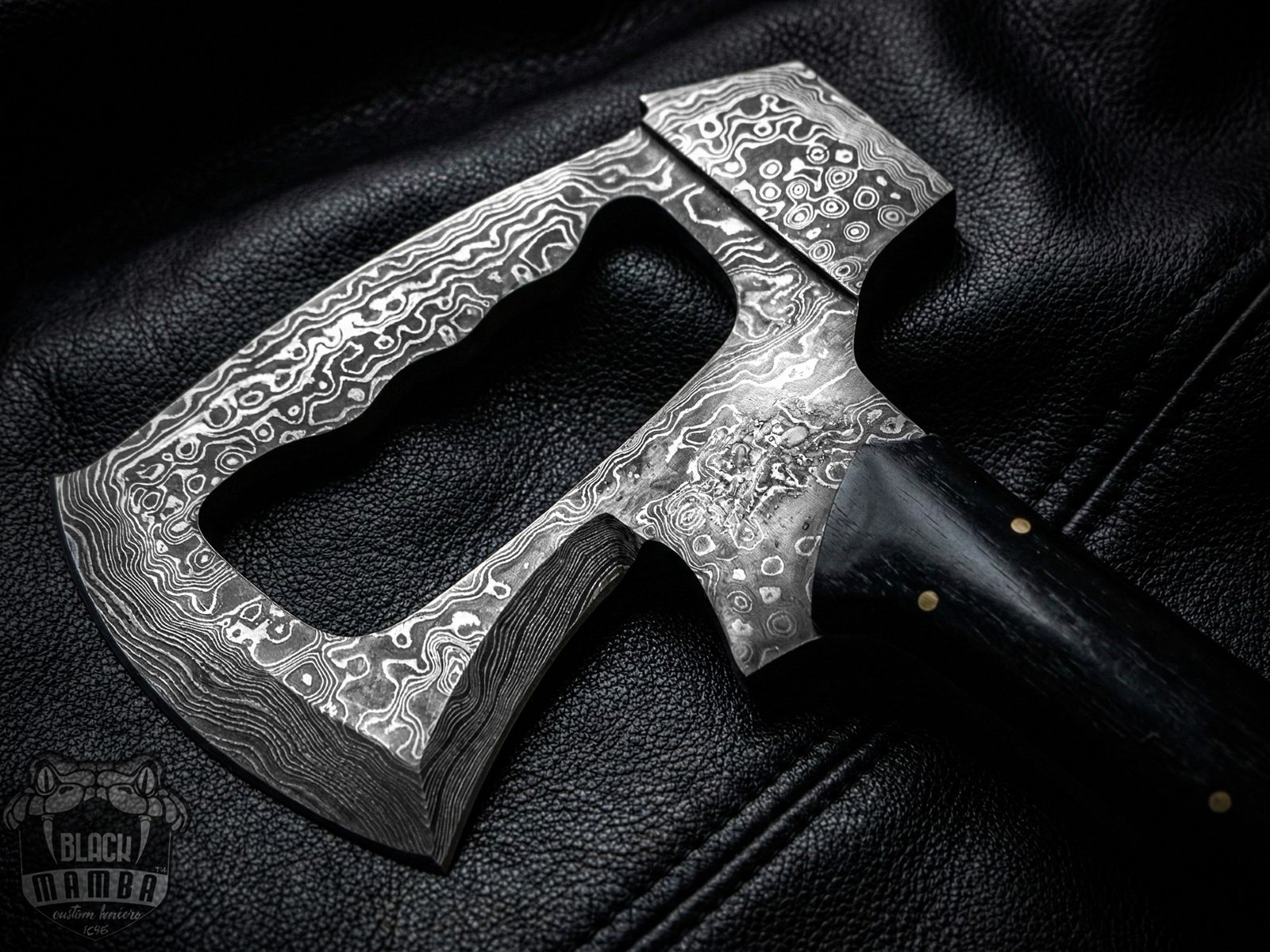
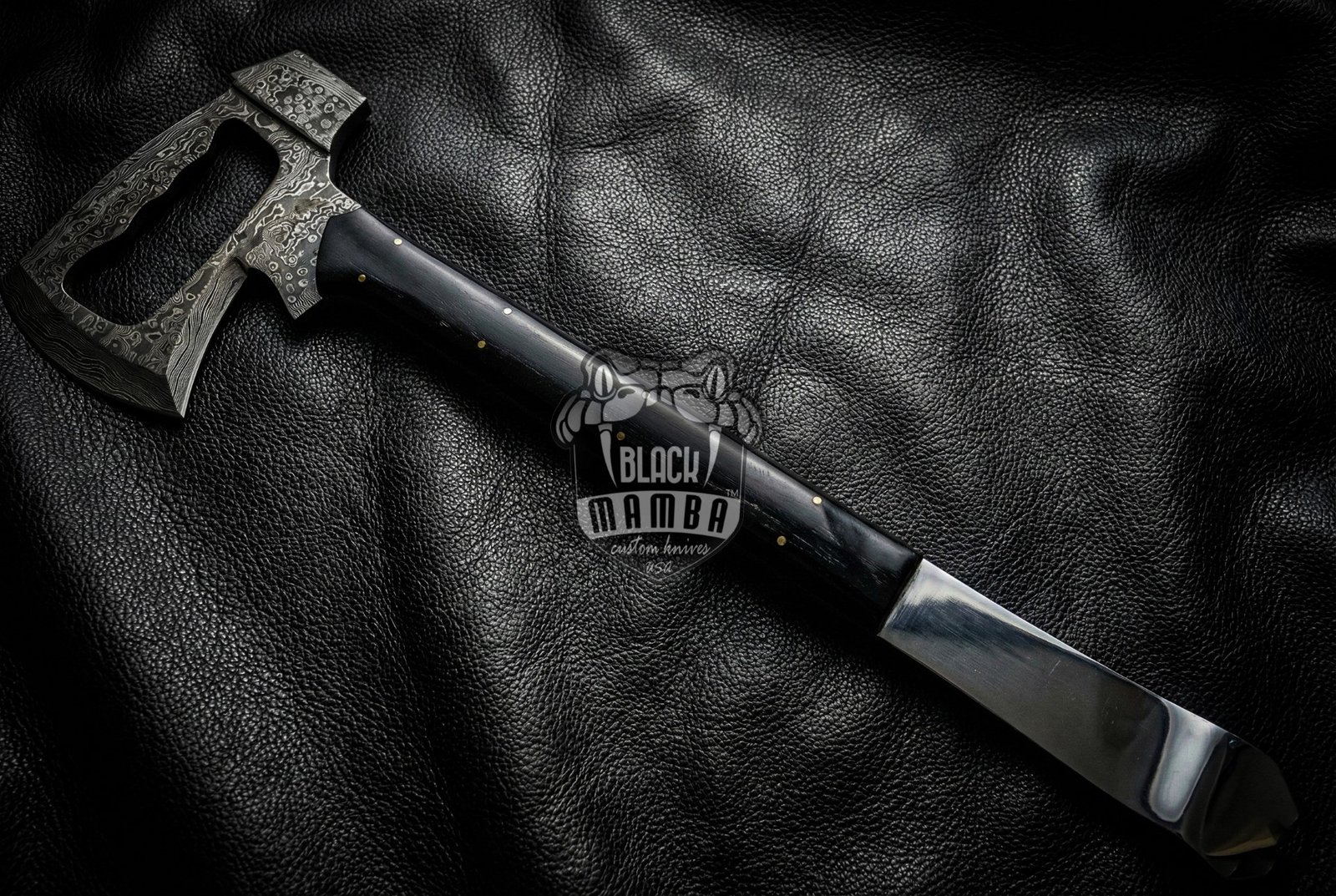
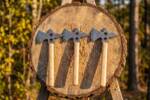
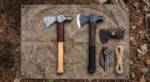
The head on the Black Kite is cut through with an open bearded profile, and the Damascus runs right through the cutout, so you can read the layers on both the outside face and the inside of the window.
| Overall length | 18 inches |
| Steel | 1095 + 15N20 Damascus, 352 layers |
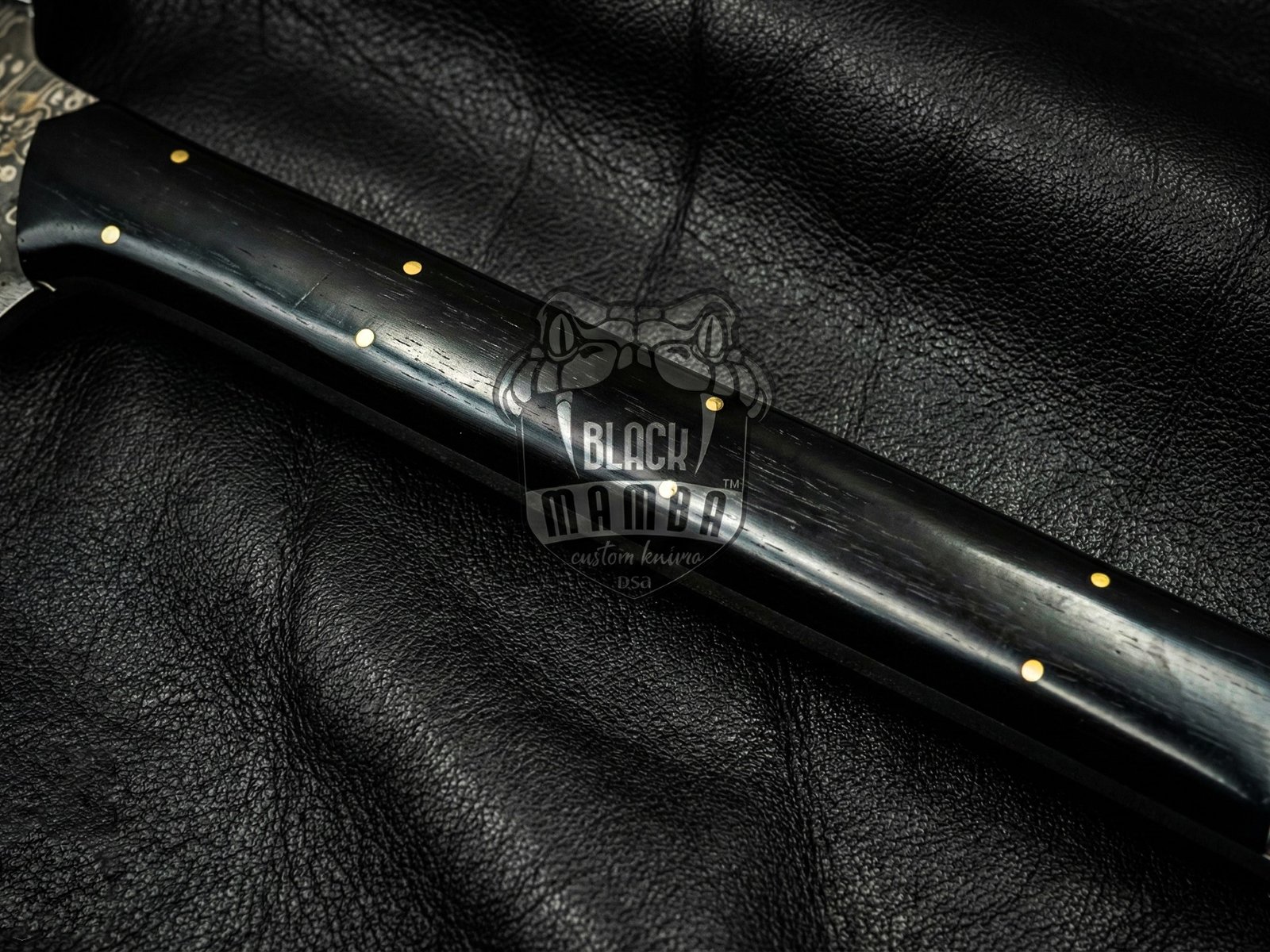
| Handle | Dark wood haft slabs pinned in brass |
| Hardness | 58–60 HRC, oil tempered |
| Pattern | Wind & Mix twist Fire pattern feather rain drop ladder Damascus Blade |
| Included | Hand-stitched leather sheath |
Its job: splitting kindling, limbing, camp chores and driving tent stakes with the flat poll on the back. At 18 inches it is a one-hand tool. You choke up near the head for controlled cuts and drop to the end of the haft when you want the weight to do the work.
The head is a working shape, not a display shape
The bit flares into a beard that hangs below the eye, which gives you a longer cutting edge without adding weight up top. Behind the eye sits a flat hammer poll. The open window through the head cuts mass out of the middle, where mass does nothing useful, and leaves it at the edge, where it does.
Pattern-welded, and you can see it
The layers here are a mix of twist, ladder and feather work rather than a single repeated motif, so the head reads differently along its length. Twist sections show tight circular eyes, ladder sections show straight rungs across the flat. That variety comes from folding and manipulating the billet in more than one direction before the head is drawn out, and it is why no two of these heads etch identically.
The butt end is a tool too
The haft runs to a flat steel end with a notch cut into it, so the bottom of the axe works as a small pry and nail puller. The dark handle slabs are pinned in brass down both sides.
Care: an axe lives outdoors and this one is high-carbon pattern-welded steel, which will surface-rust if you leave it in a wet pack. Dry the head first and sheathe it second, never the other way round. A rag with a film of oil over the head after each trip is enough. Check the wedge and the pins for movement at the start of every season and stop using it if the head shifts on the haft — a loose head is the only genuinely dangerous fault an axe develops.
Common questions
Is this a throwing axe? No. The Damascus head and the pinned handle are built for chopping, and repeated hard impacts into a target board will eventually loosen the assembly. Buy a dedicated throwing set if that is the plan.
How sharp does it arrive? Shaving sharp on the bit. An axe edge is ground more obtusely than a knife edge on purpose, because a thin edge chips on knots.
What does the layer count actually tell me? Less than people assume — we break the arithmetic down in what 352 layers actually means. If you want to understand why a forged head behaves differently from a stamped one, read hand-forged versus factory made. For the same silhouette in plain high-carbon steel at half the price, see the Anvil Oak hatchet.
Model: BMK-800
Terrell King –
This knife punches way above its price point. Handle feels amazing and the balance is perfect. Will definitely order again for another one.
Rachel Clark –
No regrets on this purchase at all. Steel has a gorgeous pattern that looks different in every light. No hesitation recommending this to anyone looking. Good to know real Memphis craftsmen are behind this, and shipping was quick too.
Hunter Hall –
Ended up ordering a second one after how happy I was with the first. Fit and finish is museum quality. You can tell real craftsmen made this by hand. Happy customer here, through and through. Made in the USA and shipped worldwide with no issues on my end.
Carl Sanders –
Ended up ordering a second one after how happy I was with the first. Took it out camping right away and it handled everything I threw at it. Great buy overall.
Antonio Kelly –
Genuinely seriously impressed with how this turned out. Blade holds a razor edge right out of the box. Steel has a gorgeous pattern that looks different in every light. This is my new favorite in the collection.
Michelle Hall –
My uncle couldn’t stop talking about this after I unboxed it. Handle feels amazing and the balance is perfect. Blade holds a razor edge right out of the box. This one’s a keeper for sure.
Sharon Cox –
Bought this on a whim and it turned out to be one of my favorite purchases in a long time. Even the small details in the damascus pattern are crisp and clean. Would not hesitate to order again.
Barbara Nguyen –
Everyone who’s seen this knife has asked where I got it. Black Mamba Knives has earned a repeat customer with this one.
Anthony Mitchell –
Ordered late at night on a whim and woke up glad I did. Handle has a great grip even with wet or gloved hands. This has quickly replaced my old go to knife for field dressing. This is the kind of purchase that makes online shopping worth it.
Emma Taylor –
Kept picking this knife up just to admire it after it arrived. Handle feels amazing and the balance is perfect. Steel has a gorgeous pattern that looks different in every light. Pommel and guard are solid, no wobble anywhere on the knife. This is my third order from Black Mamba Knives and they never disappoint. Can’t say enough good things about this purchase.
Antonio Jimenez –
This turned out to be way better than I thought it would be. Came in a nice gift box which made it feel even more special. Already telling my friends to check this out.
Ruth Jimenez –
Showed up right on time and looked even better than the photos. Took it out camping right away and it handled everything I threw at it. Great buy overall.
Stephanie Lewis –
Not going to lie. This exceeded my expectations by a lot. Weight and balance make it feel like a real working knife not some cheap import. Fit and finish is museum quality. You can tell real craftsmen made this by hand. This has quickly replaced my old go to knife for field dressing. Great buy overall.