
Description
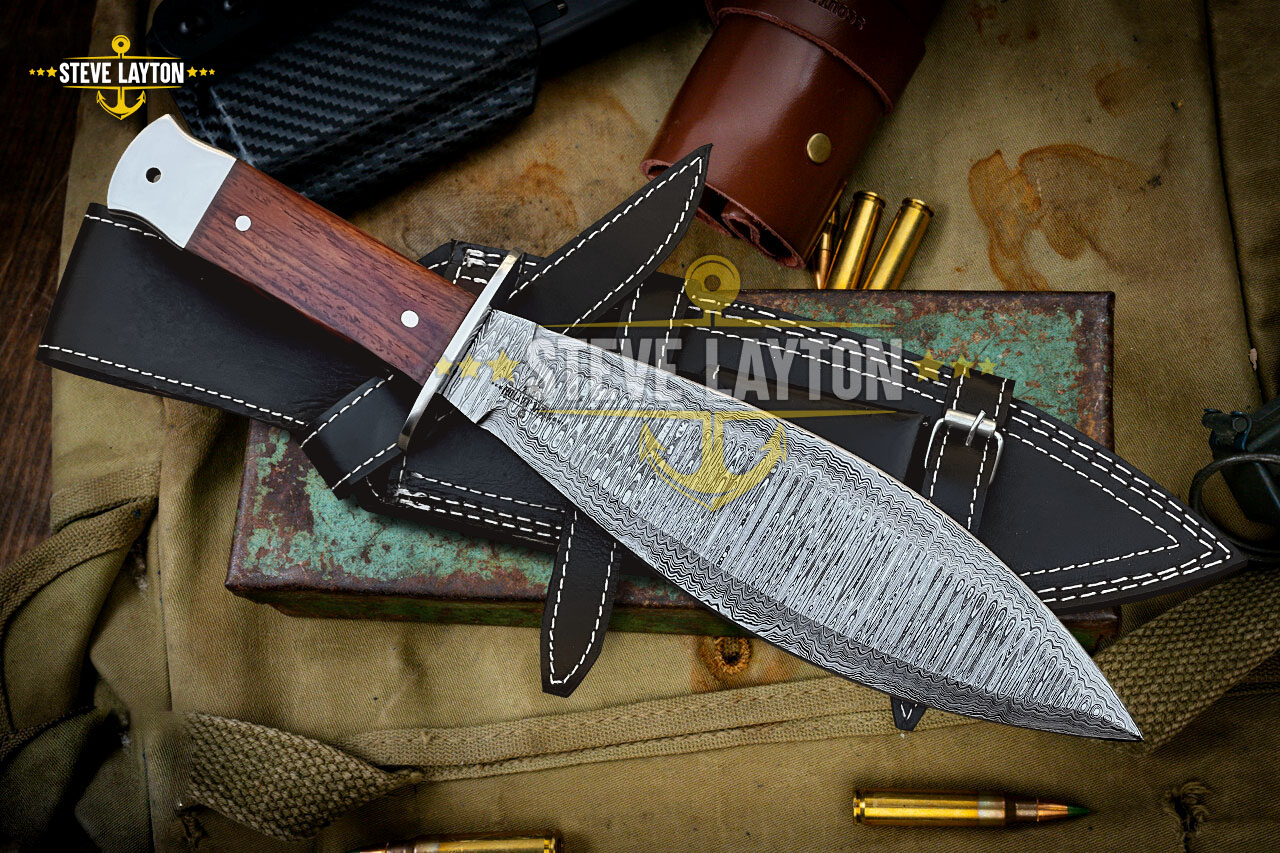
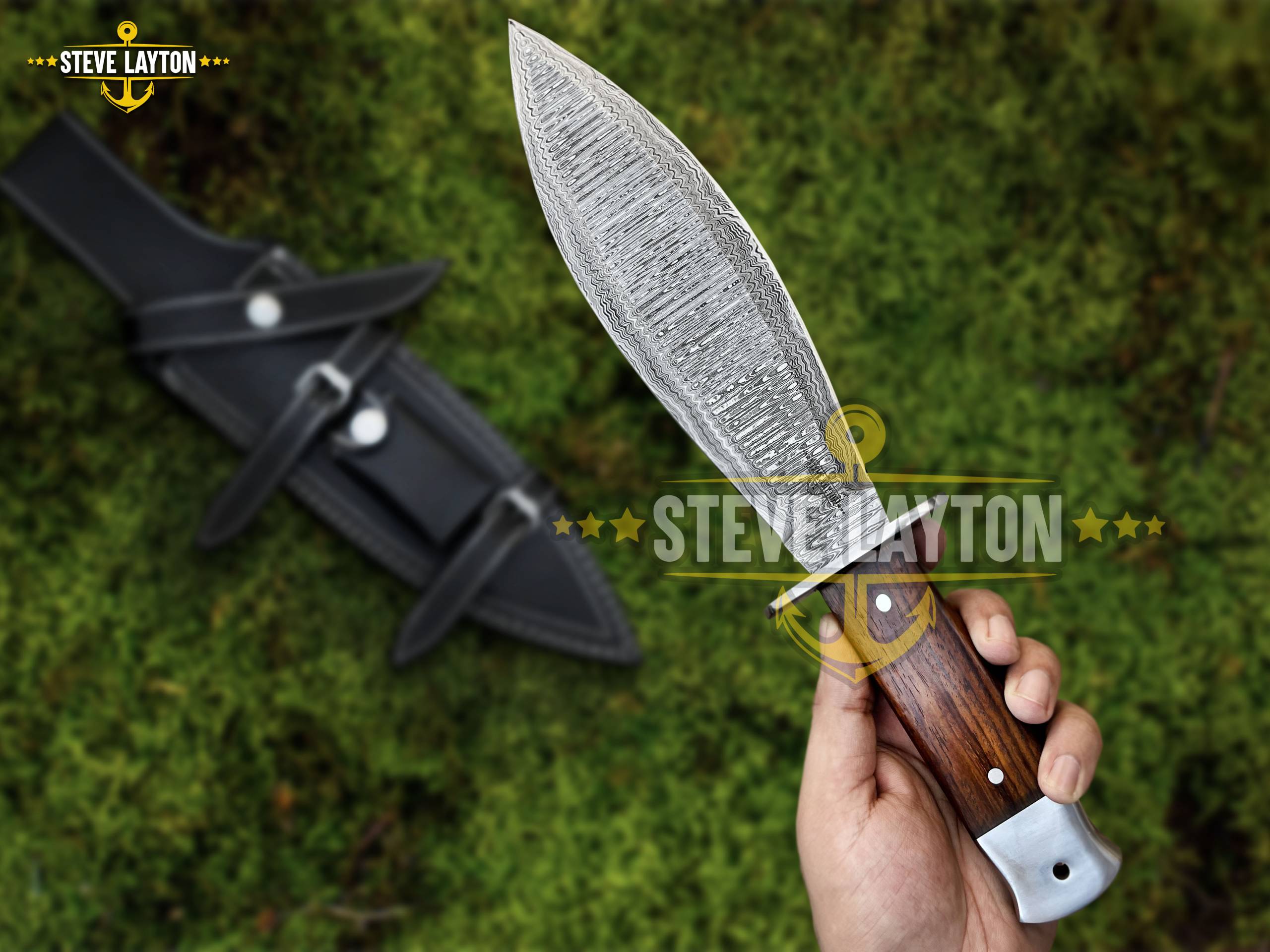
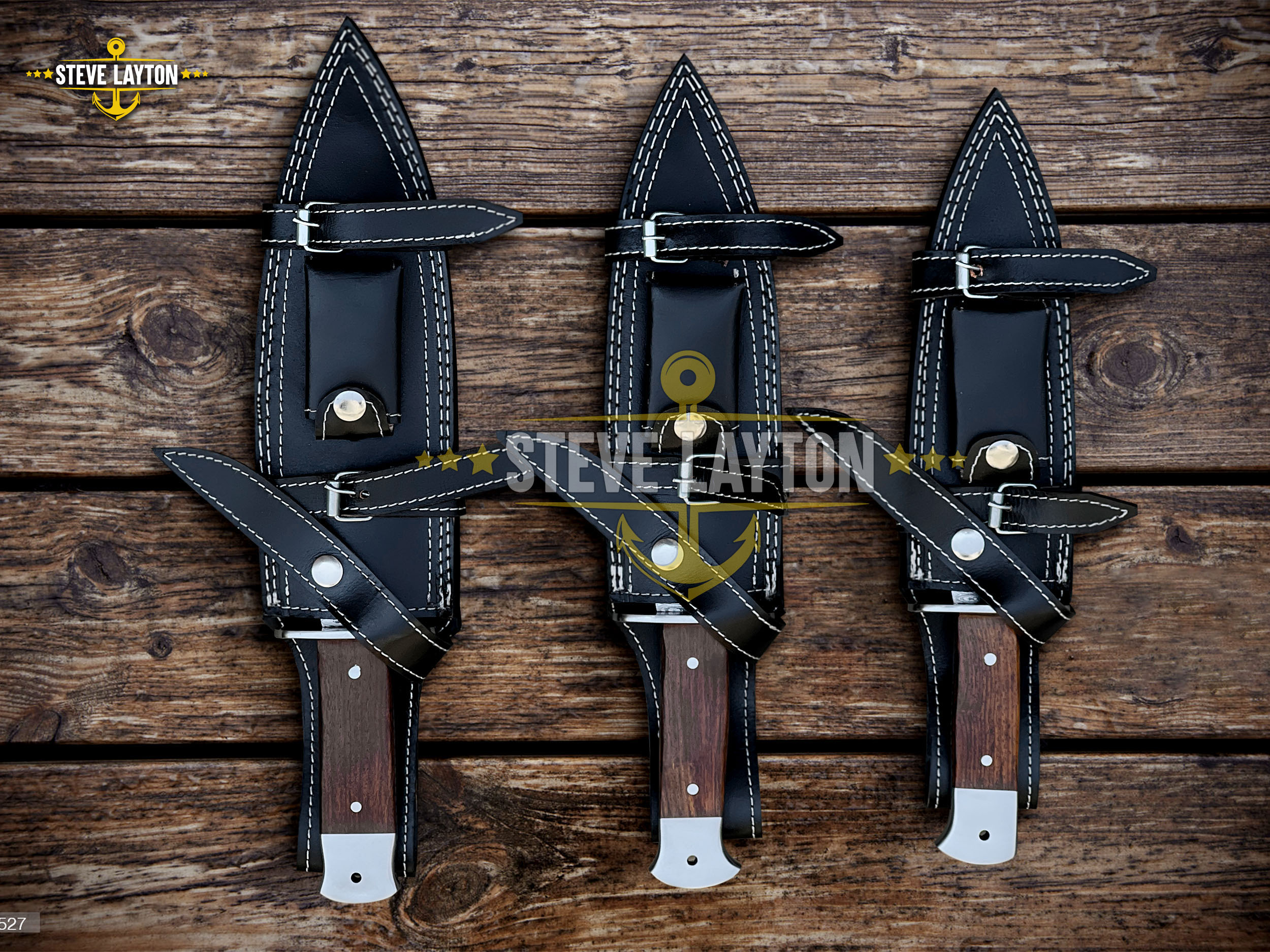
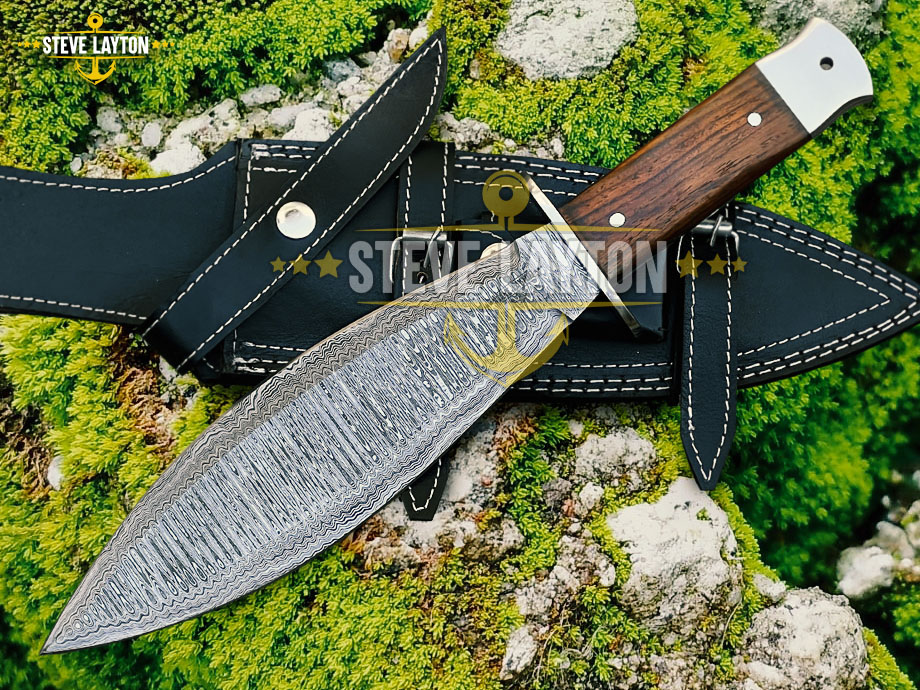
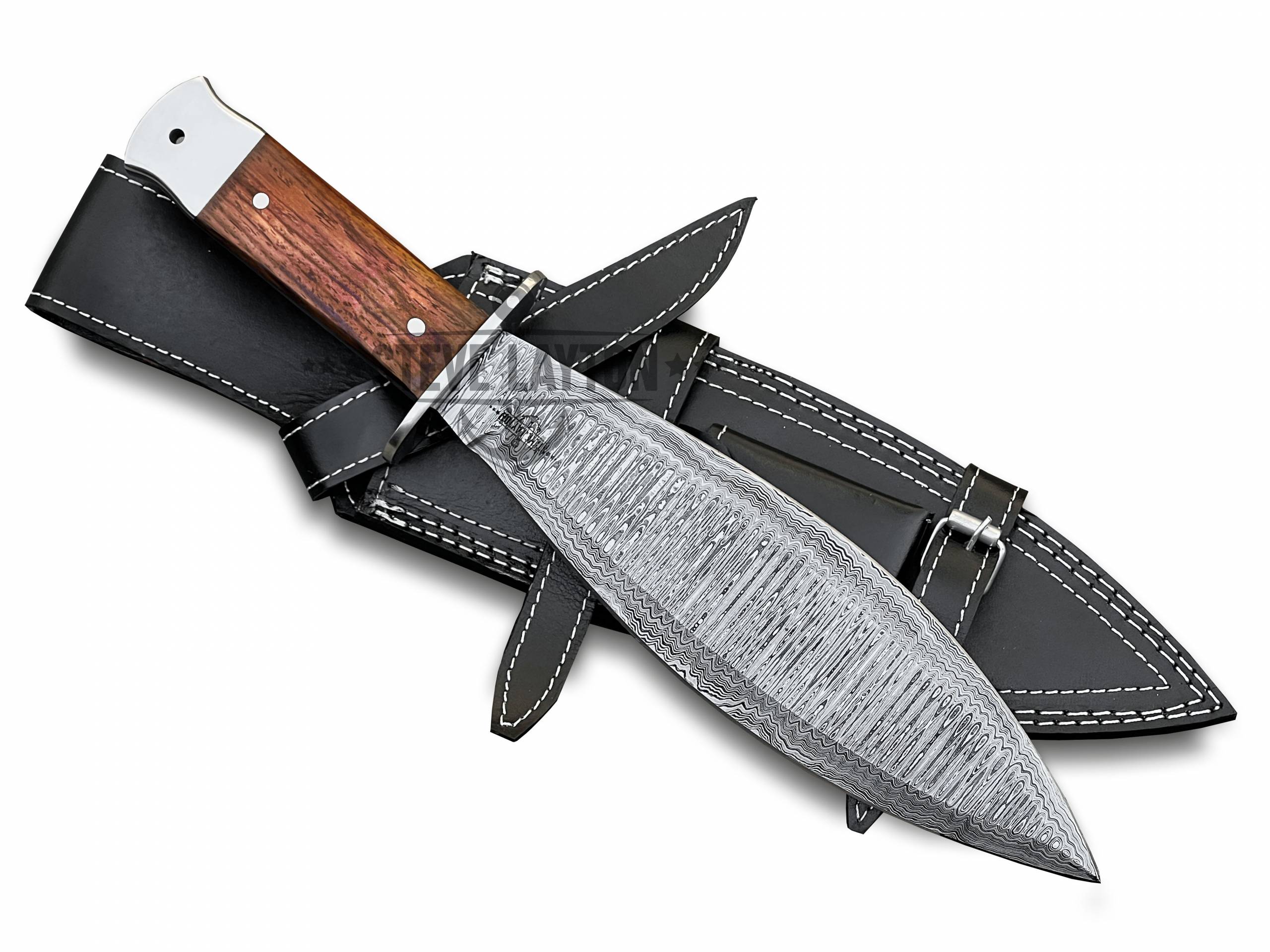
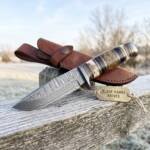
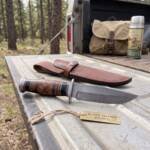
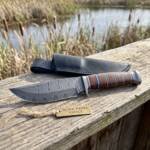
Ten inches of double-edged pattern-welded steel with a ridge running the length of it, a steel guard, and a wood handle capped in polished steel.
| Overall length | 15 inches |
| Blade length | 10 inches |
| Handle length | 5 inches |
| Handle | Wood capped in polished steel |
| Steel | 1095 + 15N20 Damascus, 352 layers |
| Hardness | 58–60 HRC, oil tempered |
| Weight | 15 oz |
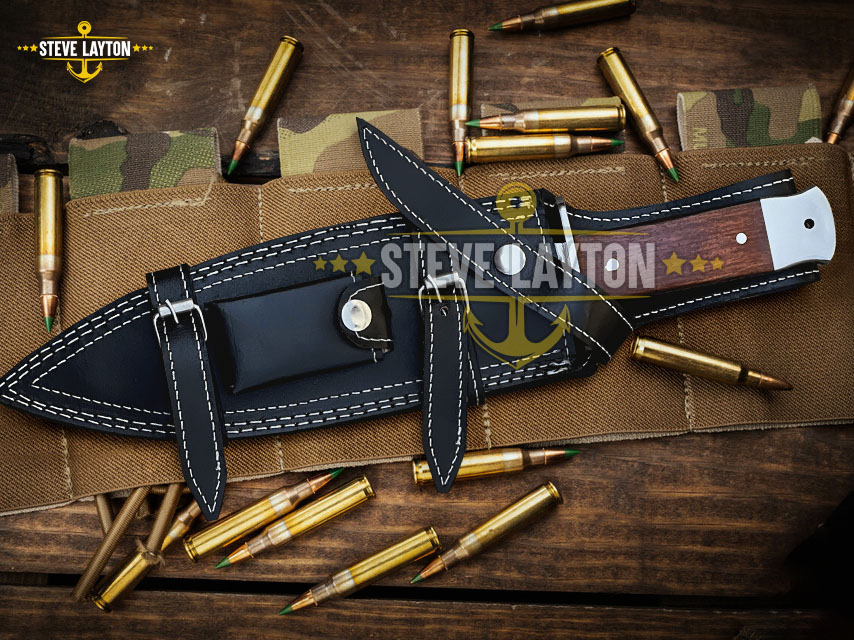
| Included | Hand-stitched leather sheath |
What it is: a display and collection dagger from our Steve Layton line, a small military-themed series that sits apart from the main catalog. It is not a hunting knife and it is not a camp knife; nothing in the design pretends otherwise.
Care: two edges means two edges to keep away from things, including your own fingers when you are cleaning it. The steel is high carbon, and a polished flat this large will hold a fingerprint long enough to etch it in, which is the main reason display pieces develop marks that nobody remembers making. Wipe it down after handling with a dry cloth. The wood handle takes furniture wax once a year and asks for nothing else. Store it outside the sheath, because fifteen inches of leather holds a considerable amount of damp.
What a double edge changes
Everything about how you can use it. There is no spine, so there is nowhere to put a thumb, and without a thumb on the back you cannot make a controlled push cut. That rules out carving, whittling, food work, cordage and every ordinary utility job at a stroke. It also changes the legal picture: double-edged daggers are named specifically in the statutes of many US states, and the restrictions usually apply to carry rather than to ownership. Read your own before you plan to take it anywhere. Our knife versus dagger guide goes through the distinction properly.
Fifteen inches and fifteen ounces
This is the largest thing in the range it belongs to, despite being called the small one. The steel pommel counterweights the blade so it does not feel as tip-heavy in the hand as the numbers suggest, and the balance point sits close to the guard. It is a one-handed object; there is no second grip position and the handle is not long enough to invite one. On a wall or in a case it reads considerably bigger than fifteen inches. For the same pattern scaled up, see the Ranger Medium dagger.
Why there is a ridge down the middle
A blade this long and this narrow has no spine to stiffen it, so the stiffness has to come from the cross-section instead. Grinding both faces to meet at a raised center line puts material where the bending load is, which is why almost every dagger in history is shaped this way. It also doubles the grinding work, because four bevels have to meet at one straight line down the middle without wandering. That line is the first thing to look at when you judge one of these.
Questions about this dagger
Can I use it as a hunting knife? No. Without a spine there is no safe way to apply pressure, and ten inches of blade is wrong for anything you would do to an animal.
Is it legal to own? Ownership is generally straightforward. Carry is where double-edged blades run into trouble, and it varies by state and by city.
What is this pattern based on? Military dagger designs of the mid twentieth century, interpreted rather than reproduced. Our military knife buying guide covers the originals.
Model: SL-027
Jonathan Miller –
Feels way more premium than the price suggests. Black Mamba Knives keeps setting the bar higher with each order. Nice to support a Memphis based knife maker, shipping was fast even internationally. Blade geometry makes it glide through cuts with barely any effort. Great buy overall.
Patrick Mitchell –
This is hands down one of the best knives I’ve bought online. Leather sheath is thick and well stitched. Not the cheap stuff you usually get. Would not hesitate to order again.
Harold Hill –
No regrets on this purchase at all. Handle has a great grip even with wet or gloved hands. Handle feels amazing and the balance is perfect. Took it out camping right away and it handled everything I threw at it. This is the kind of purchase that makes online shopping worth it.
Alan Moore –
Ordered late at night on a whim and woke up glad I did. Handle feels amazing and the balance is perfect. Worth every penny. I keep coming back to Black Mamba Knives because it’s always this good.
Sandra Morales –
Solid knife. Glad I ordered it. Balance is good, just wish the handle had a bit more grip texture. Would still tell others to give this a try.